





 Portuguese
  English
  Spanish
  7 min of reading
  0 comments


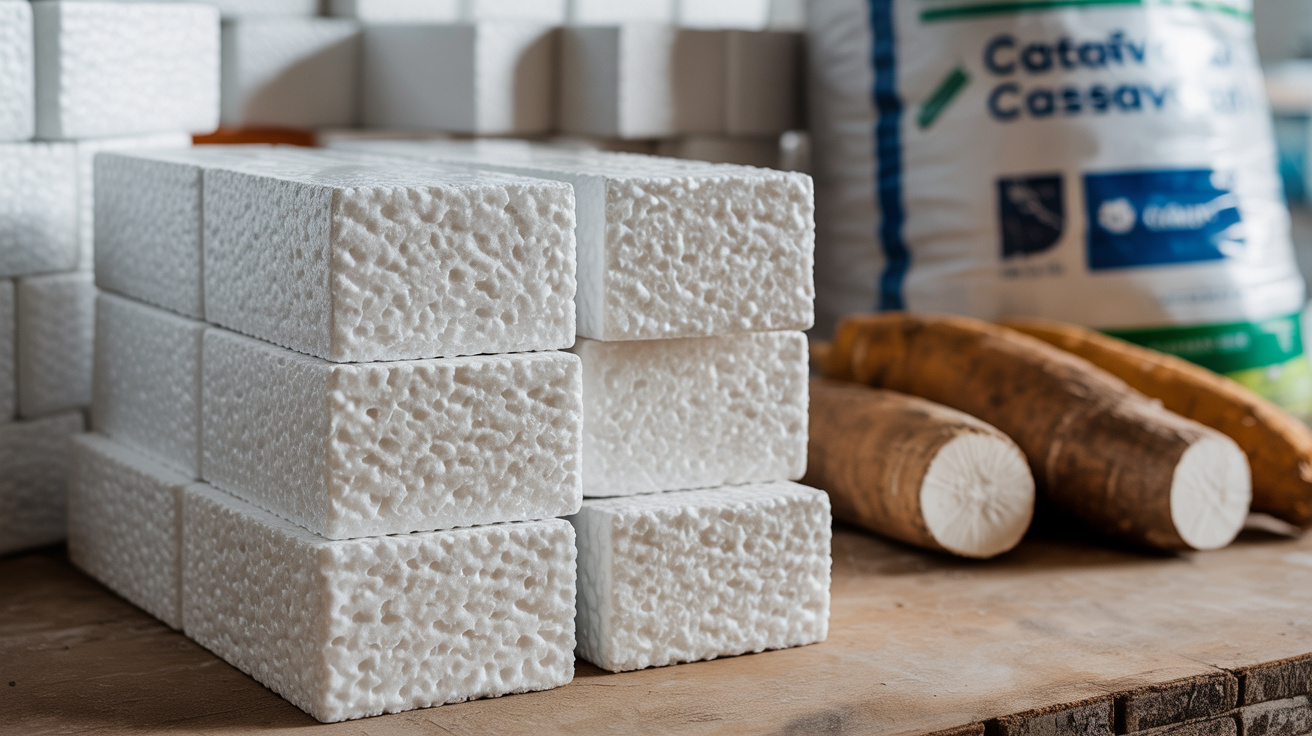
Technique in the Northeast transforms recycled styrofoam and cassava starch into lightweight blocks costing R$ 0.40 that reduce internal heat by up to 80% and divert waste from landfills.
In the Brazilian Northeast, where intense heat makes thermal comfort an urgent necessity, a manual construction technique is transforming supermarket waste into housing solutions. Using recycled styrofoam, a material composed of 98% air that takes between 400 and 500 years to decompose in nature, combined with cassava starch as a natural binder, artisanal builders produce sealing blocks that weigh only 5.7 kg but reduce internal heat by up to 80%.
Each block measuring 10x30x60 cm costs approximately R$ 0.40 to manufacture, consumes 80% less cement than conventional blocks, and can lower the ambient temperature by 6°C. With just one 50 kg bag of cement, it is possible to produce about 50 complete blocks.
The technique transforms supermarket trays, appliance packaging, and discarded cups into construction material that offers superior thermal insulation compared to traditional ceramic bricks, while diverting hundreds of kilograms of expanded polystyrene from landfills where it would remain indefinitely generating toxic microplastics.
-
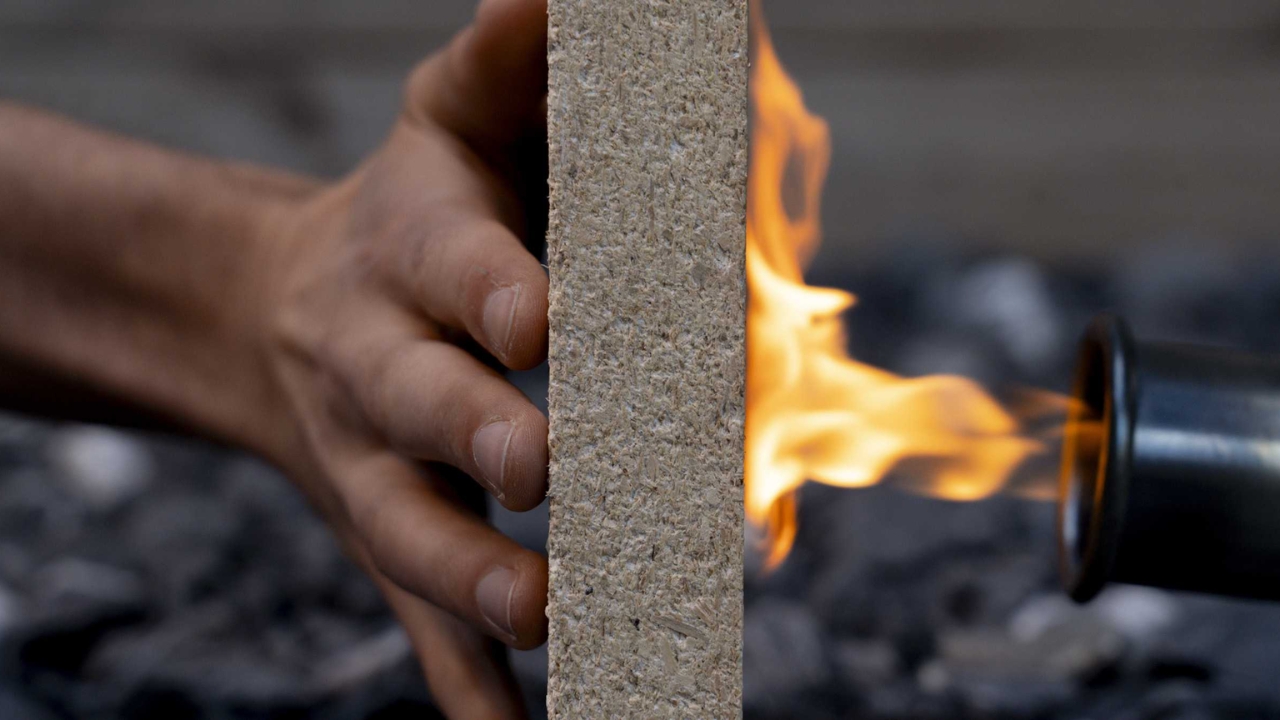
Scientists transform sawdust into fire-resistant panels, stabilize the compound with an enzyme extracted from watermelon seeds, and turn waste into promising material for construction.
-
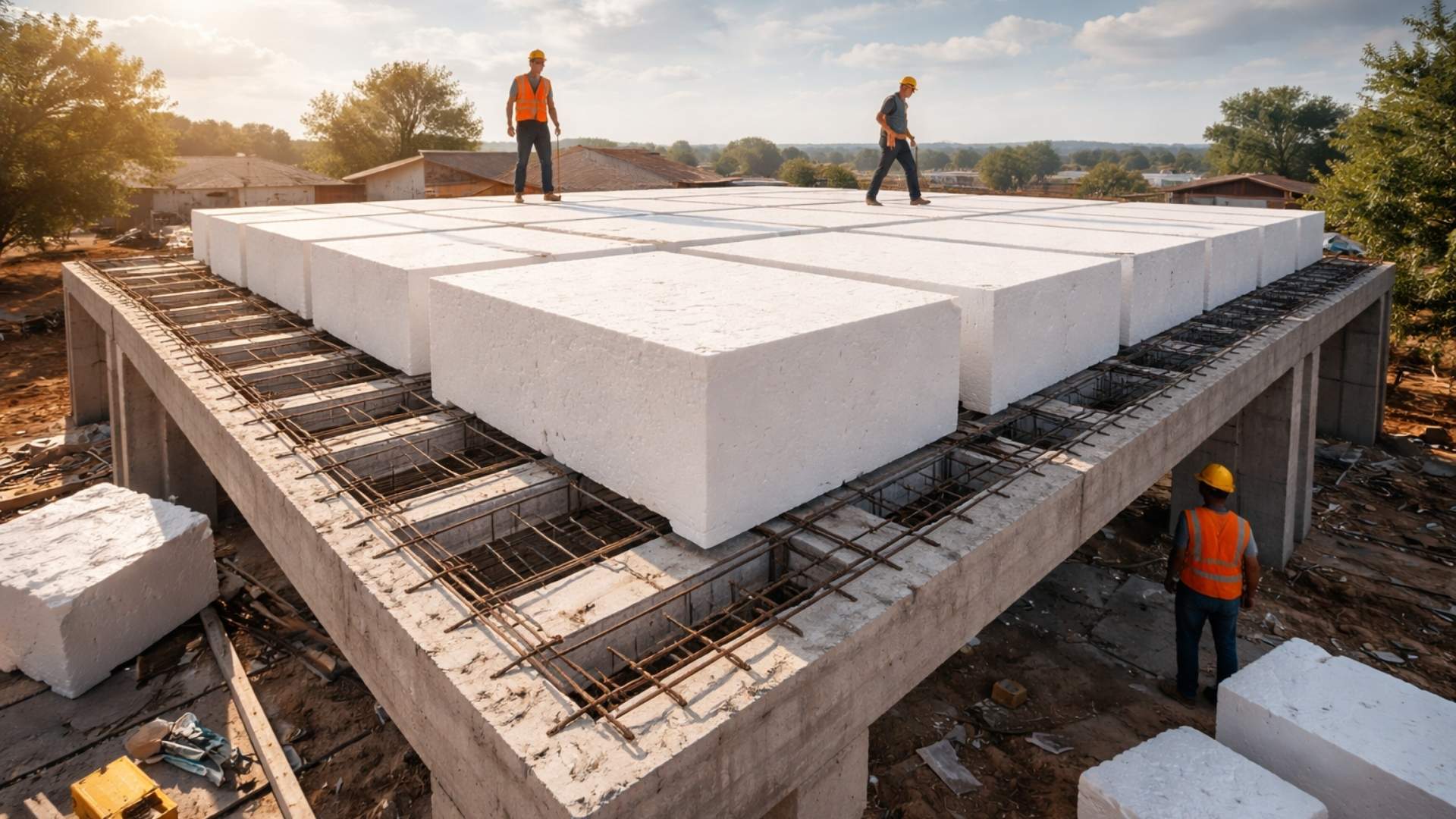
Forget concrete: architects are replacing tons of concrete with giant blocks of expanded polystyrene to build the roofs of houses and reduce structural weight by up to 50%, cut costs, improve thermal insulation, and speed up construction.
-
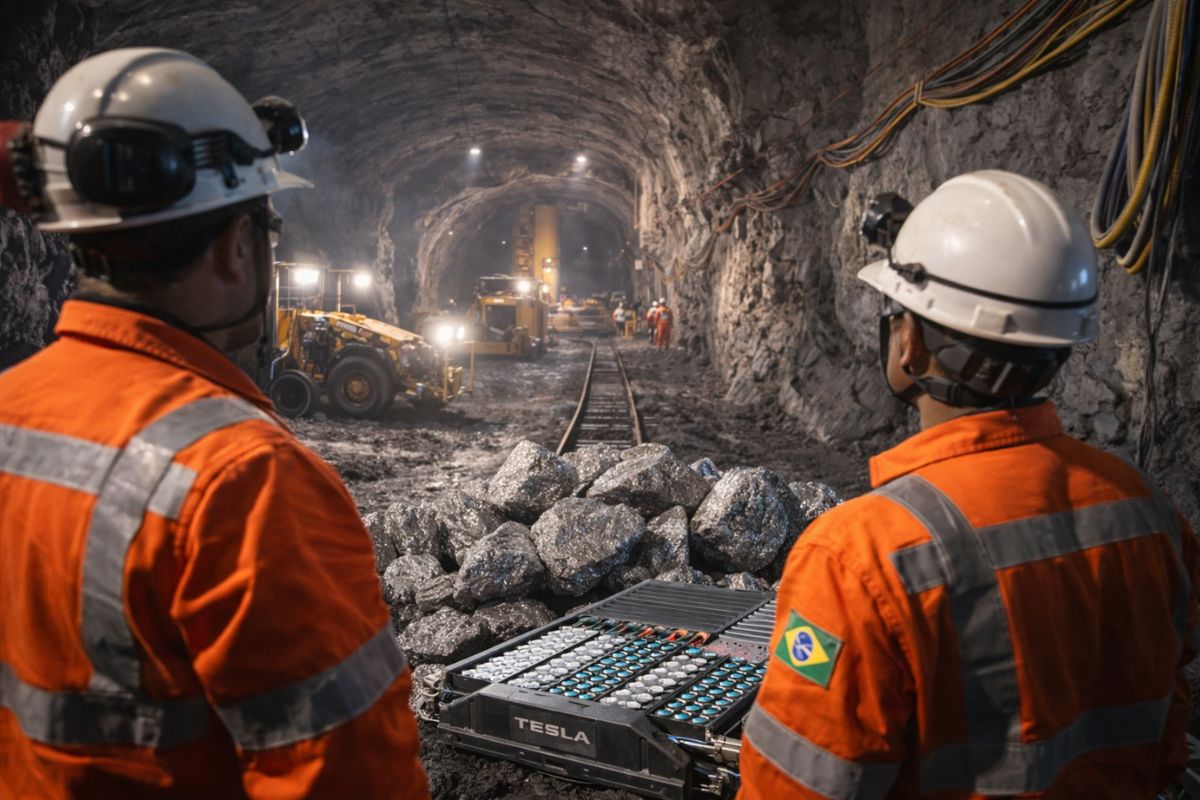
The Brazilian state enters the center of the global race for critical minerals by starting the construction of the largest underground nickel mine in Latin America, a mineral essential for electric car batteries that the entire world is competing for at this moment.
-
New CCR concrete paving technology promises roads up to 3x more durable, less maintenance, and cost reduction in Brazil.

The invisible problem of styrofoam
Expanded polystyrene (EPS), commercially known as styrofoam, has become ubiquitous in modern Brazilian life.
From the trays that package meat in supermarkets to the boxes that protect appliances during transport, through disposable cups and thermal insulation boards in construction, styrofoam is everywhere.
In Brazil, according to the company Knauf, 34,500 tons of expanded polystyrene are recycled annually, a figure that matches the rates of leading European countries. But this represents only a fraction of the styrofoam produced and discarded.
The material was created in 1941 by the German chemical industry BASF, which rediscovered a patented process originally by Swedish inventor Carl Munters.
Mass production of styrofoam
Styrofoam is produced through an expansion process where polystyrene beads are subjected to high-temperature steam, growing up to 50 times their original size. The result is a material that consists of 98% air and only 2% plastic raw material derived from petroleum.
Its properties are remarkable: density between 10-30 kg/m³, excellent thermal insulation due to closed cells filled with air, moisture resistance, extraordinary lightness, compressive strength that can vary from 7,000 to 14,000 kgf/m² (higher than many soils), and virtually infinite durability. It is precisely this last characteristic that turns styrofoam into an environmental problem.
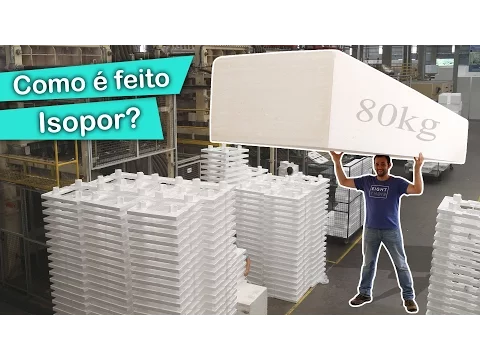

Studies indicate that styrofoam can take 400 to 500 years to decompose in the environment. Some manufacturers consider its decomposition time as indefinite, the material is not biodegradable, does not completely disintegrate, and does not disappear from the environment.
When buried in landfills, protected from sunlight and other environmental factors that could contribute to its fragmentation, styrofoam can persist for even longer periods, potentially indefinitely in its original form.
What makes styrofoam non-biodegradable is its chemical nature. It is chemically stable, and microorganisms do not have the enzymes necessary to break down its polymer chains.
The main form of styrofoam degradation is through photodegradation, a process where UV radiation from sunlight slowly makes the material brittle and causes it to disintegrate into smaller and smaller pieces, but this can take more than 500 years.
Even after this “decomposition“, the problem does not disappear. Styrofoam transforms into microplastics, small fragments that remain in the environment indefinitely, polluting ecosystems and posing a threat to wildlife and human health.
These microplastics have the ability to absorb toxic chemical compounds such as pesticides, herbicides, and heavy metals (mercury, lead), which eventually settle in rivers, lakes, and oceans.
The genius of artisanal recycling
In light of this scenario, the artisanal production technique of construction blocks with recycled styrofoam represents an elegantly simple solution to two problems: waste disposal and the need for affordable construction materials with good thermal insulation.
The process, popularized through channels like MACIEL NA REFORMA (with over 40,000 followers), demonstrates that sophisticated industrial technology is not necessary to transform waste into a useful resource. The manual technique can be performed on any construction site or backyard, using basic tools and easily accessible materials.
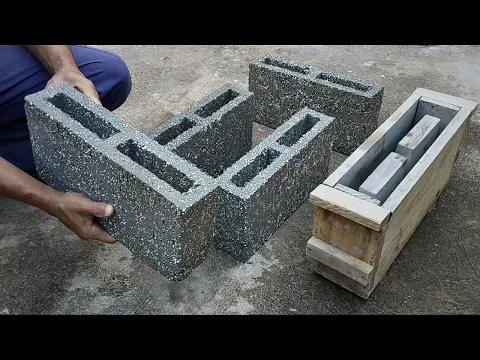
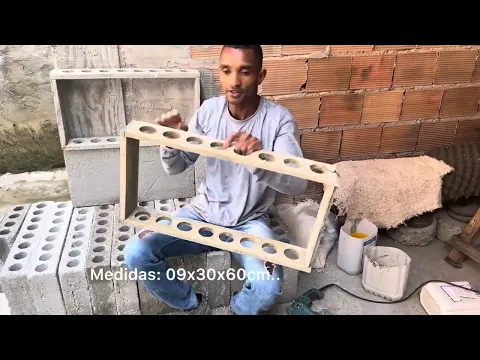
To produce blocks measuring 10x30x60 cm that weigh approximately 5.7 kg each, the recipe requires 15 liters of chopped styrofoam (4-5 large supermarket trays), 1 kg of cement, 2 kg of fine sand, 1.5 liters of water, and 50 ml of detergent or cassava starch.
The latter is the “kitchen secret” crucial, acting as a natural binder that prevents the lightweight styrofoam particles from floating in the mixture.
With one 50 kg bag of cement, it is possible to produce about 50 complete blocks. This represents an 80% savings in cement consumption compared to conventional blocks. The total cost per block ranges from R$ 0.40 to R$ 0.80, compared to traditional ceramic blocks (R$ 1.50-2.50) or concrete blocks (R$ 3.00-4.50).
Exceptional properties and performance
The most impressive characteristic is the thermal insulation capability. Walls built with these blocks can reduce internal heat by up to 80% in hot regions. In absolute terms, this translates to a reduction of 6°C in internal temperature compared to the external environment.
This superior performance compared to ceramic bricks is due to the closed cellular structure of styrofoam, where 98% of the volume consists of microscopic air pockets. Air is one of the best natural thermal insulators. When trapped in closed cells, air cannot circulate by convection, creating an effective barrier against heat transfer.
For the Brazilian Northeast, where temperatures often exceed 35°C, this reduction of 6°C represents the difference between an unbearably hot environment and a reasonably comfortable one.
This translates into energy savings with reduced use of fans and air conditioning (lowering electricity bills by up to 30-40%), housing comfort without reliance on mechanical cooling, and better health with less risk of heatstroke and dehydration.
At just 5.7 kg per unit (compared to 8-12 kg for ceramic blocks and 12-15 kg for concrete blocks), recycled styrofoam blocks significantly reduce the load on foundations.
In a 60 m² house with 2.5-meter-high walls, this represents a difference of 2-3 tons in the total weight of the structure, allowing for more economical foundations and easier handling on the construction site.
Limitations and appropriate applications
It is crucial to understand that recycled styrofoam blocks are suitable only for non-structural sealing. They cannot support significant loads and should not be used in structural walls, columns, foundations, or any application requiring high mechanical strength.
Appropriate applications include internal partition walls between rooms, closing openings in concrete or steel structures, external sealing walls in independent structure buildings, boundary walls between properties, and extensions to existing structures.
For structural use, the market offers specialized industrial EPS blocks with densities between 20-40 kg/m³ and treatment with flame retardants, designed to meet technical standards such as NBR 15575.
Measured environmental impact
Each square meter of wall built with recycled styrofoam blocks requires 12.5 blocks, equivalent to 187.5 liters of chopped styrofoam, approximately 60-75 large supermarket trays or 2-3 appliance boxes.
For a modest 60 m² house (approximately 120 m² of walls), 1,500 blocks are needed, consuming 22,500 liters of recycled styrofoam (22.5 m³), approximately 60-80 kg of expanded polystyrene diverted from landfills.
Considering that styrofoam would take 400-500 years to decompose and would eventually fragment into toxic microplastics, this immediate recycling prevents soil and water contamination for decades, prevents ingestion by animals, reduces volume in landfills, saves natural resources, and decreases CO₂ emissions.
The cement industry is responsible for approximately 8% of global CO₂ emissions. Each ton of cement produced generates about 0.9 tons of CO₂. By using 80% less cement than conventional blocks, the technique significantly reduces the carbon footprint of construction. For the 60 m² house, the savings of 2,400 kg of cement equates to ~2,160 kg of CO₂ avoided, the equivalent of a car traveling 12,000 km.
The social dimension of the technique
In Brazil, it is estimated that there are 6-7 million families without adequate housing. The housing deficit particularly affects low-income populations in the North and Northeast regions.
With material costs 40-60% lower than conventional construction and a process executable without specialized labor, recycled styrofoam blocks democratize access to dignified housing.
The production of blocks can become a source of income for recycling cooperatives, community associations, or small entrepreneurs. An artisanal producer working alone can manufacture 80-100 blocks per day, generating revenue of R$ 80-100 by selling at R$ 1.00-1.20 per unit.
The tangible process of turning waste into a useful resource has a powerful educational effect. Community projects teach the importance of recycling through practical results, circular economy, sustainable construction, and autonomy to build without total dependence on the market.
From waste to dignity
The story of recycled styrofoam blocks is the story of how human ingenuity can transform a problem into a solution.
Supermarket trays that would take 500 years to decompose, generating toxic microplastics along the way, become walls that protect families from the scorching Northeastern heat. Waste that would occupy precious space in landfills turns into homes, shelter, dignity.
Each block costing R$ 0.40 that reduces temperature by 6°C is more than just a building material. It is concrete proof that the circular economy works, that sustainable self-construction is possible, and that social transformation can begin with something as simple as mixing chopped styrofoam, cement, and cassava starch on a construction site.






Seja o primeiro a reagir!