





 Portuguese
  English
  Spanish
  4 min of reading
  0 comments


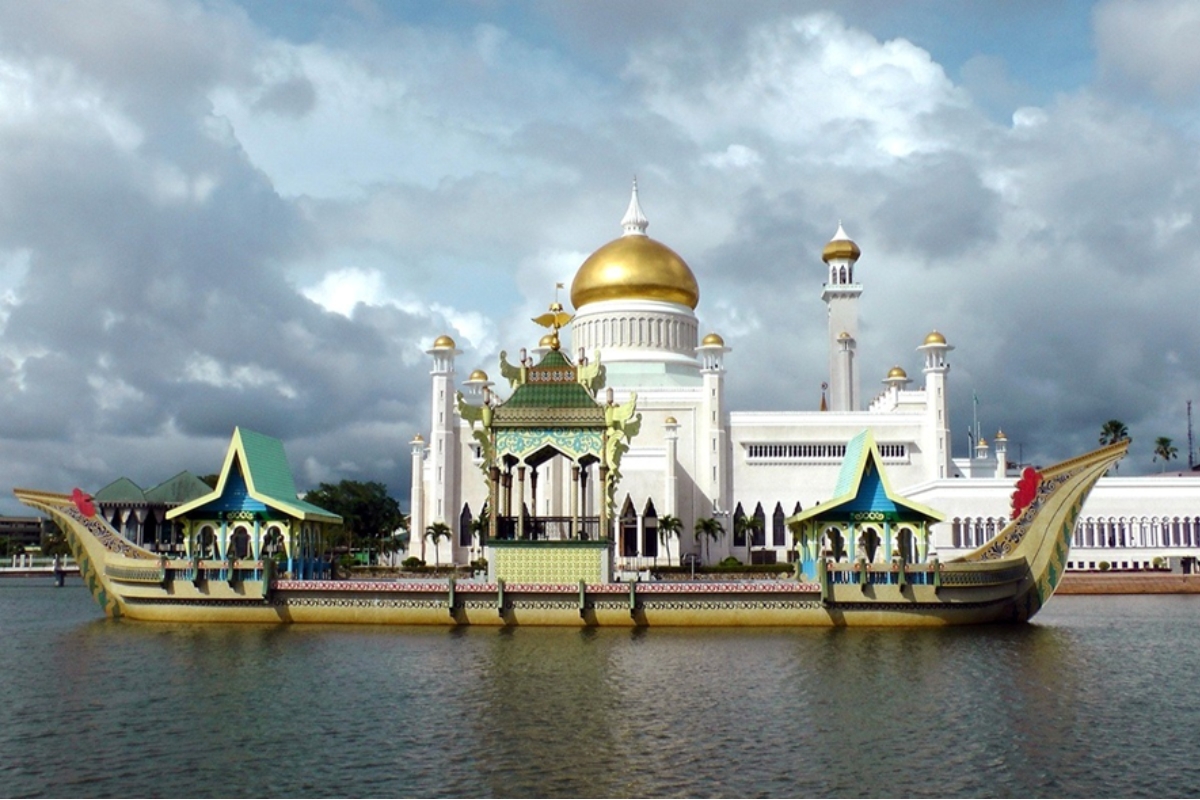
The Country Has An Abundant Subsoil Rich In Minerals And The Area Attracts Attention Due To The Quality Of Life For Its Residents In Recent Years
With just over 440,000 inhabitants and a territory smaller than many Brazilian municipalities, Brunei Darussalam ranks among the richest countries on the planet and boasts an economic model that draws attention: its citizens do not pay income tax. Located on the island of Borneo in Southeast Asia, this small sultanate built its prosperity on the intensive extraction of oil and natural gas, resources that profoundly transformed the social, political, and economic structure of the country throughout the 20th century.
The foundation of this wealth lies beneath the surface. Since the start of oil exploration in 1929, Brunei has evolved from a peripheral and underdeveloped territory to one of the nations with the highest GDP (Gross Domestic Product) per capita in the world, currently close to US$ 80,000.
Currently, oil and natural gas account for about 95% of exports and more than half of the national GDP composition, making the country highly dependent on this strategic sector. Japan, South Korea, China, and Southeast Asian countries are among the main destinations for Brunei’s energy production.
-
Lula reveals a masterstroke by Petrobras to undo a deal made by Bolsonaro, which involves the return of an important refinery that currently produces less than half of what was expected and makes Brazil dependent on international diesel.
-
A study confirms that the natural gas sector will reduce greenhouse gas emissions in Brazil by 0.5% and accelerate the energy transition by 2026.

-
Petrobras implements a severe adjustment and confirms a 55% increase in the price of aviation kerosene with a proposal for installment payments for the companies.

-
The rise in oil prices could ensure an extra revenue of R$ 100 billion for the Federal Government, indicates a recent economic study.

This constant flow of revenue has allowed the state to take on a central role in the economy and well-being of the population. In Brunei, health and education are free, the government subsidizes fuel, electricity, and part of the food, in addition to providing public sector jobs to a significant portion of the population.
The absence of income tax is possible precisely because the state primarily finances itself through oil and gas revenues, reducing the need to directly tax citizens.
Brunei Is An Absolute Monarchy And Has A Sultan

The model of government also helps explain how this structure is maintained. Brunei is an absolute monarchy, ruled by Sultan Hassanal Bolkiah, who holds the positions of head of state, head of government, prime minister, and minister of defense.
According to a report from the Brasil Escola portal, this centralization of power allows for quick decisions on strategic investments and public policies, although it also generates international criticism related to the lack of democratic openness and restrictions on civil rights.
Despite the high level of income, Brunei faces significant challenges. The strong dependence on fossil fuels makes the country vulnerable to fluctuations in the international market and global transformations in the energy matrix.
Thus, the drop in oil prices recorded at different times over the past decades has directly impacted local economic growth, leading the government to discuss strategies for economic diversification.
In recent years, the sultanate has sought to invest in sectors such as petrochemicals, logistics, high-end tourism, and Islamic financial services. The idea is to gradually reduce dependence on crude oil and add more value to energy production, as well as create new sources of revenue. Nevertheless, experts point out that the transition is slow and faces structural limitations, such as a small domestic market and a shortage of skilled labor.
Meanwhile, in social terms, the country’s wealth is reflected in high quality of life indicators. Brunei has a high HDI (Human Development Index), life expectancy above 78 years, and virtually universal basic infrastructure, with almost total access to clean water and electricity. The contrast with neighboring countries, many of which are still developing, is evident and reinforces the uniqueness of the Bruneian model.
What Is The Predominant Religion Of The Sultanate
Culturally, the national identity is strongly marked by Islam, the official religion of the state, which influences laws, customs, and daily life. At the same time, Brunei preserves local traditions and maintains historical ties with Malaysia and other countries in the region. The capital, Bandar Seri Begawan, houses most of the urban population and is home to symbols of national power and wealth, such as the imposing Omar Ali Saifuddien Mosque and the Istana Nurul Iman, considered the largest residential palace in the world.
Brunei is, therefore, a unique example of how natural resources, when managed in a centralized and strategic manner, can sustain a highly wealthy state with low tax burdens on the population. However, the country’s future will depend on its ability to adapt to a world increasingly less dependent on oil and to find new ways to maintain its prosperity in the coming decades.










Seja o primeiro a reagir!