





 Português
  Inglês
  Espanhol
  5 min de leitura
  0 comentários


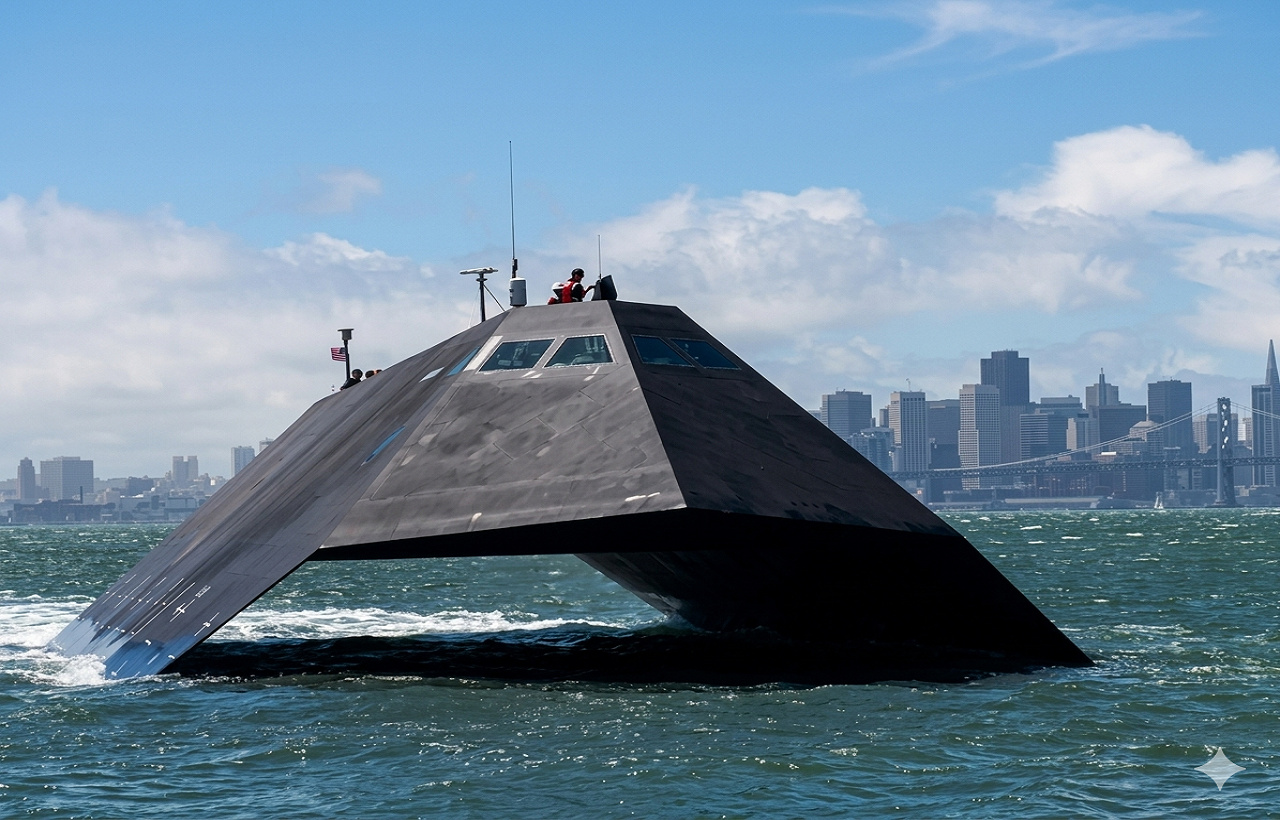
Sea Shadow, stealth ship created by Lockheed, operated invisible to radar for almost 10 years and influenced modern destroyers
The Sea Shadow (IX-529) was the first stealth ship in history. Built in 1984 by Lockheed’s Skunk Works division, the same responsible for the F-117 Nighthawk fighter, the project applied the principles of radar invisibility already used in military aviation to the maritime environment. According to official documentation from the United States Navy, the vessel had 49 meters in length, 21 meters in width, a displacement of 560 tons, and an approximate cost of 170 million dollars, operating in absolute secrecy from 1984 to 1993, before being revealed to the public and subsequently sold as scrap in 2012 for 2.5 million dollars.
Origin of the Sea Shadow stealth ship: how stealth technology came down from the air and reached the ocean
The idea for the Sea Shadow emerged in 1978 when Ben Rich, director of Lockheed’s Skunk Works, observed an unexpected phenomenon during tests with stealth aircraft models. A project photographer reported that the captured images were blurred because the angular surfaces of the prototype deflected even the light from the camera.

This observation led to the conclusion that the same principle could be applied to radar waves. If it worked in the air, it could also work in water. Initially, the proposal involved a stealth submarine, but the Pentagon dismissed this possibility. The concept then evolved into a surface ship, at which point DARPA took over the project’s funding.
-
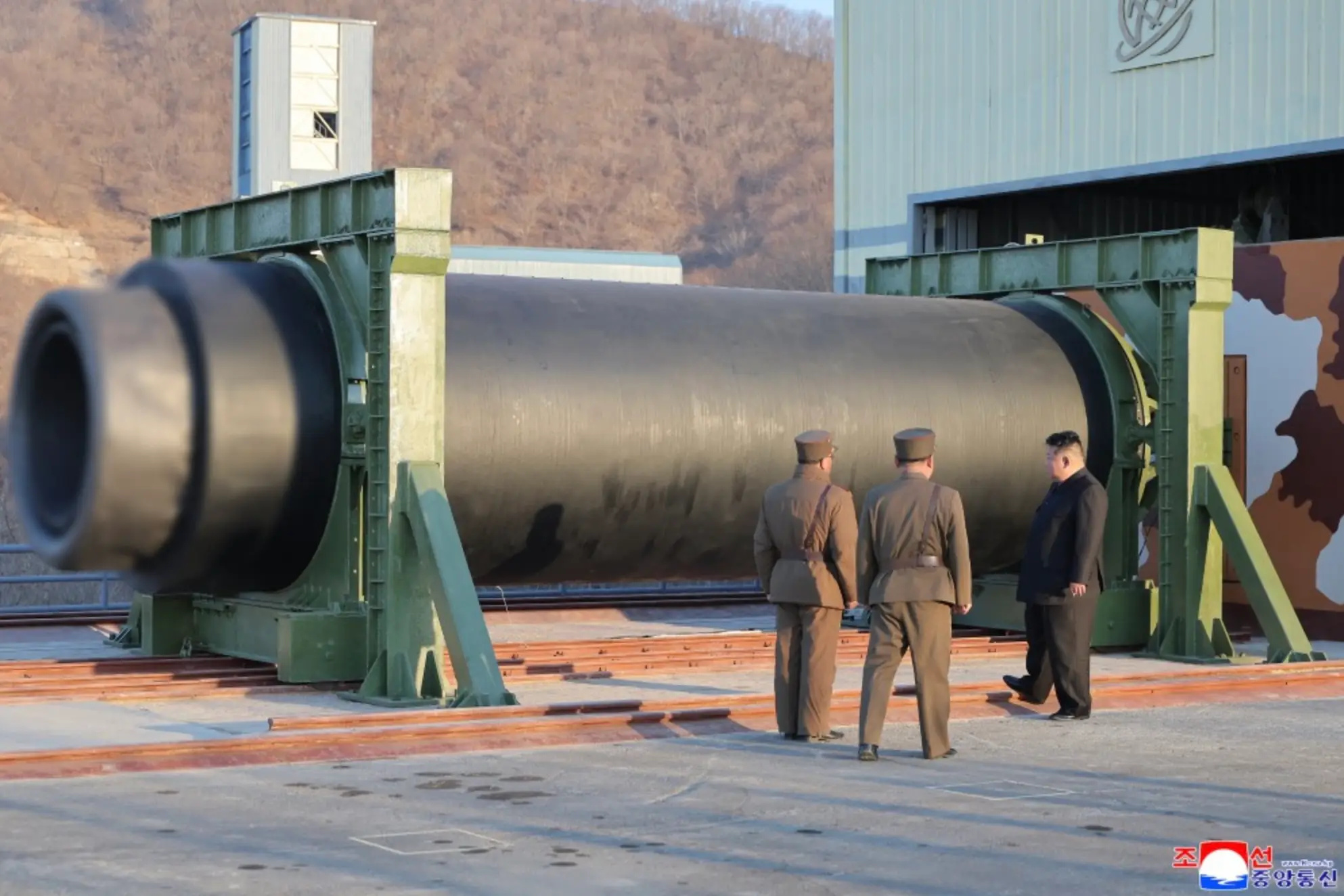
North Korea tests intercontinental range rocket with a 2,500 kN solid fuel engine supervised by Kim Jong Un and advances in a five-year strategic plan.
-
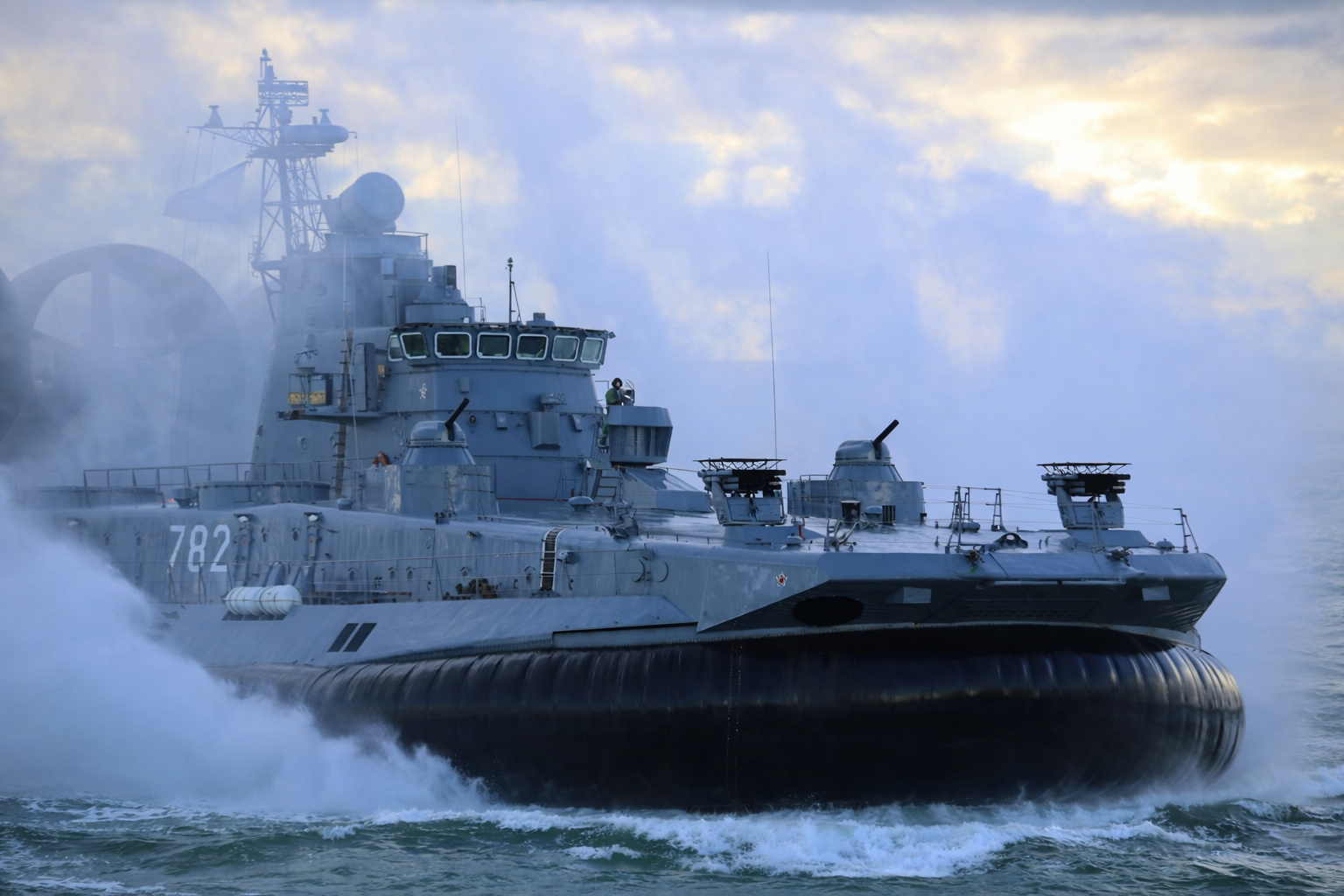
Classified as a “amphibious monster” weighing 555 tons, 57 meters long, and featuring three propellers with a diameter of 5.5 meters, the Zubr is the largest military hovercraft ever built, capable of transporting 3 tanks or 500 soldiers at speeds exceeding 100 km/h over water, ice, and sand, and China has resumed production of it to project power in the South China Sea.
-
The U.S. Army receives the first Black Hawk helicopter that can fly without pilots, be controlled by a tablet, and even land on its own during high-risk missions.

-
With 11,000 tons and sensors capable of hunting submarines at long distances, the Type 055 has become one of the most feared floating arsenals of the Chinese navy.


This transition marked the beginning of the application of stealth technology in naval engineering, creating a new paradigm in maritime warfare.
Secret construction of the Sea Shadow inside a barge used by the CIA
The Sea Shadow was not built in a conventional shipyard. Its assembly took place inside the Hughes Mining Barge HMB-1, a closed structure originally designed for Project Azorian, a secret CIA operation to recover a sunken Soviet submarine.
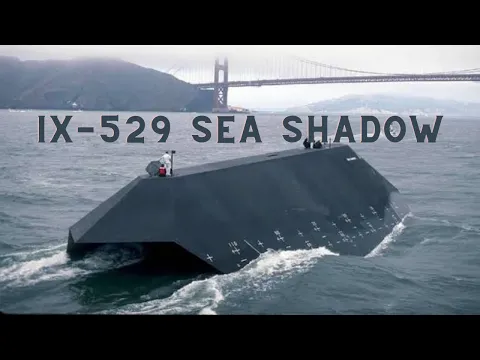

The barge simultaneously functioned as a hangar and dry dock, preventing any external observation, including by satellites. Construction took place in Redwood City, California, using hand-drawn designs, as CAD software was not available in the 1980s.
Naval engineers were recruited under absolute secrecy, and the project remained completely hidden throughout the development phase. This level of secrecy placed the Sea Shadow among the most confidential military programs ever executed.
Design of the Sea Shadow: angular hull, stealth technology, and SWATH structure
The design of the Sea Shadow was radically different from any traditional vessel. Viewed from the front, it resembled the letter A supported on two submerged, inclined hulls. From the side, its appearance directly recalled the F-117 fighter.
The vessel used the SWATH configuration, with two submerged hulls supporting the superstructure above the water. This architecture drastically reduced the contact area with the surface and, consequently, the radar signature.
The external coating employed radar-absorbing materials based on iron-ferrite, the same used in stealth aviation. The combination of angular surfaces and special materials made the Sea Shadow practically invisible to conventional detection systems.
Secret operation of the Sea Shadow: radar-invisible ship sailed only at night
During its early years, the Sea Shadow operated exclusively at night. At dusk, it was towed out of the HMB-1 barge and conducted tests in San Francisco Bay.
Before dawn, it returned to the interior of the floating hangar, remaining hidden during the day. The crew was small, composed of about ten people, and operated under strict secrecy.
With a maximum speed of approximately 13 knots and diesel-electric propulsion, the ship was neither fast nor armed. Its function was exclusively experimental. Still, it managed to drastically reduce its radar detection, becoming one of the most advanced projects of its time.
Technical problem: error in the propellers generated detectable turbulence
During initial tests, engineers identified a critical problem: the ship generated excessive turbulent wake, visible to sensors and observers.
After analysis, it was discovered that the propulsion systems had been installed backward. Correcting the error significantly reduced the turbulence.
This episode illustrates the challenges of a project developed under extreme secrecy and without conventional technical support. The Sea Shadow functioned as an experimental laboratory with real engineering limitations.
After almost a decade of operating in secrecy, the Sea Shadow was presented to the public in 1993. The geopolitical context had changed with the end of the Cold War, reducing the need for secrecy.
The ship’s futuristic appearance immediately drew attention and even inspired film productions, including a movie from the James Bond franchise. However, its operational fate would be limited.
Legacy of the Sea Shadow in naval engineering and modern stealth destroyers
Although it never entered active service, the Sea Shadow generated fundamental data for the development of modern ships.
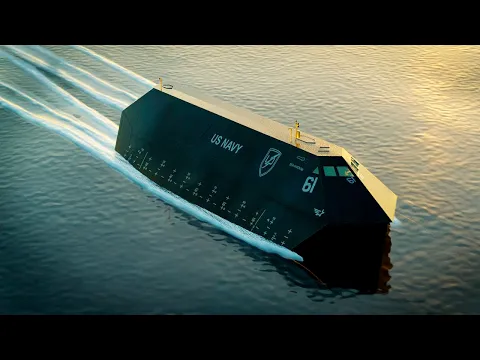
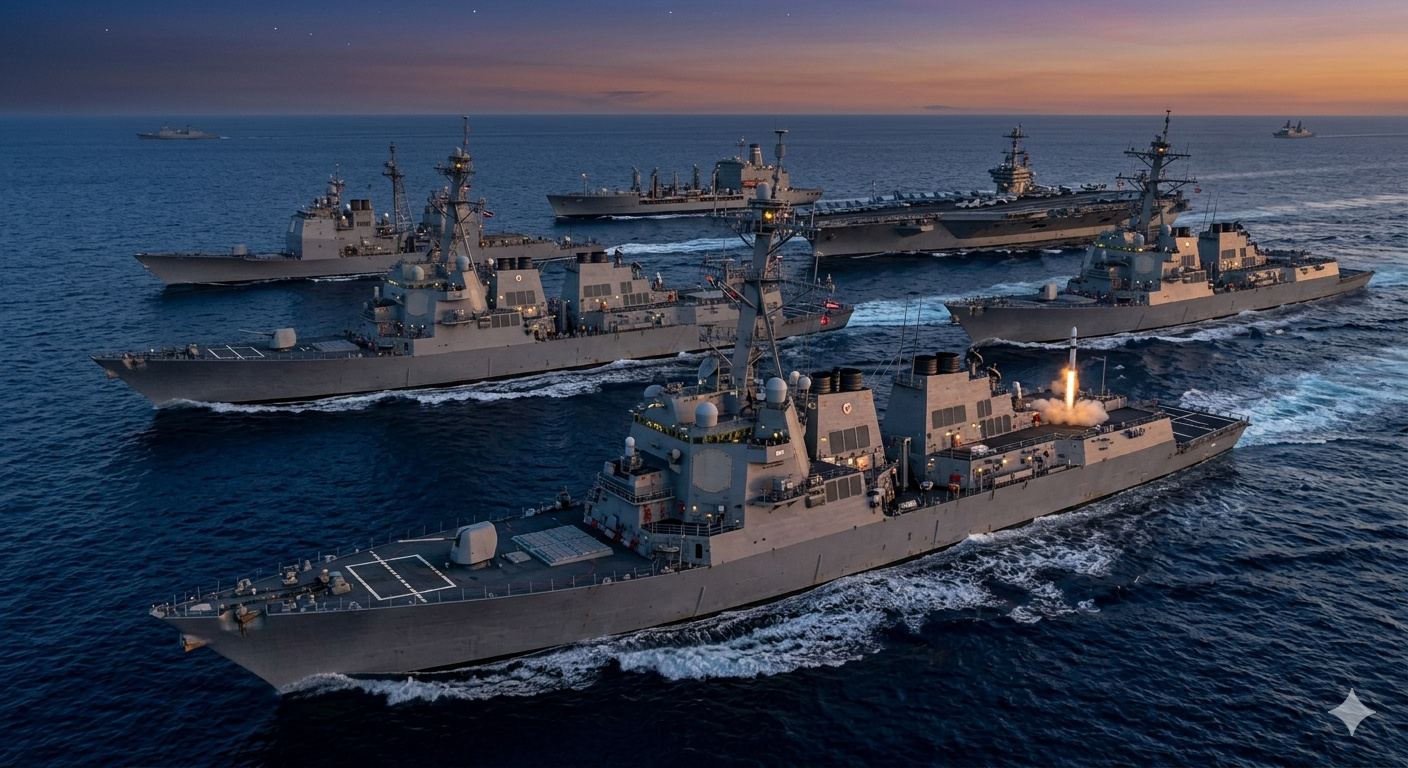
The Zumwalt-class destroyers incorporate concepts tested in the prototype, such as angular surfaces and reduced radar signature. Surveillance ships have also inherited stabilization systems derived from the design.
Additionally, noise and wake reduction technologies have been applied to submarines later on. The impact of the Sea Shadow extends across several generations of military naval engineering.
Sale as scrap: 170 million ship was dismantled for only 2.5 million
With the end of the Cold War and budget cuts, the Sea Shadow was retired. The Navy attempted to donate it to museums, but there was no interest.
In 2006, it was attempted to sell it at auction, unsuccessfully. The sale included a condition: the ship could not sail again, only be dismantled.
In 2012, it was finally sold for 2.5 million dollars and dismantled the same year. A 170 million project ended as scrap, physically concluding its existence.
The HMB-1 barge played a central role in the secrecy of the Sea Shadow. Built for Project Azorian, it had a roof designed to block satellite observation. After the CIA project ended, it was reused by the Navy as a secret shipyard. Thus, it became the only structure to house two distinct ultra-secret projects.
Reduced crew and automation: a concept that anticipated modern ships
With only ten crew members, the Sea Shadow tested automation systems that are now a strategic priority in the U.S. Navy.
Operating with reduced teams lowers costs, increases efficiency, and reduces human exposure in risk scenarios. This concept remains central to the evolution of modern naval warfare.
The Sea Shadow never participated in combat nor was it armed. It functioned exclusively as a test platform. However, its influence is visible in every modern stealth ship. Radar absorption technologies, angular design, and signature control were born or refined in this project.
Even dismantled, the Sea Shadow remains present in contemporary naval engineering, being one of the most influential projects ever developed in the military sector.






Seja o primeiro a reagir!