





 Portuguese
  English
  Spanish
  5 min of reading
  0 comments


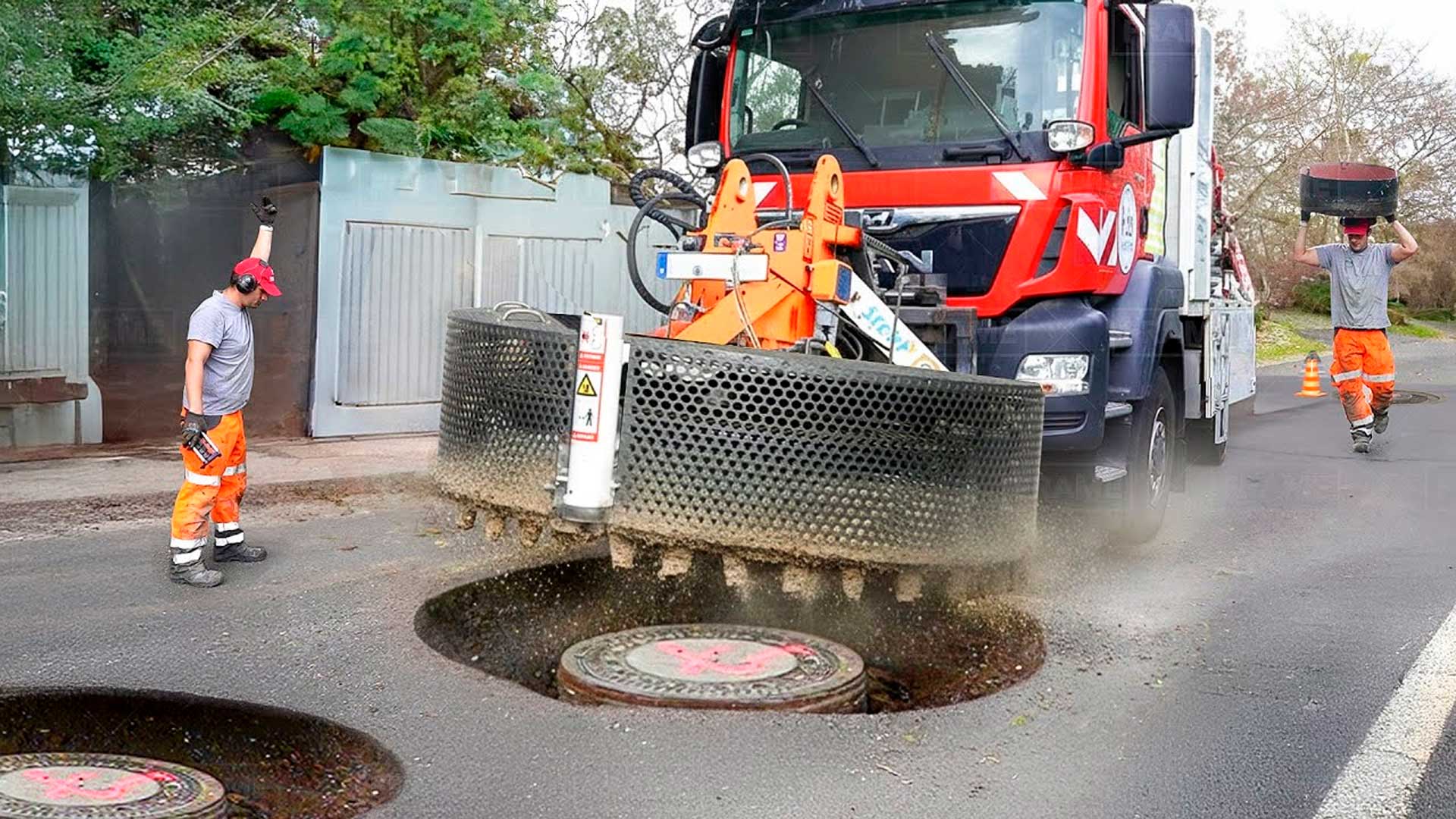
Teams In Germany Use Practical Tools And A Truck Prepared To Rehabilitate Drains And Inspection Pits Without Improvisation, Keeping The Road In Better Condition For Longer
Uneven drains, sunken or internally damaged structures are a silent problem that turns into noise on the asphalt. When the cover is below the road level, constant impacts, shaking, pavement breaks, and accident risks arise, especially for motorcycles and bicycles.
In a video from the FRAME channel on YouTube, the focus is precisely on how teams in Germany perform this type of repair with the help of a specialized truck, bringing out a set of tools and equipment aimed at keeping the roads in good condition.
The logic is simple and very much about “maintenance,” not endless construction. Instead of relying on improvised solutions on-site, the service is planned to clean, prepare, and restore areas of the inspection pit and its surroundings with well-defined steps.
-
He started running at 66 years old, broke records at 82, and is now a subject of study for having a metabolic age comparable to that of a 20-year-old, in a case that is intriguing scientists and inspiring the world.

-
Oldest tree on the planet reappears after 130 years of searches: Wattieza, 385 million years old, was 10 meters tall and had no leaves or seeds; Gilboa fossils in New York solved the mystery in 2007.

-
A 48-square-meter house assembled in hours with 4,000 bricks made of recycled plastic that does not absorb moisture, has natural thermal insulation, and costs less than 90,000 reais in a complete kit.

-
Luciano Hang revealed that Havan’s air fleet has already accumulated more than 20,000 landings, 10,000 flight hours, and 6 million kilometers traveled, and he says that without the planes, the company would never have grown so quickly.


The expected result is to reduce the street closure time and increase the quality of the finish, especially when the repair involves structure, sealing, and corrosion protection inside the pit.
Why Is The Maintenance Of Drains And Inspection Pits So Critical To Urban Infrastructure
The drain that we see on the street is, in practice, the “door” of access to an inspection pit of the drainage and sewage system, and any misalignment there usually indicates that something below is also suffering. Traffic loads, infiltration, and wear of the concrete can accelerate the problem, especially on roads with buses and trucks.
When there are internal failures, the impact goes beyond discomfort. Material losses, cracks, and points of water entry can increase deterioration and generate a snowball effect of corrective maintenance.
Technical guidelines for the rehabilitation of this type of structure emphasize that the surface needs to be clean and free of loose and fragile parts before any intervention, with the removal of deposits and unsuitable materials.
What The Specialized Truck Brings And Why It Changes The Game In Drain Repair

A concrete example of this concept of “workshop on wheels” appears in the RO-KA-TECH Journal, which reports the purchase in July 2018 of a specialized truck for mobile and automated rehabilitation of inspection pits, based on a technology called MRT.
According to the publication, the vehicle combines the necessary equipment in a 12-ton truck, designed for quick and simple application in the urban construction site.
The central point is to reduce the need to enter the pit to carry out critical steps. The report describes that the “heart” of the system is a set capable of preparing the surface and applying materials in an automated manner, which helps with productivity as well as safety on vertical walls and high-risk areas.
The publication also details operational modules, including one for automated surface preparation and another for automated application of the coating, as well as components aimed at special coatings and process control.
In practice, this means standardizing the service. Instead of each team “inventing” the method according to the street, the truck arrives with the organized process, and the operator follows a technical roadmap with less variability.
The Least Visible Part Of The Repair Is Corrosion And It Decides The Durability
Many people think that the problem with the drain is only in the asphalt around the cover. However, in sewage systems, there is a known enemy inside the pits, corrosion from biogenic sulfuric acid, which attacks concrete and surfaces in areas exposed to sewage gases.
Materials and coating systems used in this context are described by manufacturers in the industry as suitable for sewage pits exposed to this type of corrosion, focusing on chemical resistance and adherence to the mineral substrate.
This detail helps to understand why the surface preparation step is treated as decisive. If there are loose parts, residues, or incompatible layers, the chance of coating failure increases, and the “pretty” repair on the outside runs into problems again in a short time.
How Long Does A Well-Done Repair Last And Why Does This Count For Cities
The cost of the repair should not be measured only by the day of the work but by the time until the next intervention. A technical guide from the Rohrleitungssanierungsverband, updated in January 2020, points to typical average lifespan ranges according to the type of solution, with coatings in the range of 10 to 20 years and coatings for “lining” in the range of 30 to 50 years, depending on the material and conditions.
The same document emphasizes that repairs tend to maintain the expected lifespan, while renovations can extend that lifespan more significantly, as long as requirements, quality assurance, and testing are met.
This difference helps explain the appeal of mechanized and standardized solutions. If the truck and the method increase the quality of preparation and application, the municipality buys less “return in six months” and more “resolution per cycle.”
In the context of the FRAME video, the communicated idea is that technology and the organization of the service make the repair more predictable and reduce the time the street needs to be partially blocked.
In Brazil, where uneven drains often last weeks or months until corrected, this type of operation draws attention because it mixes urban maintenance, sanitation, and logistics in one package.
In your municipality, do you think the main obstacle to a service at this level is a lack of investment, a lack of planning, or a lack of accountability for quality and durability? Leave a comment saying if you’ve ever seen a “patch” on a drain that worsened the street instead of truly solving it.








-

Uma pessoa reagiu a isso.