





 Portuguese
  English
  Spanish
  4 min of reading
  0 comments


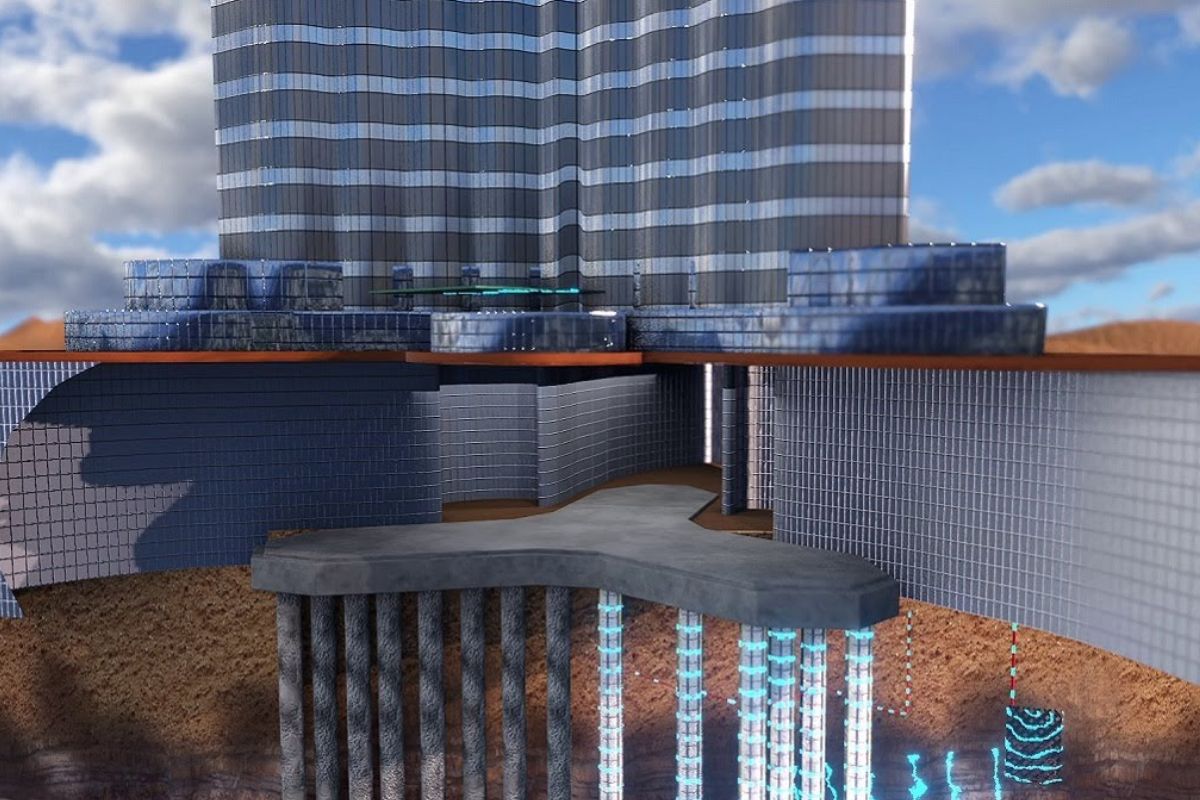
Under the Desert of Dubai, the Burj Khalifa Rests on a High-Performance Foundation That Combines Deep Piles, Continuous Concreting, and Electrically Assisted Cathodic Protection. It Is This Hidden Engineering That Allows the Burj Khalifa to Withstand Winds of 240 km/h and Maintain Structural Integrity for Decades.
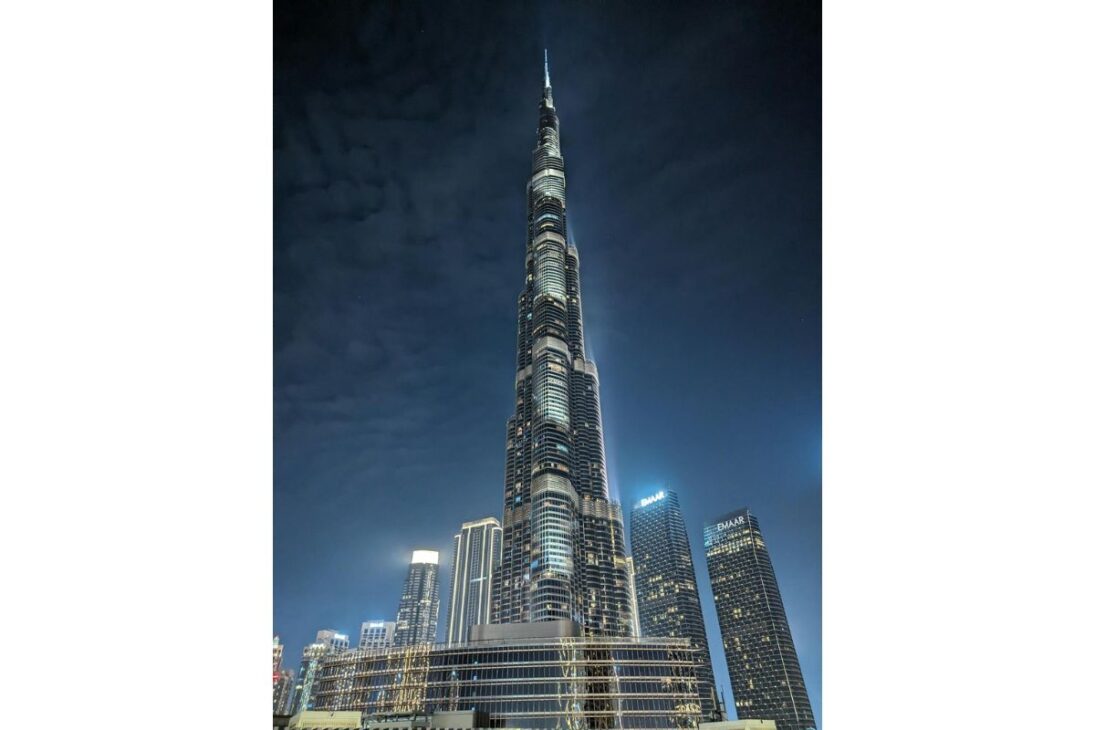
The Burj Khalifa has become a global reference not only for its height but also for the foundation solution applied on loose sand and weak sedimentary rocks. The skyscraper’s base was designed to limit settlement and dissipate extreme wind forces, ensuring safe behavior even in high-intensity sandstorms.
At the heart of the project, the Burj Khalifa utilizes a combination of a reinforced concrete raft and a set of deep piles. The operation requires continuous electrical power to keep the cathodic protection system active and prevent rebar corrosion due to saline groundwater critical condition in a coastal environment.
Hostile Terrain and the Decision for Friction Piles
The subsoil of Dubai is predominantly loose sand and weak sedimentary rocks, without a “hard stratum” at the surface to support heavy loads.
-
He started running at 66 years old, broke records at 82, and is now a subject of study for having a metabolic age comparable to that of a 20-year-old, in a case that is intriguing scientists and inspiring the world.

-
Oldest tree on the planet reappears after 130 years of searches: Wattieza, 385 million years old, was 10 meters tall and had no leaves or seeds; Gilboa fossils in New York solved the mystery in 2007.

-
A 48-square-meter house assembled in hours with 4,000 bricks made of recycled plastic that does not absorb moisture, has natural thermal insulation, and costs less than 90,000 reais in a complete kit.

-
Luciano Hang revealed that Havan’s air fleet has already accumulated more than 20,000 landings, 10,000 flight hours, and 6 million kilometers traveled, and he says that without the planes, the company would never have grown so quickly.


The designers assessed that an isolated raft would suffer from excessive settlements.
The solution required long piles working primarily through lateral friction, anchored to depths comparable to the height of a ten-story building.
This arrangement allows the soil friction forces to resist the tower’s self-weight and dynamic wind increments, reducing vertical displacement to safe levels.
Loading tests on test piles were conducted for over six months at 23 points to calibrate design parameters and confirm the system’s capacity.
Heavy Concreting in Extreme Climate
The high temperatures of Dubai imposed a nighttime concreting plan, with use of ice in the mix to control the hydration heat and avoid thermal shrinkage.
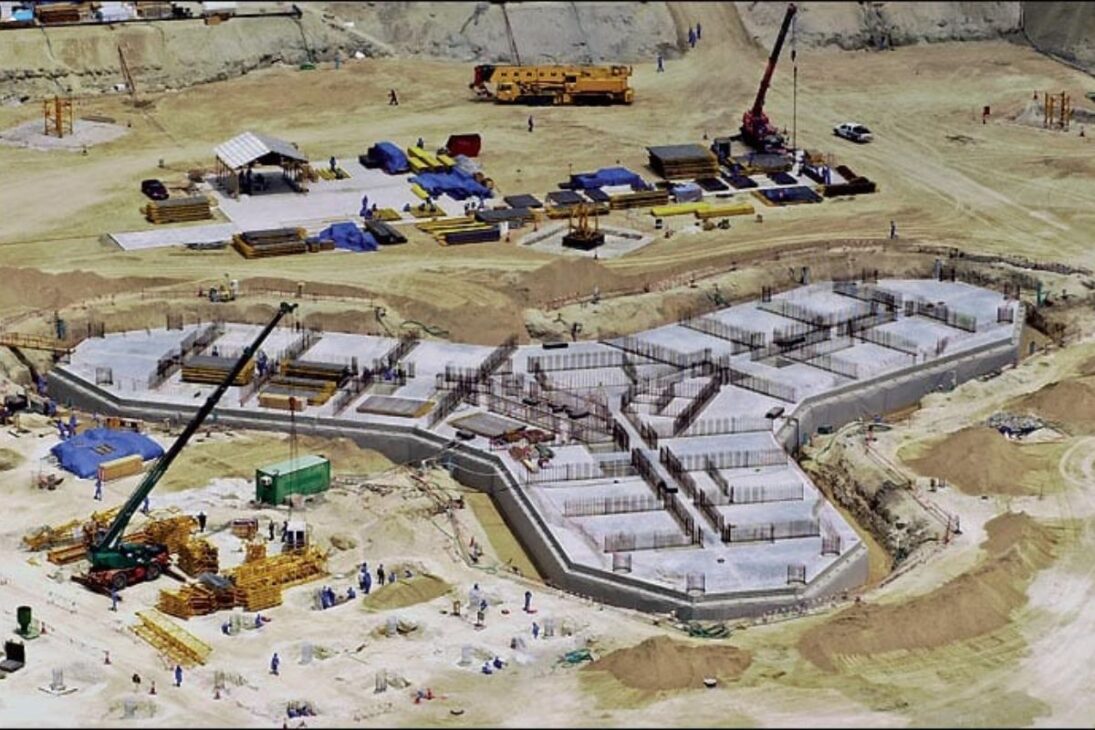
The raft was launched in four 24-hour campaigns, ensuring continuity and performance of the mass.
In the deep pile borings, excavation stability was maintained with drilling fluid of higher density than the groundwater.
Next, a temporary casing and the cylindrical rebar were installed, concreting via tremie with SCC C60 (self-compacting concrete), a solution that removes the need for mechanical vibration and ensures homogeneous filling at great depth.
Wind, Shape, and Settlement Control
The Burj Khalifa is designed for winds of up to 240 km/h. In foundations, this translates to high moments and horizontal forces that require optimized rigidity and geometry.
The “raft + piles” system distributes requests and limits rotations, with total settlement on the order of a few centimeters after the tower’s completion.
To maximize performance under wind actions, the pile density was intensified in the most requested areas, improving displacement control and preserving the integrity of the superstructure during extreme events.
Brackish Water and the Requirement for Continuous Electricity
The presence of brackish groundwater creates an aggressive environment for the steel of the piles and the raft.
To mitigate the risk, the project adopted cathodic protection with impressed current: the rebar acts as the cathode, while a titanium mesh acts as the anode.
A controlled continuous current displaces the electrochemical process and inhibits steel corrosion.
This system depends on electricity 24 hours a day. Insufficient current reduces protection; excessive current can lead to hydrogen embrittlement of the rebar.
Therefore, monitoring and fine-tuning are continuous, ensuring electrochemical balance and foundation longevity.
Execution Under Control and Performance Validation
The design team conducted rigorous load testing and geotechnical monitoring to validate calculation hypotheses and mitigate subsoil uncertainties.
The combination of field measurements and structural modeling adjusted global stiffness parameters, ensuring compatibility between the foundation and the tower.
The practical result is a redundant and robust system: if soil quality varies locally, the set of piles and the raft redistribute forces, maintaining behavior within design limits even in transient situations, such as severe wind gusts.
The Role of Detailing and Maintenance


The durability of the Burj Khalifa depends on meticulous detailing of rebar, coverings, joints, and drainage systems, as well as the maintenance plan for the cathodic system.
The scheduled replacement of anode components over the years is part of the lifecycle and preserves corrosion protection.
In parallel, periodic inspections monitor parameters such as electric potential, medium resistivity, chloride levels, and moisture, allowing for preventive interventions before any significant degradation occurs.
Projects on saturated sandy soils can achieve world-class performance as long as they combine extensive geotechnical research, controlled concreting, electrochemical protection systems, and real-time monitoring.
The foundation engineering of the Burj Khalifa demonstrates that the limit is not the soil itself, but the precision with which each variable is controlled throughout the lifecycle.
In your assessment, is the requirement for continuous electricity for cathodic protection in deep foundations an acceptable cost to ensure durability in skyscrapers like the Burj Khalifa?









-

Uma pessoa reagiu a isso.