





 Portuguese
  English
  Spanish
  4 min of reading
  0 comments


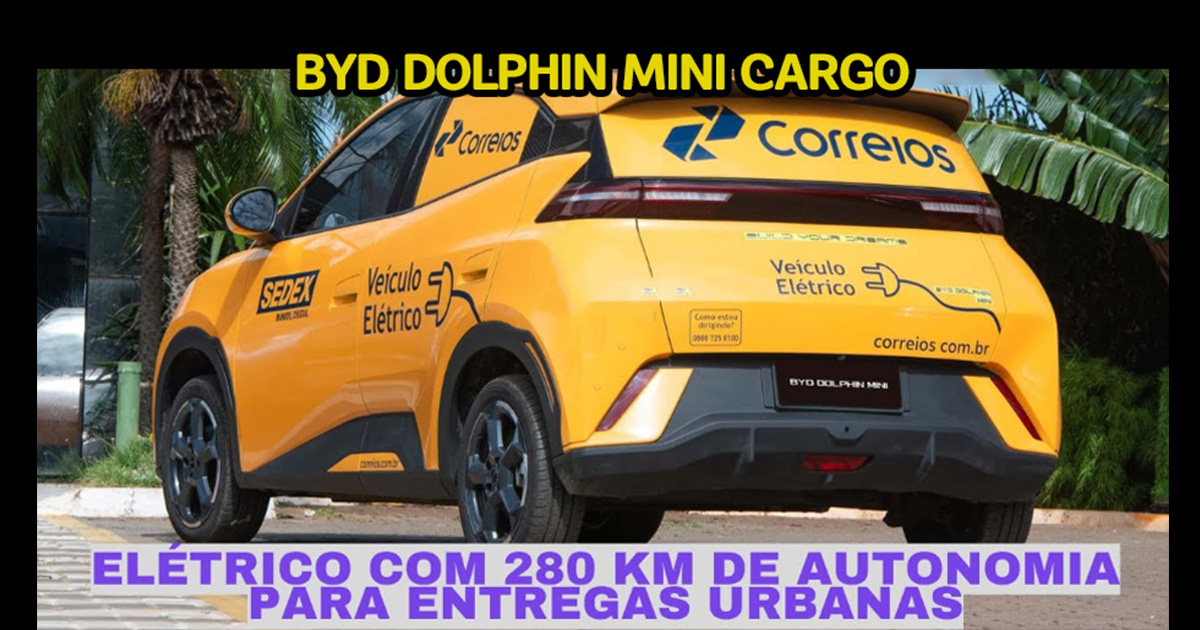
Chinese Giant BYD Expands Its Presence in Brazil with a New Electric Model Promising to Transform Urban Logistics and Attract Delivery Companies Focused on Sustainability and Efficiency. Learn How This Innovation May Impact the Logistics Sector.
BYD, a leader in the electric vehicle market in Brazil, has just launched an adapted version of one of its most popular models, the Dolphin Mini, now aimed at urban transport of small loads.
Named Dolphin Mini Cargo, the model arrives in the country as a 100% electric solution for quick deliveries, focusing on logistics companies, e-commerce, and technical services.
With a range of up to 280 km and a payload capacity of 289 kg, the new utility vehicle from the Chinese brand aims to primarily meet last-mile delivery demands, a segment that has rapidly grown with the advancement of digital commerce.
-
These living root bridges and ladders are over 700 years old and help indigenous people survive in one of the rainiest regions in the world.

-
The car stored for 38 years: when opening the barn door, what appears is breathtaking and looks like a scene from a movie!

-
From sertanejo star to international investor: Ana Castela invests millions in a mansion in the USA, creates a themed accommodation in Orlando, and shows that the “boiadeira” also wants to grow away from the stage.

-
The 10 most stunning motorhomes in the world: a $3 million trailer with a rooftop nightclub and garage for a Ferrari, “palaces on wheels” with Italian marble, private cinema, and five-star hotel luxury for billionaires.

The Cargo version’s main differentiator is the removal of the rear seat, which frees up a useful space of 2.1 m³ that is fully optimized for transport.
Successful Adaptation
The Dolphin Mini Cargo was developed based on the Dolphin Mini, a compact hatchback from BYD that is already popular among urban consumers.
The new version, however, is aimed at commercial fleets and companies seeking to reduce carbon emissions in their daily operations.
According to the manufacturer, the main focus is on making urban mobility more sustainable, quiet, and efficient.
Although visually similar to the traditional version, the Mini Cargo delivers a completely distinct proposal.
Internally, the space for rear passengers has been eliminated to make way for a flat and protected area, ideal for transporting light goods.
In addition, the model features structural adjustments to support intensive use in daily corporate operations, such as reinforcements in the suspension and a braking system adapted to the new load proposal.

Sustainability as a Market Strategy
BYD’s bet on the electric light commercial vehicle segment is strategic.
According to data from the Brazilian Electric Vehicle Association (ABVE), Brazil saw a growth of over 90% in the sales of electrified vehicles between 2023 and 2024, with a focus on corporate fleets.
The trend is driven by tax incentives, municipal laws encouraging clean vehicles in urban areas, and the growing demand for sustainable practices in the logistics sector.
In this context, the Dolphin Mini Cargo appears as a viable and competitive option for companies looking to embrace the energy transition without losing operational efficiency.
Partnership with the Postal Service
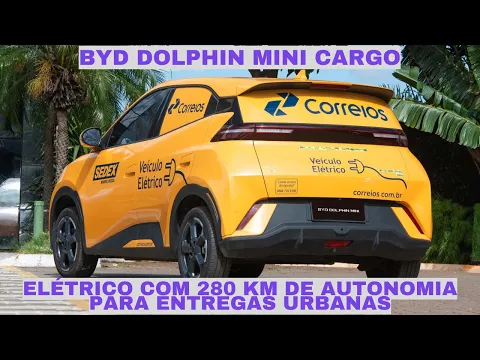
One of the first models presented by the brand was customized for the Postal Service, a state-owned company responsible for much of the package logistics in Brazil.
The vehicle, fully wrapped with the company’s visual identity, had its rear window replaced with an opaque area featuring the official logo, optimizing the security of the transported goods.
The partnership with the Postal Service highlights the potential of the Dolphin Mini Cargo as an official solution for large fleets, especially in urban environments where space is limited and environmental restrictions are becoming increasingly stringent.
Expansion of the Commercial Electric Line
In addition to the Dolphin Mini Cargo, BYD has been expanding its line of vehicles aimed at sustainable transport, including electric forklifts and the eT5 truck.
The latter is aimed at transporting larger loads and has already been tested by medium and large companies in logistics centers in the Southeast and South of the country.
The introduction of vehicles such as the eT5 and the Mini Cargo strengthens BYD’s presence in the electric mobility sector for companies, a segment that, until recently, was dominated by fossil fuels.
Price, Arrival Forecast, and Expectations
Although it has not yet disclosed the official price of the Dolphin Mini Cargo in Brazil, the expectation is for the value to be below R$ 150,000, which could represent an excellent cost-benefit ratio for fleet owners looking to electrify their operations.
The official arrival at dealerships is expected to occur in the first half of 2025, initially in major capitals like São Paulo, Belo Horizonte, Rio de Janeiro, and Curitiba.
The company plans to expand sales as demand and charging infrastructure grow in the country.

China Keeping an Eye on Brazil
BYD’s movement is part of a larger offensive by Chinese automakers in the Brazilian market.
With its own incentives and an aggressive pricing and innovation policy, brands like GWM, Chery, and BYD itself have been gaining ground in a landscape once dominated by traditional giants like Volkswagen, Fiat, and Chevrolet.
Currently, BYD leads the electric and hybrid segment in Brazil, with significant growth since the beginning of its local operations.
In 2024, the company surpassed European and Japanese rivals, consolidating itself as a benchmark in automotive innovation and sustainability.
The Future of Urban Deliveries
The Dolphin Mini Cargo proposal represents a new chapter for Brazilian urban logistics.
With compact dimensions, zero pollutant emissions, and reduced operational costs, the model could revolutionize deliveries in large centers, where agility and sustainability are strategic differentiators.
Moreover, investment in vehicles like this aligns with a global movement towards decarbonizing fleets, especially in countries that have committed to environmental targets under the Paris Agreement.
Do you believe that compact electric vehicles can replace traditional vans in urban deliveries in Brazil? Share your opinion below!







-

Uma pessoa reagiu a isso.