





 Portuguese
  English
  Spanish
  4 min of reading
  0 comments


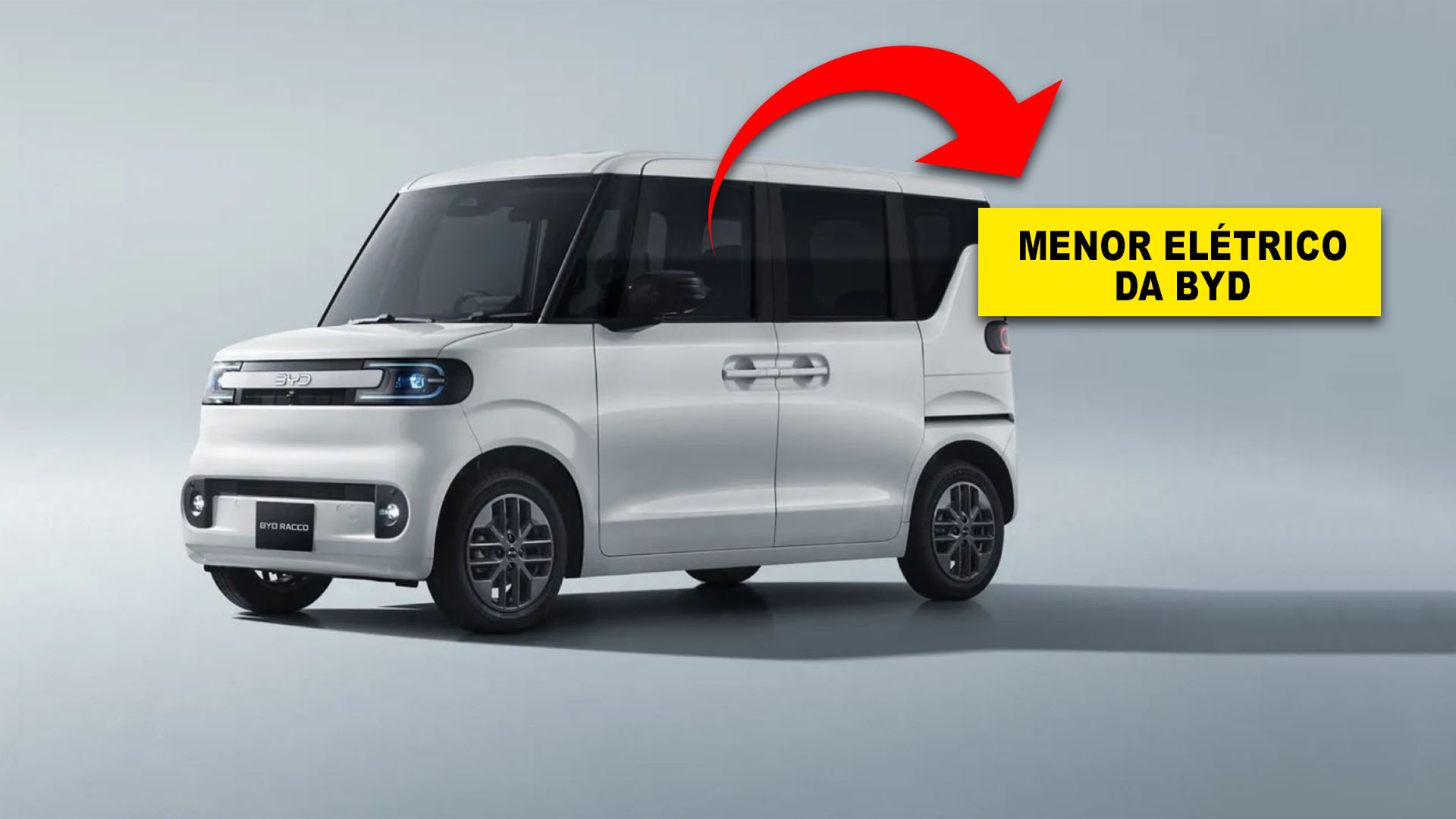
Electric Minicar Aims for Urban Use and Debuts as BYD’s First Kei Car, Unveiled at the Japan Mobility Show 2025 in Tokyo.
The BYD Racco was revealed at the Japan Mobility Show in Tokyo, with a 100% electric proposal and focusing exclusively on the Japanese market. The debut reinforces the brand’s local strategy to compete in a territory dominated by Japanese automakers.
The kei car from BYD seeks to meet the strict rules of the segment and the narrow streets of the country. The promise is to deliver accessible urban mobility, with low operating costs and compact dimensions, targeting drivers in dense cities and older neighborhoods.
The arrival of the Racco comes as Japan revises subsidies for electric vehicles and discusses competitiveness against Chinese brands.
-
The car stored for 38 years: when opening the barn door, what appears is breathtaking and looks like a scene from a movie!

-
Fiat works miracles in the Brazilian market, lowers the price of its 0 km hatch to R$ 69,990, reestablishes the model as the cheapest car in the country, and reignites the battle against Kwid and C3.
-
Chevette with cooking gas: How the gas cylinder ends up being used in cars clandestinely and why this makeshift solution can result in leaks, explosions, damaged engines, and seized vehicles.

-
Fiat launches the new 2027 Toro hybrid with 48V, 176 hp, an electric motor of 15.5 hp, a 0.85 kWh battery, up to 7% fuel savings, 8% fewer emissions, and possible exemption from IPVA.

The move pressures traditional rivals and could accelerate local mini EV projects aimed at short trips.
What Is a Kei Car in Japan: Rules, Benefits, and Urban Focus
Kei cars are lightweight vehicles with fixed limits: up to 3.40 m in length and 1.48 m in width. Legislation also restricts engines to 660 cm³ and about 64 hp, which reduces taxes and insurance for owners in Japan.
Because of the tax package and size, this format dominates dense areas and narrow streets. The focus is urban use, small parking spaces, and low maintenance costs, key factors for families and elderly people who avoid larger cars.
Since 1998, the current measures define the category. Manufacturers adjust design and equipment to stay within the standard without losing practicality. This is why many kei cars resemble minivans with high ceilings and smart interiors.
BYD Racco Numbers: Battery, Range, and Dimensions Designed for the City


The Racco uses a 20 kWh battery and claims a range of 180 km in the WLTC cycle, sufficient for daily urban routes. The platform accepts DC fast charging of up to 100 kW and adopts a heat pump for thermal efficiency in cold weather.
The design follows the kei standard: straight lines, high roof, and generous glass area. There are LED headlights and taillights and sliding rear doors, a solution that facilitates access in tight parking spaces and slopes, common in Japanese cities.
By meeting the segment’s dimensions, the Racco effectively becomes the most compact BYD. The strategy is to prioritize lightness to extract range with a small battery, reducing price and weight compared to larger electric vehicles.
Price, Launch, and Positioning in the Japanese Market
BYD indicates a price of 2.6 million yen for the Racco, a value that places it close to the Nissan Sakura and below imported compacts. A direct conversion suggests something around R$ 97 thousand, without local taxes and currency fluctuations.
Reservations in Japan are expected for the summer of 2026, with sales focused only in the country. The brand is expanding its network and betting on lean production to enter the right segment, instead of adapting global cars to local standards.
The positioning aims for low total ownership costs and intense urban use. With a simple comfort package and four seats, the Racco accommodates short trips and reduces charging time, a critical point for Japanese consumers.
Direct Competitors: Nissan Sakura, Honda N-Box, and Suzuki Spacia
The Nissan Sakura dominates the kei electric niche and serves as a reference in price and range. The Honda N-Box leads the overall kei market with around 200,000 units annually, reinforcing the strength of local brands.
To compete, BYD bets on aggressive pricing and useful features, not superfluous ones. The focus on fast charging and efficiency may attract those using the car in the neighborhood, while rivals defend networks and tradition, relevant trump cards for Japanese consumers.
If the price is close to that of the Sakura and the range delivers as promised, the Racco will have a convincing entry point. The battle will be for trust and service, areas where Japanese dealerships are historically strong.
Impact on Brazil and the Industry
For Brazil, the Racco does not change offerings in the short term. Kei cars are rarely exported and depend on specific size and power regulations, which are not easily applicable here. The project is designed for circulation and taxation in Japan.
Global relevance lies in the strategic signal. By creating a native product, BYD shows a willingness to compete on the competitor’s turf. This could accelerate local mini EVs and push prices down, even in segments above kei.
Those looking for urban electric vehicles here will continue to see compact options like the Dolphin Mini, which prioritize cost per kilometer. The lesson from the Racco is how lightness and efficiency can extend range with small, affordable batteries.
Do you think the Racco has the stamina to win over preferences for local brands in Japan? Is the price worth the slim range of 180 km? Comment below if you would buy a similar electric kei car in Brazil or if this format does not make sense here.








Seja o primeiro a reagir!