





 Portuguese
  English
  Spanish
  5 min of reading
  6 comments




BYD Hybrid Sedan Registered in Brazil Promising Up to 2,100 km of Total Range, Electric Motor of Up to 217 hp and Price Below the King, Expanding the Brand’s Strategy in the Mid-Size Electrified Segment.
A BYD registered the sedan Qin Plus with the National Institute of Industrial Property, a move that paves the way for a more affordable model than the King and promises a combined range of up to 2,100 km in the Chinese CLTC cycle.
Positioned to compete with Toyota Corolla and similar models, the sedan uses the brand’s plug-in hybrid system and, in the more powerful versions, features a motor of up to 217 hp.
Registration with INPI and Positioning in the Brazilian Market
The industrial design filing with the INPI is the standard procedure before a launch and does not, by itself, mean immediate sales will start.
-
The car stored for 38 years: when opening the barn door, what appears is breathtaking and looks like a scene from a movie!

-
Fiat works miracles in the Brazilian market, lowers the price of its 0 km hatch to R$ 69,990, reestablishes the model as the cheapest car in the country, and reignites the battle against Kwid and C3.
-
Chevette with cooking gas: How the gas cylinder ends up being used in cars clandestinely and why this makeshift solution can result in leaks, explosions, damaged engines, and seized vehicles.

-
Fiat launches the new 2027 Toro hybrid with 48V, 176 hp, an electric motor of 15.5 hp, a 0.85 kWh battery, up to 7% fuel savings, 8% fewer emissions, and possible exemption from IPVA.

Nonetheless, it signals BYD’s intention to expand its sedan family in the country with a product below the King in price and content.
This strategy aligns with the brand’s offensive in Brazil, which has been occupying market segments with a hybrid and electric portfolio in different sizes and price ranges.
Visual of the Dynasty Line and Mid-Sized Sedan Footprint
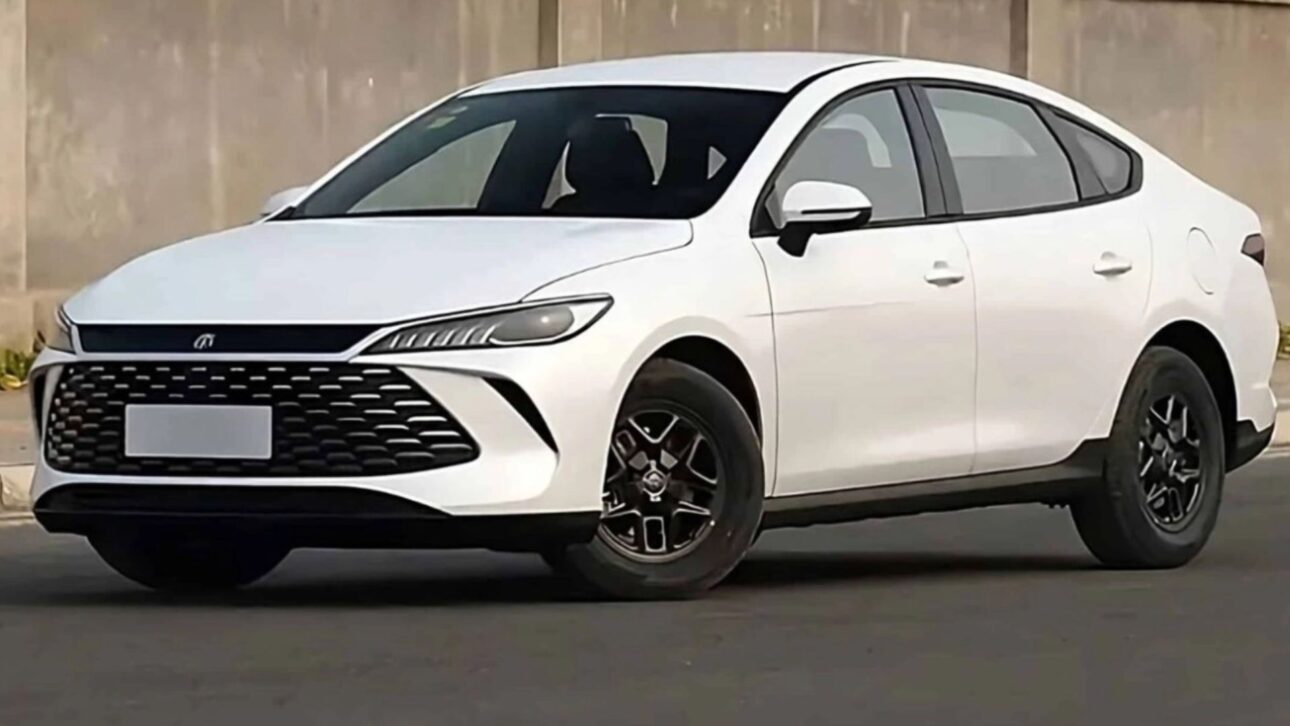
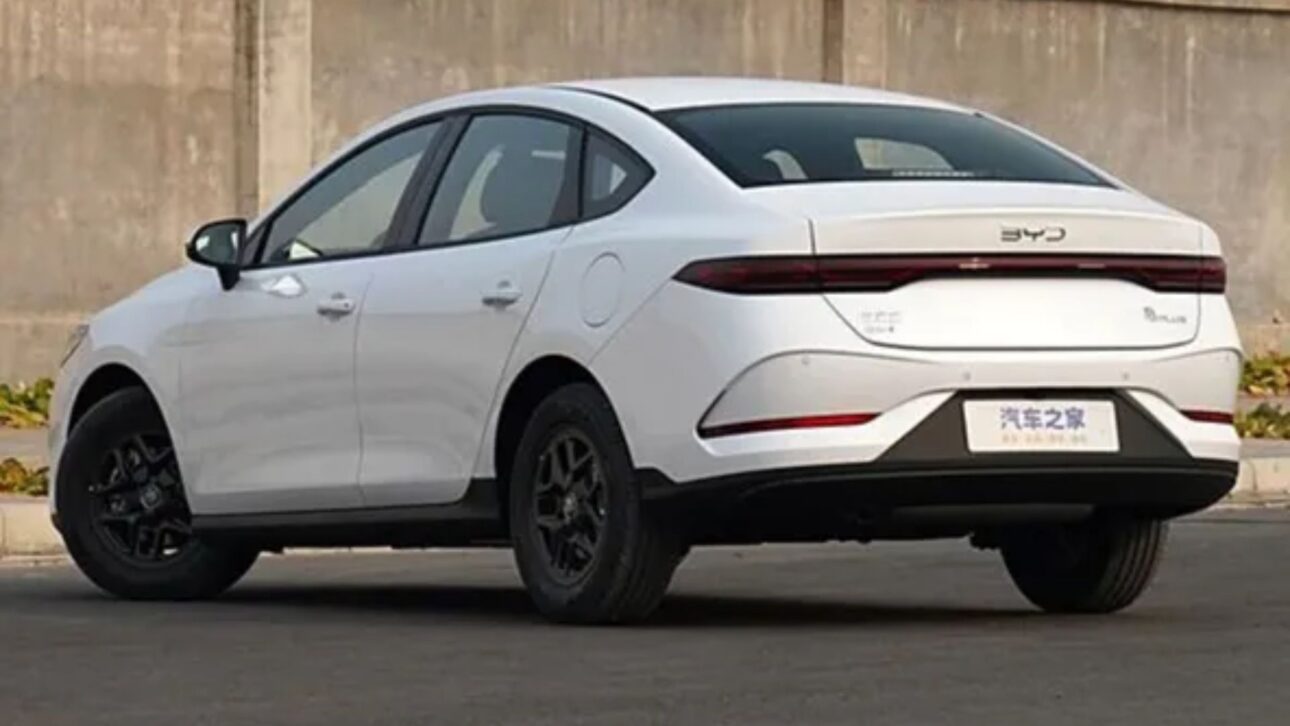
In design, the Qin Plus follows the language of the Dynasty family.
The generous grille dominates the front and features trim that resembles scales, while the sharp headlights recall the treatment seen on the King.
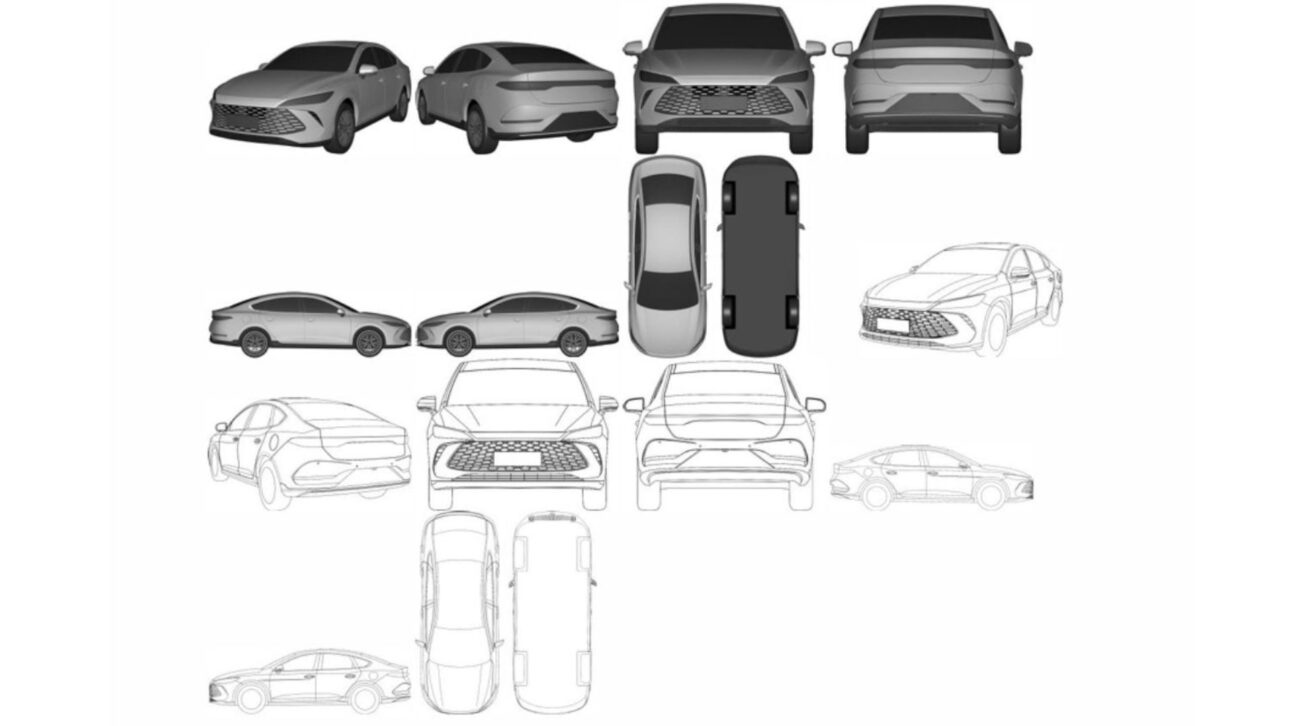
At the rear, the taillight in continuous bar reinforces the light signature, a trend established in the segment.
The result is a modern three-volume sedan, but without extravagance, aligned with the taste of consumers migrating from mid-sized sedans to combustion models to electrified solutions.
Dimensions: What Changes Compared to the King
Despite the visual similarity, the Qin Plus is slightly smaller than its more expensive sibling.
International dimensions indicate 4.765 m in length, 1.837 m in width and 1.495 m in height, with 2.718 m in wheelbase.
In practice, these proportions place it at the heart of the segment, with good internal utilization and suitable size for urban use.
The BYD King remains slightly larger in length and wheelbase, as reflected in the specifications disclosed for the Brazilian market, which explains the hierarchy between the two in the lineup.
Familiar Cabin and Focus on Functionality
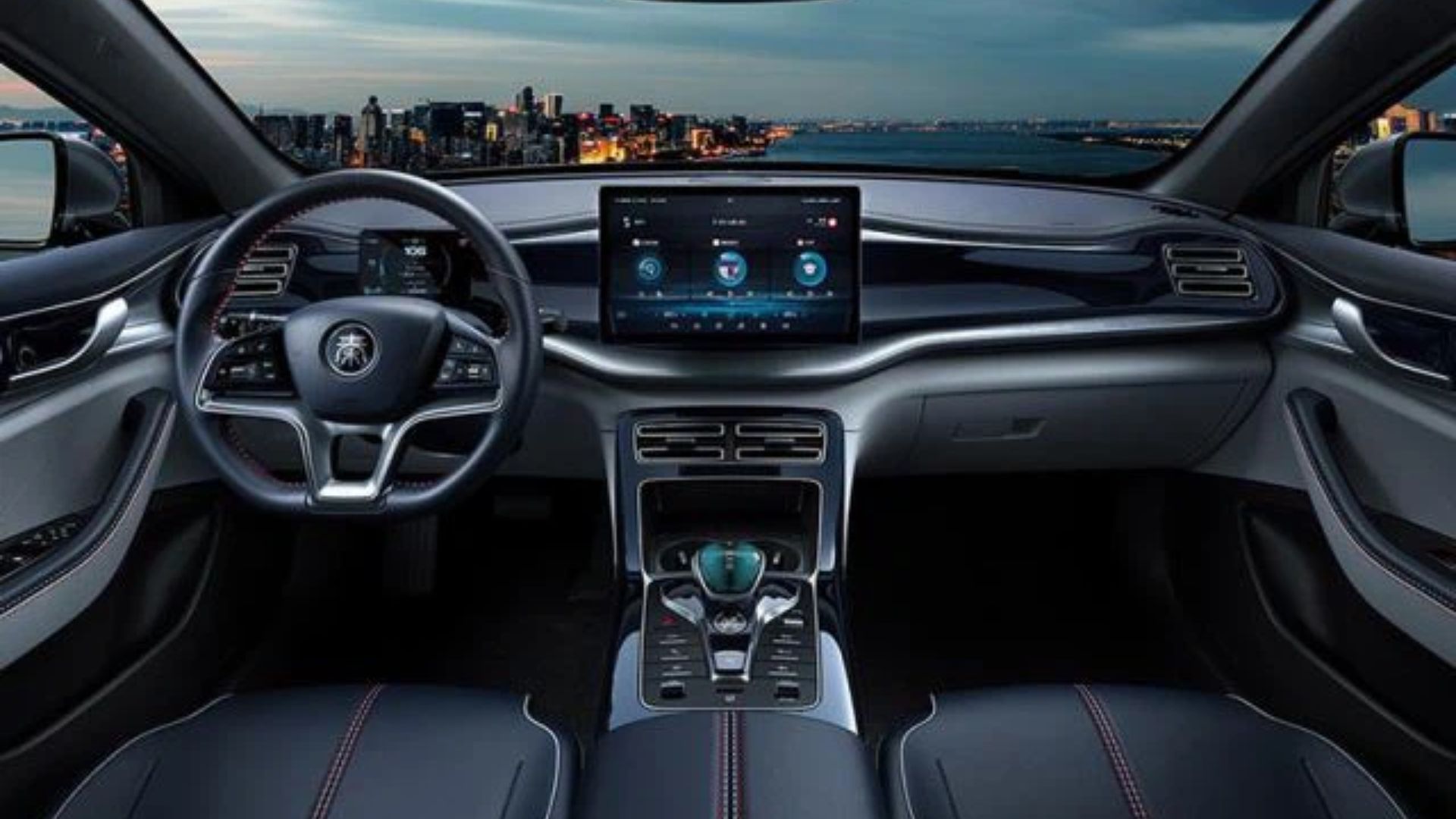
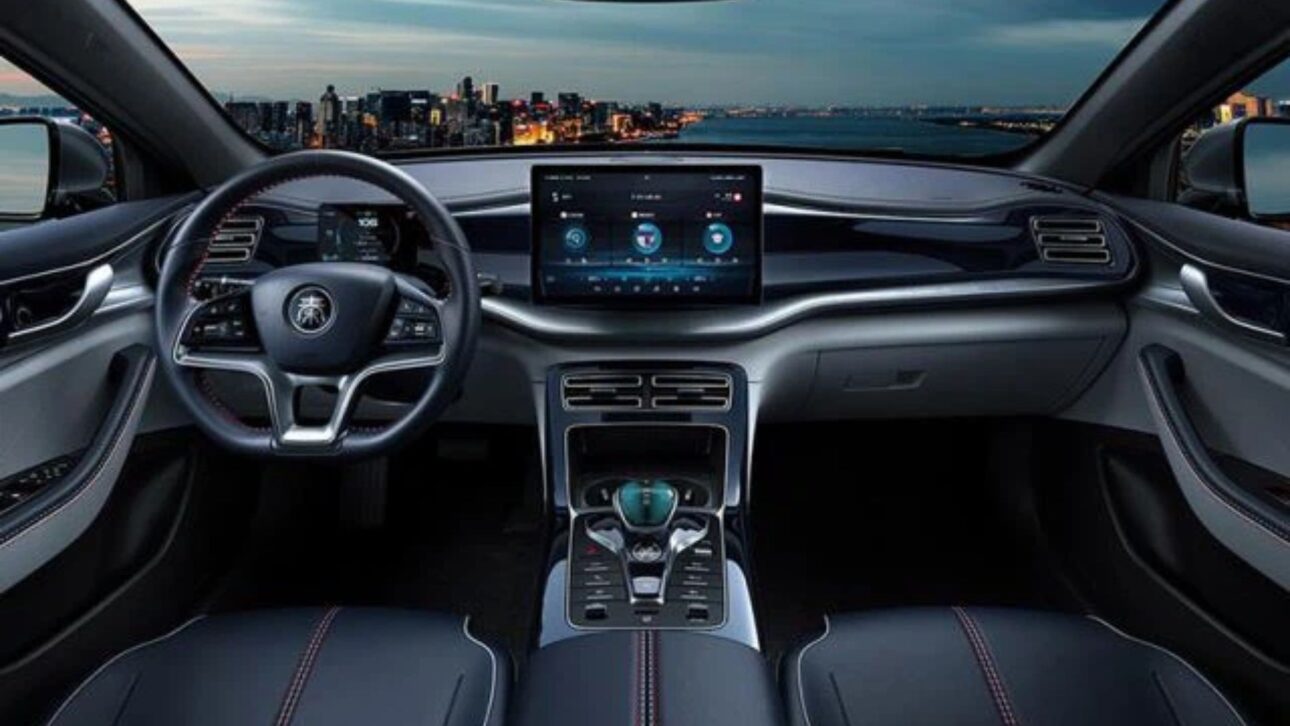
Inside, the Qin Plus repeats familiar solutions for the brand’s customers.
The digital instrument panel consolidates information on consumption, energy flow, and driving assistance.
In the center, the 12.8-inch rotating multimedia system integrates navigation and hybrid system controls.
The center console is minimalist, with few buttons, an electronic gear selector, and storage spaces that prioritize everyday use.
The idea is to reduce distractions and keep the focus on efficient driving.
Powertrain: DM-i 5.0, Range, and Consumption
The Qin Plus uses BYD’s hybrid architecture known as DM-i.
In versions tied to the fifth generation of the system, the brand claims consumption close to 2.9 l/100 km in Chinese measurements and a total range of up to 2,100 km with a full tank and charged battery, numbers obtained in CLTC cycle.
In real use, values may vary depending on the route, terrain, and weather, but they help to frame the efficiency proposal of the set.
The mechanical base combines a 1.5 naturally aspirated engine of about 100 hp and 12.8 kgfm with variable power electric motors.
In the entry configuration, the electric motor delivers 163 hp and 21.4 kgfm, associated with a battery of around 10 kWh, sufficient for around 80 km in electric mode (CLTC).
Above it, there is an option with 217 hp and 26.5 kgfm, with a battery close to 16 kWh and up to 120 km of electric range, still according to the Chinese standard.
In both cases, the transmission is of the e-CVT type, and the energy management prioritizes running on electric power in urban stretches, activating the combustion engine mainly to sustain load and efficiency at higher speeds.
Practical Comparison with the BYD King
While the Qin Plus focuses on price and versions with a smaller battery, the BYD King sold in Brazil bets on superior finishing and content.
It also uses DM-i technology, but with calibrations and packages aimed at a higher equipment level.
As a reference, BYD itself discloses a combined range of up to 1,200 km for the King in controlled conditions.
In practice, the Qin Plus tends to act as an entry point into the brand’s plug-in hybrid sedan lineup, sharing the showcase with the King and expanding the range against conventional hybrid rivals.


Timeline: The Ups and Downs of the Name Qin
The Qin Plus has been discontinued in China and later revived by BYD in response to the demand for more affordable hybrid sedans.
In 2024, the brand launched the DM-i 5.0 technology in the larger Qin L sedan, gradually bringing the update to other models.
In 2025, the Qin family gained a new generation in its more accessible tier, maintaining the positioning of “brother of the King” and reinforcing the strategy of aggressive pricing in the Asian market.
And What Is Missing to Arrive in Stores?
With the registration in Brazil completed, the next step depends on BYD’s commercial decision.
The brand is working on local production and network expansion, but there is no official confirmation of launch dates, versions, equipment lists, and prices for the Qin Plus in our market.
Should it arrive, logic indicates positioning below the King, targeting customers seeking a more rationally priced sedan, but without giving up electric range for daily use and the cost per kilometer typical of plug-in hybrids.
What to Watch When It Arrives
Upon its eventual arrival at dealerships, points of attention will be the battery capacity in each version, the certified electric range for the Brazilian standard, the warranty applicable to the hybrid set, and the integration of driving assistants.
Also deserving analysis are the trunk space with the battery pack accommodation and the scheduled maintenance costs compared to traditional hybrid competitors.
With this combination of lower price, promise of up to 2,100 km of total range, and modern hybrid package, the Qin Plus has the potential to carve out a place alongside the King and face Corolla and its peers in Brazil, or will the local consumer continue to prioritize better-equipped versions even at a higher cost?








Acho que é devaneios achar que vai ser barato
Barato kkk, o que e barato no Brasil e que preste.
PASSOU DOS LIMITES. PROPAGANA TA UM SACO. NÃO TEM COMO LER . COMECIAL TAMPA TUDO.