





 Portuguese
  English
  Spanish
  3 min of reading
  2 comments


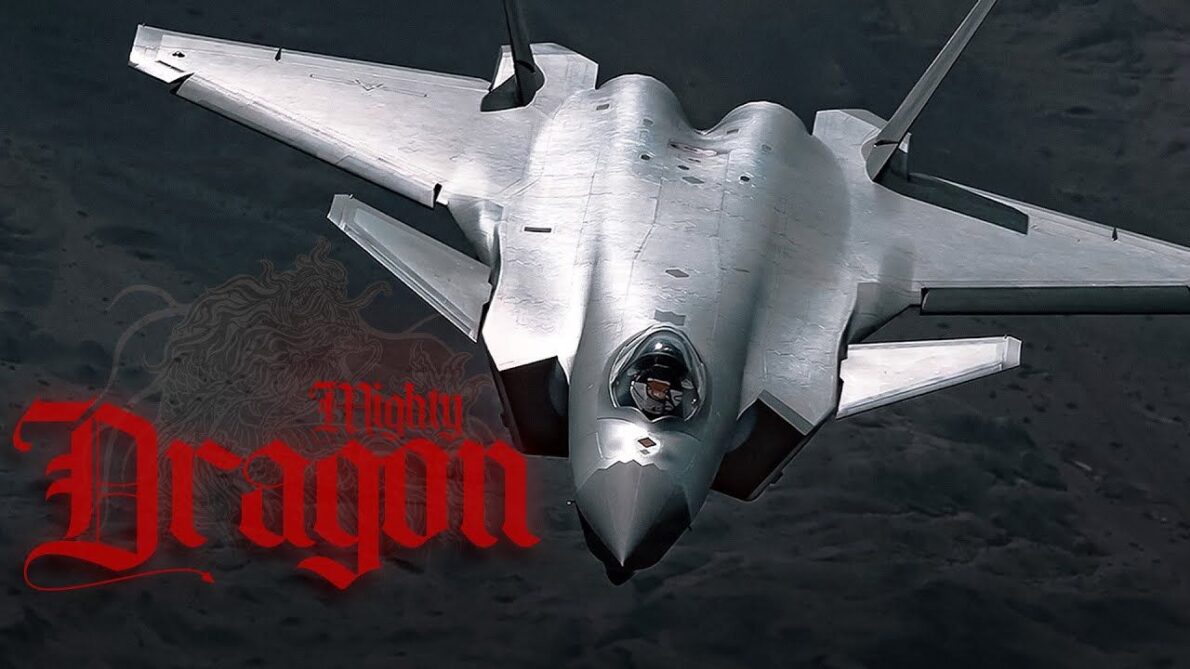

Meet The J-20 Mighty Dragon, China’s Fifth Generation Stealth Fighter Developed To Compete With The Best In The World, Including The US F-22 And F-35.
In recent years, China has developed a fifth generation stealth fighter that is impressing the world: the J-20 Mighty Dragon. But is it a match for the legendary US F-22 and F-35?
The story of the J-20 began in the late 1990s when China initiated the JXX project to develop a fighter capable of competing with the best in the world. Led by Chengdu Aerospace Corporation, the project faced enormous challenges in areas such as aircraft design, advanced materials, systems integration, and propulsion.
On January 11, 2011, China’s J-20 Mighty Dragon Fighter Jet Took Off For The First Time
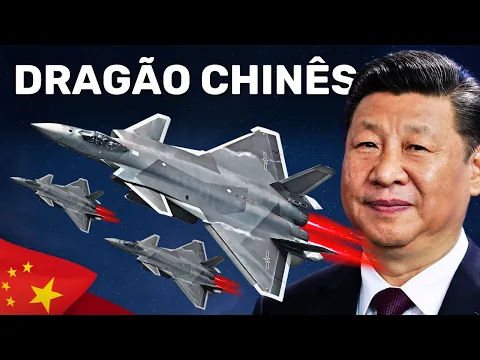

Finally, on December 22, 2010, the first prototype of the J-20 was tested, marking a historic moment for Chinese aviation. On January 11, 2011, the J-20 Mighty Dragon took to the skies for the first time, piloted by the legendary Le Gang. The short 18-minute flight was enough to electrify the global aviation community.
-
São Paulo surprises the world with a colossal railway network project that promises over 1,000 km of tracks, R$ 194 billion in investments, and 40 projects connecting the capital to the interior with fast and sustainable trains.
-
The world’s largest escalator, measuring 905 meters in China, reduces urban travel time from 1 hour to about 20 minutes and transforms mobility in mountainous regions with an engineering solution adapted to the terrain.

-
A R$ 300 million logistics giant is taking shape in Serra with over 100,000 m² and raises a question: how can this transform e-commerce and distribution in the state?

-
Could Uber Rides Lose Minimum Fare? Understand What’s Happening!

In the following years, the J-20 underwent many tests and refinements. One of the biggest challenges was propulsion. Initially equipped with Russian engines, the J-20 transitioned to using the domestically produced WS-10C engine, capable of thrust vectoring and supercruise, allowing the fighter to reach speeds above Mach 2 without using afterburners.
It Is Also Equipped With Advanced Sensors, AESA Radar, And More
Another crucial advancement was in stealth technology. The J-20 features a diamond-wing design that helps reduce its radar signature, as well as using radar-absorbing materials and special coatings. It is also equipped with advanced sensors, AESA radar, electronic warfare systems, and a wide range of smart missiles and bombs.
In 2016, the J-20 was revealed to the public during the Zhuhai Airshow, and by 2017, it entered active service in the People’s Liberation Army Air Force. Today, it is estimated that China has over 200 J-20s in service, with plans to increase that number.
While Some Question Its True Stealth Capability And The WS-10C Engines Are Still Not As Powerful As The US F119 And F135…
Compared to its American rivals, the J-20 is larger, allowing it to carry more fuel and weapons. Its Canard Delta design and thrust vectoring engines make it extremely maneuverable. Furthermore, the J-20 is equipped with advanced electronic warfare systems capable of disrupting enemy communications, which could be decisive in future conflicts.
While some question its true stealth capability and the WS-10C engines are still not as powerful as the US F119 and F135, the J-20 represents an incredible technological leap and China’s rise as a military superpower.










Interessante essa informação do motor WS10C, conseguir fazer esse J-20 voar a Mach 2 ou superior, se pela relação peso potência nem mesmo o WS15(que seria comparável ao PW-F119), tinha essa disposição, muito menos esse WS10C terá. Creio que há um exagero na potência divulgada por vocês!
De fato com WS10C é sabido que ele não tem esse desempenho, ele foi usado msm para testes de vôo e aprimoramento de projeto, mas ainda no ano passado já começaram testes de vôo com WS15 então creio que em poucos anos ele estará em condições de uso massivo.