Portuguese
  Spanish


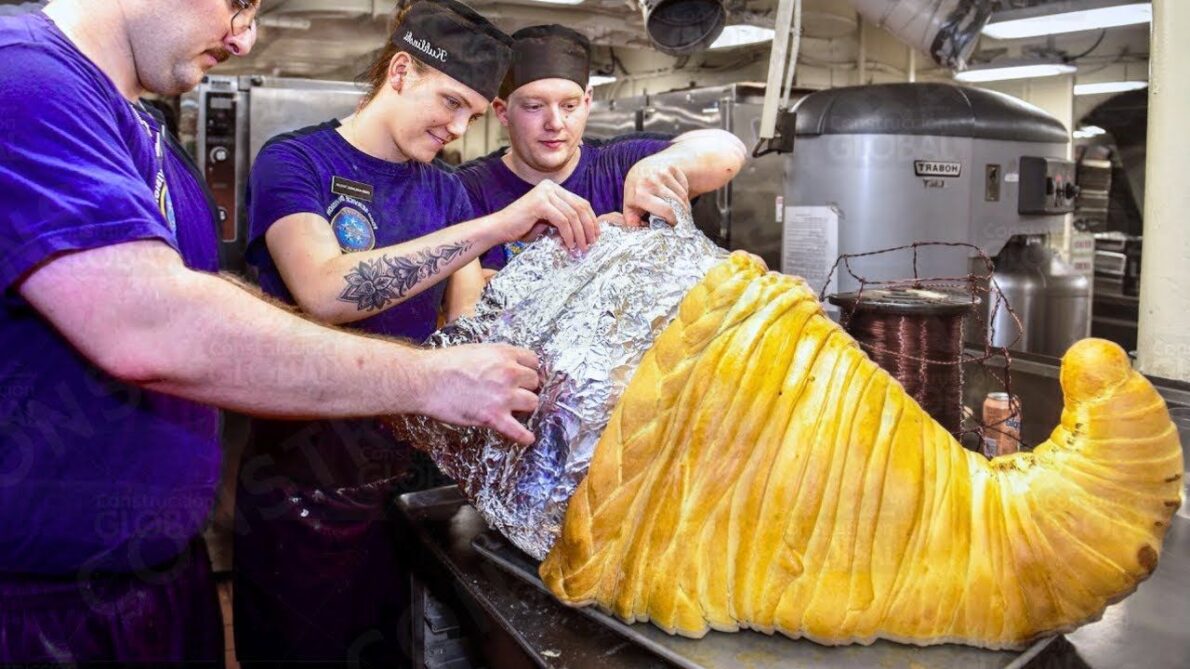

This Is How The US Navy Feeds Its Sailors, From Submarines To Aircraft Carriers, Using Complex Logistics, Advanced Storage Techniques And Exceptional Cooking Skills To Ensure Nutritious Meals And Keep Crew Morale High At Sea.
Have you ever wondered how the US Navy manages to feed its sailors out at sea? From submarines to aircraft carriers, the logistics is impressive. Let’s explore the secrets behind this operation and how food is prepared to keep the crew in great shape during long missions.
The US Navy has over 8,500 culinary specialists working at more than 300 locations. These professionals ensure that every ship is well stocked with food and essential supplies. The logistics involve supply convoys and strategic airdrops to transport fresh food and supplies to ships at sea.
Navy Uses Advanced Food Storage And Preservation Capabilities On Submarines And Aircraft Carriers
Inside the ships, the kitchen is a center of operations where efficiency and quality are crucial. The cooks prepare meals for up to 5,500 members of the crew, depending on the size of the ship. A typical day in the kitchen involves preparing around 17,300 meals, utilizing large quantities of food such as 1,600 pounds of chicken and 160 liters of milk.
-
The man who started in construction with his own house founded a company in 1957, went through a banking crisis in 1987, and ended up connected to 16,500 houses in Houston.

-
They exchanged the idea of a large house for a 35 m² warehouse, spent US$ 12,000 on the structure, and created a tiny house in Colorado with space to live and work.
-
While modern cities rely on pumps and electricity, in Iran, ancient tunnels carried water through the desert using only slope and gravity.
-
Instead of sending families far from the city, a project in Chile intentionally created incomplete houses on expensive urban land and left technical space for each to grow.



To ensure that the food arrives fresh, the Navy uses advanced storage and preservation capabilities. Ongoing replenishment is key. This can be done through direct connection between ships or by vertical replenishment, where helicopters transfer supplies between ships.
During A Six-Month Mission, A Submarine Invests Approximately $260,000 In Food
Submarines face even greater challenges due to limited space. During a six-month mission, a submarine invests approximately $260,000 in food, with aerial resupply providing provisions for up to 90 days. All the food is stored in any available space, including under seats and tubes.
Despite the limitations, the food prepared on board is varied and nutritious, helping to maintain high morale. Mealtime is a moment of socialization and a reminder of the camaraderie among sailors. The culinary skills of the specialists make food much more than just fuel; it’s a boost to the spirit of the sailors, allowing them to continue their missions with strength and determination.