





 Portuguese
  English
  Spanish
  5 min of reading
  0 comments


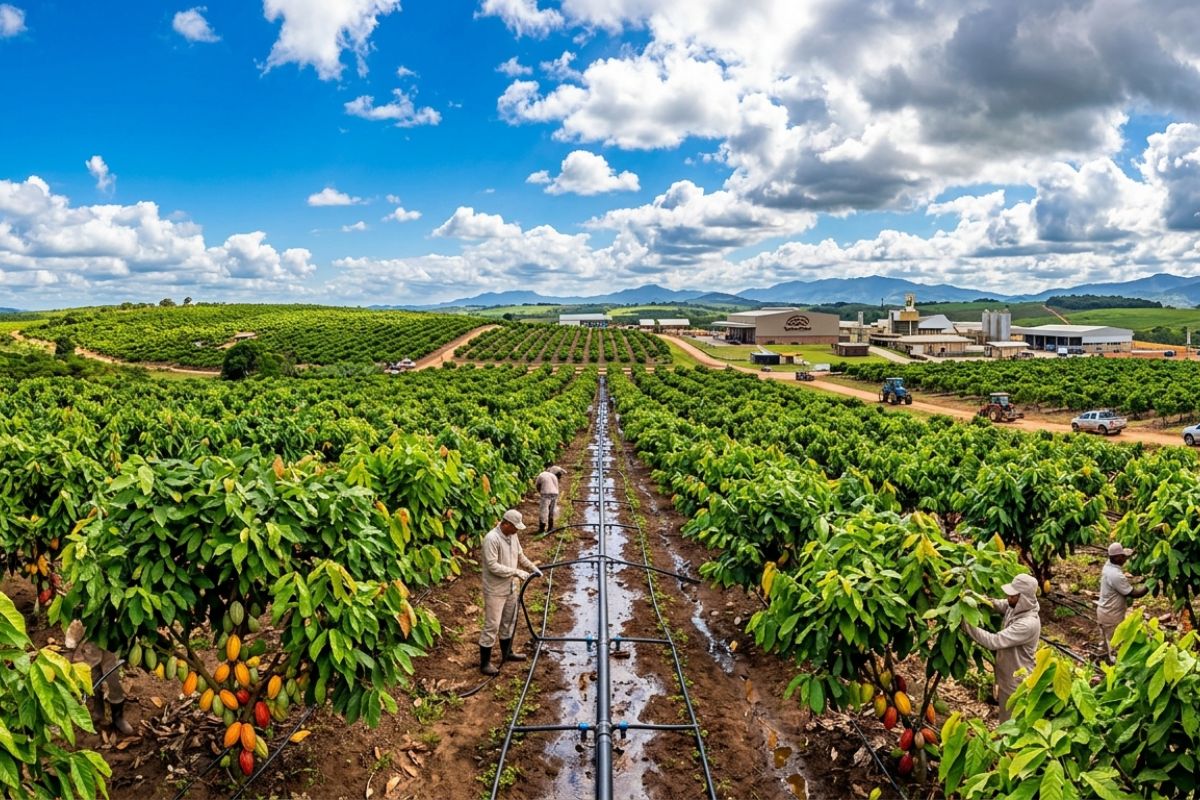
In the cocoa farm in Linhares, Cacau Show combines automated irrigation, fertigation, and full sun cultivation to test technology and gain control over quality and production
The automated irrigation has become the heart of a project that changes the way Cacau Show views the field. The company, known for its chocolate, maintains its own cocoa farm in Linhares with technology and management that diverge from the traditional model in Brazil.
More than just planting, the strategy is to gain control over quality and productivity, test techniques, and bring knowledge to the sector. The plan is ambitious: to invest around R$ 1 billion by 2034 to expand cocoa cultivation in Brazil.
Why Cacau Show decided to produce its own cocoa

Behind the brand’s growth, there is a sensitive point: without quality cocoa, there is no quality chocolate.
-
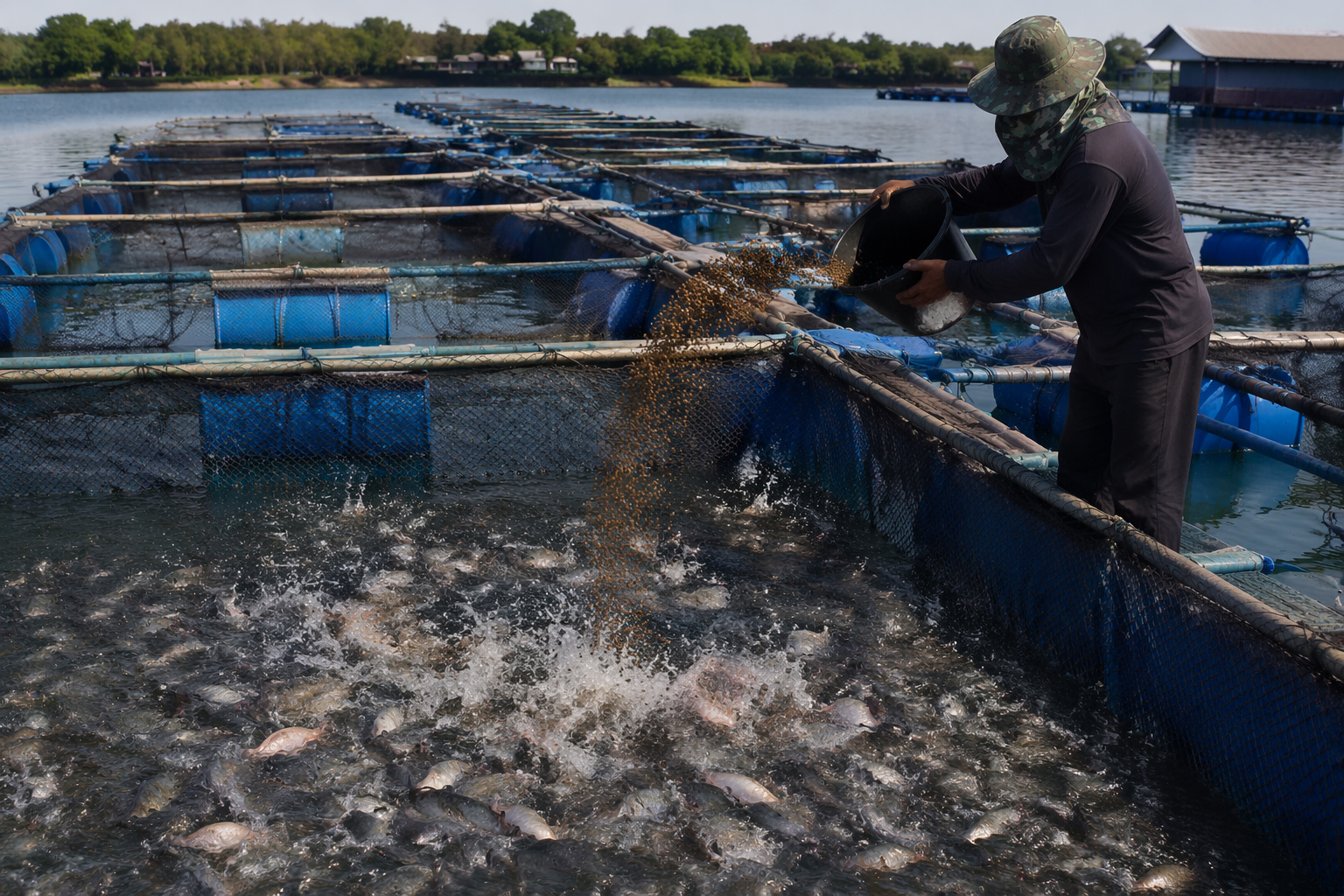
Without soy, there is no fish on the plate: the hidden link that supports global aquaculture and can affect the price of the fillet that reaches your table.
-
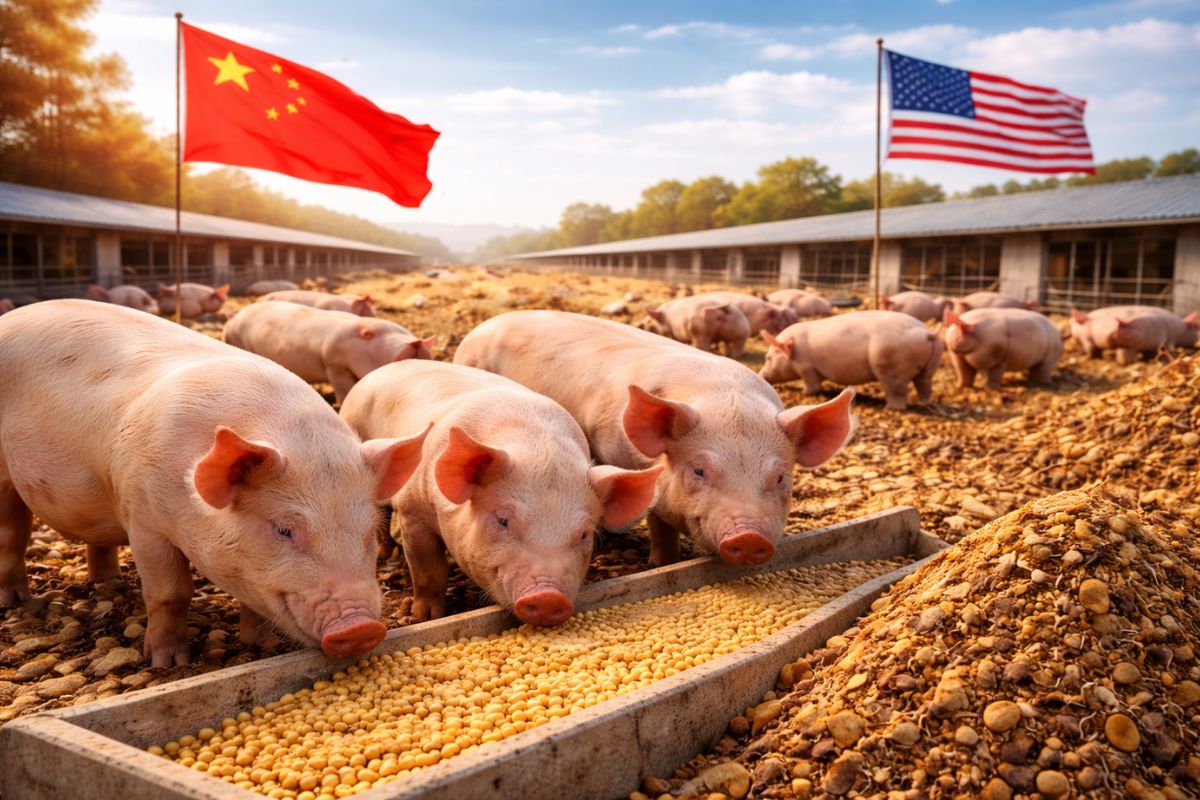
China is replacing soybeans with fermented feed in pig diets, and this silent shift is already generating 6 billion dollars and could take billions away from Brazil and the United States in the coming years.
-
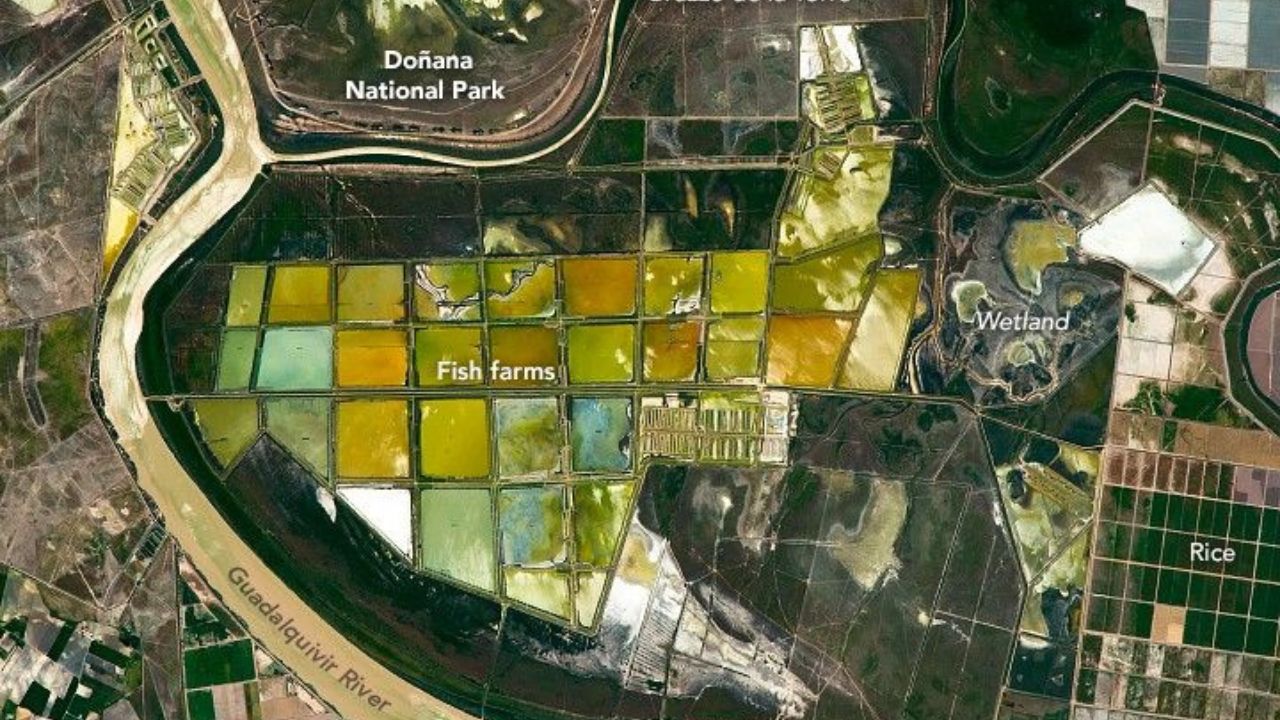
More than 36,000 hectares of rice fields and aquaculture farms have transformed the Guadalquivir delta into a geometric grid visible from space, where channels, dikes, and tides operate one of the largest agro-hydraulic systems in Europe in southern Spain.
-
Dry weather accelerates soybean harvest, but threatens to devastate crops in Southern Brazil: losses already reach 50.4% and the climate scenario raises maximum alert for producers in 2026.
Brazil was once a world leader in the past, but has lost strength over time, especially after diseases that devastated plantations, such as witch broom.
In this scenario, the decision to produce part of the cocoa internally arises. The Dedo de Deus farm in Linhares operates as a strategic project and an innovation laboratory to study cultivation, test technology, and improve the final product that reaches the consumer.
The course change: from the cabruca system to full sun cultivation
In Brazil, cocoa is usually planted in the cabruca system, where cocoa trees grow under larger trees, taking advantage of natural shade.
It is a more sustainable model, but it also brings limitations, such as lower productivity, more difficulty in mechanization, and less control.
At Cacau Show’s farm, the path is different. The company adopts full sun cultivation, with cocoa trees in the open air, without shade.
This allows for more control over the plantation, facilitates management, and can reduce pest problems, but comes with a clear condition: without technology, it doesn’t work well.
Automated irrigation and fertigation: the differential that sustains the model
This is where automated irrigation comes in as a central piece. The system is combined with fertigation, meaning water and nutrients are applied together precisely. Everything is controlled based on soil measurements, moisture, and plant needs.
This control allows the cocoa tree to produce year-round with more stability. The logic is simple: when the plant receives water and nutrients at the right time, the field operates with predictability, and productivity responds.
The leap in productivity: what the numbers indicate
The cited results are striking. While the Brazilian average hovers around 300 g of cocoa per plant per year, at the Dedo de Deus farm, production reaches 1,800 g per plant, meaning up to six times more.
In some cases, productivity per hectare also skyrockets: from about 450 kg in Brazil to over 2,000 kg in areas of the farm.
This contrast reinforces the direct impact of technology on management, with automated irrigation as the foundation of the system.
Flavor does not start in the factory: fermentation and drying with control

The work does not end at harvest. The harvested cocoa is not yet ready to become chocolate, and there is an essential process where flavor begins to develop: fermentation.
At Cacau Show’s farm, fermentation lasts about 7 days and occurs in two phases: alcoholic fermentation for about 48 hours, and acetic fermentation, which can last up to 5 days.
During the process, the beans are constantly moved to ensure quality, and the farm uses automated equipment for this work.
Then comes drying, with more innovation. The farm creates a mechanical system called a spider, which moves the beans to prevent them from sticking together.
In the final stage, it uses an adapted dryer, similar to those used for coffee, but without contact with smoke, because smoke can completely ruin the flavor of cocoa. The goal is to reach about 6.5% moisture before storage and use.
An innovation center that aims at the field beyond the farm itself


The Dedo de Deus farm is not treated merely as a productive area. It functions as an innovation center, where the company tests techniques, improves processes, and generates knowledge.
The idea is not to keep this to itself: Cacau Show intends to continue buying cocoa from small producers, but bringing technology, knowledge, and best practices.
This matters because the cocoa scenario in Brazil has a striking characteristic: a large part of the production comes from small and medium producers, which makes standardization, access to technology, and large-scale productivity gains difficult.
The investment plan and what may change by 2034
There is an expansion plan with an investment of around R$ 1 billion by 2034 to increase cocoa cultivation in Brazil.
Today, the farm’s production still represents a small part of the total used by the company, but the expectation is that this participation will grow in the coming years with the expansion to thousands of hectares.
If this progresses as planned, Cacau Show may cease to be seen merely as a chocolate manufacturer and also become one of the major cocoa producers in Brazil, supported by technology, management, and automated irrigation.
Cocoa beyond chocolate: more utilization of the fruit
Another point that helps explain the strategy is the versatility of cocoa. Besides chocolate, the fruit generates other products, such as cocoa honey for beverages and sweets, pulp for juices, ice creams, and jams, and even the shell can be used as fertilizer.
It is a richer crop than many people imagine, and mastering the process from planting to the final product increases the value of the entire chain.
And for you, what stands out most in this project with automated irrigation: the productivity up to 6 times greater per plant or the idea of expanding cultivation in Brazil by 2034?






Seja o primeiro a reagir!