





 Portuguese
  English
  Spanish
  5 min of reading
  31 comments


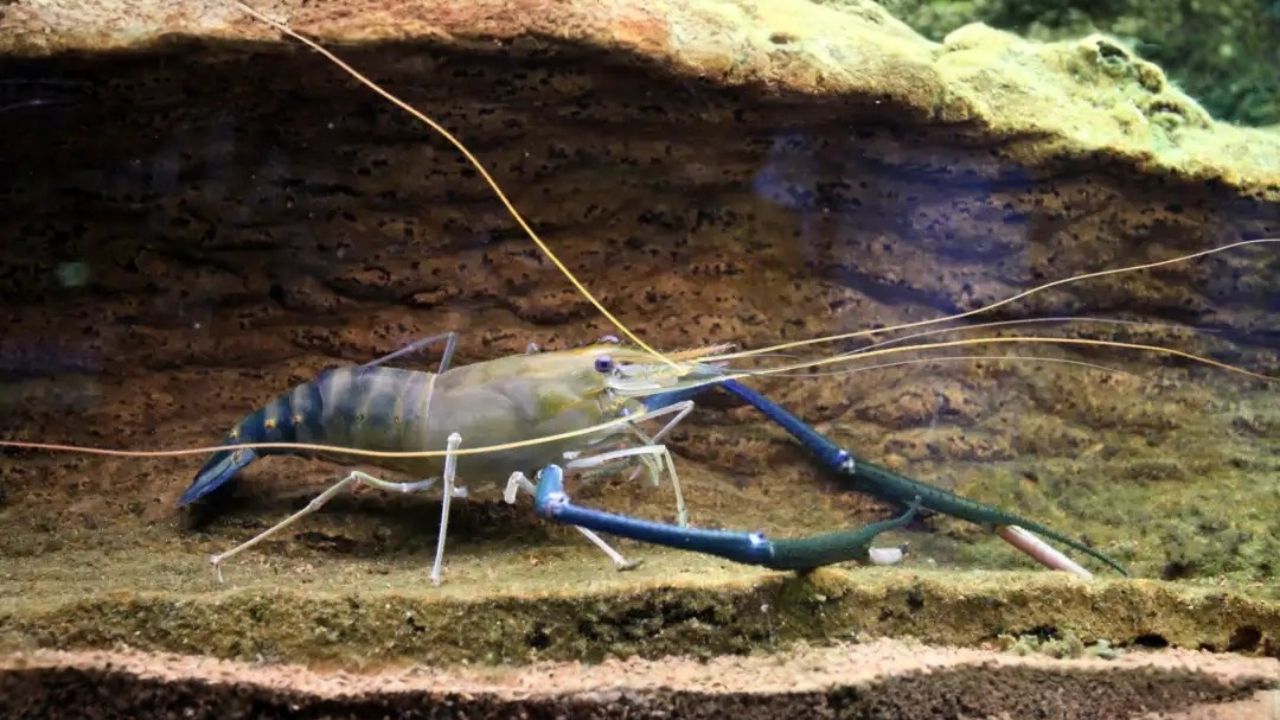


Macrobrachium Rosenbergii Shrimp Digs Tunnels, Increases Turbidity, Favors Toxic Algae, and Concerns Scientists About Ecological Impact on Tropical Rivers.
Most of the time, the debate surrounding tropical river degradation revolves around urban pollution, fertilizers, pesticides, and dams. However, there is a biological agent whose impact is little reported outside aquatic ecology circles: the giant Malaysian shrimp (Macrobrachium rosenbergii), a freshwater shrimp from Southeast Asia that, through the simple act of digging, physically and chemically modifies rivers, influences turbidity, alters sediments, and favors toxic algae blooms.
Science refers to this behavior as ecological engineering, when an organism can profoundly transform the environment, altering physical, biogeochemical processes, and even trophic dynamics. In the case of the rosenbergii, the mechanism is direct: it digs tunnels and trenches in the substrate, stirring up mud, sand, and organic debris. This changes light flow, intensifies particle suspension, and creates conditions that favor organisms thriving in turbid environments — among them algae and cyanobacteria capable of producing toxins.
River Bioengineering: The Cavity That Becomes Turbidity
The continuous digging performed by this shrimp results in the phenomenon that ecologists call bioturbation. Unlike erosion caused by rain or machines, bioturbation is a biological and diffuse erosion, happening 24 hours a day, continuously, which disturbs the interface between sediment and water column.
-
With a cost per shot close to zero, the DragonFire laser could change naval warfare in 2027 and provide British ships with nearly unlimited defense against drones.

-
A British startup creates tires that generate electricity in electric vehicles when passing over potholes, speed bumps, and cracks.

-
Scientists have created robots made with living cells that have their own nervous system, swim on their own, explore the environment, and self-organize without any genetic engineering, and now they want to do the same with human cells.

-
Students create a solar-powered ambulance that operates without a plug, without fuel, and still keeps medical equipment running in remote areas.


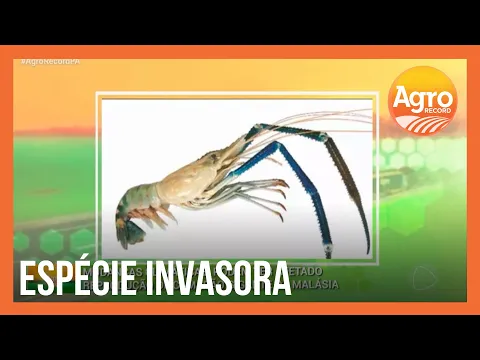

Researchers studying Macrobrachium rosenbergii in countries like Thailand, Vietnam, and Myanmar observed that increased turbidity reduces light penetration, harms submerged plants, and creates a highly competitive and unstable environment. Aquatic plants depend on photosynthesis; without light, they die or fail to colonize the riverbed. From this point, the cycle feeds back: fewer plants, more available sediment, more turbidity, more bioturbation.
This domino effect is documented in journals such as Aquatic Conservation and in reports from the FAO, which mentions Macrobrachium rosenbergii as a species of economic interest, but also with potential ecological impacts when managed carelessly.
From Physical Degradation to Toxic Bloom: How the Cycle Closes
Turbidity is not just a physical parameter: it triggers chemical and biological changes. Cyanobacteria — better known to the general public as toxic algae — have competitive advantages in environments where the water column is rich in nutrients and poor in penetrating light. In rivers altered by bioturbation, three factors consistently emerge:

- Stirring of phosphorus and nitrogen from sediment into the water, increasing nutritional availability.
- Reduction of competition for submerged plants, which no longer compete for nutrients.
- Local thermal stratification, facilitating the growth of surface organisms.
These conditions favor species such as Microcystis, Planktothrix, and Dolichospermum, capable of producing toxins such as microcystins, anatoxins, and cylindrospermopsin, with known effects on fish, birds, domestic animals, and humans.
Scientists call this a bloom, an accelerated growth of algae that can transform entire areas into greenish plates, reduce dissolved oxygen, and cause fish mortality, a phenomenon already recorded in various countries of Southeast Asia.
Introduction in New Regions and Hidden Ecological Risk
Although native to the Indo-Pacific region, the giant Malaysian shrimp has been introduced to other continents for aquaculture, becoming an export product and cheap protein, with rapid growth and good acceptance in international markets.
The FAO registers the rosenbergii as one of the most cultivated species in tropical freshwater aquaculture, with significant production in India, Thailand, Bangladesh, Vietnam and expansion to countries in Latin America and Africa. However, when it escapes farms into the natural environment, it can take on the role of an invasive species, altering local ecology.
In systems where submerged plants are crucial — such as floodplain rivers, wetlands, coastal swamps, and tropical deltas — the arrival of this shrimp can represent the gradual elimination of plant communities, replaced by unstable sediments and dominance of microalgae.
Large Sizes, Large Impacts: Biology That Amplifies the Effect
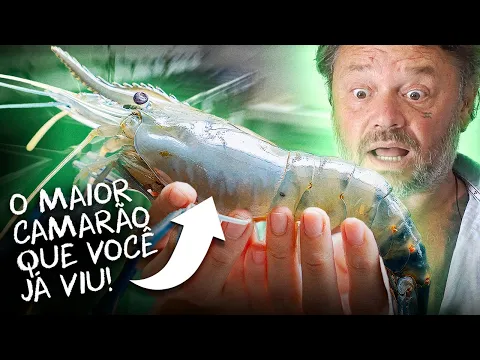
We are not talking about a tiny shrimp. Macrobrachium rosenbergii can reach up to 30 centimeters in length and displays aggressive, territorial, and exploratory behavior. Adult males have robust chelae that serve not only for feeding but also for digging.
This size explains the intensity of bioturbation: a single individual can already affect the microenvironment around it; hundreds or thousands, in a stretch of floodplain river, turn the bottom into a mosaic of cavities that interrupt roots, loosen sediments, and eliminate the stability necessary for colonizing plants such as Hydrilla, Vallisneria, and Najas, key species for nutrient control.
When vegetation disappears, the system loses a natural buffer: submerged plants store nitrogen and phosphorus; without them, nutrients return to the water, closing the cycle that favors toxic blooms.
Why the Public Has Never Heard of This
Public perception of shrimp and fish is almost always culinary: protein, recipes, gastronomy. Few imagine that a crustacean can:
- alter sediments
- favor toxic algae
- remodel the river bottom
- compete with native species
- reduce plant biodiversity
- amplify eutrophication
Furthermore, rosenbergii has economic importance in aquaculture, creating a regulatory paradox: the same animal that generates income and protein can also cause diffuse environmental impacts, hard to trace and almost invisible to the public.
A central point is that these impacts are not spatial, like an oil spill; they are extremely slow processes, cumulative, that remain invisible for years before becoming irreversible.
The Dilemma Between Aquaculture and Conservation
The FAO has reports that encourage the cultivation of Macrobrachium rosenbergii as a sustainable economic alternative and as protein for low-income tropical countries. However, the agency acknowledges the need for physical containment, monitoring, and escape control, especially in regions where the shrimp is not native.
This is the core of the dilemma: how to expand low-cost aquaculture without transforming tropical rivers into eutrophied systems and without losing submerged plants that are key to ecological balance?
In countries where toxic blooms have become a public problem — such as China, India, and Bangladesh — the debate about bioturbation is starting to gain traction but is still far from public awareness.
The Invisible Engineer and the Alert from Ecologists
Macrobrachium rosenbergii is both a economically valuable species and a silent bioengineer capable of altering an entire ecosystem. Its impact expresses a simple yet powerful ecological principle: not all degradation is chemical, and not all transformation is visible.
Nature can be reconfigured by an organism as inconspicuous as a shrimp — and science has only begun to measure the extent of this effect. The question now is: in an era of intensive aquaculture and rivers pressured by pollutants, will it be possible to balance cheap protein with ecological conservation, or will the future of tropical waters be shaped by bioengineers that no one sees?







Serious research are to be conducted in order to find solution , cause if natural disasters can be countered, I believe we can find a solution, we need to think outside the box
Esse ai e o famoso (pitu )
Gosta muito de morar em braços do mar,onde forma mangues.
E o camarao mais saboroso do planeta
Corrijo, provocan escoriaciones al tocarse y auyentan el turismo