





 Portuguese
  English
  Spanish
  7 min of reading
  0 comments


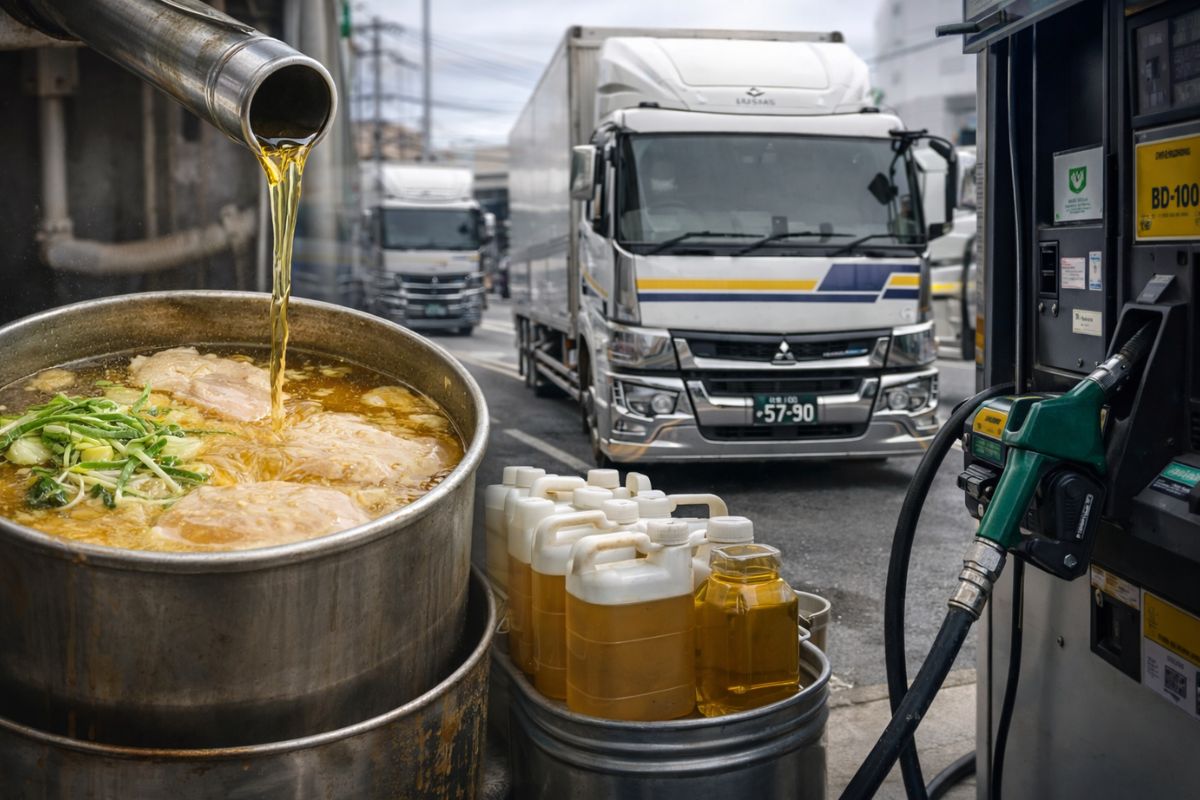
In Shingu, in the Kyushu region, Nishida Shoun, led by Masumi Nishida, collects fat from tonkotsu ramen and used tempura oil, reacts with chemical ingredients, and produces about 3 thousand liters monthly of biodiesel, a fuel that already supplies directly half of 170 trucks and aims to reduce CO2.
In the yard of a transport company that depends on diesel trucks, the scene seems common until the detail that changes everything: part of the fleet runs on fuel born from ramen, from those tonkotsu pots that usually stay behind the scenes of restaurants, far from any gas station.
The initiative is led by Masumi Nishida, president of Nishida Shoun, who found in tonkotsu ramen waste and in used cooking oil a way to fuel vehicles, tackle costs, and still pursue a concrete environmental goal, with CO2 reduction as a stated north.
Where The Idea Came From And Why Ramen Entered The Equation

The origin of the project was not a distant laboratory nor a marketing campaign, but rather a daily pain of those who serve tonkotsu ramen: what to do with the soup and, mainly, with the fat that remains after serving.
-
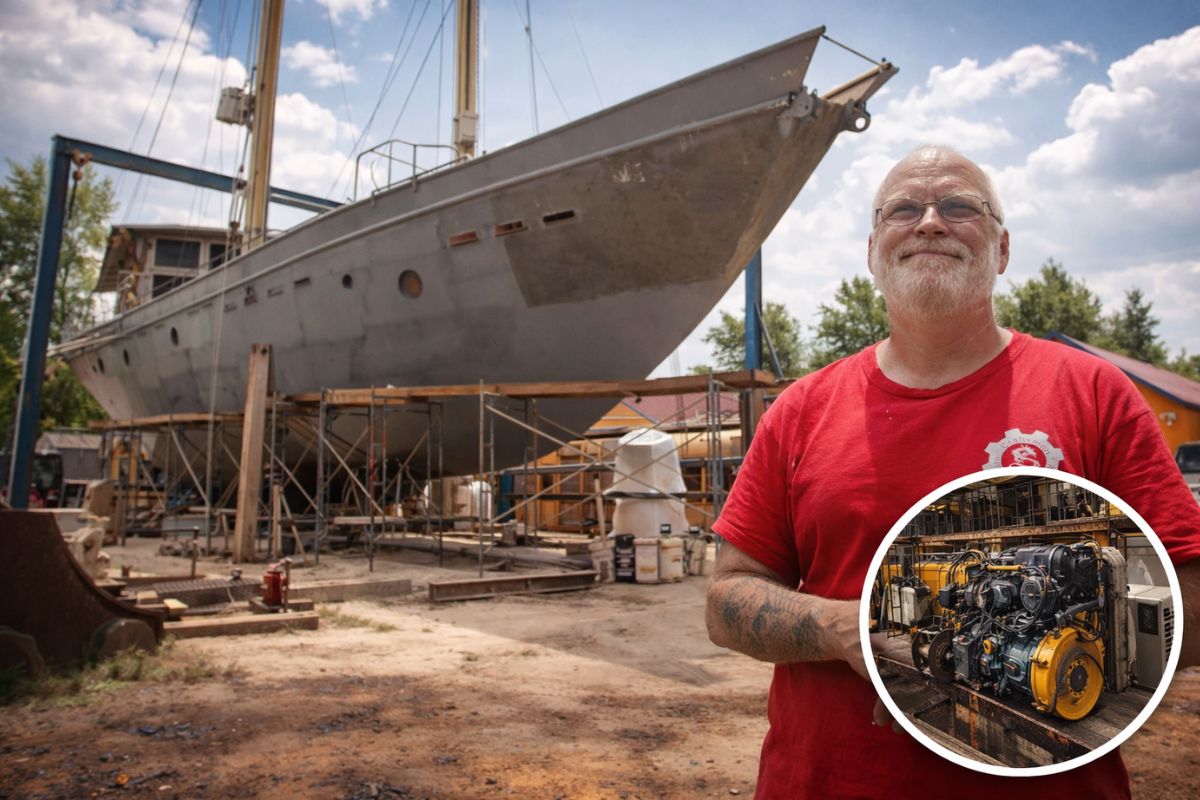
A retired IT professional built a 22-meter boat in his backyard in Oklahoma with a school bus engine, light pole masts, and handmade watertight doors to become the redneck version of Jacques Cousteau.
-
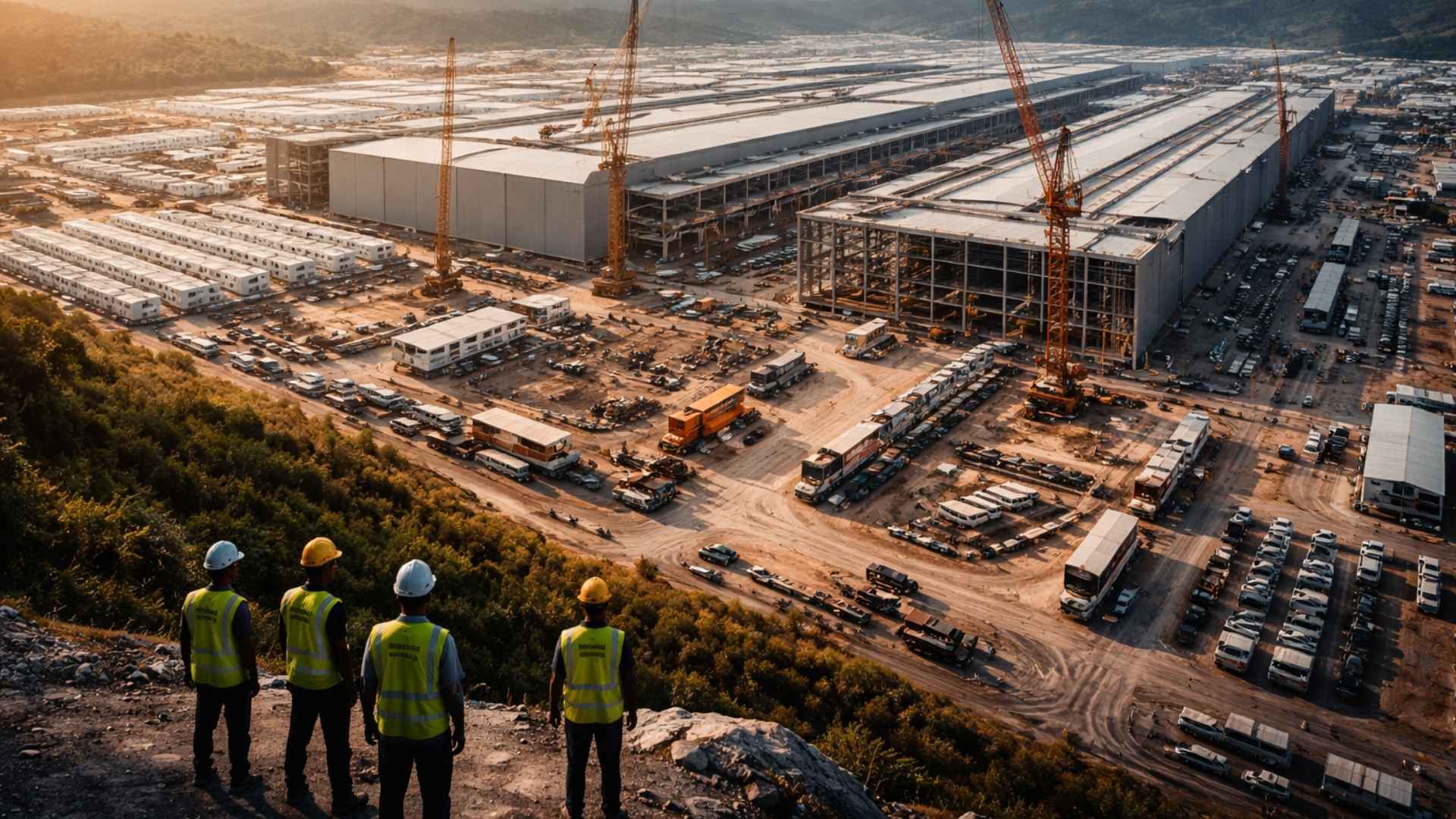
China is building a city in Brazil: a complex with an investment of R$ 5.5 billion comes to light, but allegations involving workers draw attention.
-
While Argentina buys old war equipment, Brazil is keeping an eye open and joins the select group of nations with advanced military technology by investing $5.2 billion, producing 36 Gripen fighters in the country, and reducing operational costs.

-
Brazil on alert? Why invading Brazil is a NIGHTMARE for the USA: 8.5 million km², 213 million inhabitants, Amazon covering 60% of the territory, trillion-dollar war, and resistance that even 13,000 aircraft could not control.


A well-known restaurant owner of Nishida reportedly reported difficulty in discarding the excess, and the question opened an unexpected route within a company that needs diesel every day.
The key was to see the residue as raw material, not as waste. At the same time that the kitchen sought a way out for the leftover ramen, the transport company had a structural problem: diesel trucks are essential for operations, and the continuous use of fossil fuel increases CO2 emissions, precisely the point that Nishida says he started to view more seriously as the company grew.
The personal history also weighs in this push. The mentioned trajectory is long-term: the company started about 54 years ago with just one truck, and as the fleet grew, awareness of emissions became part of the internal debate.
In this context, tonkotsu ramen ceased to be just a typical dish and became a source of energy input.
How The Fat From Tonkotsu And Used Oil Became Biodiesel

The technical heart of the project is the transformation of the fat separated from the tonkotsu ramen soup into biodiesel, combined with used cooking oil, such as that from tempura.
The described procedure involves extracting the fat from the broth and making it react with chemical substances to produce usable fuel for diesel engines.
The first attempt was said to have been quick, resulting in about a week, but that does not mean the process was “just a push of a button.”
Fuel is not just a recipe, it’s quality control, because any variation in the composition of the fat from ramen or the used oil can alter the behavior of the biodiesel in the injection system, in combustion, and in storage stability.
The practical point supporting the initiative is the comparison of performance: it is said that the energy efficiency of the fuel made from tonkotsu ramen soup is “almost equal” to that of conventional diesel.
This equivalence, even when treated generally, helps to understand why the fleet was able to incorporate the biofuel without requiring a complete technological change in the truck.
Collection Logistics: The Partnership With Ramen Restaurants In Kyushu

To produce biodiesel on a monthly scale, it’s not enough to have the idea; it’s necessary to ensure a constant flow of raw material. The solution was to expand collection in the Kyushu region, partnering with tonkotsu ramen restaurants and organizing the separation of fat directly in the stores.
In practice, each restaurant would need to separate the fat from the ramen soup and store it, while employees from Nishida Shoun handle the removal. What was once waste becomes routine, and this reduces friction for the restaurant, which no longer has to deal alone with the leftover fat and instead integrates into a reuse circuit.
The relationship has been described as advantageous for both sides: the ingredients come “freely” to those producing biodiesel, and the disposal of the fat is no longer a problem for the restaurant.
There is also a reference to a monthly value of about 5,000 yen for a restaurant, with no processing fee, suggesting a partnership model where the central point is not selling fuel, but enabling the collection and conversion of ramen waste into energy.
What Changes In The Daily Life Of Trucks And How To Measure Performance
The number that gives dimension to the project is straightforward: about 3 thousand liters per month of biodiesel, used to fuel approximately half of the company’s 170 trucks.
In operation, this means that the tonkotsu ramen fuel is not restricted to an isolated test; it becomes part of the fueling plan and the continuity of service.
Even so, the truck driver’s daily routine cannot depend on surprises. If the biodiesel varies, the operation feels it. This is why, when discussing “performance almost equal to diesel,” the fuel must maintain a standard to avoid harming starts, engine response, and reliability on long routes.
There is also a human detail that helps to understand the acceptance: the idea of the “soup ramen truck” draws attention, generates conversation, and, according to reports, it starts being recognized on the street when someone sees the truck passing by and associates the initiative with popularization.
This type of social recognition does not replace technical criteria, but influences how much the team buys into the proposal and supports it in their daily work.
CO2 Reduction: The Reasoning Behind The “Carbon Cycle” Of Biodiesel

The environmental promise of biodiesel, in the presented discourse, is not magic; it is a cycle argument: fossil fuels like diesel come from underground sources and, when burned, they would add “new” CO2 to the atmosphere.
On the other hand, biodiesel made from animal and vegetable oils, such as tonkotsu ramen fat and used oil, relies on the idea that the carbon emitted during combustion was recently incorporated by biological chains, reducing the net increase in atmospheric concentration.
This is the type of environmental goal that depends on consistency, not slogans. For CO2 reduction to be more than just intention, it is necessary to maintain the real substitution of diesel with biodiesel over time, ensuring that the volume produced is not merely symbolic and preserving the reliable operation of trucks, as a stationary fleet also incurs indirect environmental costs.
The president’s own history reinforces persistence: more than 20 years of research and improvement in biofuels are cited, placing the ramen project as part of an ongoing line of trial, error, adjustment, and practical use, rather than a one-off experiment to “go viral.”
Limits, Challenges, And What It Would Take For All 170 Trucks

Transforming tonkotsu ramen biodiesel into fuel for half of 170 trucks is already an operational milestone, but the next step is even more demanding: the declared intention is that, in the future, all trucks should run on biomass fuel.
To achieve this, the equation must close on three fronts at the same time: sufficient raw material, stable process, and internal distribution logistics of the fuel.
The most sensitive point tends to be the continuous supply of ramen fat and used oil. If collection fluctuates, production fluctuates.
If production fluctuates, the fleet relies more on conventional diesel again. Scale is a discipline, and it requires a network of partners, storage, standardization of inputs and outputs, in addition to operations that do not compromise transportation service.
There is also the challenge of perception: no matter how “welcoming” and easy to tell the story is, what sustains the change is the performance and predictability of the fuel.
The biodiesel from ramen needs to continue delivering results “almost equal” to diesel, month after month, for the goal of replacing the entire fleet to cease being a distant aim and become a timeline.
The story of trucks fueled with tonkotsu ramen draws attention because it brings together two worlds that rarely intersect: the kitchen and the road, and transforms waste into real fueling.
It’s not a trick; it’s an organized chain, with collection, fat separation, chemical conversion, and continuous use in a fleet large enough to show that the idea has moved beyond the realm of curiosity.
If you had a ramen restaurant in your city, would you agree to separate the fat to fuel a fleet of trucks, or do you think this kind of partnership only works where the culture of reuse is already mature?
What would need to happen, in practice, for this to become something common in Brazil as well?






-

-

-

4 pessoas reagiram a isso.