





 English
  Francês
  Alemão
  Italiano
  Japonês
  Norueguês
  Portuguese
  Spanish
  3 min of reading


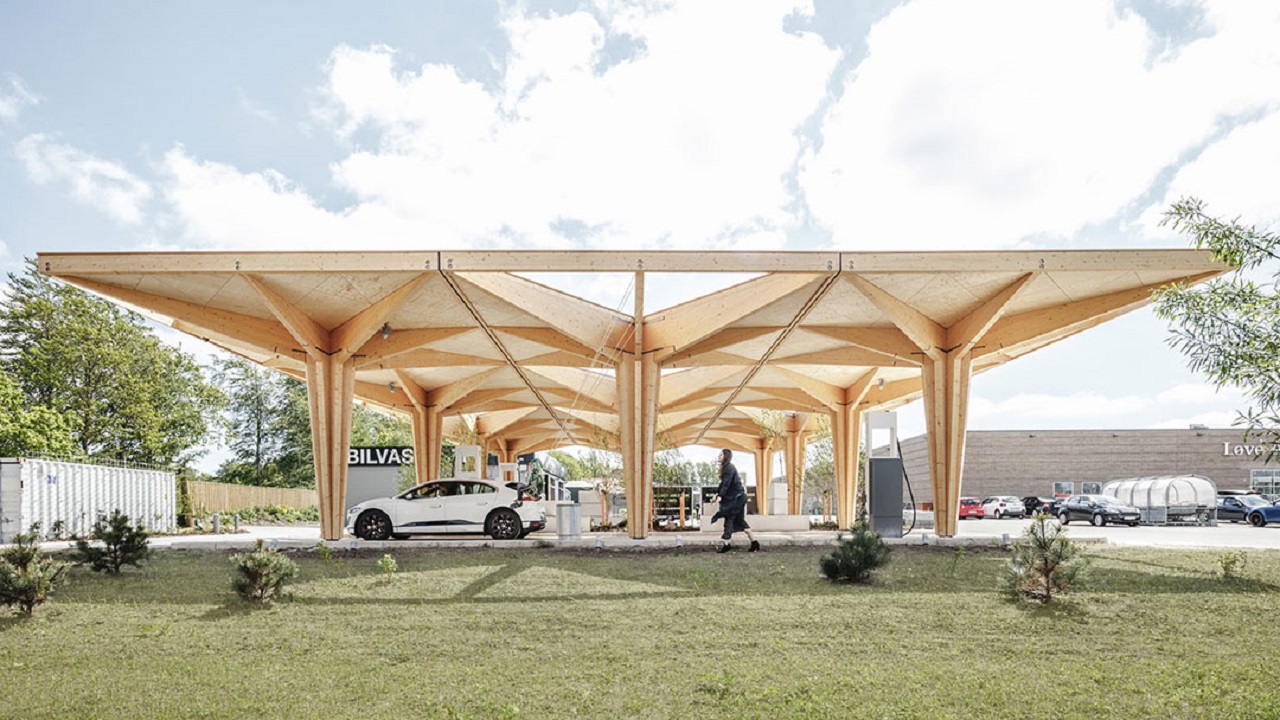
The Winning Project from the Contest in Canada Will Bring a New Type of Gas Station, Offering an Amazing Experience for Electric Car Drivers Without Using Fossil Fuels
It has been said for some time that gas stations are on borrowed time. As the popularity of electric cars grows, fuel stations will need to reinvent themselves to supply this new segment of the automotive market. But a new design competition, funded by Parkland, one of the largest fuel station companies in the world, based in Canada, is proposing the challenge to imagine what future fuel stations will look like.
Read Other Related News
New Future Fuel Stations Designed by Company from Canada
Parkland, a company based in Canada that currently operates around 3,000 gas stations spread across 25 countries, is the main sponsor of an international challenge aimed at creating a future electric refueling station.
-
Engineers propose a fourth traffic light for intersections – the change promises to affect crossings, queues, and waiting times.

-
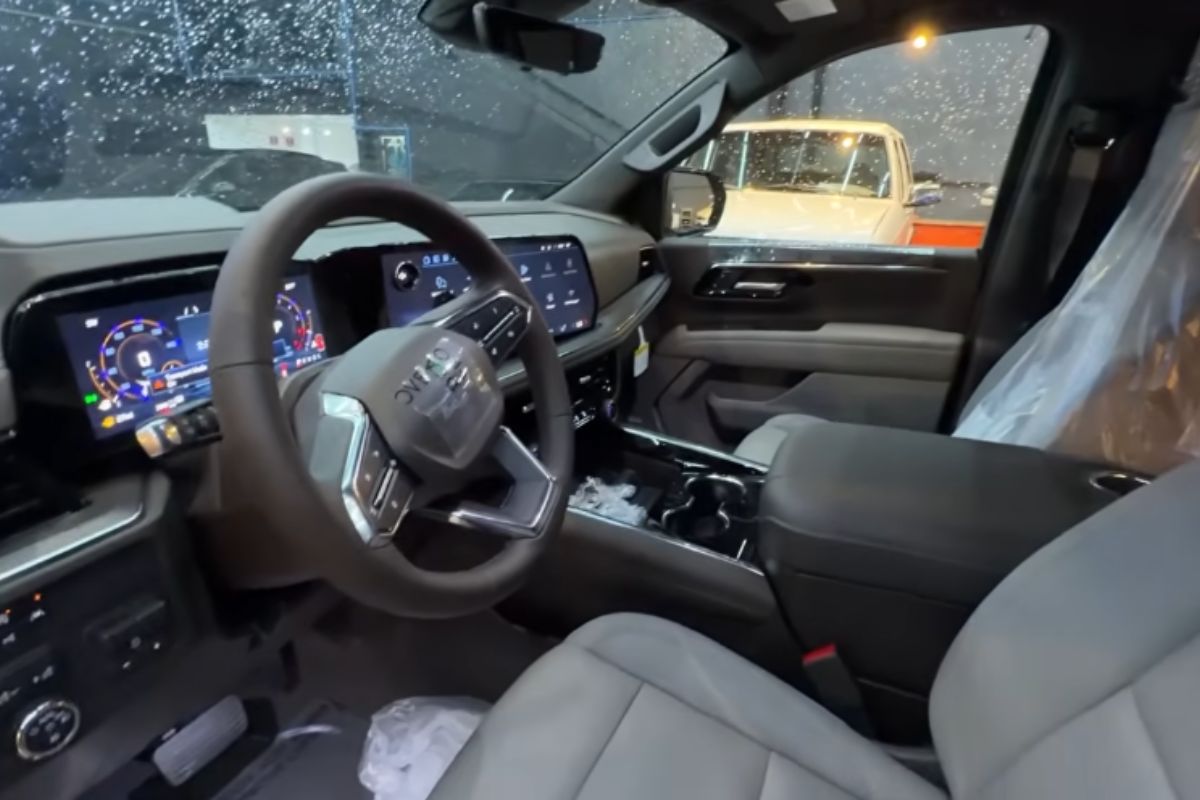
Chevrolet Suburban Z71 lands in Brazil with a V8 engine, off-road design, air suspension, seven seats, and colossal size, a rare version imported for around R$ 1.3 million with luxury and exclusivity.
-
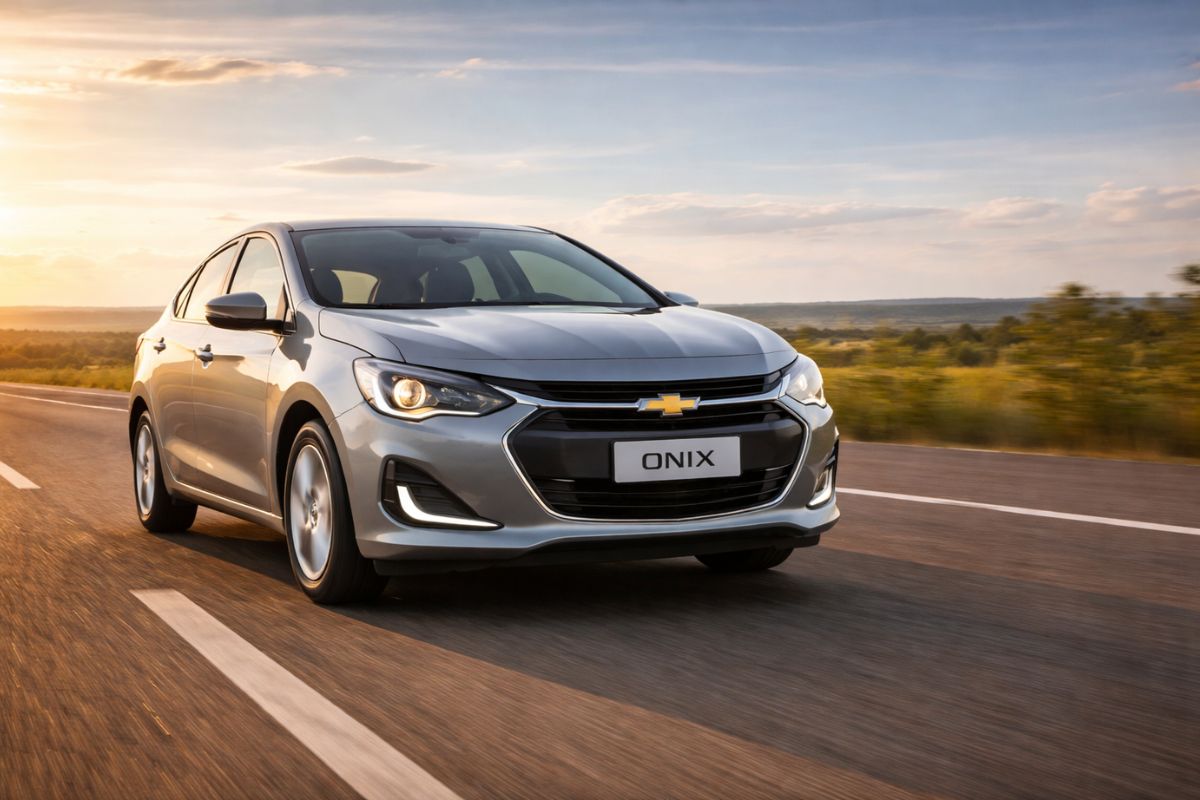
The Chevrolet Onix 1.0 turbo achieves 17.7 km per liter on the highway and ranks among the three most economical cars in Brazil in 2026, alongside two more expensive Toyota hybrids available at dealerships.
-
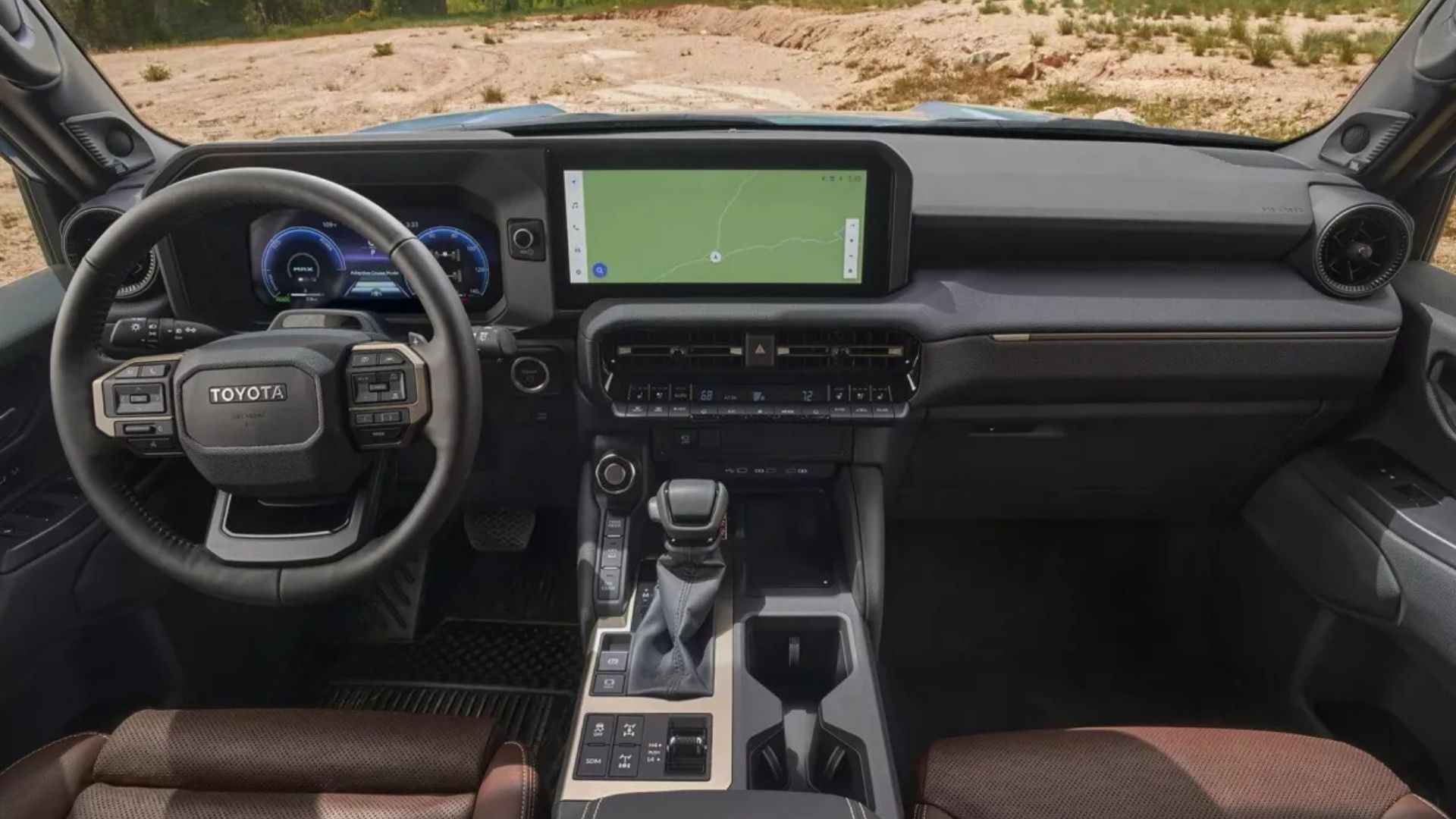
Little sister of the Hilux: Toyota launches Land Cruiser FJ with 4 radical versions, 2.7 engine with 166 hp and 4×4 traction with locking.
The challenge winner sought to understand that the time required to charge a battery is also an opportunity for the driver to rest and relax, considering that an electric car can take up to half an hour to fully charge. Now, Parkland will have to plan the next steps to begin building the new fuel stations.

According to Darren Smart, Parkland’s Senior Vice President of Strategy and Corporate Development, the company has spent considerable time reflecting on the industry’s direction, and there is no doubt that the automotive sector is becoming increasingly electric. However, Smart stated that when it comes to improving customer experiences, the automotive sector is still very much behind, as fuel stations are located in poor and dangerous areas, leading to customer dissatisfaction, as they will have to remain stationary for 20 to 30 minutes to charge their electric cars in a risky external area.
Future Fuel Station Design Highlights Accessibility with a Minimalist Model That Facilitates Consumer Life
-
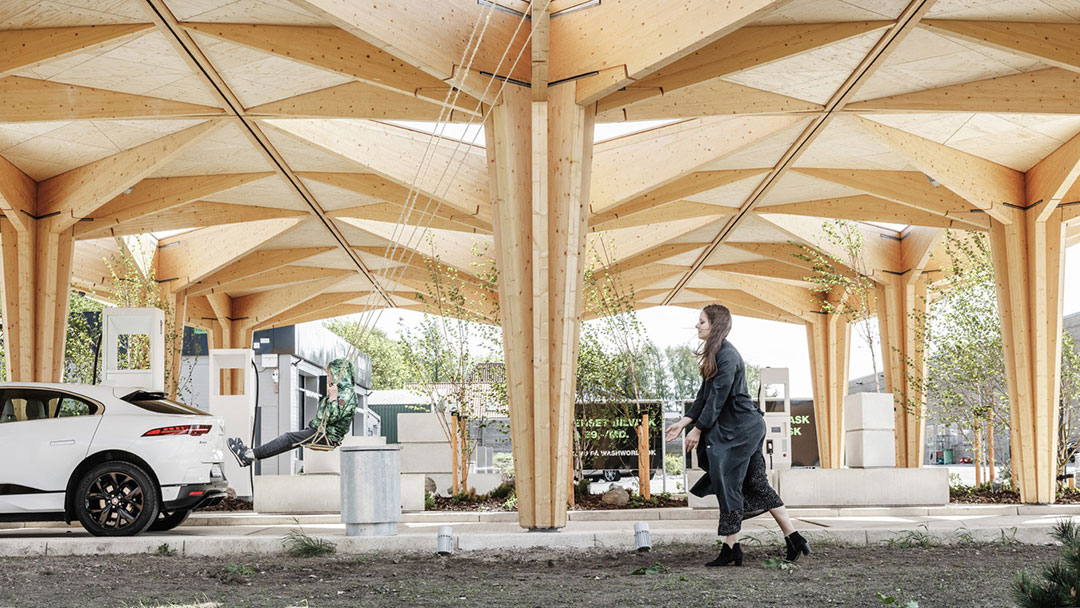
PHOTO: Electric Autonomy Canada -
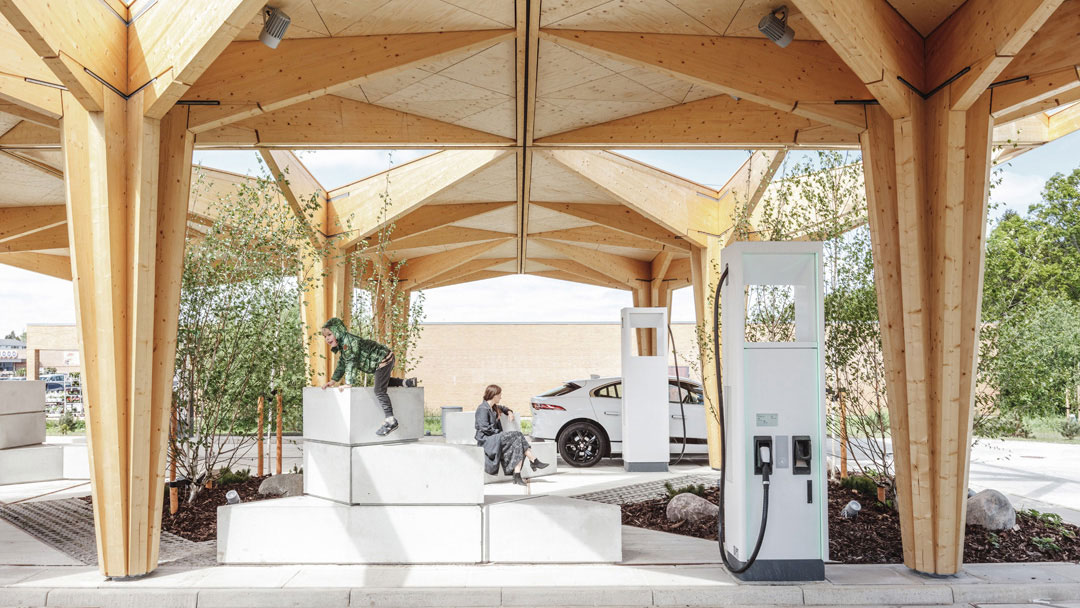
PHOTO: Electric Autonomy Canada -
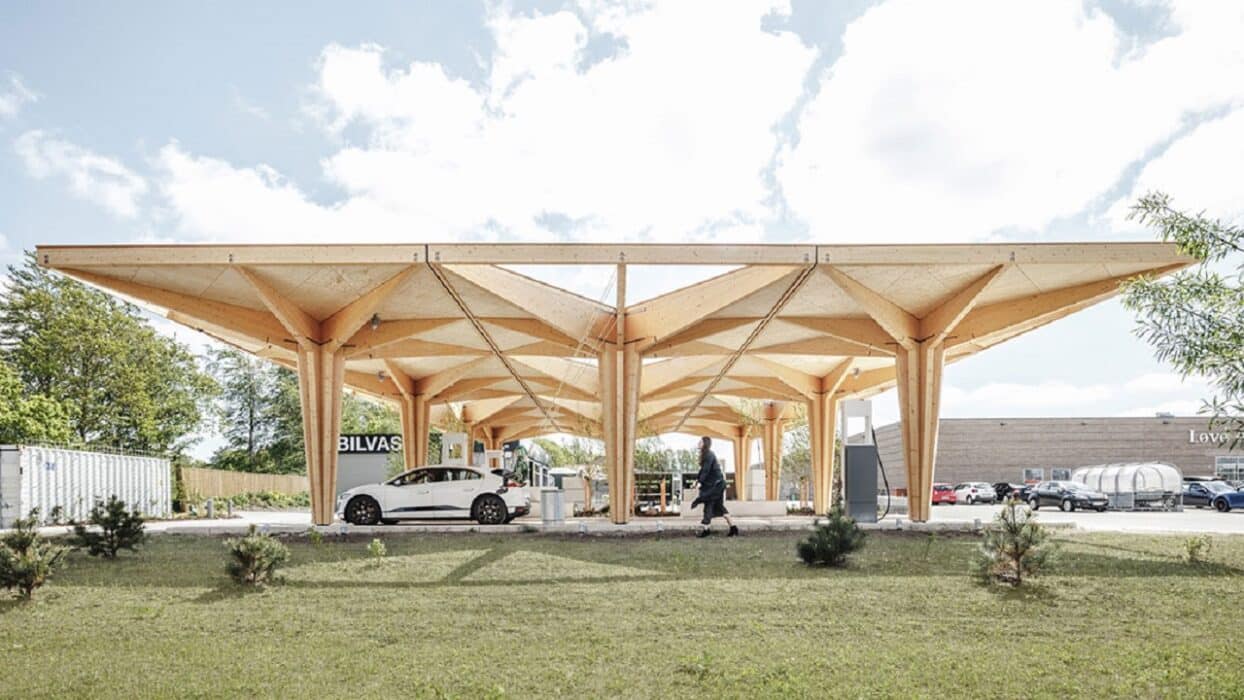
PHOTO: Electric Autonomy Canada
Scottish architect James Silvester, who was responsible for the winning project of the challenge, highlighted in his presentation a model that is entirely different from what we currently have, prioritizing the improvement of customer experience. The design of the new station establishes a long, linear structure, with charging terminals throughout its area.
In the central part, there will be shops and provision of other services, such as convenience services, also including spaces for drivers to take a break and relax while their electric cars charge. James reported that the new stations will need to adapt to customers, offering them some form of comfort and entertainment, as waiting almost 40 minutes generates discomfort and irritation for the customer.
The new stations have been designed with a modular system that allows their structure to adapt to different plot sizes. The refueling station designed by James is skillfully capable of providing a wide range of services and amenities for the vehicle and its driver. The station will offer food and beverage options, an exercise area, therapeutic massage, and also a garden, all for the driver’s relaxation while their vehicle charges.
Sustainability Will Also Be a Priority in the New Future Stations
The project developed by the Scottish designer and architect features a structure entirely made of sustainable materials, such as wood and stone, and its roof will have solar energy generating panels.
James emphasized that, with this new modular structure, the construction time will be much shorter and more flexible, allowing for a wide range of services within the station.








Seja o primeiro a reagir!