





 Portuguese
  English
  Spanish
  3 min of reading
  9 comments


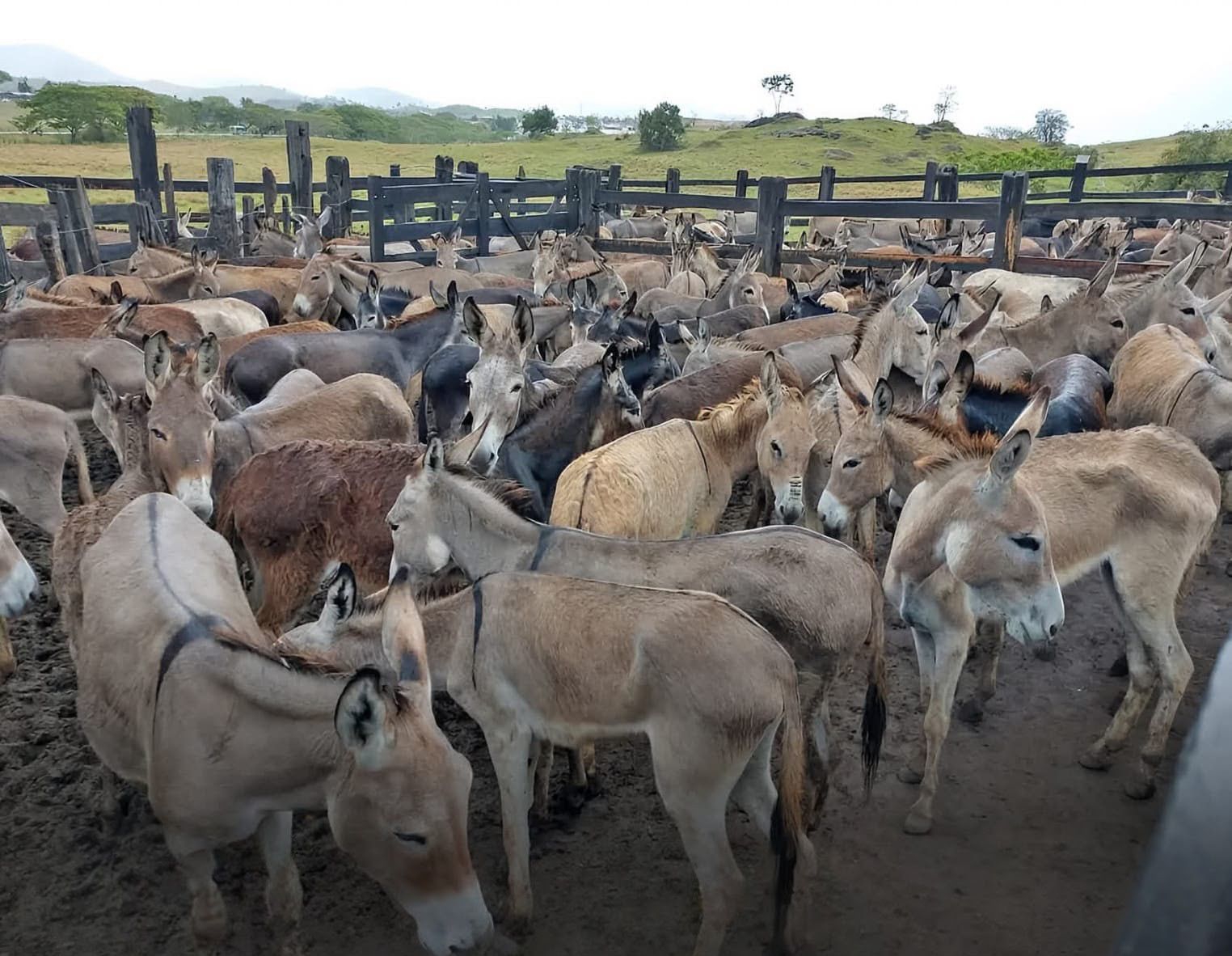


The Authorization Strengthens Production Under Official Inspection and Can Open Space for New Investments Without Replacing Beef and Pork.
The donkey meat has entered the radar of the Brazilian agribusiness and may gain strength in 2026 with a significant change in the legal and commercial landscape.
Brazil, considered the sixth-largest consumer of meat in the world, may see this product advance in the market following a decision that guaranteed the legality of slaughtering these animals.
The measure recognizes slaughter in slaughterhouses with Federal Inspection Service (SIF), with sanitary and animal welfare standards provided by law, in addition to inspection by the Ministry of Agriculture and Livestock.
-
The institute that trained the greatest aerospace engineers in Brazil has just opened its first campus outside São Paulo after 75 years: ITA Ceará will have R$ 445 million, new courses in energy and systems, and classes are expected to start in 2027.
-
Luciano Hang, owner of Havan, goes to Juiz de Fora after the tragedy in February, brings R$ 1 million, hands out R$ 2,000 cards, and donates up to R$ 15,000 to victims in the region.

-
The Brazilian passport allows legal residence in dozens of countries without the need for a prior visa, and most Brazilians are unaware that they can apply for residency directly upon arriving in nations in South America, Africa, and even Europe.
-
Petrobras sends a message to Brazilian truck drivers after fuel collapse and reveals plan to have 100% domestic diesel.


What Happened and Why It Grabbed Attention
On November 5, 2025, the Federal Regional Court of the 1st Region recognized the legality of the slaughters carried out by the certified slaughter industry with SIF.
The understanding considered that the procedures follow sanitary and animal welfare rules, with continuous oversight by the Ministry of Agriculture and Livestock.
In practice, the legal recognition reduces uncertainties for those intending to operate in this chain, as long as they adhere to the required criteria.
What Changes in Practice for Investors and the Market
With legality assured, the expectation is for increased interest from commercial investors and faster negotiations with Brazilian entrepreneurs.
The formation of a productive chain is now seen as a possible path, without removing cattle and pigs from the center of the protein trade.
This opens space for a complementary market, with the potential to reorganize part of the agro-industrial activity, especially where there is already a regularized slaughterhouse structure.
How the Process Works Within Sanitary Rules
The mentioned slaughter involves the certified slaughter industry with Federal Inspection Service (SIF), which requires sanitary standards and control routines.
The permanent oversight of the Ministry of Agriculture and Livestock is pointed out as part of the process, with continuous inspection at the designated stages.
With this foundation, the product tends to gain space only when the operation is within the official requirements, without shortcuts and without informality.
What Can Happen From Now On With the Sale of Donkey Meat
The scenario favors the entry of new players and the advancement of commercial discussions, with the possibility of expanding activity related to donkeys.
There is also the expectation of reducing animal abandonment. Alex Bastos, a zootechnician and livestock producer, states: “As donkey farming has never been established and their use has lost utility in transportation activities, many animals are abandoned on roads and fields.”
The change may alter the dynamics of breeding and management if the activity organizes itself as a regular productive chain.
Alert for the Impact on Meat Marketing and the Donkey Population
The possibility of consumption and commercialization remains surrounded by debate, with warnings about the impact on the donkey population.
The Chinese demand for collagen located just beneath the skin of these animals appears as one of the driving forces of pressure on the species in several countries, including Brazil.
Between 1996 and 2025, more than one million donkeys were killed in Brazil. The number dropped from 1.37 million to just over 78 thousand, representing a reduction of 94%.
This decline raises a red flag and keeps the discussion ongoing about how to reconcile market, oversight, and species preservation.
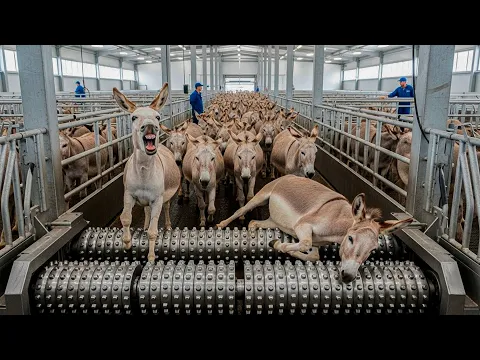
Discover Inside the Largest Donkey Slaughterhouse in Brazil









Realmente um absurdo, tanto se fala e tanto vem se lutando para se conseguir a proteção aos animais, e muito mais sobre esses pobres animais, que já sofreram tanto, por abandono ou esforço exagerado e agora ainda serão sacrificados para que alguns lucrem com isso. Não, não é aceitável que isso aconteça 😞😞
Sacrificar aqueles que sempre foram símbolos do verdadeiro trabalho. Quem criou a ideia deve ser o filho do **** só pode. Porque não cria a família e abre um hospital para Sacrificar e vender os órgãos.
Agora era só o que faltava. Os animais são dóceis Agora o ser humano é a pior espécie de bicho que existe aqui na terra. Quem realmente aderir a essa ideia que sofra muito até a morte.
Quee@