





 Portuguese
  English
  Spanish
  5 min of reading
  0 comments


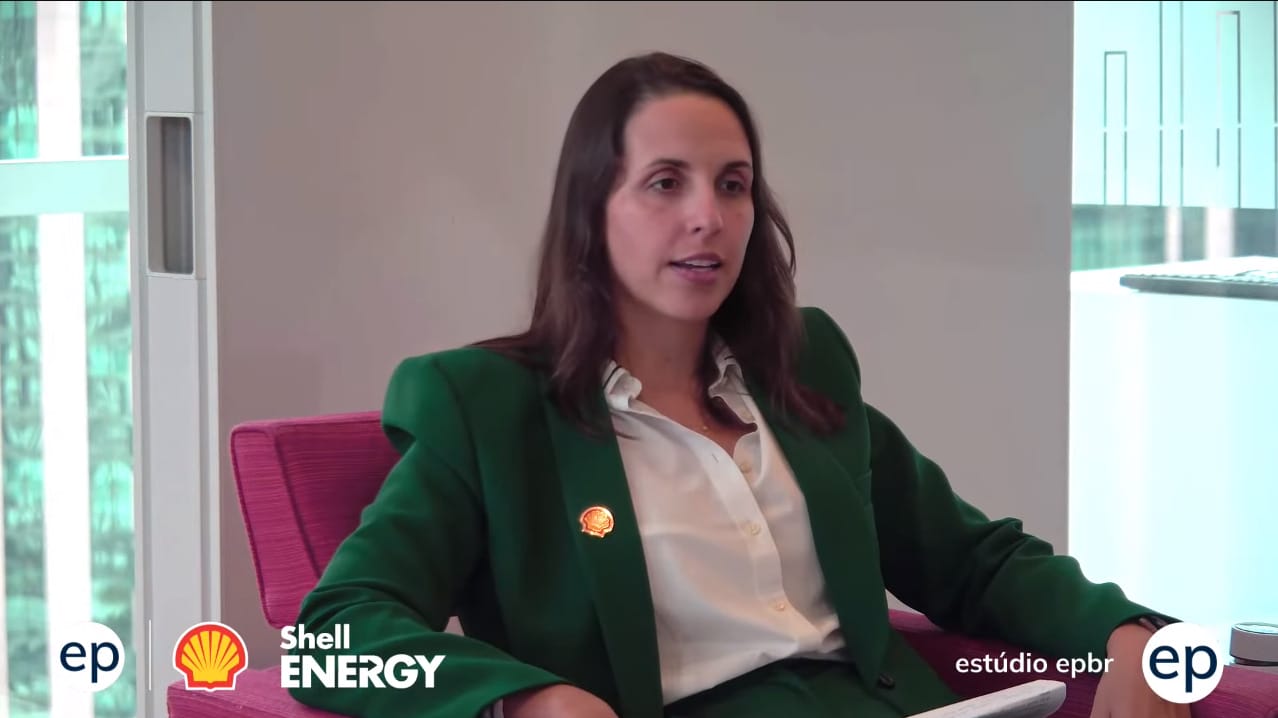
According to the Sales and Gas Origination Manager at Shell Energy Brazil, the function of the gas trader is to simplify the market, making it less complex. She emphasizes the importance of this role for the efficiency and transparency of the sector.
Present at the meeting were the Sales and Gas Origination Manager of Shell Energy Brazil, Carolina Bunting, and the Gas Supply and Market Manager of Bahiagás, Makyo Félix.
The epbr magazine, in collaboration with Shell Energy Brazil, organized the pioneering Shell Energy Gas Forum in November, which aimed to share knowledge about the natural gas and energy market with society.
The event addressed the liberalization of the natural gas market, the transition to the free market, and how consumers can take advantage of the spot market for natural gas to develop strategies that promote the sustainability of their operations. This was an important moment for new consumers to understand how this market works, the new types of contracts available, and the benefits they can bring to their businesses. **An opportunity for new consumers to understand how this market works, the new types of contracts available, and the benefits they can bring to their businesses.**
-
The rise in oil prices could ensure an extra revenue of R$ 100 billion for the Federal Government, indicates a recent economic study.

-
Naturgy begins an investment of R$ 1.6 million to expand the gas network in Niterói and benefit thousands of new residences and businesses.
-
A major turn in the Justice system suspends tax increases and directly impacts oil and gas companies in Brazil by affecting costs, contracts, and financial planning, leaving uncertain what could happen to the sector if these costs had increased.

-
Brava Energia begins drilling in Papa-Terra and Atlanta and could change the game by reducing costs in oil while increasing production and strengthening competitiveness in the offshore market.


Challenges for the Development of the Biomethane Market in Brazil
The executive identifies two main difficulties for the advancement of the biomethane market in Brazil. The first challenge is related to logistics – how to connect, in an economically viable way, the various sources of biomethane to consumption centers and the gas pipeline network.
“A second point is determining the value of biomethane in the Brazilian market. Currently, the market seeks to differentiate between natural gas and biomethane. Therefore, it is necessary to promote the development of a standard for biomethane, as well as the product’s recognition. And, for this, it is crucial to address regulatory issues,” commented the executive.
The recognition of the value of biomethane and the development of standards are key aspects to drive the market in Brazil.
“Renewable natural gas is a field where there has already been considerable investment in other regions of the world, particularly in Europe. We see enormous potential in Brazil as well,” said Carolina Bunting.
Carolina Bunting emphasized that Shell has been cautious in evaluating business opportunities in this sector.
“There are challenges to be overcome, and that’s why we are being very careful about the type of product we seek to acquire and the type of project we intend to enable. We are willing to establish advantageous partnerships with producers to create a more competitive and alternative product for the end customer. **In the end, they are looking for solutions that help reduce emissions economically**,” she highlighted.
“Shell has shown interest in biomethane, we are negotiating with producers and are also in contact with potential customers interested in acquiring and using this gas to reduce their carbon emissions,” said Carolina Bunting.
She notes that the company already has activities in this sector in other countries. This year, it completed the acquisition of Nature Energy Biogas, the largest producer of biomethane in Europe.
“We need to find a mechanism to stabilize the market and avoid unnecessary costs, while maintaining the necessary competitiveness,” stated Makyo.
Shell has expressed its interest in expanding its operations to include the marketing of biomethane in the Brazilian market. Its goal is to incorporate renewable gas into its product portfolio at Shell Energy Brazil, in response to the growing demand for decarbonization among customers.
New Strategies for the Gas Market, Says Makyo Félix from Bahiagás
Makyo Félix, responsible for the Gas Supply and Market sector at Bahiagás, highlighted the importance of offering more options and flexibility in contracts for consumers.
According to the manager, the trend is for contracts to become more flexible, allowing involved parties to acquire gas more efficiently. Additionally, he emphasized the possibility that, in the future, the opposite could happen: selling excess gas to the trader or loader, aiming to balance the market. **The goal is to seek balance, as a positive balance for one could represent a negative balance for another**.
“Shell’s responsibility is also to assist in this process for the consumer, clarify how the market works, and aid in the integration into the market across Brazil. It is not necessary to be limited to one state due to certain restrictions. We are operating in several Brazilian states, we have that knowledge, we can guide the consumer and really explain how this process will work,” she concluded.
According to her, the company has been using a more adaptable contract model, the Master Sales Agreement (MSA), to accommodate changes in consumption throughout the year without imposing penalties.
“Sometimes, a customer operating in the market in Minas Gerais wants to operate the same way in Espírito Santo and cannot. This generates a lot of difficulty and disappointment for the customer, who seeks a solution that adapts to different situations and does not find that option,” explained the executive.
Carolina Bunting stated that the main function of a trader is to create market and increase liquidity. Therefore, the objective would be to solve the challenges, risks, and demands of both customers and producers.
Some producers are hesitant to enter the Brazilian market due to complexity, high fixed costs, and management difficulties. Similarly, customers understand that there will always be unforeseen circumstances and that needs may arise that a more conventional contract, like the GSA [Gas Supply Agreement], may not be able to meet.
Reducing the Complexity of the Gas Market in Brazil
According to Carolina Bunting, Sales and Gas Origination Manager at Shell Energy Brazil, the primary role of gas traders in Brazil is to simplify the market. This was one of the points highlighted during the first Shell Energy Gas Forum, a partnership between the epbr agency and Shell Energy Brazil (see the full record above).
Carolina explained that consumers may encounter difficulties dealing with the various rules present in each state and finding options that meet their demands with flexibility, without the risk of facing future fines or penalties. Shell Energy is able to assist customers in navigating these rules and seeking a combination of contracts that meet each one’s needs.
Organized by

Source: EPBR










Seja o primeiro a reagir!