





 Portuguese
  English
  Spanish
  6 min of reading
  4 comments


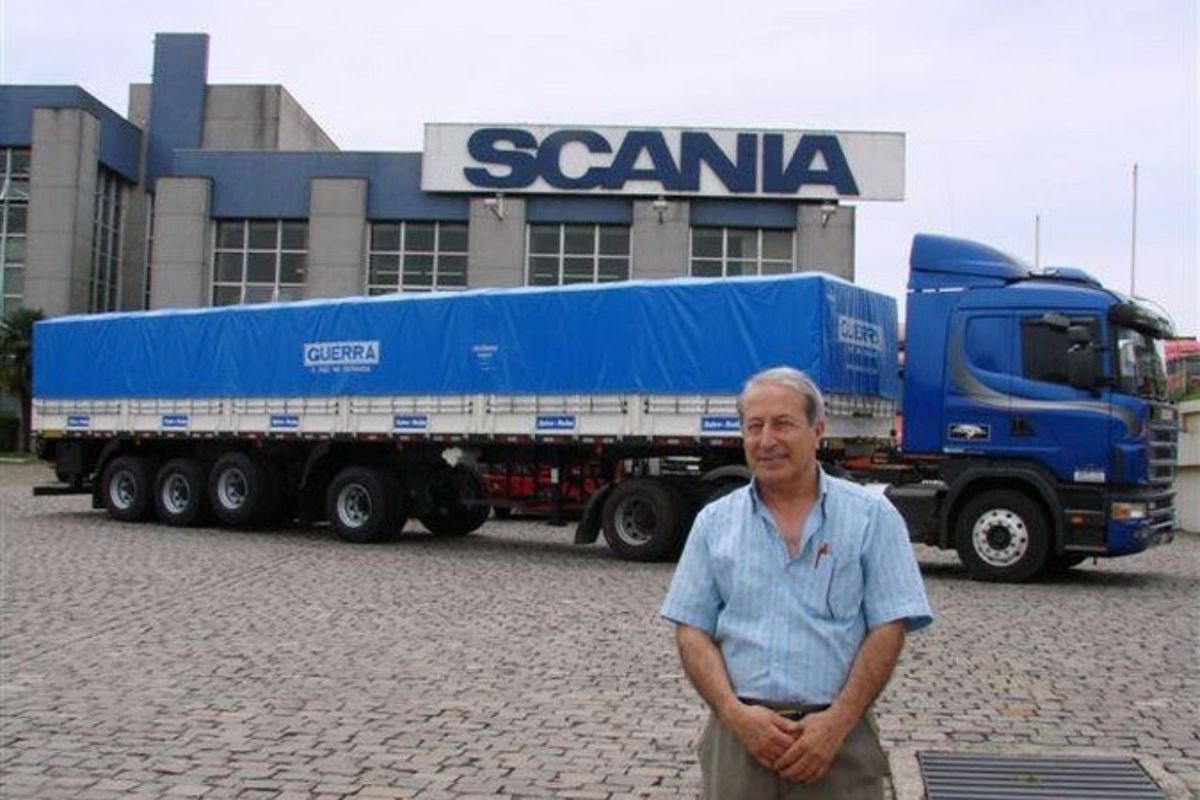


Today The Four-Axle Trailer Can Run Legalized In Brazil, As Long As It Respects The Regulations Of The Contran, Follows The Current Weight Limits And Meets All Technical Requirements To Run Without Fear Of Fines And Seizures
For many years, the four-axle trailer was seen as the villain of Brazilian roads. The composition, known as the fourth axle, divided roads, yards, and inspections between those who saw efficiency and those who only saw problems. Amidst all this confusion, many people didn’t even know if they were inside or outside the law. Now, with clearer rules, the reality has changed. Today, the four-axle trailer can run legalized in Brazil, as long as it is fully regularized and complies with the current technical standards.
This shift directly interests transporters, truck drivers, and shippers of grains and heavy loads. The same solution that once was synonymous with fines, seizures, and court injunctions can now represent productivity and legal security. The central point is simple: understanding how the fourth axle came about, why it became controversial, and what needs to be regularized in practice for the four-axle trailer to run legalized in Brazil without surprises at inspection points or on the scales.
How The Four-Axle Trailer Was Born And Why It Became Controversial

The story begins in 2008 when engineer Dirceu Sironi, known for creating the seven-axle bitrem, introduced the idea of the four-axle trailer to the transportation sector. The proposal was clear: increase the load capacity without sacrificing stability and safety, also improving the weight distribution on the pavement.
-
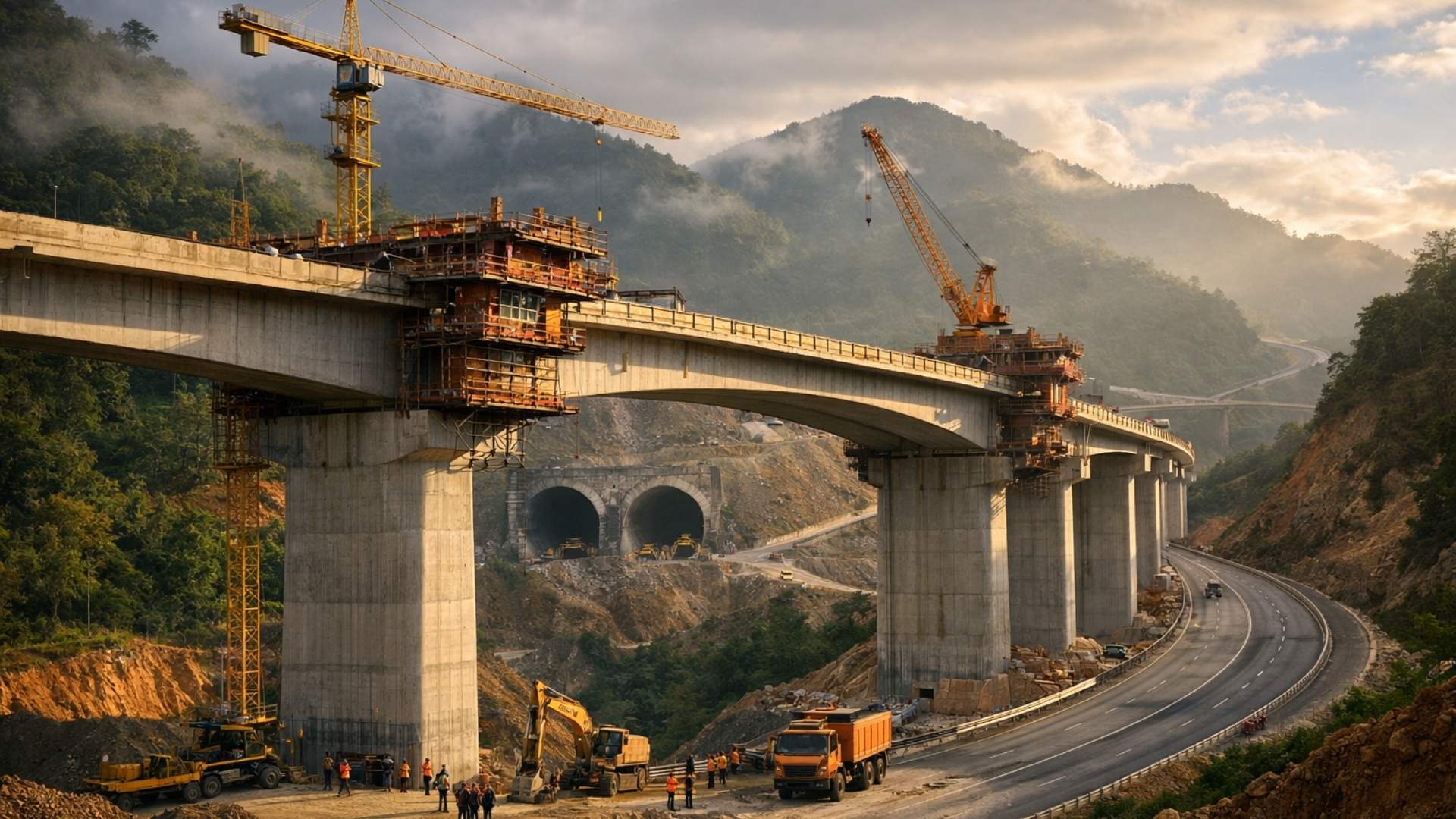
The government puts R$ 8.6 billion on the table to change the highway (BR) with 50 overpasses, 28 bridges, 4 tunnels, and 40 km of bike lanes in 180 km of historic duplication.
-
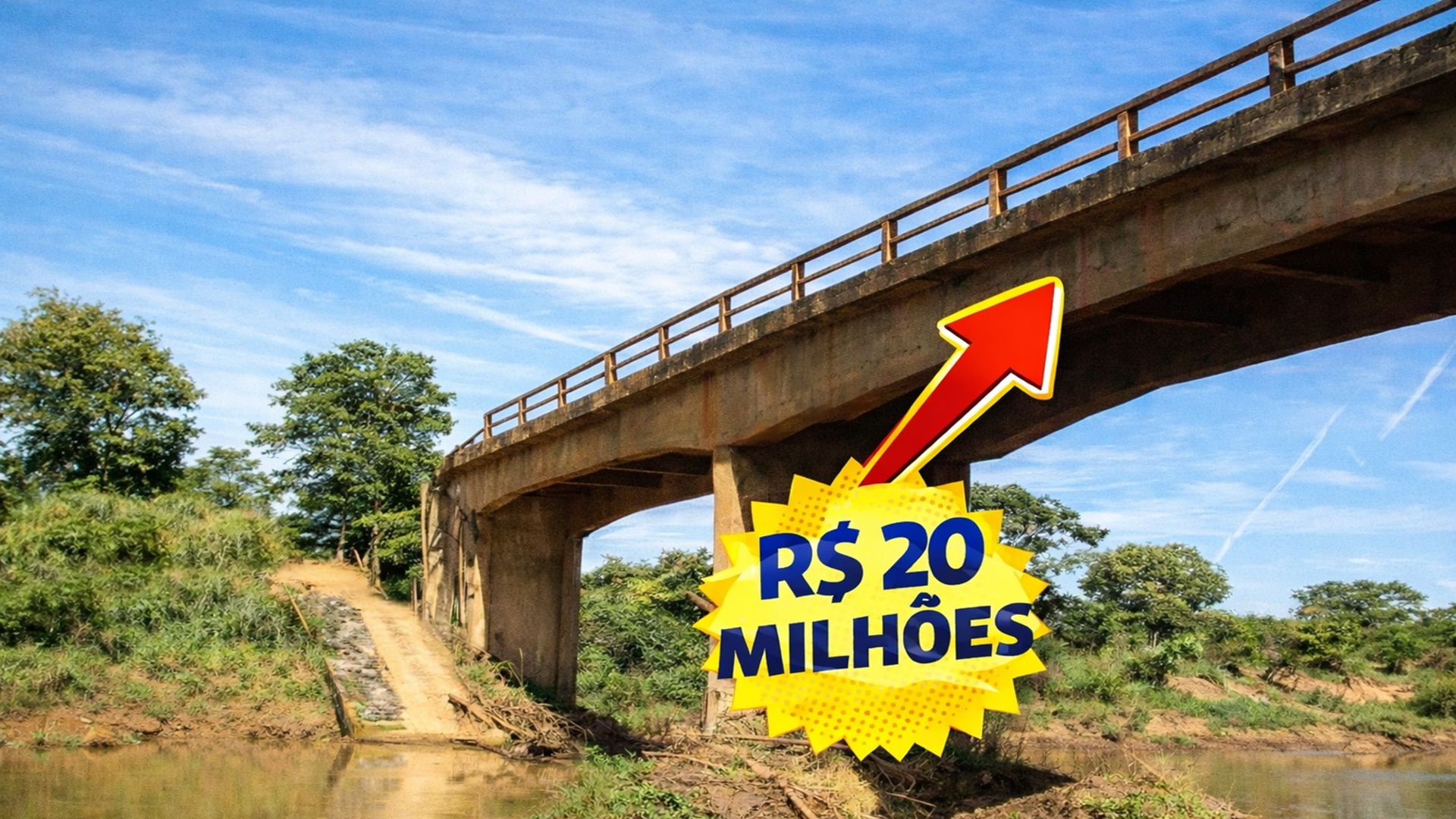
BRL 20.1 Million Bridge Project Kicks Off: 200-Meter Construction to Improve Access in Three Cities in Minas Gerais
-
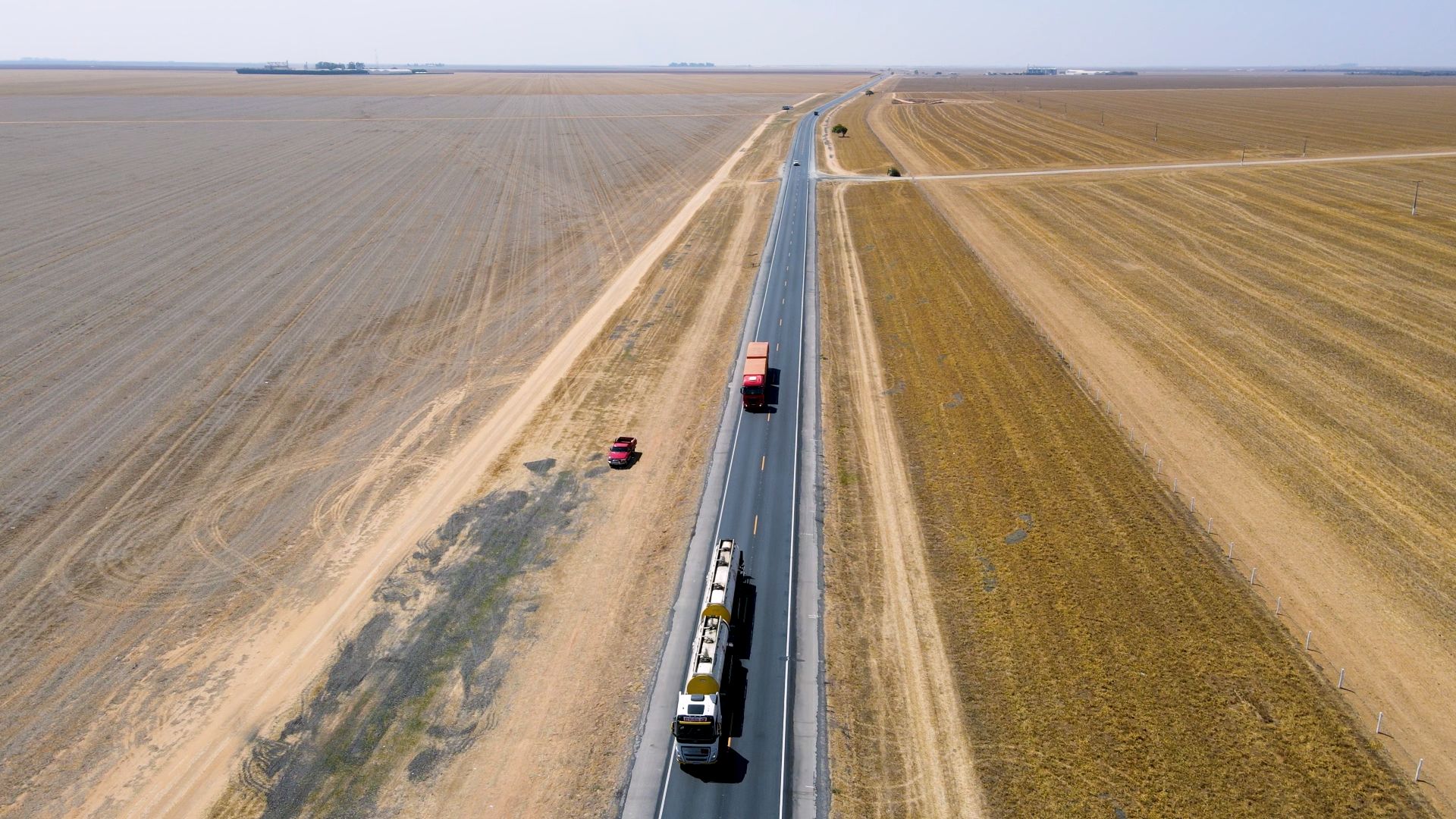
‘Endless Road’ In Brazil Is One of The Largest In The World: 145 Km Stretch On An Important Highway (BR) Crosses The West Of Bahia And Had 135.9 Km Revitalized With R$ 35.3 Million
-
Engineer From ITA Who Worked at Embraer Leads Free Flow Expansion With National Artificial Intelligence and Technology for Toll Without Barriers in Brazil


In practice, the concept worked. Tests showed more stability in curves, better dynamic behavior, and greater efficiency in transporting heavy loads, especially grains. The problem began outside of engineering: the official approval of the composition was not completed at the time, which created a real legal void. The trailer existed, ran, and delivered operational results, but it did not have explicit and structured backing in legislation, opening space for conflicting interpretations.
From Legal Void To The Fame Of Synonym For Fine
Without clear regulations, the four-axle trailer grew based on regulatory improvisation. Transport companies and truck drivers began to adapt Vanderleia and LS trailers, often in an artisanal or semi-industrial way, adding the fourth axle to gain loading capacity over long distances.
As a result, the same four-axle trailer could be legal in one state and illegal in another. In some places, inspectors considered the composition illegal; in others, there was tolerance or more flexible readings of the rules. The result: fines, vehicle seizures, stopped loads, and a flood of lawsuits and injunctions.
Even with this risk, many continued to bet on the fourth axle because each trip with more tons meant fewer trucks on the road, proportionally lower consumption, and higher profitability per freight. It was this continuous use, mixed with legal insecurity, that consolidated the fame of the composition: loved by those who explored the technical potential, hated by those who had their trucks seized or spent their time in the courts.
What Changed: When The Four-Axle Trailer Can Run Legalized In Brazil

With increasing pressure from the sector and the growing presence of these compositions on the roads, the Contran was forced to act. Over time, the council began to establish specific rules for special compositions, including the four-axle trailer.
Today, the central message is objective: the four-axle trailer can run legalized in Brazil, as long as it fully complies with the current technical and regulatory standards. This means that there is no longer a need for an injunction in court or special traffic authorizations, as long as the set is completely within what the legislation requires.
In practice, running regularized involves four main pillars:
- Approved Project and Modifications
The inclusion of the fourth axle needs to follow an approved project, with a validated technical solution and assembly carried out within recognized standards, not just artisanal adaptations without technical responsibility. - Correct Weight Distribution
The entire set must respect the PBTC limits and load per axle defined in the rules, with weight well distributed to avoid overloading a specific point of the set or the pavement. - Dimensions Within Standard
Length, width, rear overhang, and other measurements must remain within the limits established for the category. Exceeding these parameters puts the trailer back in a situation of irregularity. - Safety Systems In Order
Brakes, suspension, lighting, signaling, and other mandatory items must be suitable for the new arrangement with four axles. Without this, the trailer can run, but cannot run legalized in Brazil, because it fails inspections or serious enforcement.
Regularized Trailer X Irregular Trailer: The Difference Is In The Details
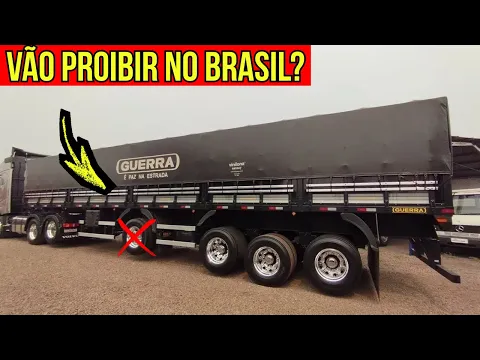

Today there is a very clear boundary between a regularized fourth axle and an irregular fourth axle, although many people still ignore this difference in their daily lives.
When the trailer is modified with a technical project, passes inspection, has approved reports, and is correctly documented, it can run legalized in Brazil and ends years of uncertainty for the transporter. The risk of fines and seizures drops drastically because the vehicle becomes backed by regulation.
When the fourth axle is adapted without following the rules, without a report, or with excessive weight, the scenario goes back to what it was in the past: exposure to fines, seizures, loss of trips, and wear with customers. In many cases, the savings made on makeshift adaptations vanish during the first rigorous inspection.
Why Are There Still People Afraid Of The Fourth Axle
Even with clearer rules, part of the sector remains hesitant. To a large extent, this happens because the memory of years of legal insecurity still weighs heavily. There are transporters who have seen trailers stuck in yards for days, loads delayed, contracts at risk, and lawyers having to rush for injunctions at dawn.
Another point is that the interpretation of the law in the field can still vary from region to region, especially when the vehicle does not have its documentation and reports well organized. When there are missing papers, or when the data on the CRLV does not match what the inspector sees in the yard, the four-axle trailer ceases to be able to run legalized in Brazil and returns to the risk zone.
Therefore, more than just buying or adapting, the key is to document, approve, review, and train drivers and teams so that everyone knows how to explain, during inspections, that the set complies with the rules and why it is legal.
Is It Worth Investing In A Four-Axle Trailer Today?
For those who work in sectors such as grains, fertilizers, and other heavy loads over long distances, the concept of the fourth axle still makes a lot of operational sense. More load per trip, fewer trucks running, and better utilization of the transport structure are strong arguments.
The difference is that today, the gains only hold if the operation is 100% within the law. It is not enough for the project to work technically. If the trailer is not regularized, it does not matter to say that it can run legalized in Brazil because on paper and in inspections it remains irregular.
From a strategic standpoint, those who decide to invest in this type of composition need to see the fourth axle as a complete investment, which involves engineering, documentation, compliance with standards, inspections, and training, not just “one more axle to carry more weight.”
And what about you, do you think that the four-axle trailer, now that it can run legalized in Brazil, has become an indispensable ally for heavy transport or is it still too great a risk for your type of operation?






Eu tenho minha opinião brasileiro em vez de brigar por ter um frete melhor, estradas ,pontos de apoio,pensam em PESO, CAPACIDADE DE CARGA , É ASSIM POR DIANTE,mas como falo a desoniao da classe nunca vai mudar
É puro modismo,igual as Vanderléias ,todo mundo comprou e hj não encontra mais.Foram todas abandonadas.Essas carretas sobrecarregam o cavalo ,tem enorme desgaste de pneus e freios e logo estarão todas jogadas também
bom dia, acabei de adquirir uma quarto eixo é muito boa , não vejo muito pela diferença de peso que carega mas por não necessitar de licença para rodar nas rodovias estaduais, oque está me preocupando é se os boatos que estão rodando será mesmo lei apartar de 2026 que será necessário o cavalo mecânico ser traçado, aí vai me dificultar ou até mesmo ter que me desfazer dela