





 Portuguese
  English
  Spanish
  7 min of reading
  3 comments


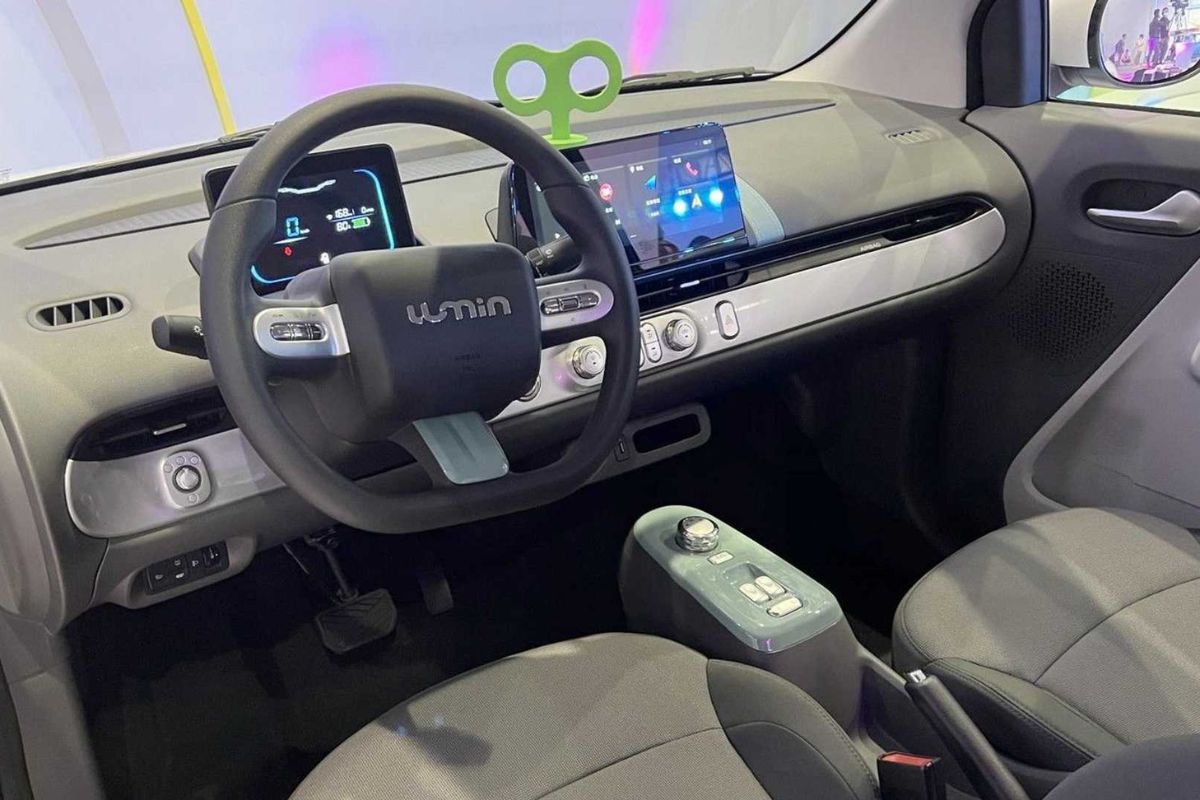


The Changan Lumin Electric Car Draws Attention for Being Zero km, Having Air Conditioning, Multimedia Center, Rear Camera, and a Totally Urban Proposal, Even with Only 47 hp and Limited Interior Space.
The Changan Lumin electric car appears as an unusual proposal for those looking at the market with an eye on urban mobility and low pricing. With a converted price of around R$ 40,000, the model draws attention for including items such as air conditioning, electric steering, multimedia center, and rear camera in an extremely compact package clearly aimed at the city.
At the same time, this electric car makes it clear from the first glance that it was not designed to cater to all types of use. The focus here is on short trips, urban routines, and a lower entry cost for a zero km vehicle. This is not a car for large families or long trips, but rather a simple solution for those who want to get around daily with a small electrified model.
Urban Proposal Defines Everything in the Chinese Electric Car
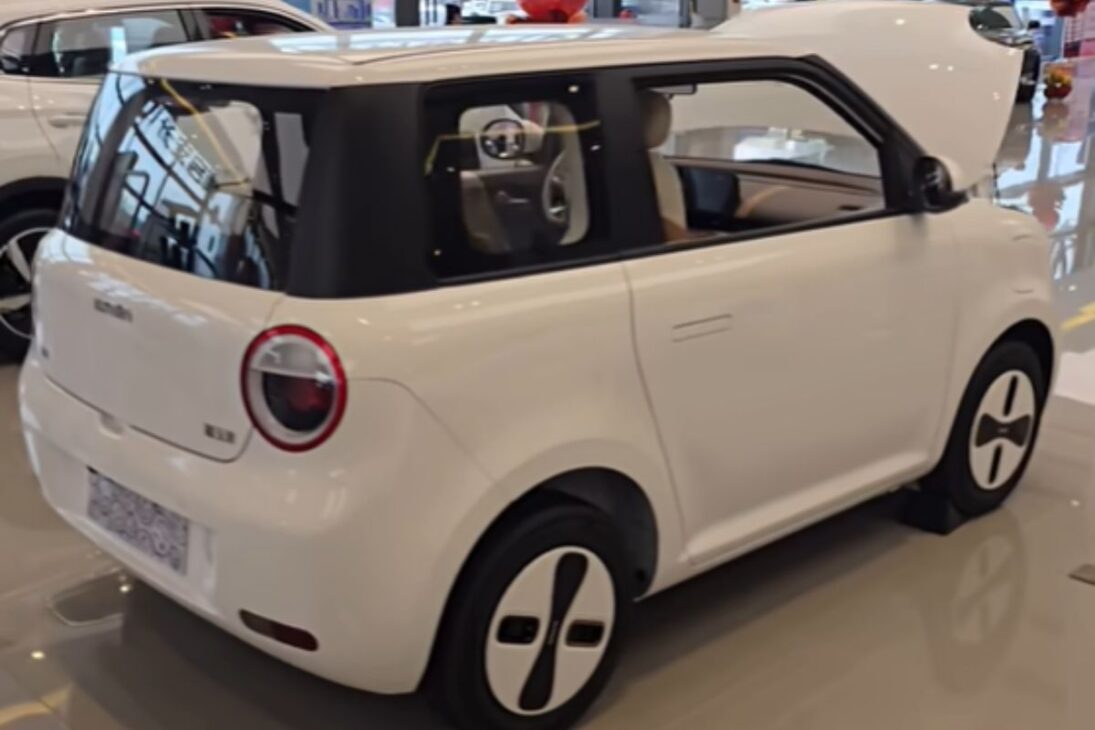
The Changan Lumin does not try to seem bigger than it is. The electric car was designed for urban travel, circulation on city roads, and daily use on short trips, such as going to work, college, shopping, and routine commitments.
-
5 cheapest used cars than a Honda CG 160 Titan 0 km, with options starting at R$ 13,000 for those who want to trade their motorcycle for a car and escape the rain, sun, and risks of riding.
-
Around R$ 24,000: 4 used Ford SUVs with up to 253 hp, V6 engine, all-wheel drive, 7 airbags, panoramic sunroof, and a complete package that surprises with its price and performance in Brazil.
-
A brand new car starts at around R$ 75,000 in Brazil, but what stands out the most is seeing streets filled with SUVs and expensive sedans in a country where millions remain in debt.

-
For R$ 32,000, a brand new Hyundai car is a rival to the Kwid with a 1.2 engine producing 82 hp, 6 airbags as standard, multimedia with wireless Android Auto, up to 391 liters in the trunk, and a refreshed look for 2026 in India.

This is evident in several aspects. The top speed does not reach 100 km/h, standing at 99 km/h, which already shows that the model was not designed for more demanding highway performance. The core of the proposal is urban mobility, with a small, light vehicle that is easy to use and has an attractive price.
Within this logic, the Lumin positions itself as a car for those who prioritize practicality and a lower entry cost. It is the type of vehicle designed for a second car in the household, for elderly people who need short trips, or for those who want a new, basic car for the city.
Price is the Main Point that Makes the Electric Car Stand Out
The strongest aspect of the Changan Lumin is the price. According to the presented data, the electric car costs just under 5,000 dollars in the market of origin, which, based on the mentioned conversion, would place it in the range of R$ 40,000.
This number completely changes the perception of the product. An electric car zero km at this price starts to seem much more interesting, especially when compared to entry-level urban models with combustion engines sold at much higher prices.
It is precisely here that the model sparks curiosity. Even with clear limitations in performance, space, and finish, it becomes relevant for offering a basic set for urban use at a price that, in theory, would be much lower than the standard seen in other electric cars.
Interior Space is Simple and Quite Limited
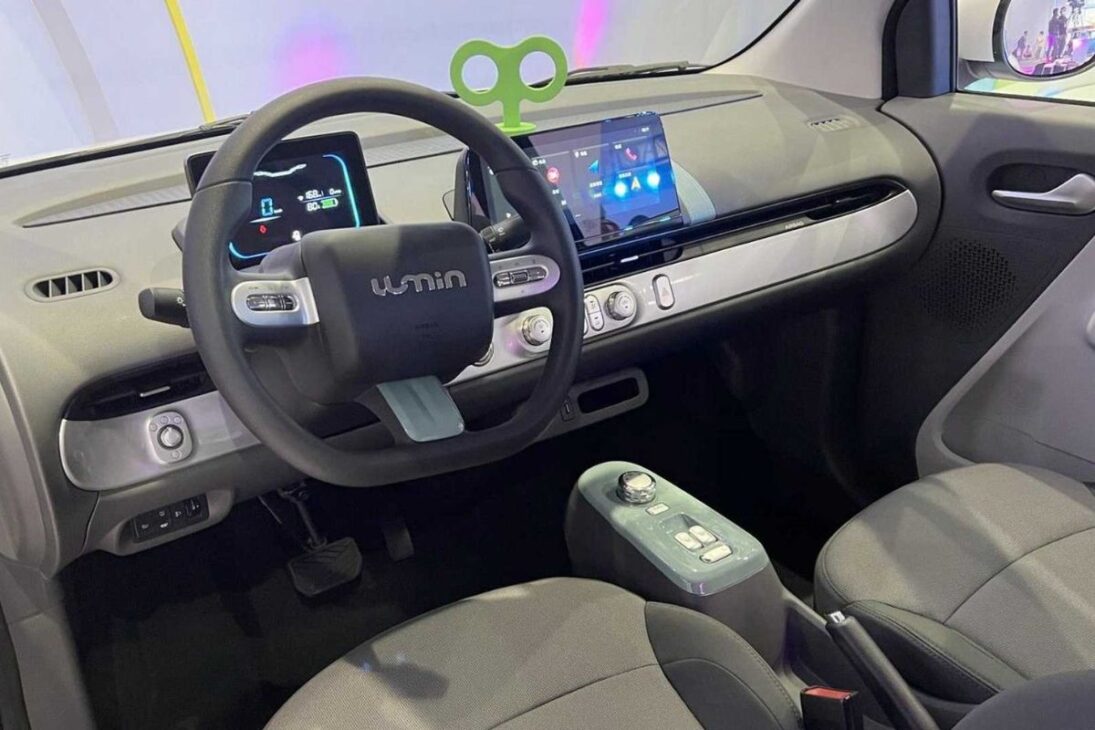
If the price is appealing, the interior space quickly shows where the cuts are. The electric car has reduced dimensions, and this directly impacts the cabin and the trunk.
In the four-seater configuration, the rear space is tight. For someone to enter more comfortably, the front seat needs to be pushed forward, which further compromises the internal position. The headroom is also small, and the finish is very basic, with a lot of visible plastic.
In the rear, the trunk practically disappears when the car is being used with all four seats occupied. About 180 liters remain, a volume sufficient for small purchases or lightweight objects.
If the seats are folded down, the capacity increases significantly, reaching something between 500 and 600 liters according to the presented analysis. The car either carries people, or it carries luggage with more room.
Equipment Makes the Electric Car Seem More Complete Than Expected
Despite the economic focus, the Lumin’s equipment package draws attention. The electric car includes air conditioning, heating, electric windows, rearview camera, multimedia center, and front airbags.
It also features items that are somewhat unexpected for such a low-cost model, such as traction control, stability control, and tire pressure monitoring. This helps create the impression that the car is more complete than the price would suggest.
On the other hand, there are clear cuts. There is no traditional glove compartment, the finish is very basic, the rear seat does not provide real comfort for long journeys, and several details show a basic construction. The Lumin tries to deliver the essentials with some technological perks, but without hiding that it was designed to cost little.
The Finish of the Electric Car is Simple and Lacks Refinement
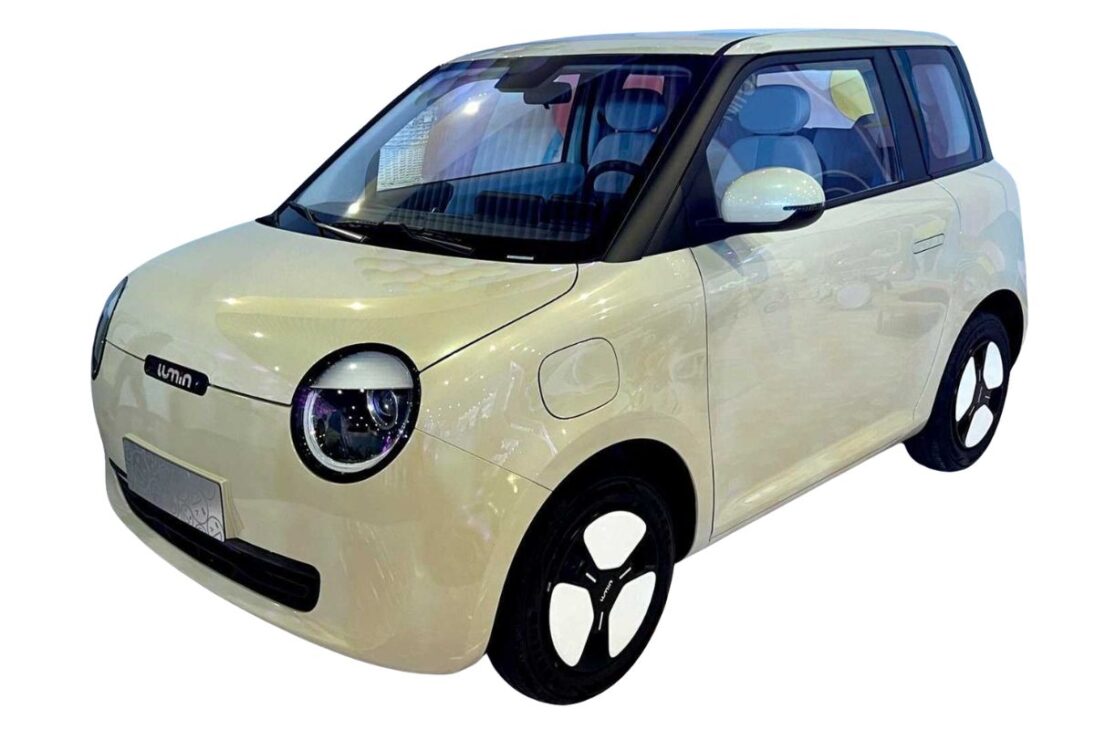
Upon entering the Changan Lumin, it becomes evident that the investment was concentrated on the functional proposal, not on refinement. The electric car uses a lot of plastic on the dashboard, doors, and in various points of the cabin.
This choice is not surprising considering the price. What the model offers is a straightforward cabin, with few luxuries and almost no materials that attempt to convey sophistication. Still, the digital instrument panel and multimedia center help give a more modern feel to the assembly.
In other words, the interior does not impress for its perceived quality but for the contrast between simplicity and equipment. It is a basic environment, but with features that make sense for urban routines.
Motors Clearly Show the Limits of the Electric Car
When the subject shifts to performance, the Lumin reinforces its proposal without beating around the bush. The electric car has 47 horsepower and 8.5 kgfm of torque, modest numbers even by urban standards.
This means that the model was not made to deliver strong acceleration or agile behavior on highways. The promise here is for smooth travel, aimed at those who want to get from point A to point B with economy and simplicity.
The speed limit itself reveals this. Reaching 99 km/h already shows that the car is at the limit of its urban vocation. The Changan Lumin does not want to be sporty, nor versatile for any scenario. It simply wants to fulfill its role as a city car well.
Range of Up to 300 km Depends on the Version
Another point that draws attention is the range. The electric car has versions with a declared range of 190 km and up to 300 km, according to the Chinese cycle mentioned in the data.
At the same time, the analysis itself reminds that this standard tends to be more optimistic. Therefore, the more cautious interpretation is to consider that, in real use, the range may be lower than the official number, especially in less favorable conditions.
Still, even with this caveat, the figure remains interesting for an urban model. For those who drive little each day, the autonomy can be sufficient, especially if the use is concentrated on short and predictable trips.
Driving and Structure Show the Focus on Economy


The mechanical and structural set also delivers the model’s streamlined proposal. The electric car uses steel wheels with hubcaps, drum brakes at the rear, and a very simple suspension solution.
None of this is a problem given the price and function of the vehicle, but it shows that there was no attempt to sophisticate the project. The goal was to assemble a functional, cheap automobile suitable for urban use without significantly increasing the final cost.
This simplicity resonates with the target audience. Those looking at this car are not seeking luxury or refined engineering, but an affordable, new, electric means of transport.
Electric Car Makes Sense as a Second Vehicle or Routine Solution
Within the presented context, the Lumin seems to make more sense as a complementary use car. The electric car serves well for repetitive urban travel, short trips, and day-to-day tasks.
It may interest those who commute to work, students, older drivers who do not need high speed, and even families who want a second vehicle exclusively for the city. In these scenarios, the reduced size, theoretical lower cost, and basic equipment become strong points.
On the other hand, those who need space, better performance on highways, or greater flexibility of use are likely to quickly encounter limitations. The Lumin is interesting precisely because it embraces its proposal without trying to be everything at once.
Changan Lumin Draws Attention Because It Disrupts the Pricing Logic
The biggest impact of the model is not in performance, luxury, or cutting-edge technology. What makes the Changan Lumin stand out is the combination of very low price, electric propulsion, and a reasonable equipment package.
This electric car demonstrates how an extremely simple urban model can still spark interest when the price falls into a range that seems closer to the reality for many people. Even with evident limitations, the fact of being zero km, electric, compact, and equipped with basic comfort items changes the conversation.
In the end, the Lumin does not draw attention by promising too much. It draws attention because it proposes little, but at a price that makes many reconsider what they would accept in exchange for electric urban mobility. It is a car with a specific mission, and that is precisely what makes it intriguing and potentially appealing.
Would you dare to use this electric car as an everyday city vehicle, or do you still think it is too limited to be worth the investment?







Eu compraria , moro em cidade pequena, sou músico preciso levar violão, caixa de som compacta me atenderia perfeitamente.
Um carro extremamente necessário à realidade brasileira!
Vejo que a proposta do veículo é bem interessante e sem oferta fora da realidade. Eu compraria o automóvel sem problemas, e ainda o utilizaria em viagens curtas.