





 Portuguese
  English
  Spanish
  3 min of reading
  0 comments


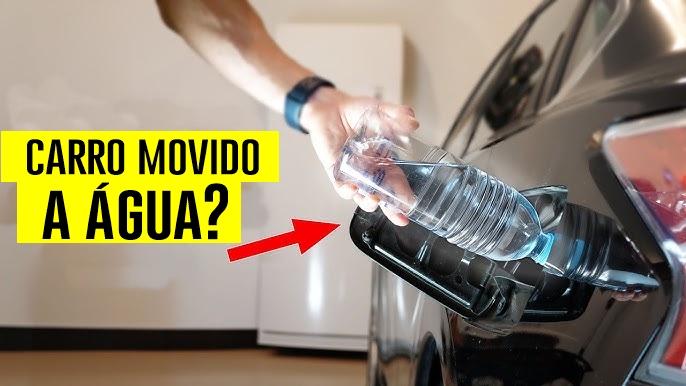
Is It Possible to Replace Fuels with Water? Discover If a Water-Powered Car Could Truly Exist and How This Technology Would Work.
The price of fuels is always rising, and many drivers have wondered if there might be a more accessible and abundant alternative to fuel their cars. Among all the possibilities, one idea persists in popular imagination: what if it were possible to create a water-powered car?
After all, water covers about 70% of the Earth’s surface and seems to be an inexhaustible resource. But would it really be viable to use water as fuel for automobiles?
Is a Water-Powered Car Possible?
Water, by itself, does not have enough chemical energy to be used as fuel. Unlike gasoline or ethanol, it does not burn spontaneously and does not release energy that can be converted into movement.
-
Honda performs miracles in fuel consumption with a hatch that marks 13.2 km/l in the city and 15 km/l on the highway, leaving Polo, HB20, 208, and Onix behind and becoming a reference among compact cars without resorting to turbo or hybrid systems.

-
Six diseases that seem common but can prevent the renewal of the driver’s license for the elderly throughout Brazil and surprise experienced drivers — could any of them affect you without showing clear signs?

-
With 122 hp, fuel consumption of up to 17.7 km/l, and a trunk capacity of 440 liters, this hybrid SUV impresses even though it costs up to R$ 47,000 more than the Yaris — meet the Toyota Corolla Cross.
-
600 km with three Chinese plug-in SUVs, same mode and air conditioning on: Jaecoo 7, BYD Song Plus, and Haval H6 hit the road, and the pump reveals who was truly the most economical.

History shows that water was used in steam engines, but in those systems, the real fuel was coal, which heated the water and generated steam under pressure.
Due to this, the only viable way to use water in modern engines would be through the separation of its chemical components: hydrogen and oxygen.
Hydrogen, when isolated, can be used as an excellent fuel. However, this process has significant challenges that limit its commercial viability.
Hydrogen: The True Source of Energy
Hydrogen, present in the composition of water (H₂O), is highly energetic and can be used to power engines in two main ways:
- Fuel Cells: convert hydrogen into electricity to power electric motors.
- Direct Combustion: can be burned in modified internal combustion engines.
The first option is the most efficient and clean, as its byproduct is only water vapor. However, extracting hydrogen from water requires a process called electrolysis, which consumes more energy than the amount hydrogen provides when burned. This means that the system would not be self-sufficient without an external energy source.
Hydrogen Production: A Financial and Environmental Hurdle
Hydrogen can be obtained in different ways, but most of them have environmental or financial issues:
- Natural Gas Reforming: currently, the main source of hydrogen is natural gas, but this process releases large quantities of CO₂.
- Water Electrolysis: a cleaner method, but extremely costly and inefficient, as it consumes more energy than it generates.
- Biomass Pyrolysis: could be a more sustainable alternative, but still has high costs and is not widely applied.
With this, hydrogen production remains an economic challenge. Until there is a cheap and efficient method for its production, hydrogen-powered cars will remain unfeasible on a large scale.
Benefits and Drawbacks of Hydrogen-Powered Cars
Despite the challenges, hydrogen-powered cars have some advantages that could make them a future alternative to fossil fuels: Advantages:
- Zero emissions: FCEVs (fuel cell electric vehicles) emit only water vapor.
- Fast refueling time: refueling a hydrogen car takes about 5 minutes, unlike the hours required to recharge an electric car.
- Greater range: some models can travel over 600 km on a full tank.
Drawbacks:
- High production and distribution costs of hydrogen.
- Limited infrastructure: hydrogen refueling stations are still rare.
- Lower efficiency compared to battery electric cars.
And the Future? Will We One Day Be Able to Fuel Our Cars with Water?
The idea of a car powered exclusively by water is a utopia based on a conceptual error. To extract energy from water, more energy effort is required than the return obtained. However, the development of new technologies may make the use of hydrogen a viable alternative.
Currently, the automotive industry has been investing in research to make hydrogen production cheaper and less polluting. Additionally, countries like Japan and Germany are expanding their refueling networks to make hydrogen cars a real option for drivers.
For now, battery electric cars are the best sustainable alternative, but as technology advances, hydrogen may gain traction and become a viable solution for the future of mobility.










Seja o primeiro a reagir!