





 Portuguese
  English
  Spanish
  5 min of reading
  124 comments


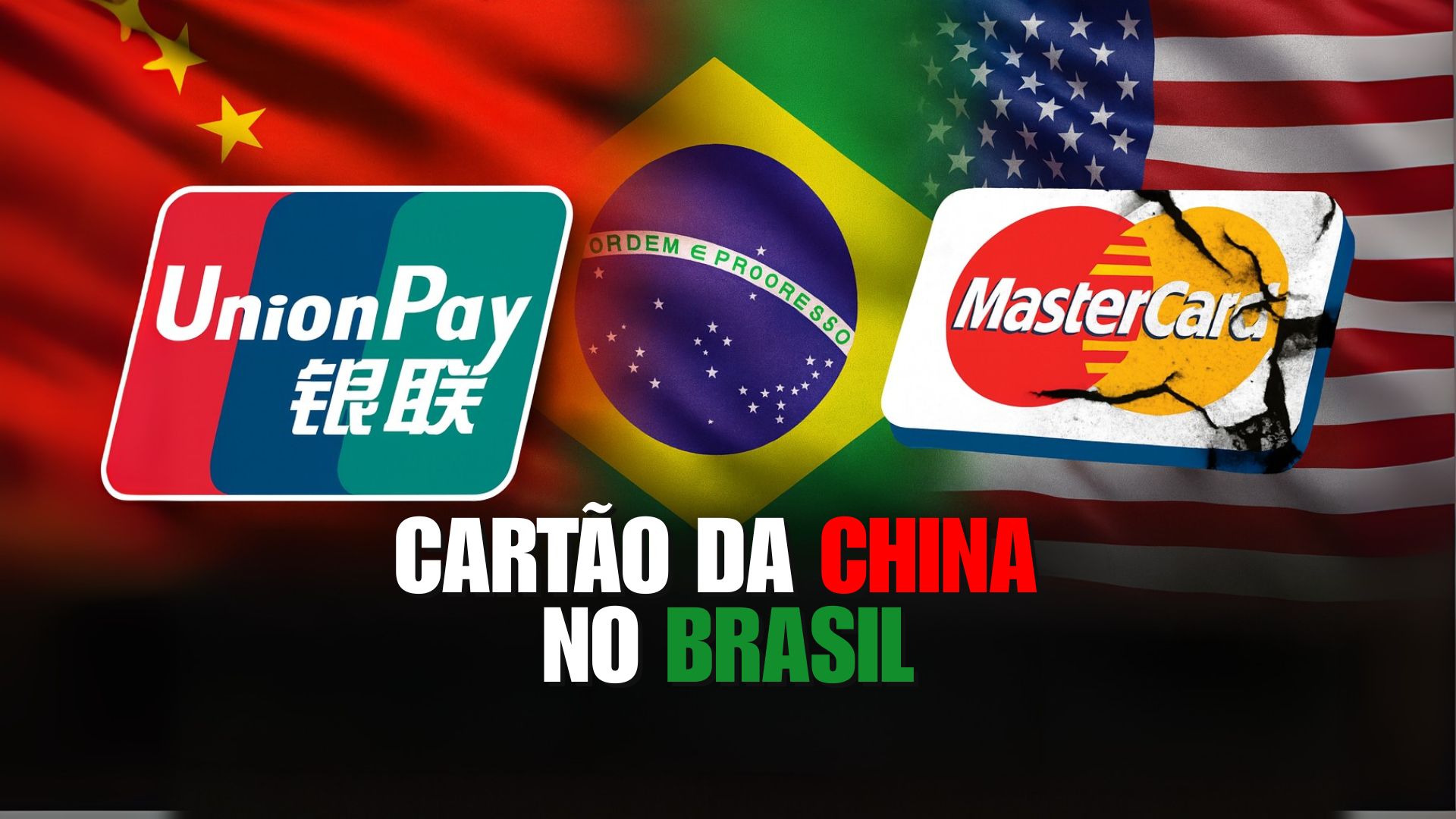


The Arrival of UnionPay in Brazil Promises to Change Competition in Payment Methods, Expand Financial Inclusion, and Offer New Alternatives to Consumers in a Sector So Far Dominated by American Brands.
The UnionPay, the largest card brand in the world by volume of cards issued and presence in more than 180 countries, is preparing for its operational debut in Brazil in 2025 through a partnership with the fintech LeftBank, as revealed on Friday (22) by the website Alta Renda.
The move forecasts local card issuance, integration with Pix, and onboarding with payment machines, with the promise of increasing competition against Visa and Mastercard while also pushing for financial inclusion for currently underserved populations.
What Changes in the Brazilian Market
The entry of the Chinese brand occurs in an environment dominated for decades by American brands. The arrival of UnionPay through a national issuer broadens the offerings for consumers and businesses and tends to pressure prices and acceptance conditions.
-
Oil surged to $115 a barrel due to the war in the Middle East, and diesel in Brazil has already risen to R$ 7.45 per liter, while the United States…

-
Brazilian city bets on the business environment to generate jobs and attract investments in the energy sector — secretary reveals strategy at Macaé Energy 2026.

-
50 viaducts, 4 tunnels, 28 bridges, and 40 kilometers of bike paths: BR-262 in Espírito Santo will receive 8.6 billion reais for the largest engineering project in the state’s history, inspired by the Immigrant Highway in São Paulo.

-
Brazil produces too much clean energy and doesn’t know what to do with it: over 20% of solar and wind capacity was wasted in 2025 while investors flee and 509 renewable generation projects were abandoned in the last year.


This Brazilian operation is anchored in digital services, with account opening via the app, instant transfers, bill payments, top-ups, and popular credit options, as well as billing solutions and a benefits club.
Meanwhile, the partner issuer aims to attract millions of new users with less bureaucratic processes.
LeftBank claims that part of the revenue from transactions will be redistributed to social causes chosen by the customers, a model that seeks to differentiate its proposal in a sector marked by fees and benefits traditionally linked to rewards programs.
Who is LeftBank
Founded by entrepreneurs from the southern region of Brazil, LeftBank positions itself as a social-focused fintech, emphasizing banking inclusion and support for organized collectives and movements.
To facilitate the regulated services, the platform operates in partnership with a payment institution authorized by the Central Bank, a common structure among fintechs that do not yet operate with their own license.
In practical terms, the issuance of UnionPay cards and integration with banks, acquirers, and Pix will be conducted by this network of partners.
In public discourse, the fintech’s leadership has been associating the expansion with a social impact project.
The co-founder Daniel Verçosa declared that the company was born to “provide opportunities for millions of Brazilians without banking access and support civil society entities.”
Investors and advisors connected to the market, such as José Kobori, have reinforced the narrative that the partnership with UnionPay could reduce the country’s dependence on foreign brands.
Impacts for Consumers and Commerce
In practice, the cardholder will have a card with a global brand for domestic or international use, with a promise of expanded acceptance in tourist destinations and in e-commerce transactions.
The retail sector, in turn, is expected to gain an alternative payment arrangement, potentially with more competitive transactional costs as scale increases.
Integration with local acquirers and gateways is crucial at this stage. The greater the technical compatibility with payment machines and digital wallets, the faster the diffusion at the consumer level tends to be.
UnionPay already has significant international acceptance and operates in various markets through interoperability agreements.
In Brazil, despite partial acceptance for cards issued abroad, local issuance on a large scale was not yet available. This is the gap the partnership aims to fill starting in 2025.
Direct Competition with Visa and Mastercard
The competition is not just for market share. Visa and Mastercard have consolidated ecosystems with multiple layers of services, security, tokenization, and partnerships with digital wallets.
UnionPay, on the other hand, is expanding its presence outside of Asia, targeting emerging countries and betting on mobile payments and QR code as entry points.
Globally, UnionPay’s base exceeds 9 billion cards issued.
Visa and Mastercard also operate with billion-user bases, sustained by decades of relationships with issuing banks and retailers. In Brazil, the timing may favor competition.
The advancement of Pix and open finance has matured the infrastructure, and payment arrangements have become more open to new participants.
The expansion of UnionPay, if confirmed with widespread acceptance in both physical and online retail, tends to reshape negotiations on fees and benefits.
Financial Inclusion and International Commerce
The promise of financial inclusion is one of LeftBank’s main themes. By facilitating the entry of new account holders and offering microcredit and digital payment methods, the operation targets historically underserved segments.
For tourism, a brand with reach in Asia and commercial routes could simplify expenses for visitors in Brazil and for Brazilians abroad.
In international commerce, companies negotiating with Chinese suppliers may benefit from alternative payment routes and, potentially, lower costs.
Geopolitical Scenario
The movement occurs amid recent trade tensions between Brazil and the United States.
In July and August 2025, Washington announced tariff measures and sanctions aimed at Brazilian authorities, which reignited discussions about dependence on Western financial infrastructures.
In this context, the presence of a Chinese brand with global scale is seen by some in the market as risk diversification.
This is not about replacing existing networks but adding redundancy to the system, something viewed positively by companies exposed to international flows.

Operation Structure in Brazil
According to public communications from the fintech and industry outlets, LeftBank will be responsible for local issuance and for integration with banks, acquirers, and Pix, while the Chinese brand will provide the international network and acceptance technology.
The credit function is expected to debut after the initial phase, which prioritizes accounts and cards with a transactional focus.
At the same time, the fintech states that customers will be able to direct part of the revenue from fees and interchange to pre-selected social projects, incorporating this mechanism into the app.
Differentiators of the Proposal
In addition to the narrative of social impact, the combination of local issuance, global presence, and existing acceptance in various tourist destinations creates a competitive package for specific niches, such as international trade, travel, and e-commerce.
The decisive test, however, will be the acceptance in domestic retail on a large scale and the user experience in apps and digital wallets.
Without friction in payment machines, captures, and refunds, no arrangement prospers.
What to Watch in the Coming Months
There are three variables to monitor. First, licenses and partnerships: the expansion depends on the linkage with regulated institutions in Brazil and alignment with Central Bank rules.
Next, commercial agreements with acquirers and large retail networks, which determine the speed of diffusion.
Finally, prices and benefits: sensitivity to discount rates, MDR, and rewards usually defines the migration of brands by establishments and consumers.
Given this scenario, would you switch your current card for a UnionPay product issued in Brazil if acceptance and costs are competitive?









Sou inteiramente a favor não só pela competitividade mas para reduzir a dependência maciva do Visa e Mastercard.
Sou um dos tocaria de bandeira se for atrativo!
claro que aceitaria uma nova bandeira de cartão concorrencia e desdolarização do BRICS so traz o bem
Seria o LeftBank uma instituição financeira de esquerda? 😋
Só pode ser um ****!