





 Portuguese
  English
  Spanish
  4 min of reading
  0 comments


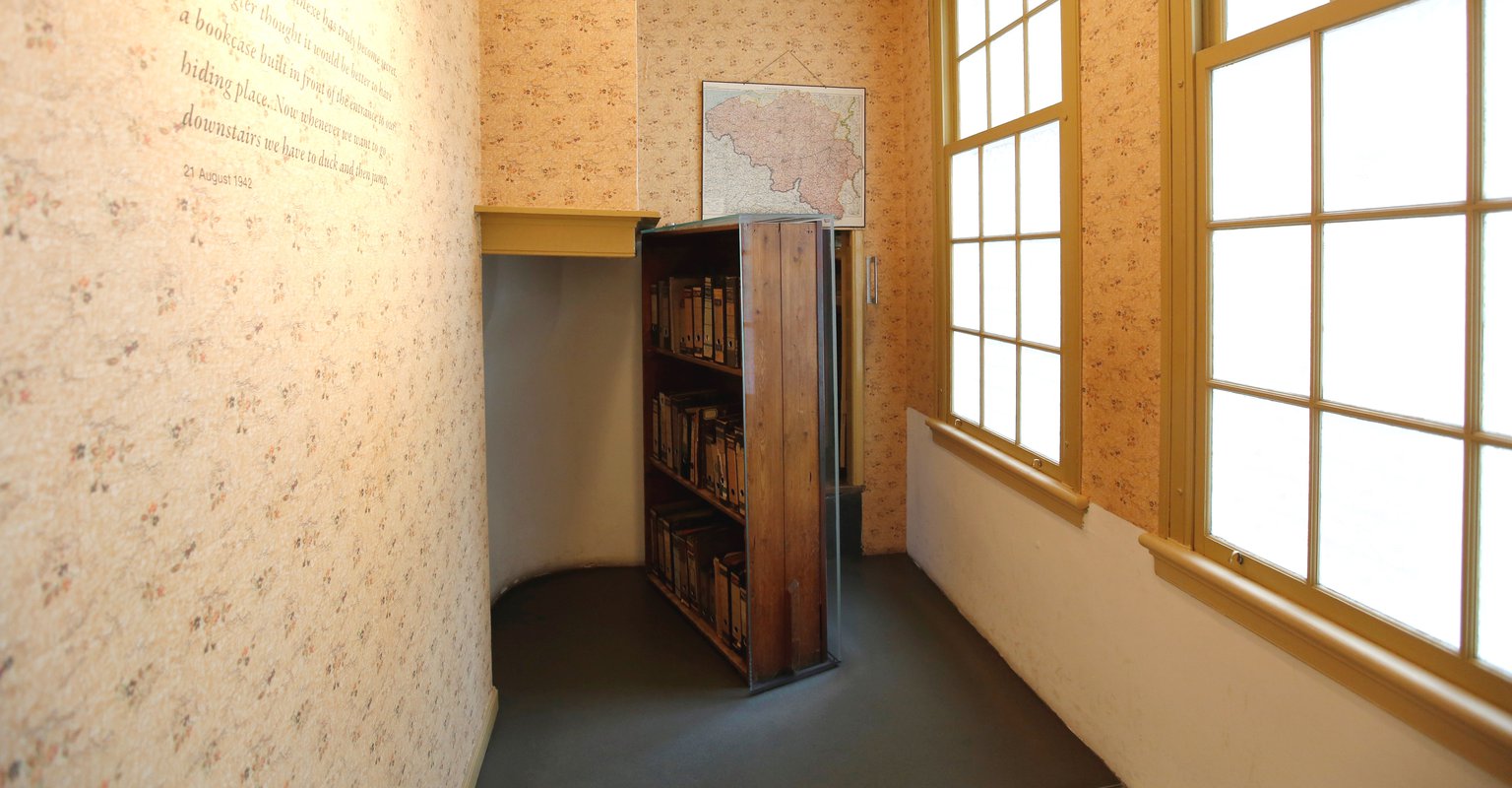
Secret Shelter of 46 m² Hidden Behind Shelf in Amsterdam Hid Eight Jews for 761 Days During Nazi Occupation and Became a Global Symbol of Civil Resistance.
On July 6, 1942, amid the Nazi occupation of the Netherlands, eight individuals began to silently disappear from public life in Amsterdam. They did not flee the country or get deported. They climbed a narrow staircase in a commercial building on Prinsengracht and entered a space that did not appear on official plans, had no visible windows, and could only be accessed by those who knew the secret. Behind a movable wooden shelf, began one of the most emblematic hiding places in 20th-century history. The location would be known decades later as the Secret Annex, today preserved by the Anne Frank House. But, between 1942 and 1944, it was just a clandestine shelter, built with improvisation, silence, and minimal engineering, capable of keeping people alive during one of the most violent periods in Europe.
The Technical Dimension of the Secret Shelter Hidden in a Common Building
The hiding place was approximately 46 square meters, distributed over two floors and an attic. It was not a military bunker or a structure reinforced with reinforced concrete. It was a space adapted within an existing commercial building, with common walls, wooden floors, and artisanal insulation.
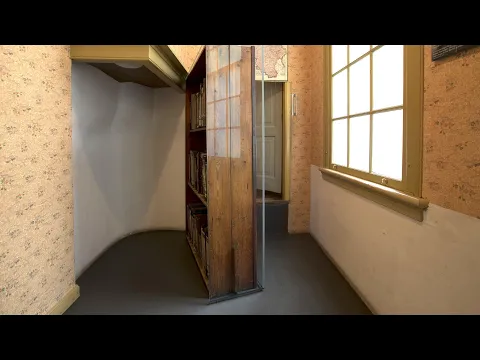

The entrance was the most critical point of the project. To conceal it, a rotating solid wood shelf was installed, secured with reinforced hinges. When closed, the shelf seemed just like a heavy piece of furniture filled with files.
-
Son of a Brazilian, a 20-year-old young man defies extreme pressure, wins the world rodeo championship, and takes home a million-dollar prize of nearly R$ 5 million.

-
The largest freshwater aquarium in the world is in Brazil, impressing with 5 million liters, 380 species, and will host a national congress that brings together specialists in biodiversity, animal conservation, and unprecedented research with more than 100 species bred in captivity.
-
For the first time in history, a Bandeirante airplane was towed by a tractor along Avenida FAB in Amapá, the first runway of Macapá, in a historic operation to become an attraction at Parque Residência.

-
George Lucas has a 4,700-acre film ranch in California, with a main house of 50,000 square feet, a 35-seat cinema, library, observatory, artificial lake, and sound studio hidden among hills; Skywalker Ranch shows how the creator of Star Wars built a private world off-screen.




When opened, it revealed a narrow door leading to a steep staircase, invisible to any unsuspecting visitor. From a technical standpoint, the shelter had extreme limitations:
- no dedicated ventilation, just small cracks and passive air circulation;
- total absence of natural light in most rooms;
- improvised sound insulation, with strict rules of absolute silence during the day;
- maximum capacity exceeded, with eight people sharing a space designed for much less.
Still, the shelter operated for 761 consecutive days, a remarkable logistical and human feat in a context of constant surveillance.

Eight People, 761 Days and a Routine Calculated to the Minute
For over two years, eight Jews remained hidden at the location. Any noise outside the permitted hours could expose the group to the building workers or German patrols. Daily life was governed by nearly industrial technical rules.
Between 8:30 AM and 6 PM, business hours, no one could:
- walk in shoes,
- use running water freely,
- move furniture,
- or speak in a normal tone.
Toilet flushes, heavier footsteps, and even dragging chairs were prohibited. The building operated normally on the ground floor, while a few meters above, people lived in complete silence.
Food arrived thanks to external helpers who took severe risks. There was no industrial stock, adequate refrigeration, or regular supply. Everything was calculated to minimize visits and reduce suspicions.
The Historical Context That Made the Hiding Place Necessary
The Nazi occupation of the Netherlands began in May 1940. Within a few months, anti-Semitic laws came into effect, restricting Jews’ access to jobs, schools, public spaces, and means of transport. In 1942, systematic deportations to extermination camps began.
In this scenario, hiding became one of the few alternatives to almost certain death. It is estimated that over 100,000 Dutch Jews were deported during the war. Only a fraction survived.
The shelter on Prinsengracht was not unique, but it became the most well-known for a specific factor: within it, a teenager wrote a diary that later became one of the most read books in history.
Engineering of Improvisation: Why the Hiding Place Worked for So Long
From a technical and strategic point of view, the success of the shelter was due to a rare combination of factors:
- location in an active commercial building, which diluted suspicions;
- entrance camouflaged by a heavy everyday element;
- strict internal behavior rules;
- reliable and constant external support;
- and absence of direct denunciations for over two years.
There were no sensors, reinforced concrete, or military technology. The shelter operated thanks to social engineering, human discipline, and knowledge of the urban environment.
This type of hiding place is today studied by historians as an extreme example of survival architecture, where simple decisions — such as the position of a shelf or the timing of bathroom use — had a direct impact on life and death.
Discovery, Arrest, and the End of the Secret Shelter
On August 4, 1944, after 761 days of concealment, the hiding place was discovered. The exact circumstances of the denunciation are still debated by historians, but the result was immediate: all occupants were arrested by the German police.

The shelter, which had functioned invisibly for more than two years, was dismantled in a few hours. Furniture was removed, papers scattered, and the space was exposed for the first time since 1942.
After the war, the building was preserved and, decades later, transformed into a museum. Today, the site receives millions of visitors annually and keeps the space practically intact, without artificial reconstructions, precisely to preserve its real and technical dimension.
A Simple Shelter That Became a Global Symbol
What began as an improvised space of 46 m², hidden behind a shelf, became one of the most powerful symbols of civil resistance, Nazi persecution, and human fragility in the face of totalitarian regimes.
The shelter did not survive due to advanced technology, but because of precise human choices, extreme discipline, and absolute silence. In technical terms, it proves that, in extreme contexts, architecture, logistics, and behavior can merge into a single survival system.


-

1 person reacted to this.