





 Portuguese
  English
  Spanish
  8 min of reading
  2 comments




Wooden House Hanging on Cliff Reveals Centuries-Old Hidden Temple in Guizhou and Trail Opened by a Resident in His Sixties
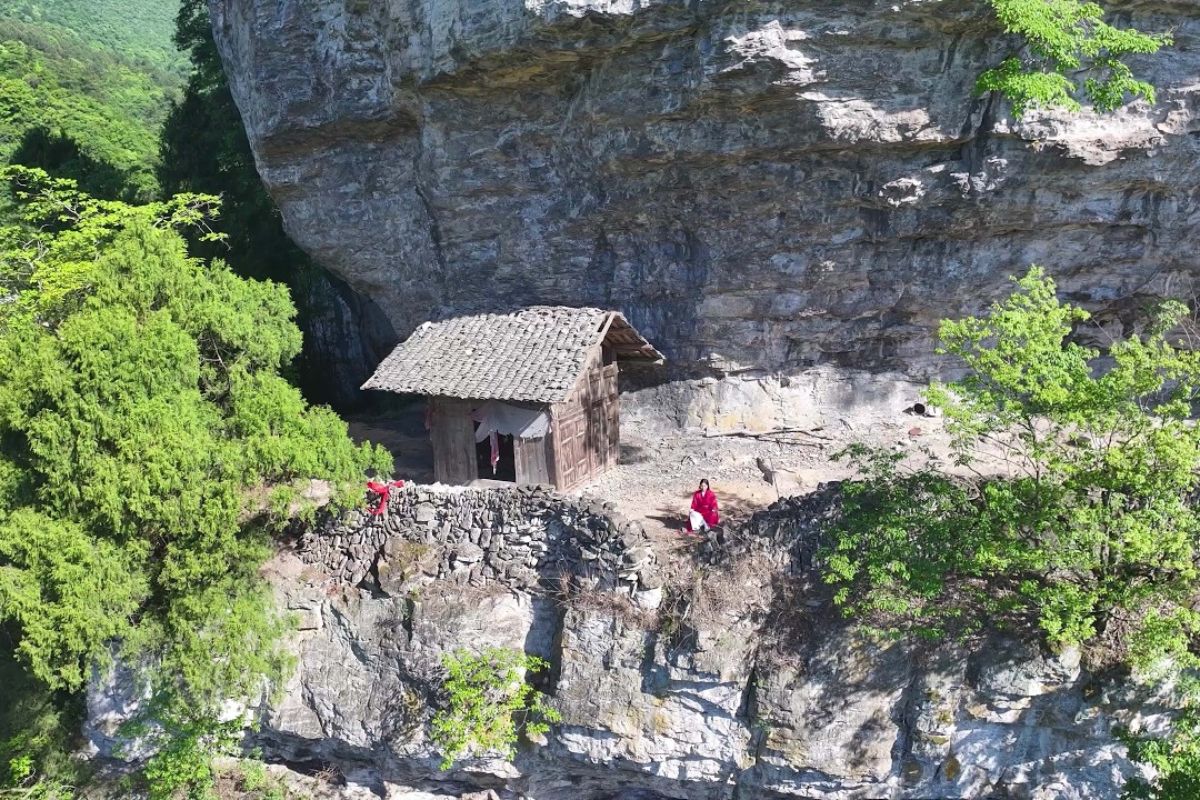
Apparently isolated in the void, a wooden house hanging on a cliff in Shibing, in the Chinese province of Guizhou, hides a much larger story than its own gravity-defying structure. Positioned about 100 to 200 meters above the ground, the building serves as an entrance to an ancient temple carved into the mountain and to a defense system created over a century ago to protect residents from bandits.
The path to get there, however, was not established by the state or religious authorities. It exists thanks to the quiet work of a single resident, already in his sixties, who opened and maintains a steep and slippery trail so that Buddhist pilgrims can still reach the site on sacred dates. In images captured by content creator Xiaoxue, what seemed like just a curious wooden house hanging on a cliff reveals itself as the visible tip of a semi-abandoned historical complex.
The Discovery of an Impossible House on the Rock

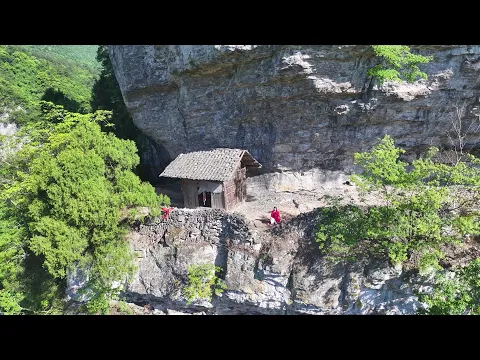
The story begins when Xiaoxue’s team traverses the mountains of Shibing County and, from afar, spots a small wooden structure embedded in the rock. The house appears to be suspended in the air, with a chasm just below and vertical walls rising toward the clouds.
-
It seems simple, but it enriches: from R$ 500 to R$ 6,000 per piece and up to 10 days of handcrafted production, how is the couple from Praia Grande making a high income with hyper-realistic miniatures and turning a hobby into a money-making machine?

-
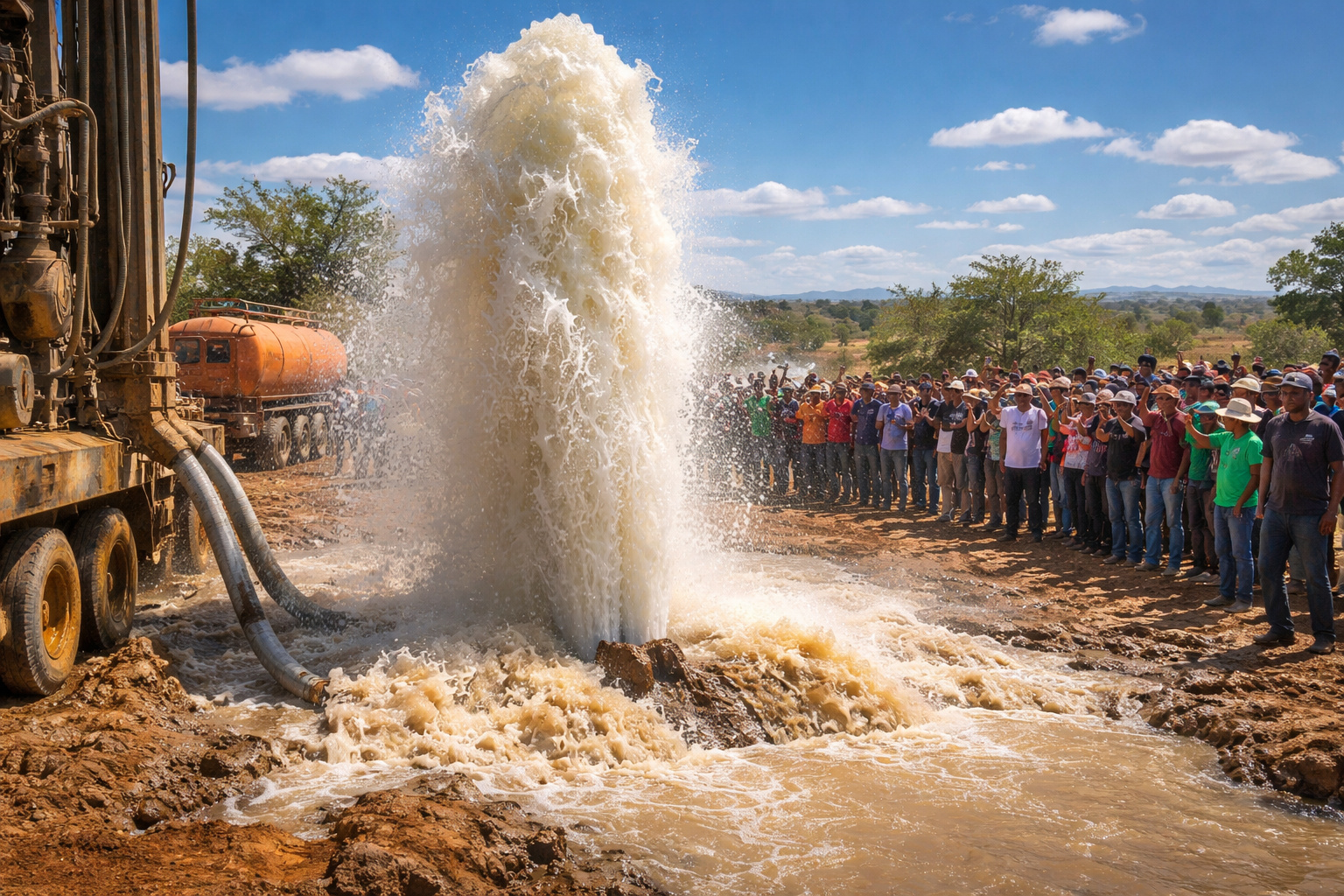
Artisanal well erupts with water in the sertão of Bahia, revealing a surprising flow with six active fissures underground and changing the landscape in the Bahian semi-arid region.
-
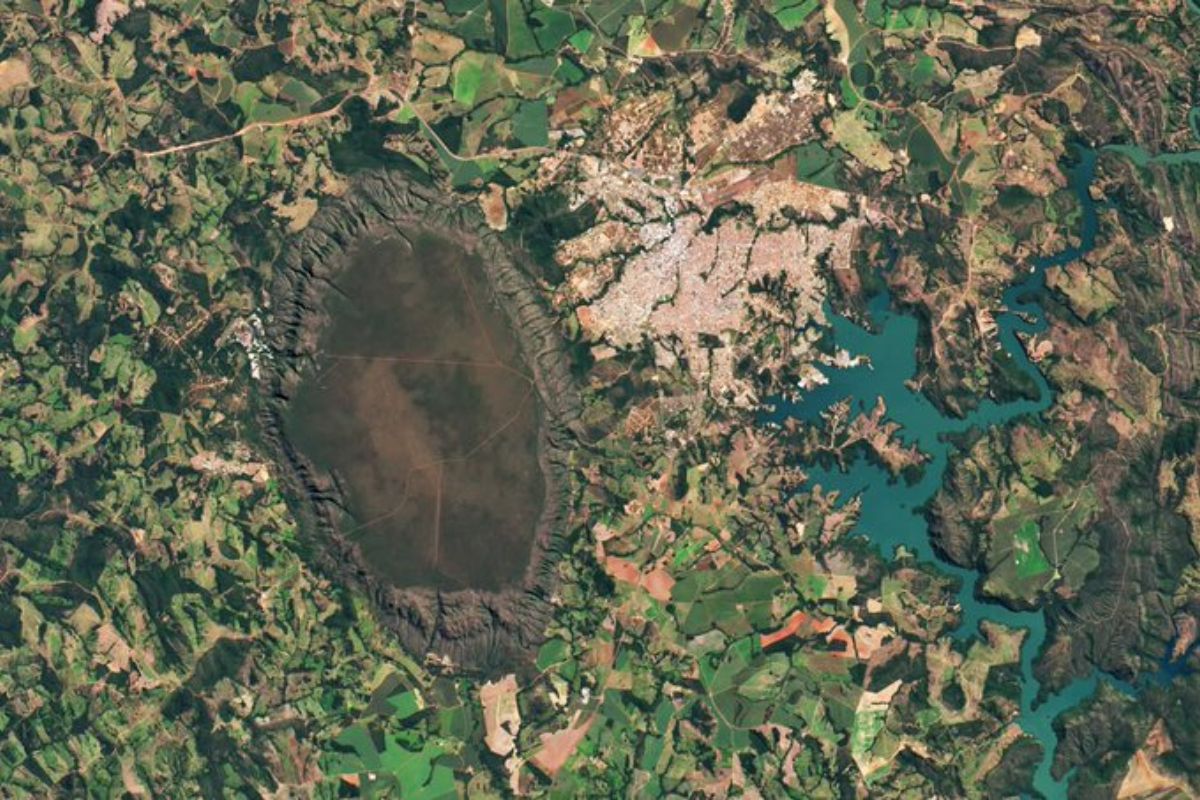
NASA published a photo taken from space of a mountain range in the interior of Goiás, and the whole world wanted to know what it was: beneath it lies the largest hot water spring on the planet, with temperatures reaching 70 degrees in the middle of the Cerrado.
-
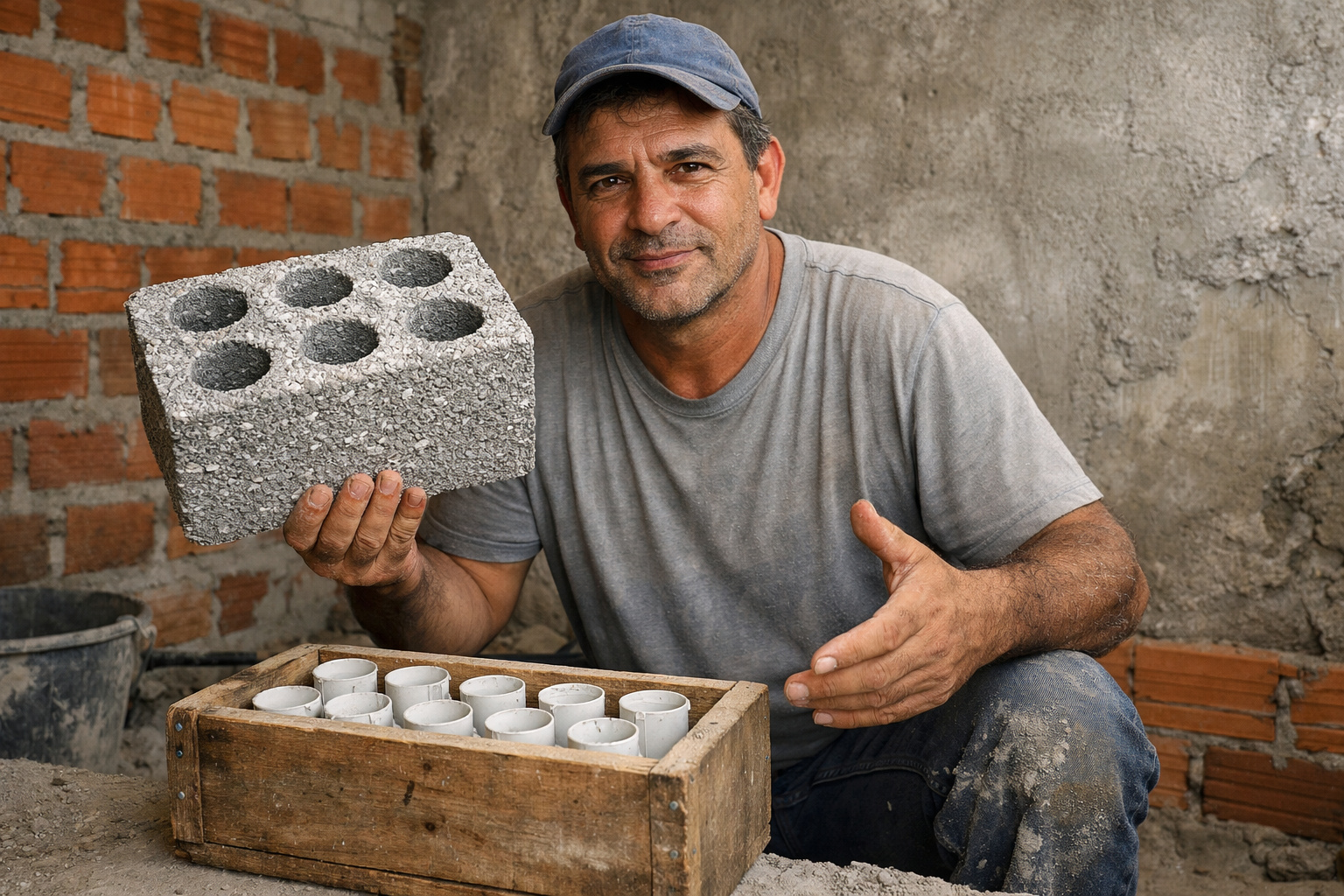
A thermal block costing only R$ 0.40 catches attention by reducing heat by up to 80% using recycled styrofoam, a common kitchen ingredient, and a manual technique capable of producing 50 blocks from a single bag of cement.

From below, it is almost impossible to see the building. The wooden house hanging on the cliff is hidden among uneven ground and vegetation, visible only from specific angles. The local estimate is that it is dozens or hundreds of meters off the ground, in a stretch of cliff that can only be reached on foot, via a narrow trail, opened by force on the slope.
The Unlikely Guide Who Opened the Trail
The access to the top begins by chance. The team meets a resident who climbs the mountain to check on his beehives. He is a farmer in his sixties, who supplements his income with honey and occasional jobs.
It is this resident who offers to guide them. He is the one who, over the years, has opened and maintains the trail leading to the temple and the wooden house hanging on the cliff, using a lawnmower to clear the path always before a specific date: June 19, the day when devotees climb the mountain to worship Buddha and the Bodhisattva Guanyin.
He is not an official guardian of the temple nor a government employee. In his own words, when there’s no work in the fields and no outside job appears, he spends his time taking care of that stretch of road, so that religious access isn’t completely lost.
The Steep Trail That Borders the Abyss
The route to the temple takes about 20 to 30 minutes for those accustomed to mountain climbing, but the sensation is one of constant risk. The path is narrow, with sections where there is a cliff above and a cliff below, requiring hikers to advance sideways, with minimal foot support.
At various points, the trail crosses areas where the ground is soft, slippery, and covered with dry leaves, which increases the risk of falling. There are segments where one can only perceive that a path exists because the local resident cut the vegetation weeks before. Without this manual work, access would practically disappear.
Amid the difficulties, there are signs of a robust ecosystem. The team encounters streams, small waterfalls, and even mountain konjac, a plant that the guide identifies as useful in traditional medicine. On cold days, the thermal sensation on the slope is even more extreme, with cutting winds and constant shade created by the rocks.
Between Collapsed Walls and Defenses Against Bandits

As the trail approaches the top, the first traces of defensive architecture emerge. Remnants of tall walls, now collapsed, formed a kind of mountain gate. It was the control point to prevent the passage of bandits.
The resident explains that, in the past, people living in the area erected stone walls about five to six meters high. At strategic points, small square holes were opened in the walls, intended for shooters. In this way, anyone who ascended without permission was exposed, while the defenders had a clear view of the path and could react first.
Today, what can be seen are debris scattered on the ground, sections of wall still standing, and the base of this ancient defense structure. Even in ruins, the original design indicates that the top of the cliff functioned as a fortress, combining temple, dwelling, and observation post.
The Wooden House Hanging on the Cliff as an Antechamber to the Temple
Right after passing through the walls, the construction that first caught attention appears: the wooden house hanging on a cliff, partially supported on the rock and partially suspended over the void. The use of topography is evident. The structure takes advantage of natural protrusions to anchor beams and columns, reducing the volume of material needed and distributing the weight on the slope itself.
According to the resident, the house, as it stands today, was built or reconstructed in the 1980s, at a time when the ancient temple had already been partially demolished and building materials had been taken to the village at the foot of the mountain. What remains today would be a reduced version of the original complex.
Nevertheless, the wooden house hanging on the cliff serves as a point of transition between the pilgrimage space and the edge of the abyss, marking the physical limit between the path of ascent and the heart of the temple embedded in the rock.
A Temple With at Least 160 Years of History
At the door, two merit tablets help estimate the age of the temple. On one of them, it is possible to read a precise date: February 19 of the first year of Tongzhi, Qing dynasty, which places the record around 160 years ago. It features names of donors and amounts in coins, indicating an organized system of crowdfunding for the construction or maintenance.
The other tablet presents more worn calligraphy and more advanced erosion, suggesting that it might be even older. This reinforces what the resident recalls from memory: the temple already existed when he was young, and the elders of the village claimed that the facilities were well before the renovations of the 1980s.
That is, the temple associated with the wooden house hanging on the cliff is, in practice, a century-old religious site, used by generations as a place of worship, refuge, and community organization.
Interior Taken Over by Bats and Gradual Abandonment
Upon entering the small building connected to the temple, the team finds three statues on the altar. The resident explains that, in the past, an image of Guanyin Bodhisattva would have been consecrated there, but it was later taken to another temple in the plain village. Today, he cannot accurately identify who is represented in the remaining figures.
The floor is covered by a thick layer of bat droppings. The ancient worship room has, in practice, been occupied by a colony of animals, a clear sign that the flow of devotees has drastically decreased. According to the guide, only on June 19 does the region see a larger number of visitors, when residents climb the mountain for Buddhist rituals and can occasionally clean the space.
Ancient Well, Intermittent Spring, and Signs of Looting
In the vicinity of the temple, there is also a well lined with stones and clay, a work attributed to the monks who lived at the top of the cliff. The structure is dry and the mud cracked, indicating a recent change in the water regime or a prolonged drought period.
The resident reports that, years ago, water was abundant and even stalactites hung from the rock in certain sections. Many of them have been broken by visitors, in search of fragments or simple vandalism. In one part of the wall, remnants of limestone formation still resist, probably because they remained out of direct reach of people.
Despite the well being dry, one can still clearly hear the sound of running water coming from a nearby waterfall that plummets about 50 meters down the cliff. The whole scenario reinforces the original logic of choosing the location: a high point, difficult to access, but with a natural water source and a wide view over the valley.
An Emptying Village and a Temple Maintained by Few
At the base of the mountain, the village connected to the temple and the wooden house hanging on a cliff has shrunk. According to the guide, there used to be more than 30 families there. Today, only six or seven remain. Most of the young people have moved to the city or work outside, leaving mainly the elderly behind.
The same phenomenon is reflected in religious practice. The resident explains that, in recent years, almost only older people climb the mountain to worship Buddha. The young people, he says, do not believe in it as much and prefer to seek job opportunities elsewhere. With fewer believers, there is also less interest in maintaining the temple in good shape.
In this context, the trail opened and maintained by the sixtysomething farmer gains symbolic weight. It is, at the same time, an act of faith, a form of cultural preservation, and an individual effort to prevent access to the temple and the house from being swallowed by vegetation.
Heritage Invisible to Outside Eyes
Viewed from a distance, the set seems just a curious wooden house hanging on a cliff in Guizhou, another dramatic scene amid the slopes of the region. But conversations with the resident show that the structure is part of a more complex system that includes historical military defense, Buddhist tradition, intelligent use of spring water, and community organization in times of conflict.
The gradual abandonment, the migration of young people, and the physical wear of the structures transform the place into a silent heritage, known mainly by the older inhabitants of the village. Without preservation policies or formal registration, the history of the temple increasingly relies on oral memory and occasional records such as this visit by Xiaoxue.
Ultimately, what sustains the physical access to the place is the work of a resident without an official position, but with a strong sense of responsibility. Without the trail he clears by hand, the wooden house hanging on the cliff and its century-old temple would cease to be visitable long before they collapse.
For you, who made it this far: which part of this story impresses you the most, the wooden house hanging on the cliff, the century-old temple, or the dedication of the resident who keeps the trail alive on the mountain?








A dedicação do morador.
Fui diagnosticada com doença de Parkinson há quatro anos. Por mais de dois anos, dependi da levodopa e de vários outros medicamentos, mas, infelizmente, os sintomas continuaram piorando. Os tremores se tornaram mais perceptíveis e meu equilíbrio e mobilidade começaram a declinar rapidamente. No ano passado, por desespero e esperança, decidi experimentar um programa de tratamento à base de ervas da NaturePath Herbal Clinic.
Sinceramente, eu estava cética no início, mas, poucos meses após o início do tratamento, comecei a notar mudanças reais. Meus movimentos ficaram mais suaves, os tremores diminuíram e me senti mais firme ao caminhar. Incrivelmente, também recuperei grande parte da minha energia e confiança. Tem sido uma experiência transformadora. Me sinto mais eu mesma novamente, melhor do que me sentia há anos. Se você ou um ente querido está lutando contra a doença de Parkinson, recomendo muito que você considere a abordagem natural deles. Você pode visitar o site deles em www. naturepathherbalclinic .com