






 Portuguese
  Spanish
  10 min of reading
  0 comments


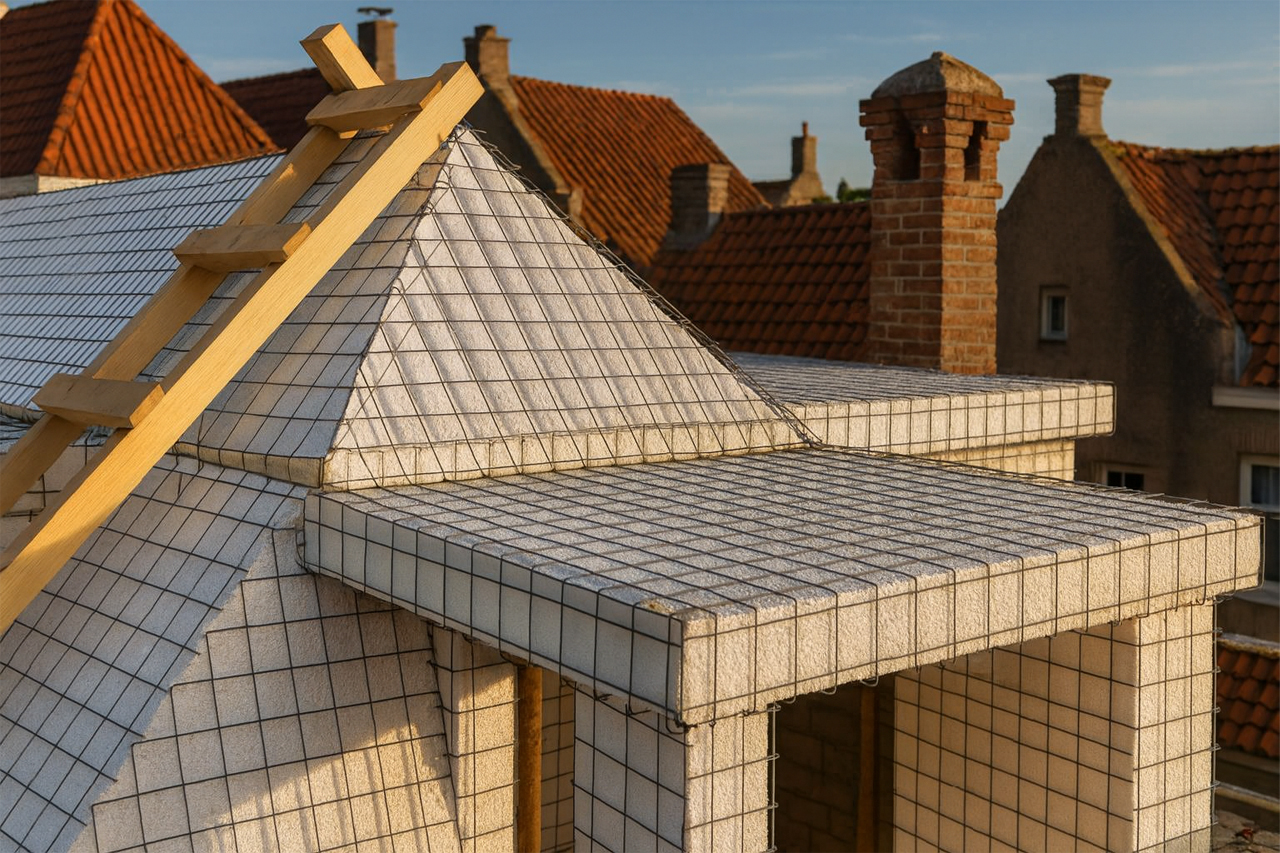
The so-called “Styrofoam house” is built with EPS panels that serve as the insulating core of the walls and slabs, which can reduce the temperature by up to 20ºC while also providing a lower cost for construction
Styrofoam houses have transitioned from a curiosity to a trend in Brazil. The technology uses EPS panels as the main element of walls and slabs, speeding up the schedule and delivering superior thermal insulation, which helps keep the house cooler in hot regions. In reference projects, internal temperature differences of up to 20ºC have been reported under specific conditions when compared to the external environment.
The appeal is not just comfort. EPS construction reduces waste, simplifies logistics, and allows for the structure to be assembled in much shorter timeframes than traditional masonry, with some projects being completed in about 15 days for small and standardized units. For readers seeking a quick, economical, and efficient solution, this guide explains how it works, potential costs, advantages and limitations, and the technical care to follow.
Throughout the article, you will understand what expanded polystyrene is, how monolithic panels and the ICF system differ, the role of Brazilian performance standards, and a step-by-step guide to safely and quality executing the project.
-
Bolivian Female Construction Workers Form Association to Combat Discrimination and 38% Pay Gap in the Industry

-
Near Amsterdam, residents buy land and discover they must also build streets, manage drainage, handle waste, and grow food on half their plot.
-
Brazil’s WEG to Open New Factory in China by 2027, Expanding Production of Large Rotating Electric Machines and Low to Medium Voltage Motors in Rugao

-
Chinese Shipyard Secures $1 Billion in Orders for Low-Carbon Container Ships Amid Global Fleet Renewal Efforts


What Is a Styrofoam House and How Does the EPS System Work
The so-called Styrofoam house is constructed with EPS panels that serve as the insulating core of the walls and slabs. These panels receive steel meshes and layers of mortar or sprayed microconcrete on their faces, forming a rigid and resistant structure after curing. EPS is extremely lightweight and has low thermal conductivity, which minimizes heat transfer from the exterior to the interior.
In practice, the construction site remains more organized. As the EPS panels arrive ready from the factory, the assembly resembles a puzzle, with cuts and openings defined in the project. Electrical and plumbing installations are carried out through grooves and chases in the panel itself, which are then restored before the final finish. This speeds up stages and reduces rework.
Another advantage is the flexibility of finish. The EPS wall accepts plastering, painting, textures, cement boards, and various internal and external cladding. The final aesthetic does not have a “Styrofoam look.” What the resident sees is a conventional finish, but with a “core” of thermal insulation that enhances comfort.
Difference Between Monolithic Panels and ICF
In monolithic panels, EPS is a continuous slab surrounded by metal screens and coated with mortar on both faces. This ensemble forms the finished wall and can bear load according to structural calculations. On the other hand, ICF is a system of EPS forms that remain in place. Within them, walls are reinforced and poured in concrete, keeping EPS permanently as internal and external insulation.
Which to choose depends on the goal, the project, and the available workforce. Monolithic panels tend to be very quick for closures and light structures. The ICF tends to be appealing when aiming for a reinforced concrete wall with excellent thermal and acoustic performance, while maintaining execution speed and a clean site.
Why Styrofoam Houses Stay Up to 20ºC Cooler
EPS has low thermal conductivity. In simple terms, it hinders the passage of heat from one side of the wall to the other. Thus, on very hot days, the flow of heat from the exterior to the interior is reduced. When combined with strategies for shading, cross ventilation, and solar protection at openings, the comfort gain is significant.
Field reports show quite expressive temperature differences between the external and internal environments of houses made with EPS panels, reaching up to 20ºC in specific scenarios and measured at points. It is essential to understand that these numbers depend on variables such as EPS thickness, façade color, local climate, solar orientation, and openings. This is not a universal promise but a technical potential of the system when well specified.
In everyday operation, this thermal barrier typically means less use of air conditioning and fans, resulting in energy savings. For those living in hot climate regions, the thermal insulation of EPS translates to more stable comfort throughout the day, with fewer peaks of heat indoors.
Comparison with Traditional Masonry
In conventional ceramic masonry, walls have thermal bridges and an inertia that does not always help to block heat efficiently in hot climates. EPS, by its insulating nature, minimizes these bridges and reduces heat transfer. The result is a more pleasant thermal sensation with less effort from climate control systems.
From a performance perspective, what matters is the set: wall, roof, frames, brise-soleil, sills, and shading. Projects that combine EPS panels with well-insulated roofing, proper ventilation, and solar protection solutions tend to show better thermal comfort and reduced consumption throughout the year.
Ready in 15 Days: How Is It Possible to Build So Fast
The promise of construction in about 15 days is linked to industrialization. Much of the work is done in the factory, with EPS panels cut to size, markings for frames, and duct passages planned in the project. This reduces improvisation and accelerates the timeline.
A typical schedule for a compact unit starts with a simple, leveled foundation. Next, the team assembles the panels, locking and securing them according to the project. Then comes the stage of reinforcement and mortar projection or concreting of the faces. With the structure stabilized, they proceed with the installations, closing off the chases, plastering, and finishes. In larger or customized houses, the timeframe naturally extends, but it is still usually much shorter than in masonry.
The dry assembly, organized site, and lesser dependence on curing large volumes of masonry explain the speed. In addition to the timeline, there are impacts on the indirect cost of the work, such as fewer days of labor costs, shorter equipment rental time, and reduced material waste.
Is It Cheaper? The Main Cost Drivers
In many scenarios, the Styrofoam house may be cheaper than traditional masonry when considering the total cost of the project, including construction time, labor, logistics, waste, and operating the property over the years. Time savings translate to money, especially when the owner depends on rent during construction or when the team is lean.
The material itself can have a competitive price per m², but the key lies in the rationalization of the project. The more standardized the modules, the less waste and faster the assembly. This reduces rework and generates savings on transportation, freight, and storage. Additionally, thermal efficiency tends to lower energy bills in hot climates, a benefit that accumulates over the long term.
On the other hand, there are costs that may increase the budget. High-performance frames, premium finishes, and complex architectural details raise costs for any construction system. The difference is that, in EPS, the technical foundation already favors less waste and speed, something that can offset the investment in better finishes.
What Else Affects the Budget
Some factors that directly impact the final cost.
- Thickness of EPS and density. More insulation means more material and, generally, higher costs.
- Type of structure. Monolithic panel or ICF with reinforced concrete have different costs.
- Executive project. Complete documentation reduces errors and improvisation, preventing extra costs.
- Skilled labor. Teams trained in EPS panels are more productive and avoid rework.
- Logistics and freight. Jobs distant from suppliers may have higher transportation costs.
- Finishes and frames. Items that define comfort and aesthetics are also top factors for price variation.
Advantages of Styrofoam Houses
The first major advantage is speed. With industrialization, a clean site, and less dependence on masonry curing, the construction progresses predictably. This is valuable for those with tight timelines or who need to move in quickly.
The second is thermal comfort. The insulation of EPS reduces heat exchanges and helps maintain cooler environments in summer and stable temperatures in winter. In many cases, the thermal sensation is so superior that the use of air conditioning decreases, creating space for energy savings and maintenance costs.
The third is operational sustainability. Less debris, less waste, optimized logistics, and energy efficiency contribute to a more environmentally friendly footprint. Add to this the ability to better size installations and avoid excessive breakages.
Finally, there is the versatility of finishes. Textures, porcelain tiles, stones, and paints perform well when correctly applied over the layers of the system. The final result can be classic, rustic, or contemporary, according to the taste of the resident.
Common Disadvantages, Limits, and Myths
Not everything is perfect. The labor needs to be trained to cut, anchor, and secure correctly in EPS. Drilling into the wall or hanging loads requires proper anchors and screws, along with reinforcements in strategically defined points in the project. Without this care, users may get the wrong impression of fragility.
Another recurring question is about flammability. Modern EPS for construction incorporates flame-retardant additives and, more importantly, is coated with mortar or concrete, which elevates the overall safety of the structure. As with any system, fire safety depends on the design, compatible materials, connection detailing, and adherence to current regulations.
There are also perceptions about acoustic insulation. EPS does a great job in isolating high frequencies, but low-frequency noises and impacts require additional solutions, such as floating floors, detached ceilings, and mass layers. The final performance is a result of the design, not just the material.
Standards, Technical Responsibility, and Approvals
The market reference for residential building performance in Brazil is ABNT NBR 15575, which establishes minimum criteria for thermal comfort, acoustics, durability, safety, and other requirements. In a Styrofoam house, the wall, slab, and roof ensemble needs to meet these performance parameters.
It is mandatory to have technical responsibility from an architect or engineer, through ART or RRT. This professional coordinates the architectural project, structural calculations, installations, and constructive details that ensure the performance and safety of the system. Improvised solutions without technical support are not recommended.
There may also be local requirements from municipalities, such as building codes and specific approval requirements. The safe approach is to submit the complete project along with a descriptive memorial, calculation memorial, manufacturer catalogs, and performance reports for the EPS panels to be used.
Step-by-Step Guide to Bring the Project to Life
Start with the needs program. List environments, areas, number of bedrooms, bathrooms, and comfort priorities. With this in hand, hire an architectural project that considers the EPS system from the outset, to take advantage of modulations and reduce cuts.
Next, select suppliers with proven experience. Request technical catalogs, anchoring details, performance tests, and visits to completed projects. Evaluate delivery times, on-site support, and availability for training for the team.
With suppliers aligned, build a detailed executive project, including BIM compatibility when possible. Define reinforcement points for suspended loads, locking, passages, and solar protection solutions. Create a realistic timeline and an inspection checklist by stage.
Finally, organize the logistics of the site. Plan for the receipt and storage of EPS panels, moisture control for mortar materials, circulation routes, and protection of finished pieces. A well-managed site reduces unforeseen events and maintains quality.
Examples and Application References in Brazil
Compact and modular houses have been gaining space in different states, especially in hot regions, where thermal insulation translates into immediate comfort. Reports of projects completed in 15 days mostly appear in standardized units that maximize industrialization, meaning ready-to-assemble pieces on-site.
Cases of reducing temperatures by up to 20ºC indoors tend to emerge in projects with generous EPS thicknesses, well-insulated roofs, and good shading. These results are good indicators of the system’s potential when the project aligns with the climate and terrain orientation.
For those wishing to see up close, there are companies and demonstration projects that allow for technical visits, which help in understanding the assembly, the final texture of the walls, and the thermal sensation inside the environments.
Frequently Asked Questions About Styrofoam Houses
Do Styrofoam houses catch fire?
The EPS used in construction incorporates flame-retardant additive and, most importantly, is coated with mortar or concrete. Safety depends on the ensemble. Therefore, it is essential to follow the design, details, and prevention regulations.
Are Styrofoam houses durable?
When designed by an engineer, with steel meshes, concreting, and reinforcements as per the project, the house made of EPS displays excellent rigidity and durability. Walls and slabs act as a stable structural sandwich.
How much does it cost to build a Styrofoam house?
It varies with the finish standard, EPS thickness, system type, and logistics. Savings often appear in terms of speed, waste reduction, and energy use over time. Request comparative quotes with a fixed scope.
Does it really stay cooler?
Yes, the thermal insulation of EPS reduces heat transfer. Field reports indicate internal differences that can reach up to 20ºC under specific conditions. The overall design of the house directly influences this result.
Can I hang cabinets and heavy loads?
Yes, as long as reinforcements are planned and proper anchors and screws are used. It is ideal to plan load points in the executive project to avoid improvisations after the construction.
Can I finance it?
Financial institutions analyze the technical documentation. Having an executive project, ART or RRT, memorials, and system catalogs facilitates approval.





-

-

-

-

-

-

23 people reacted to this.