





 Portuguese
  English
  Spanish
  6 min of reading
  0 comments


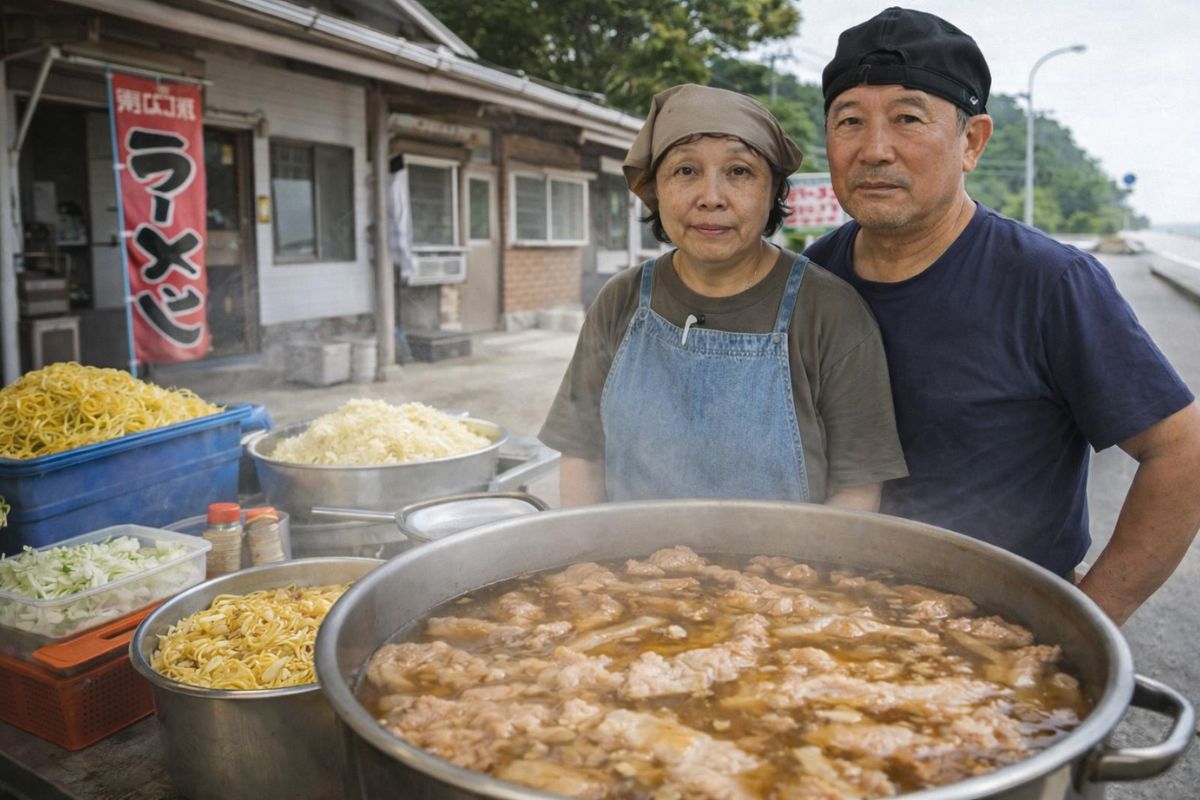
In Iyo, Ehime Prefecture, the Ramen Shop Futami has been open since 1996, even with few people around. The couple prepares soy sauce, miso, and salt ramen, using green onions, pork, and broth on a scale that reaches 500 kg weekly, and receives fans with a view of the ocean there.
The ramen that is often “just a dish” in many cities has gained another weight in a remote corner of the coast: it has become a reason for travel. There, a couple has maintained their routine since 1996 and supports the shop with a pace that seems disproportionate to the size of the place, cooking in volume, repeating steps, and serving bowls that have become a reference.
There is a contradiction that explains the fascination. Almost no one lives nearby, but someone always comes from afar. And the farther the journey is, the more the ramen needs to prove it’s worth the curve, the road, and the wait, without relying on promises, just on consistency.
A Village That Became a Fixed Address

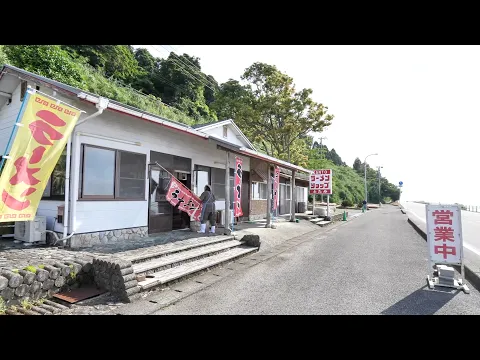
The address is not hidden by chance. The shop is located in Iyo, Ehime, Japan, and the setting enhances the experience: the sea is right there, and the meal can take place with an open view, in an environment that many describe as part of the flavor.
-
These living root bridges and ladders are over 700 years old and help indigenous people survive in one of the rainiest regions in the world.

-
From sertanejo star to international investor: Ana Castela invests millions in a mansion in the USA, creates a themed accommodation in Orlando, and shows that the “boiadeira” also wants to grow away from the stage.

-
The 10 most stunning motorhomes in the world: a $3 million trailer with a rooftop nightclub and garage for a Ferrari, “palaces on wheels” with Italian marble, private cinema, and five-star hotel luxury for billionaires.

-
Trump wanted to spend $400 million on the White House, but the courts prohibited the million-dollar construction.


When the landscape enters the dish, the customer’s expectation changes, and that requires even more consistency.

The story of how it started helps explain why this spot has endured. The owner, Misa, says she was born and raised in the area and that the operation started simply, selling takoyaki in a warehouse that ended up demolished and repurposed.
She recalls that, back then, there was no road like today, and the daily passage was through a narrow street at the back, used to get to work.
The Uninterrupted Routine That Sustains the Ramen

What keeps ramen alive in a remote place is less “innovation” and more discipline. The couple’s speech shows this: tomorrow’s preparation tends to be the same as today’s, with early packaging, cooling, and repetition.
The kitchen operates as a continuous line, because service doesn’t start when the customer sits down; it starts when the previous day’s preparation ends.
It is also clear that the business is both a restaurant and a home life.
They say they are together in the shop and at home, without breaks, and when rest exists, it turns into quick errands and small trips, like going up and down the mountain and back.
The shop had employees at some point, but the heart of the work remained in their hands, which explains both the consistency and the weariness.
Menu That Grew Without Losing the Basics

The ramen in this place did not begin as a huge menu. The starting point was straightforward: soy sauce and miso. Over time, the menu expanded but without losing focus on what sustains a traditional house, with a clear base and variations that revolve around the same principle: well-balanced broth, reliable noodles, and toppings that complement the soup.
Among the options, there are versions of salt and combinations where soy sauce has been incorporated into a ramen with pork bones, a change that shows how the house evolves without breaking with what already works.
This controlled expansion is the type of choice that protects consistency, because it broadens the audience but prevents the kitchen from diluting into dozens of different processes.
Green Onion, Onion, and Pork: The Signature in the Bowl

The hallmark of the place, in the accounts of those who follow the routine, involves a simple and persistent ingredient: green onion. It appears on the menus with miso and salt, in generous portions, sometimes pickled, and not just as a decorative detail.
Green onion changes texture and perception of fat, which is especially important when the broth is denser or when the meat comes in stronger.
On the protein side, the house works with different cuts, including pork belly in char siu style, which the public recognizes immediately due to its juiciness and contrast with the broth. There is also mention of a meat that goes in the ramen and is not chashu, reinforcing that flavor does not depend on a single “topping” of meat but rather on composition.
And the behind-the-scenes scene is almost literal: bags of onion and garlic, large ingredient organization, and a stock logic that seems bigger than the place suggests.
The Broth as a Test of Patience

In ramen, the broth is what separates a “good meal” from a memorable house. In daily life, this appears in details that seem trivial but define the outcome: careful cleaning of bones, repetition of the process, and a simple philosophy, stated without glamour but with truth, of continuing to try. Broth is persistence, not a trick.
The operation also shows that the kitchen needs to react to service in real-time. There are moments of pouring soup, requests for refills, and adjustments to the pace, which demands that the broth remain stable for hours without losing its character.
In a salt version, for example, the customer notes that it can get quite salty, yet still appreciates that “nothing has changed since the old days.” This is a technical compliment: maintaining the same profile for decades is harder than creating a new recipe.
When “Hundreds of Kilos” Become Weekly Logistics
The scale is part of why the shop attracts attention. In the account, there is a reference to around 500 kg, a volume that, for a family business in a remote area, indicates a kitchen that operates like a small industry, even without a factory-like appearance. It’s not just cooking; it’s planning purchases, storage, and turnover, because running out of ingredients in a remote place is costly and disrupts the rhythm.
This scale helps explain why the ramen becomes a destination. Those who travel for hours want to find the bowl just as they envisioned it, which depends on a stable chain: consistent green onions, properly prepared meat, a repeatable broth profile, and service that can handle the flow. The effort is invisible to those who arrive and only see the sea, but it’s precisely this behind-the-scenes work that sustains the fame.
Why People Cross the Road Just for a Bowl by the Sea
The answer isn’t in a single phrase; it’s in the sum. There’s the ramen itself, with a menu that ranges from soy sauce to miso and salt, focusing on green onions and pork.
There’s the setting, with the possibility of eating in a room with tatami and enjoying the ocean view. And there’s the bond: customers who say they’ve been coming for years, others who recall visiting around 2000, and people who return because they find the same flavor and the same noodles.
The central point is that the place has become a reference without relying on turnover. The ramen functions as a ritual, and the village serves as its frame.
Instead of “stopping by the shop,” visitors make a journey with a singular goal: to arrive, sit, wait, see the sea, and eat. This is how a map gains a must-visit point.
The story of a couple sustaining ramen in a village for decades shows that the “secret” is rarely in the exotic.
It lies in the repeatable: well-tended broth, ample ingredients, a menu that grows without losing itself, and an experience that turns waiting into part of the pleasure. When consistency becomes identity, even isolation becomes an advantage.
Now I want a very personal response, as you would tell someone: would you travel for hours for ramen if you knew the shop has maintained the same standard since 1996? And on such a trip, what would weigh more for you, the technical flavor of the broth or the idea of eating with the sea in front, in a place where almost no one lives?








-

-

-

-

-

13 pessoas reagiram a isso.