





 Portuguese
  English
  Spanish
  4 min of reading
  19 comments


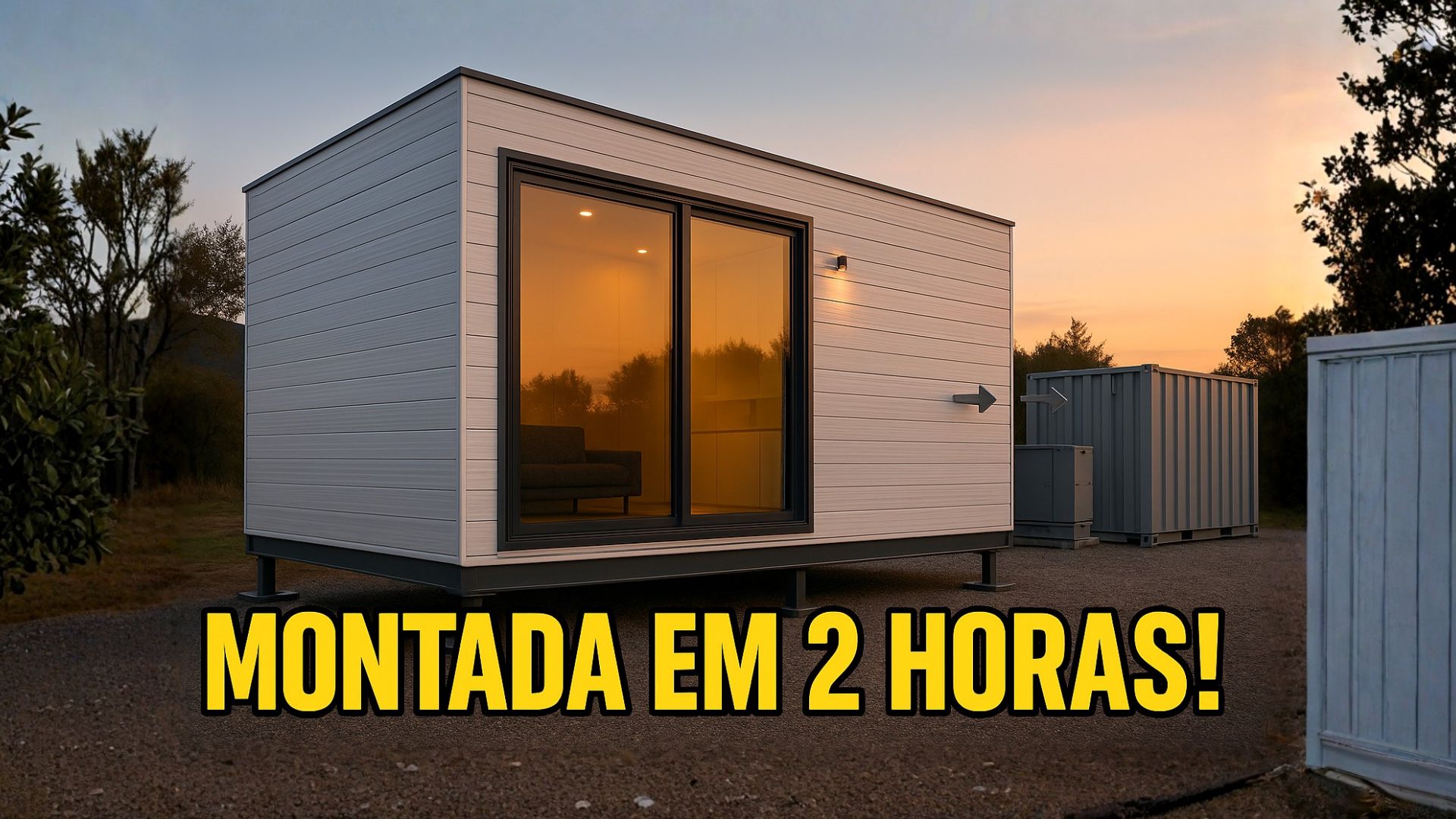


Chinese Capsule Houses Gain Space in the Brazilian Market with Quick Installation, Complete Comfort Features, and Modular Structures That Appeal to Sectors Like Tourism, Construction, and Compact Housing.
Capsule houses produced in China have been gaining space in the Brazilian market as a compact and quickly installable alternative.
According to manufacturers and companies in the modular construction sector, these modules arrive ready for assembly, can be installed in about two hours by two professionals, and include heated floors, air conditioning, and thermal and acoustic insulation.
Metal Structure and Durability of Capsule Houses
According to technical specifications provided by manufacturers, the models use a high-strength galvanized steel structure.
-
Scientists warn that a comet about 1 km in size that has started to release gases may actually change direction in space. It was spotted by NASA and surprises with potential impacts near Earth.

-
These living root bridges and ladders are over 700 years old and help indigenous people survive in one of the rainiest regions in the world.

-
From sertanejo star to international investor: Ana Castela invests millions in a mansion in the USA, creates a themed accommodation in Orlando, and shows that the “boiadeira” also wants to grow away from the stage.

-
The 10 most stunning motorhomes in the world: a $3 million trailer with a rooftop nightclub and garage for a Ferrari, “palaces on wheels” with Italian marble, private cinema, and five-star hotel luxury for billionaires.

The external panels receive a coating of treated aluminum alloy to resist corrosion and humidity.
The aim is to ensure uniform performance in different regions.
On the inside, companies report that the walls have layers of insulation that help maintain a stable temperature.
The modules also use hermetic double-glazed windows, a solution employed to enhance thermal comfort and reduce external noise.

The electrical and plumbing installations are integrated and assembled in the factory. Pipes, light points, and connections are tested before being sent to the customer. This model reduces the need for on-site adaptations.
Internal Comfort and Climate Control in Capsule Houses
Despite their compact size, the houses are delivered with items common in traditional residential projects.
Manufacturers report that the electric heated floor is distributed beneath the main living area. The system helps maintain thermal comfort on cold days.
The reverse air conditioning units allow heating and cooling as needed.
The layouts vary, but units between 30 and 40 m² typically include an integrated living room and kitchen, bedroom, and bathroom.

In some cases, delivery may come with basic furniture installed in the production line.
This depends on the contracted configuration.
Quick Installation and Site Preparation
According to specialized installers, assembling models up to 40 m² takes about two hours.
The condition is that the site is prepared. The capsule can be positioned on a leveled slab, precast blocks, or adjustable metal supports.
This feature facilitates installation in areas with moderate unevenness.
After positioning, connections for water, electricity, and sewage are made through quick coupling points.
Technicians explain that the time for this step depends on the site’s infrastructure.
Applications of Capsule Houses in Tourism and Lodging
Tourism enterprises have adopted capsule houses in mountainous, beach, and countryside regions.


According to lodging operators and glamping projects, the main advantage is the time between acquisition and the start of operations.
The quicker installation reduces construction periods. The units are used as individual chalets and compact studios for seasonal rentals.
They can also serve as support structures for outdoor activities.
The ability to relocate the module within the site is highlighted as an advantage by industry managers.
Residential Use and Modular Expansion
The format is also considered a compact housing option. Real estate professionals report demand for small homes and independent annexes.
Modularity is pointed out as a differential by specialized architects. The resident can start with a main unit.
Additional modules can be added later. The connection can be made via decks or light structures.

Environmental Impact and Efficiency of Modular Construction
Researchers studying industrialized construction assert that modular systems reduce waste at the job site.
A large part of cutting and adjusting occurs in the factory. Smaller bases and point foundations minimize soil interventions.
Industry companies report that some projects include solar panels and water reuse systems. However, these items are not present in all models.
Growth of Capsule Houses in the Brazilian Market
The advancement of capsule houses accompanies the expansion of modular construction in the country. Manufacturers claim that the industrialized standard facilitates quality control.
The model tends to offer more predictable performance in thermal and acoustic comfort. Urbanization specialists indicate that compact solutions can expand housing options.







Adoraria uma dessa pra mim aqui em Ubatuba SP
Já sei que uma casa de 2 metros custa 250,000 00 reais. Qual seria o tempo de entrega?
Essas casas cápsulas sou muito interessante gostsria mais informação