





 Português
  Inglês
  Espanhol
  3 min de leitura
  0 comentários


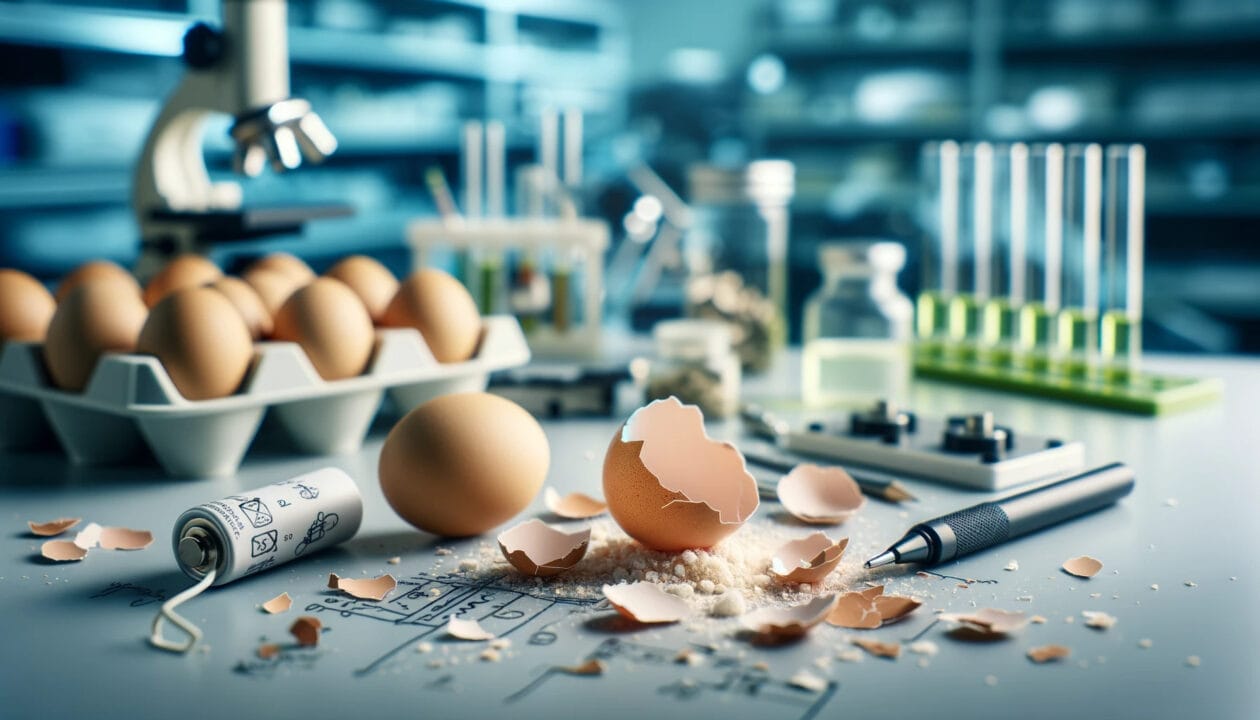
Researchers Make Innovative Discovery By Identifying A New Promising Material For Energy Storage In Batteries Using Chicken Egg Shells. Learn More About This Significant Advance.
Researchers have been consistently dedicating efforts to find more efficient and sustainable solutions for energy storage. Recently, a significant breakthrough was achieved with the discovery that chicken egg shells could play a crucial role in the development of rechargeable battery systems. This innovation promises not only greater safety and sustainability but also a reduction in associated costs, as revealed by recent studies in the field.
Egg Shells Can Be Used As Electrodes
Associate Professor at Murdoch University, Manicham Minakshi Sundaram from the Harry Butler Institute’s Water, Energy, and Waste Center, has successfully developed a new mechanism associated with electrode and electrolyte materials, providing an alternative to the costly and impractical energy storage technologies of the past and present.
According to Minakshi, it was discovered that chicken egg shells can be used as electrodes, that is, a conductor of electricity, to power batteries. The egg shells have a high level of calcium carbonate, and when they are cooked and crushed, their chemical composition changes and they become a efficient electrode and a more effective energy conductor.
-
A bright yellow mushroom imported from Asia escaped from a cultivation farm in the United States in 2010 and is now aggressively spreading across 25 states, destroying entire communities of native fungi in American forests.

-
Buried under China, a colossal machine weighing 20,000 tons began operating as the largest neutrino detector on the planet and, in just 59 days, surpassed results that science took half a century to achieve.

-
Iran enters the center of a climate alert after the war emitted 5.6 million tons of CO2 in two weeks, surpassing the annual pollution of entire countries.

-
Lunar exploration may change after a Chinese probe finds a “cavity” of radiation that reduces the impact on astronauts by up to 20% at certain times on the Moon.


Understand The Process
According to the researcher, the current lithium-ion batteries used for renewable energy storage typically rely on fossil fuels, and reusing a biorenewable waste product like egg shells could add considerable value to the renewable energy market.
They also offer a potentially safer option, as current lithium battery technologies are costly and potentially unsafe in the event of a failure. At a time when the world continues to prioritize renewable energy sources, this advancement marks an important step, offering hope for a greener and more sustainable future.
Egg Shell Contains A Series Of Active Chemical Compounds
The study, conducted by Minakshi for his PhD thesis at Flinders University, focused on the development of sustainable electrodes for water-based energy storage technology.
The implications of this study go beyond the scientific discovery, according to Minakshi, who stated that chicken eggs and related products are used in large quantities in the food processing and manufacturing sectors, in households, in the nutrition industry, and even in the pharmaceutical industry. However, their shells are typically sent as solid waste to landfills.
However, egg shells and shell membranes contain a series of active chemical compounds that can be utilized. Minakshi claims that the reversibility of this new approach allows for more efficient recovery and storage of energy, and the study demonstrates that highly conductive aqueous lithium and sodium electrolytes, with variable salt concentrations, have the potential to replace current non-rechargeable primary batteries. The discovery promises high energy capacity, long lifespan, and affordability for aqueous batteries.
Applications Of The Discoveries Are Numerous
By incorporating suitable additives such as biodegradable redox polymers, titanium boride or sulfide (TiB2, TiS2), or bismuth oxide compounds (Bi2O3), the electrodes can be modified to enhance their performance.
The potential applications of this discovery are immense, according to Minakshi, highlighting that it would be possible to transition from a linear economy to a circular economy, reducing, reusing, and recycling waste, thereby improving sustainable development and addressing waste management.
The studies on sustainable electrode materials have also been expanded to other biological wastes, including chitosan derived from crustaceans, mango seed husk, and grape pomace generated from wineries. From these biological wastes, nitrogen-doped carbon has been obtained, exhibiting excellent electrochemical performance.







Seja o primeiro a reagir!