





 Portuguese
  English
  Spanish
  4 min of reading
  0 comments


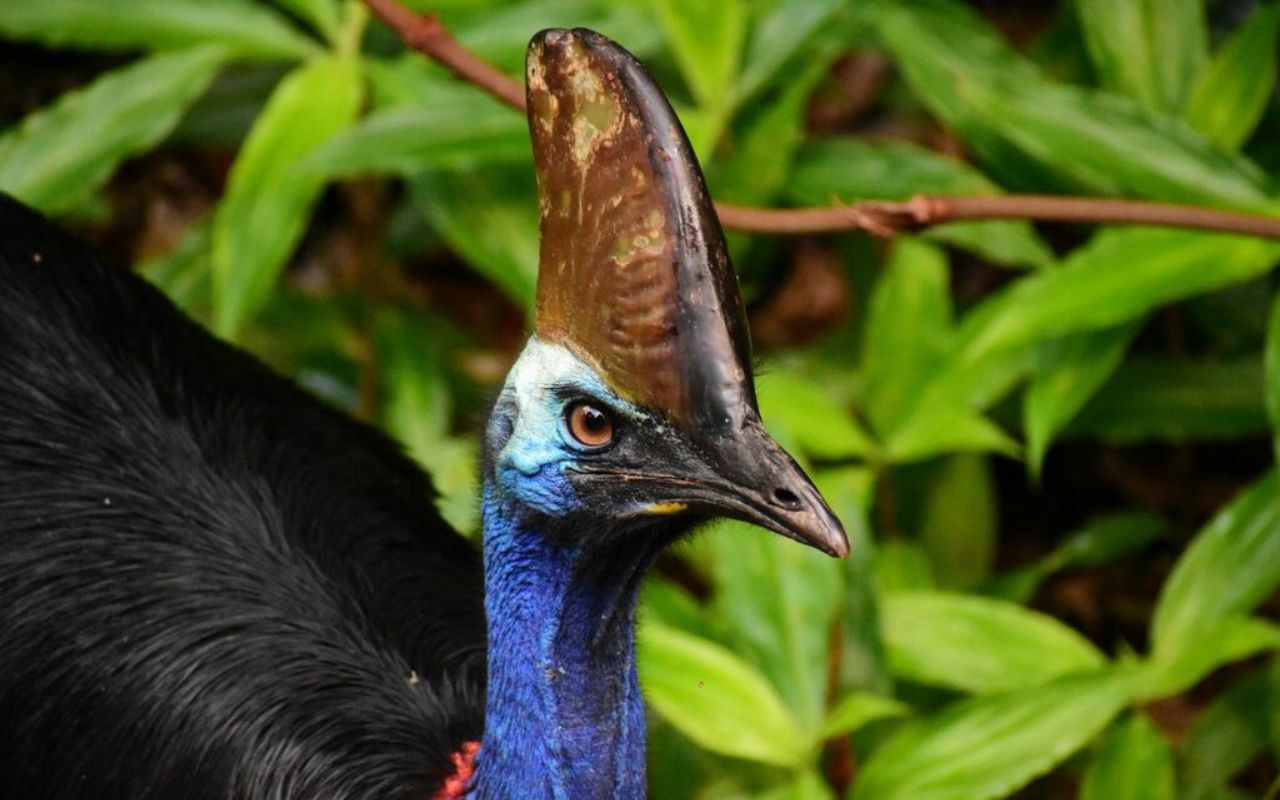
Considered The Most Dangerous Bird In The World, The Cassowary (Casuarius-casuarius) Can Weigh Up To 60 Kg, Run At 50 Km/h, And Has Caused Human Deaths.
The bird considered the most dangerous in the world does not fly, lives in tropical forests, and can cause fatal injuries in seconds. It is the cassowary, a species native to Oceania that draws scientific attention for its physical build, sharp claws, and extreme defensive behavior.
The animal primarily lives in Papua New Guinea, as well as areas of Australia and Indonesia, according to information from the International Union for Conservation of Nature (IUCN) Red List.
The combination of strength, speed, and territorial instinct explains why this bird has gained worldwide fame.
-
He started running at 66 years old, broke records at 82, and is now a subject of study for having a metabolic age comparable to that of a 20-year-old, in a case that is intriguing scientists and inspiring the world.

-
Oldest tree on the planet reappears after 130 years of searches: Wattieza, 385 million years old, was 10 meters tall and had no leaves or seeds; Gilboa fossils in New York solved the mystery in 2007.

-
A 48-square-meter house assembled in hours with 4,000 bricks made of recycled plastic that does not absorb moisture, has natural thermal insulation, and costs less than 90,000 reais in a complete kit.

-
Luciano Hang revealed that Havan’s air fleet has already accumulated more than 20,000 landings, 10,000 flight hours, and 6 million kilometers traveled, and he says that without the planes, the company would never have grown so quickly.


Considered The Most Dangerous Bird In The World Can Weigh Up To 60 Kg
The cassowary (Casuarius casuarius) is among the largest birds on the planet. It can reach up to 1.70 meters in height and weigh approximately 60 kilograms, being surpassed only by ostriches and emus in body size.
Although it cannot fly, its physical structure makes it one of the most imposing animals in the tropical forests where it lives.
This robustness, combined with long and extremely muscular legs, allows the cassowary to run, jump, and attack with impressive efficiency when it feels threatened.
Unique Appearance Makes The Bird Impossible To Mistake
Visually, the bird considered the most dangerous in the world stands out from any other.
The body is covered in dark feathers that resemble thick hair strands, while the neck and head lack plumage and showcase intense colors such as blue and red.

“This enormous flightless bird has dark, shiny plumage and a large horn-like plate on its colorful head with two wattles on its neck,” describes the Ebird.org platform, affiliated with Cornell University in the United States.
According to the Animal Diversity Web (ADW), this rigid plate located on top of the head is made of bone and cartilage and helps the animal navigate dense vegetation.
Why Is The Cassowary Considered The Most Dangerous Bird In The World?
The title is not an exaggeration. The cassowary has claws that can reach up to 12 centimeters in length, true natural blades used for defense.
In risky situations, the animal strikes with blows aimed at the legs or the torso of the opponent.
“They can attack humans using their powerful legs and large sharp claws,” explains the ADW.
As it lives in dense forests and has small wings, the cassowary tends to react aggressively when it feels cornered, according to ADW and IUCN.
Real Cases Reinforce The Danger Of The Bird
Although attacks are rare, there are fatal records. In 2019, a 75-year-old man died in Florida, United States, after being attacked by a cassowary he kept in captivity.
The case was reported by the BBC and reignited the debate about the risks of keeping wild animals outside their natural habitat.
These episodes help to consolidate the reputation of the cassowary as the bird considered the most dangerous in the world.
Speed, Silence, And Skill Surprise Researchers
Another factor that makes the cassowary so feared is its mobility. The species is an excellent swimmer and jumper, in addition to being able to run at up to 50 km/h.
“When they move slowly through the forest, they can be almost silent. But if alarmed, they can cover the fields at almost 50 kilometers per hour, using the bony casques on their heads to push vegetation out of the way,” explains the ADW.
Reproduction And Behavior Deviate From Bird Norms
The cassowary’s life cycle is also unusual. At birth, the chicks have brown feathers with stripes.
By around three years old, they reach adulthood and can reproduce.

Each female lays between four and eight eggs, but it is the male who takes on incubation and care for the chicks, according to the ADW.
In captivity, life expectancy ranges between 20 and 40 years, although there is no confirmed average in the wild.
In September 2024, a private park in the UK announced the hatching of a cassowary chick in captivity after 25 years of attempts.
Diet And Ecological Role Of The Bird Considered The Most Dangerous In The World
Despite its fame, the cassowary has a predominantly frugivorous diet.
It feeds on fruits that have fallen to the ground, as well as insects, fungi, and small vertebrates such as amphibians and reptiles, which it captures with its claws, according to the ADW.
This feeding habit makes the species an important seed disperser in tropical forests, directly contributing to environmental balance.

Limited Population And Human Threat
Although it is not threatened with extinction, the number of individuals is relatively low.
It is estimated that there are between 20,000 and 50,000 cassowaries living in specific areas of Oceania.
Without natural predators, the main risk to the survival of the bird considered the most dangerous in the world is humanity, whether through hunting, meat consumption, or habitat destruction, according to the IUCN and ADW.
Source: National Geographic









-

Uma pessoa reagiu a isso.