





 Portuguese
  English
  Spanish
  6 min of reading
  0 comments


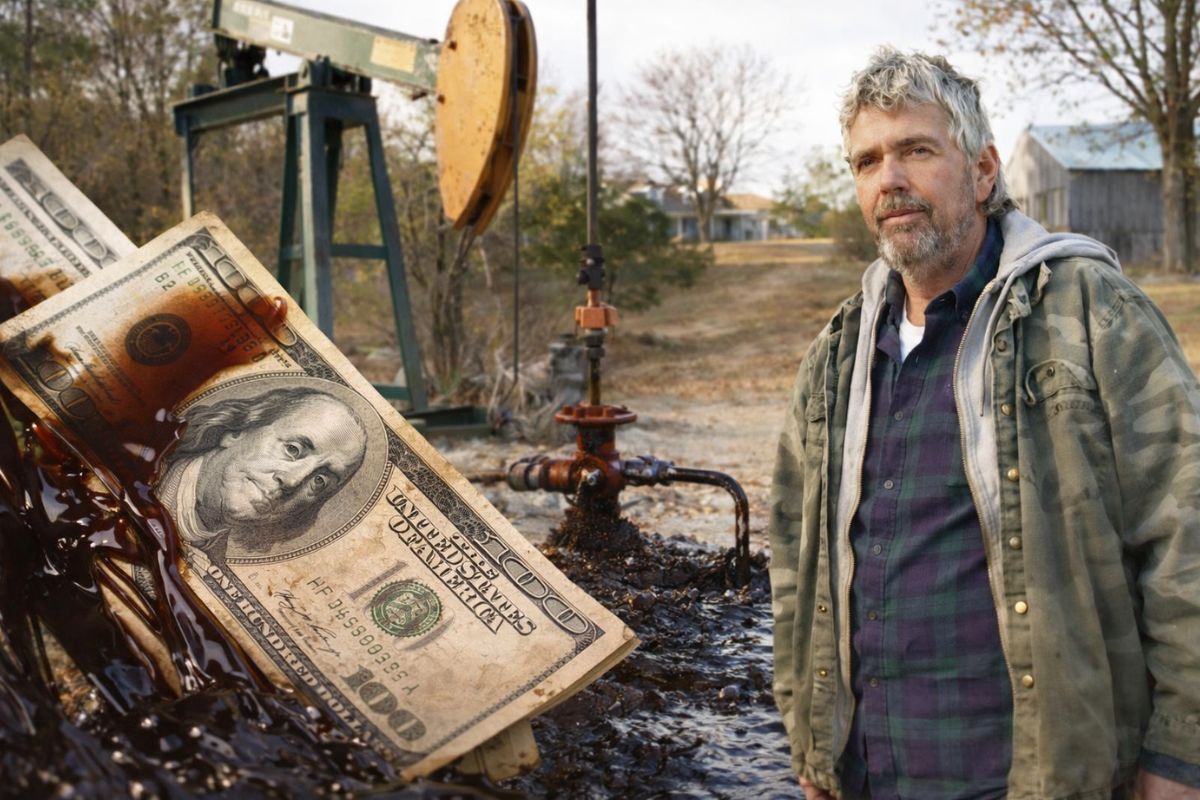
In South-Central Kentucky, Travis Coomer Drills His Own Backyard, Hits an Oil Well, and Says He Earns Up to US$ 4 Million a Year. The Story Blends Leasing, State Licenses, Equipment Risks, and Daily Production in Barrels, While the Family Tries to Control the Impact on the Neighborhood and Their Wallet.
The oil that often seems distant, tied to large fields and companies, entered the life of a rural Kentucky resident in an unlikely way: through the backyard. Travis, referenced in the account as someone in the drilling industry, describes a recent hit near home and the rapid transformation of the property into a constant work area, with machinery, crew, and well routine.
At the same time he speaks of high earnings, the scene is not of a “simple miracle.” There are licenses, operational risk, equipment costs, pressure to maintain production, and even the fear of neighbors starting to look for oil nearby. It’s a storyline that combines luck, skill, and a dose of daily tension.
The Backyard That Became a Drilling Area

The story takes place in south-central Kentucky, on a property described as a 150-acre plot, about 11 km from Columbia. It’s in this rural setting that the “backyard” stops being just a domestic space and starts functioning as a drilling front, with a well in the front yard and a declared intention to open another.
-
These living root bridges and ladders are over 700 years old and help indigenous people survive in one of the rainiest regions in the world.

-
From sertanejo star to international investor: Ana Castela invests millions in a mansion in the USA, creates a themed accommodation in Orlando, and shows that the “boiadeira” also wants to grow away from the stage.

-
The 10 most stunning motorhomes in the world: a $3 million trailer with a rooftop nightclub and garage for a Ferrari, “palaces on wheels” with Italian marble, private cinema, and five-star hotel luxury for billionaires.

-
Trump wanted to spend $400 million on the White House, but the courts prohibited the million-dollar construction.


Travis himself treats the hit as a turning point: he speaks of having “hit it big” on a well close to the house and mentions something like around 4,000 barrels since he found the flow. The image is striking because it mixes the mundane with the industrial: the house in the background, the rig in the foreground, and the family observing, already projecting what this changes in the short and long term.
How Much Money Comes In and How the “Unlikely Millionaire” Explains the Jump
In the account, Travis is presented as “the backyard oil guy,” and the income appears in two scales. One of them is annual: the case title mentions US$ 4 million per year.
The other is monthly: he is described as someone who is “probably” earning between US$ 200,000 and US$ 300,000 per month, a broad range that highlights how much this type of operation can fluctuate based on production, price, and contracts.
The account also makes clear that money is not guaranteed for those trying to replicate the formula. He comments that he has seen people go bankrupt, mortgage their homes, and make poor decisions trying to hit the “right hole in the right place,” especially when it comes to the lease agreement.
In other words: the backyard oil hits the headlines, but the machinery behind it is full of variables and can penalize those who arrive without capital, without skill, or without risk assessment.
Drilling in Practice: Depth, Equipment, and the Cost of Error
The described operation is far from improvisation. The rig mentioned would be capable of drilling down to 1,200 meters deep using a carbide button bit, and the “brand new” equipment is valued at over US$ 1.2 million.
This helps to understand why, even when the well is on the property, the chain involves heavy investment, trained crew, and operational discipline.
And discipline becomes a theme when the story shows a simple problem that turns into a loss: the machine stops, production drops, and the explanation is a lack of fuel, treated as a “beginner’s mistake.”
The detail is small, but the impact is large: when the rig is not working, time becomes lost money, and the pressure to resume drilling increases, because every stoppage adds to fixed costs, delays, and anxiety about “being in a slump.”
Licenses, State Rules, and Why One Well Leads to Another
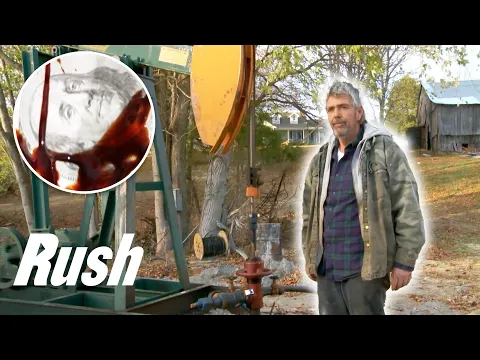

The advancement of drilling is linked to authorization. Travis mentions that the state office called saying that the permit application had been processed, which paves the way for him to “double down” and try another well, now in the backyard. This shows that, even on private property, it’s not just about digging and done: there is a formal permission ritual, with steps that can either clear or block the next drilling.
A specific requirement attributed to the state of Kentucky also arises: he says he needs to “weigh 400 tons” from that well to be able to drill another. The excerpt does not detail what exactly “weighing” means, but suggests a rule related to extracted volume or proof of production before allowing new drilling. In practice, this creates an incentive to keep the well running and prove performance, because expansion depends on meeting the requirement.
Production in Barrels: What the Numbers Tell About the Backyard Routine
When Travis dives into the numbers, he mixes cost, productivity, and a direct reading of results. He claims to have spent about US$ 30,000 to drill a well in the backyard and reports daily production reaching dozens of barrels per day.
In one section, he describes a well in the front yard producing 80 barrels per day and another on the property producing 40 barrels per day, totaling 120 daily barrels when combining the mentioned production fronts.
The account also mentions the price as part of the excitement: he states that crude oil is “almost $100 a barrel,” which helps to explain why each extra barrel weighs so much in the mental account of those drilling.
In daily life, barrel becomes more than just a unit of measurement: it becomes a goal, a justification to keep the crew, a reason to speed up repairs, and, above all, it becomes a thermometer for “whether to persist or stop.”
Neighbors, Secrets, and the Race for Leases
The case also suggests a typical side effect of success stories: the surroundings start to pay attention. Travis comments that he doesn’t know where the oil would be “flowing” to the property, but makes it clear that he doesn’t want neighbors to start looking. This concern sets the tone for a silent competition, because the discovery of oil at one point can spark interest in nearby areas and pressure negotiations.
The narrative itself talks about leases and the “junction” where drillers and contracts attempt to explore the flow. When money comes in, competition arises: people wanting “a piece of this,” operators trying to drill early to secure position, and property owners trying to understand whether it’s worth closing a contract, maintaining discretion, or waiting for better conditions.
Hard Work, Team, and the Side That Doesn’t Show Up in the Phrase “Became a Millionaire”
Even with the appeal of “millions a year,” the story insists on showing that nothing works alone. Travis talks about seeking “the best help possible,” bringing in drillers, dealing with hunting season disrupting the schedule, and putting a junior driller to operate, assuming the risk of error. There are nicknames, charges, and a practical hierarchy: who leads, who executes, who fixes.
And there’s the physical part of the work, with mud, casing, pressure, and the moment when “the signs of oil couldn’t be stronger.”
It’s the kind of routine where a wrong decision can be costly, and where “getting it right” coexists with constant maintenance, equipment expenses, and the need to maintain a minimum standard of safety and operational control.
The Backyard Dilemma: Quick Gains, Transformed Routine, and What Comes Next
In the end, the case is not just about finding oil, but about living with it. Travis speaks of continuing to drill “for the rest of his life,” while the family appears as part of the plan to capitalize on the results, including wife, children, and grandchildren.
The house becomes a backdrop for industry, and the backyard becomes a zone where the line between asset and worksite grows increasingly thin.
If your backyard started producing oil and your income skyrocketed, would you prefer to keep everything discreet to avoid a rush of neighbors and curious onlookers, or would you negotiate openly to turn the area into a bigger business? And what would be your personal limit for accepting noise, mud, and risk inside the house in exchange for such gains?







-

Uma pessoa reagiu a isso.