





 Portuguese
  English
  Spanish
 5 min of reading
  0 comments


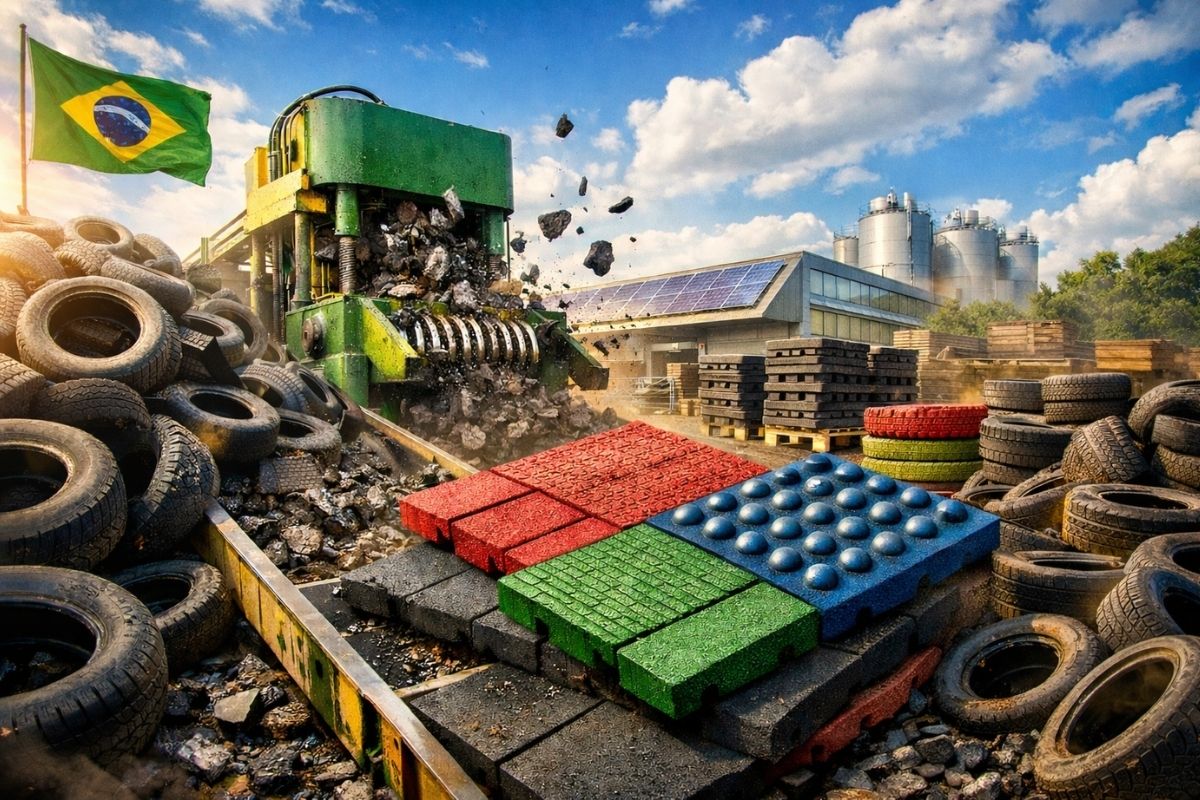
In Ceará, An Industry Developed Its Own Engineering To Transform Discarded Tires Into Sensory Safety Floors, Tripling Production And Achieving ESG Certification While Paving The Way For A New Sustainable Economy
The story of this innovation begins with a problem that the whole world still struggles to solve: what to do with discarded tires on a large scale. Each tire takes up to 600 years to decompose, pollutes the soil, contaminates water, and spreads in landfills and irregular dumps across the country. Instead of seeing only environmental liability, an industry in Maracanaú decided to transform discarded tires into high-resistance rubber floors, designed for safety and inclusion in squares, schools, and playgrounds.
This turning point was born in 2021, out of concern for the correct disposal of rubber waste from another company in the group.
In just four years, the business achieved ESG FIEC certification, with international validation for industries that prioritize sustainable economy.
-
Historic bankruptcy of Centauro shocks the market, and the century-old company puts more than 500,000 products, machines, and complete infrastructure up for online auction.
-
New shoe factory in Ceará is expected to create 400 jobs and strengthen the local economy.
-
No one imagined it, but a mixture of sawdust with a mineral that fights fires surprises scientists with a result that changes the course of fire-resistant construction.
-
From empty land to a high-end house, wooden construction uses a lightweight system, metal structure for the foundation, ventilated ceramic cladding, and special windows to create an efficient and comfortable living space throughout the year.
Today, this operation shows that it is possible to transform discarded tires into sensory safety floors, generate jobs, strengthen the circular economy, and open new markets in Brazil and abroad.
From Environmental Problem To Opportunity To Transform Discarded Tires Into Floors

Recycling tires is a daily challenge for the industry. Every day, thousands of units are discarded in Brazil, taking up space, accumulating water, and posing environmental risks.
While many still see only a difficult-to-treat waste, this Ceará industry decided to view discarded tires as a concrete solution for safety and sustainability.
Located in Maracanaú, the factory receives used tires that, instead of going to uncontrolled dumps, enter a structured reverse logistics flow.
The goal is simple yet powerful: remove tires from the environment and return them to society as durable, sensory safety floors with a strong ecological footprint.
How The Factory Transforms Discarded Tires Into Safety Floors
The process begins with the arrival of the tires at the industrial plant. They are sorted and sent to a specific processing line. First, the internal metal parts are removed, which are separated as metallic material. Then, the rubber is shredded in different stages until it turns into granules.
From this granule, the company can transform discarded tires into safety floors that meet multiple uses.
Part of this material is pressed into molds that create rubber plates used in squares, schools, and playgrounds, creating safer surfaces for children and adults.
In some cases, the floors are applied directly on site in a monolithic form, which expands design possibilities.
Adapted Machines And Own Engineering To Create Sensory Floors
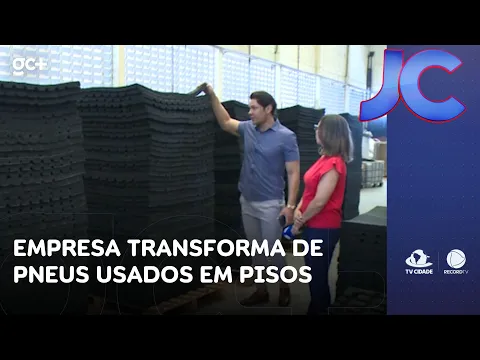

None of this would be possible without engineering innovation. The ideal machinery to transform discarded tires into floors simply did not exist ready in the Brazilian market.
The closest were machines designed for the footwear industry, used in the manufacturing of shoe soles.
The solution was to search for these suppliers and adapt everything internally. In Fortaleza, the technical team made the necessary adjustments, redesigned parts of the process, and created their own industrial line to recycle tires and produce rubber floors.
This local development allowed discarded tires to become a high-performance product with specific safety and comfort characteristics.
Sensory Floors, Inclusion, And Safety For Children
One of this industry’s great differentiators is the concern with the sensory aspect. The floors produced from discarded tires are not only designed to cushion impacts from falls.
They are also thought out to stimulate children, including those with autism or other conditions that require special attention.
The proposal is for these sensory floors to become part of pedagogical spaces, helping teachers and schools integrate play, safety, and child development.
The products can be installed in squares, daycares, schools, and playgrounds, offering colors, textures, and comfort that go beyond the basic protective function.
Growing Production, New Machineries, And More Applications
Today, the factory removes over 100 tons of rubber waste from the environment each month. And this volume is still expanding.
With the arrival of new machinery and the development of new products, the company plans to triple the amount of discarded tires into floors starting in April, increasing the positive environmental impact and the scale of the operation.
Besides the plate floors, the company also manufactures monolithic flooring, applied directly on site. Both formats maintain the same logic: reusing discarded tires as sensory and ecological floors, expanding the portfolio to meet different architectural and urban projects.
The current focus is on the Northeast, with local and international market operations in perspective.
ESG Certification, Circular Economy, And Job Generation
The recognition came quickly. In four years, the industry achieved ESG FIEC certification, with international validation for practices aligned with sustainable economy.
This reinforces that transforming discarded tires into floors is not just an interesting idea, but a consistent business model within the circular economy.
In practice, the operation already generates about 30 direct jobs, in addition to mobilizing chains of collection, logistics, and technical services.
The initiative reduces environmental impacts, strengthens the circular economy, and proves that it is possible to generate wealth while taking care of the planet.
Complete Projects For Schools, Daycares, And Public Spaces
In addition to transforming discarded tires into floors, the company offers complete solutions for those who want to apply this technology in real projects.
There is a dedicated architecture and projects sector capable of developing the integral design of areas such as schools, daycares, squares, and playgrounds.
The same operation that manages the reverse logistics of tires also delivers sensory floors ready for use, with planned layouts and technical specifications suited to each space.
This way, the cycle closes: the tire that would be an environmental problem returns to society as safe, playful, and sustainable infrastructure.
And you, after learning about this story of discarded tires in sensory and sustainable floors, what type of space in your city do you think this solution should be a priority now?








-

Uma pessoa reagiu a isso.