





 Portuguese
  English
  Spanish
  5 min of reading
  0 comments


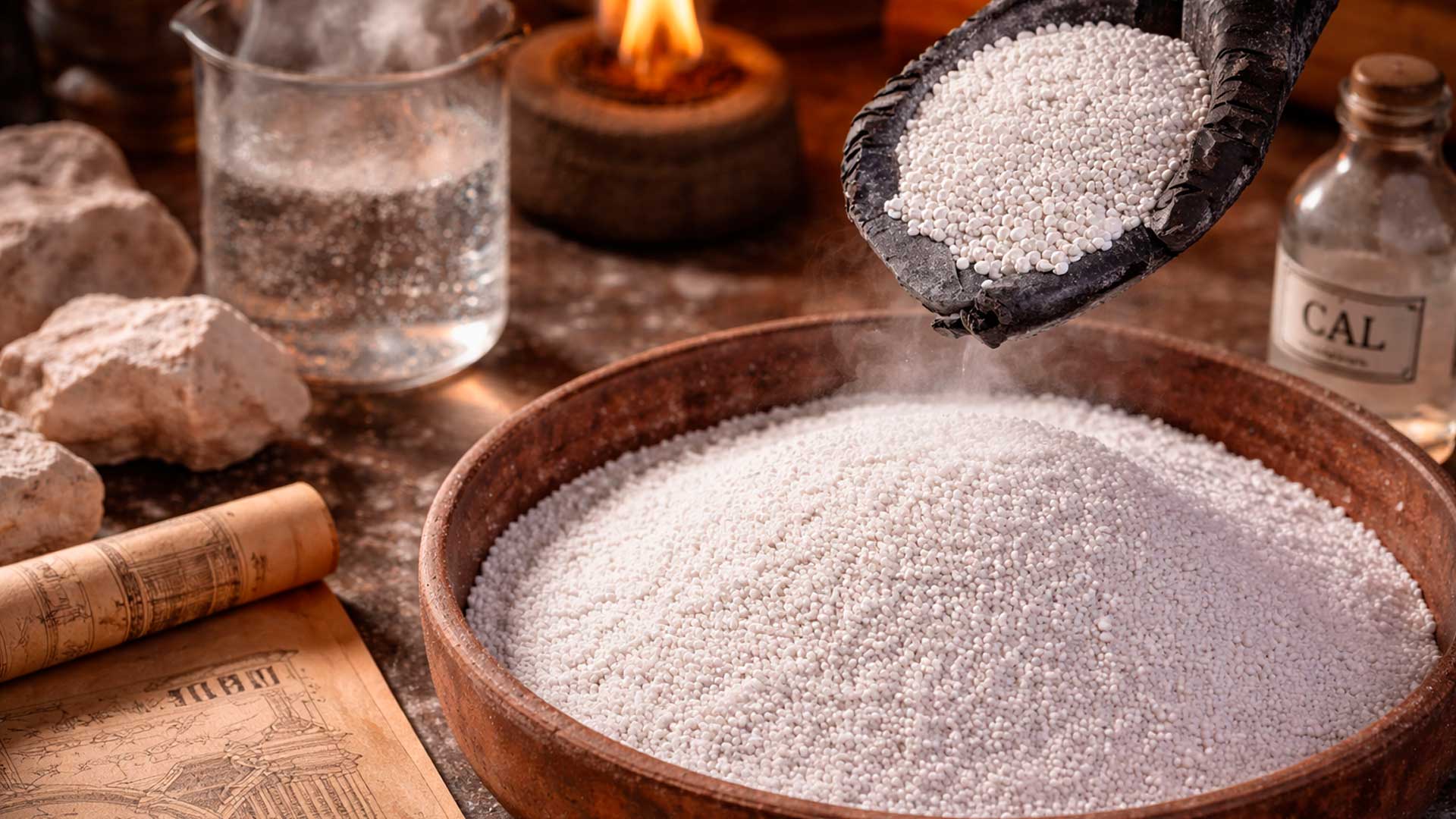
New generation of thermal storage uses lime and water to store cheap electricity in the form of heat, targeting factories, buildings, and in the future, even residential systems
A technology that seeks inspiration from lime used since Ancient Rome is starting to gain traction as a candidate for a little-visible problem of the energy transition. Instead of competing with traditional electric batteries, it aims for something even bigger: supplying heat for industrial processes, hot water, and heating of spaces.
The interest is not small. Heat accounted for almost half of the final energy consumption worldwide in 2022, and in building heating, fossil fuels still represented 63% of global use, with natural gas alone accounting for 42% of the demand in 2022. This helps explain why solutions capable of storing clean heat have started to attract so much attention.
The logic of the system is simple on paper and sophisticated in execution. When calcium oxide, quicklime, comes into contact with water, it releases heat and transforms into calcium hydroxide. When heated again, the material loses water and returns to its original state, allowing the cycle to be repeated as if it were a rechargeable thermal battery.
-
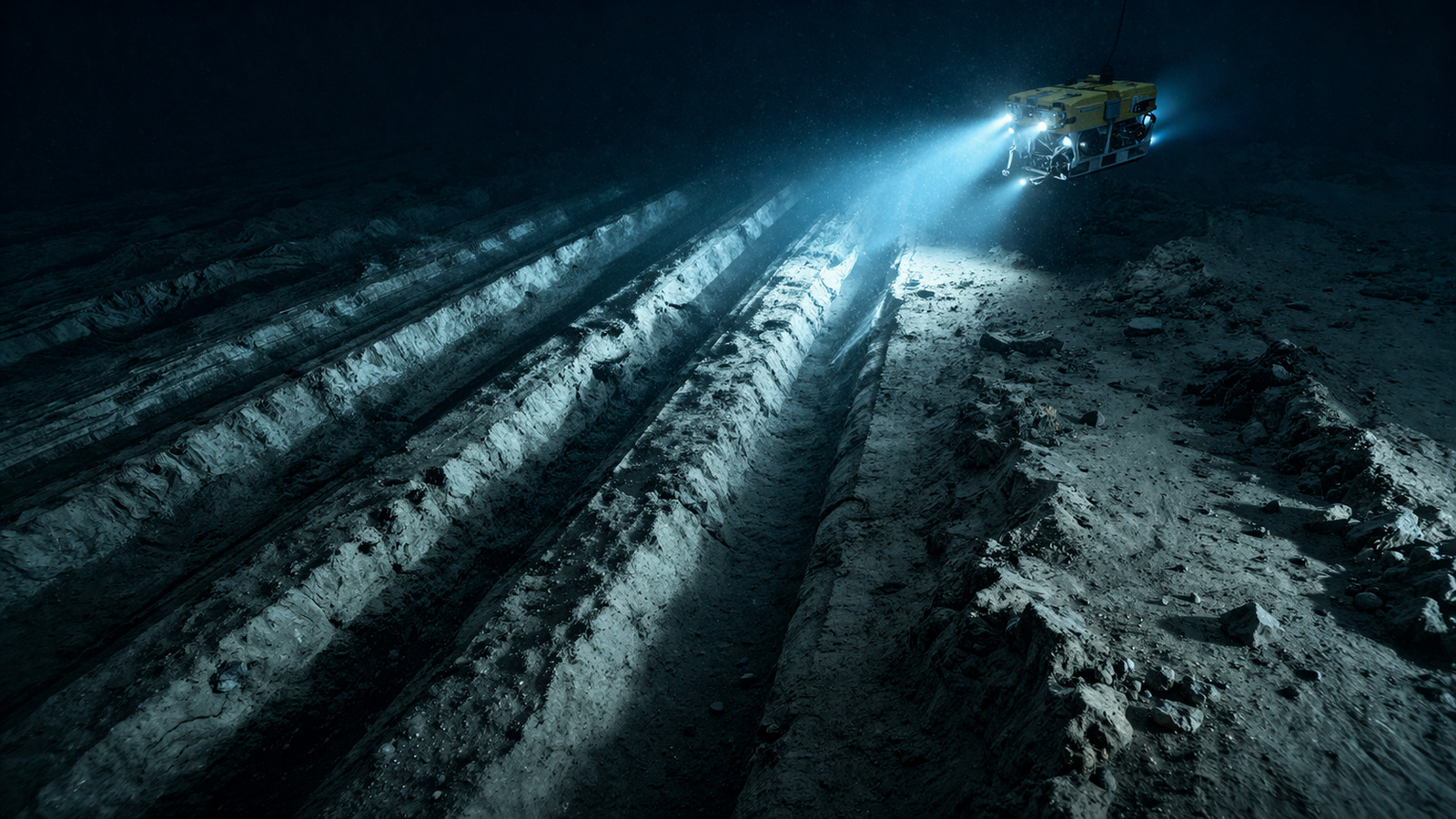
Scientists have found in the dark depths of the North Sea giant marks from 18,000 years ago left by colossal icebergs, and the discovery could help predict the future of Antarctica.
-
In Mexico, a 3,000-year-old Maya site with the dimensions of an entire city may have been built as a colossal map of the cosmos, created to represent the order of the universe and reveal how this people organized space, time, and rituals.

-
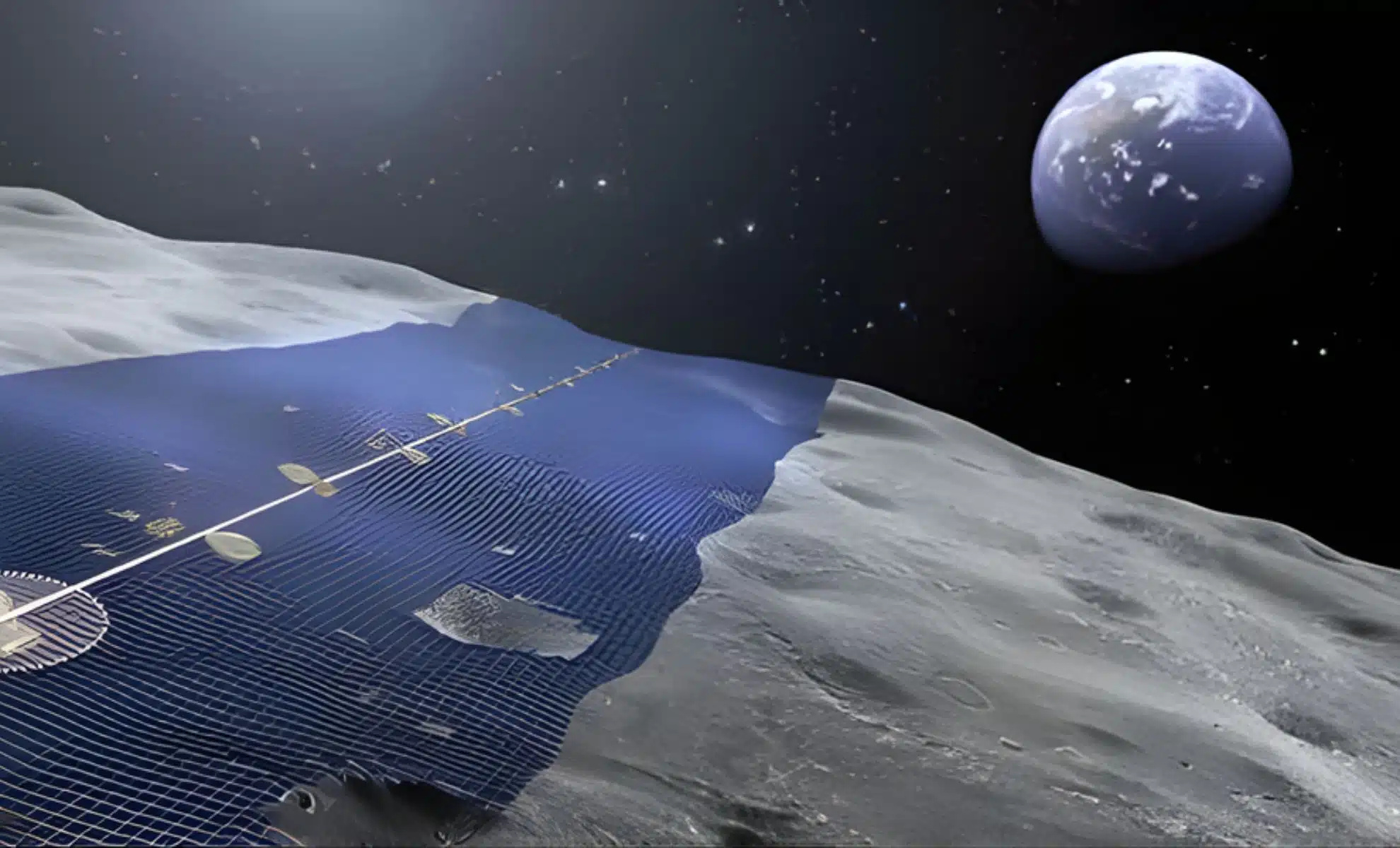
Japan wants to build a solar ring of 10,900 kilometers on the Moon to continuously send energy to Earth.
-
Weighing almost 1 ton, with temperatures of up to 3,000°C, the ability to launch 10,000 fragments within a radius of 1 km, capable of penetrating concrete and melting steel, Turkey’s terrifying bomb emerges as one of the most destructive non-nuclear weapons ever presented.

Among the companies trying to bring this idea to market is the American Cache Energy. In the material released by the company, the system works with heat of up to 1,000°F, about 538°C, uses standardized industrial components, and is designed to store energy for periods ranging from hours to long durations, without moving parts in charging and discharging.
How an ancient chemical reaction turned into a modern thermal battery

The recent advancement did not arise from a new reaction, but rather from a new way to package and control a chemical principle known for decades. Cache claims to have developed small pellets derived from limestone that can better withstand charging and discharging cycles, solving an important part of the practical problem that has always hindered this type of storage.
In practice, electricity, ideally coming from solar and wind sources, is used to “charge” the material. Then, when heat is needed, the controlled reintroduction of moisture causes the pellets to release thermal energy at high temperatures, sufficient to cover a wide range of industrial uses and also heating and hot water demands in buildings.
Another point that helps explain the interest lies in logistics. The University of Minnesota Morris describes these pellets as a material that can be stored in containers or silos, almost like grains, paving the way for simpler installation systems and even easier transportation than other thermal storage alternatives.
Where the first tests already indicate real application


The initial target makes sense. The industry needs constant heat, and in many cases, at high temperatures, an area where direct electrification is not always simple or cheap. Recent studies on thermal batteries indicate that this type of solution can reduce the costs of electrifying industrial heat and decrease dependence on natural gas-powered equipment.
On March 26, 2026, the University of Minnesota Morris announced the installation of a pilot from Cache Energy to heat a campus building. The institution reported that it already produces over 60% of its electricity on-site from wind turbines and solar panels, but also highlighted that its biggest energy challenge remains heating, which consumes about four times more energy than electricity.
The use in critical situations has also caught the military’s attention. On September 25, 2025, Cache announced collaboration with the U.S. Army ERDC-CERL to test a storage system designed to enhance the energy resilience of military facilities during emergencies, blackouts, and extreme weather events.
In the industrial sector, the technology has also moved beyond purely experimental environments. Recent coverage of the company reports tests in a unit linked to KitchenAid, from Whirlpool, in Ohio, with performance exceeding expectations, signaling that the concept is starting to be evaluated under operational conditions closer to the real market.
Why this technology is starting to seem viable now
The main change has been economic. For a long time, the idea of storing energy in the form of heat seemed promising in the lab but difficult to make financially viable in the real world. The drop in renewable costs and the growing need to use surplus electricity generation more intelligently have changed this scenario and breathed new life into thermal batteries.
This matters because not all decarbonization goes through outlets, cars, and lithium batteries. Heat remains a huge part of the global energy bill, especially in buildings and industry, and much of it still directly depends on fossil fuels. A technology that captures cheap clean electricity and returns it as usable heat can occupy a strategic space that today still belongs to gas.
It is also not a newly discovered idea. Academic reviews show that calcium-based concepts for thermochemical storage date back to the 1970s, but interest has intensified in recent years due to the pressure for long-duration storage and solutions for process heat.
What could still hinder the expansion of the cement battery
The first obstacle remains material. Review research on calcium-based thermochemical systems indicates that performance can decline over cycles due to sintering, loss of reactivity, and structural changes in the material, which forces companies and laboratories to seek more stable formulations.
The second challenge is commercial. The competition for the thermal storage market is far from being decided, as there are other technological routes in development, with materials like graphite, rocks, bricks, sand, and different chemical compounds, each with its own advantages in terms of cost, temperature, and application.
In practice, this means that there will hardly be a one-size-fits-all solution. Heat systems for a factory, a university campus, a heating network, or a house may require different architectures, with very distinct temperatures, storage times, and operational costs. This is one of the reasons why the market is still in a phase of natural selection.
Still, the proposal draws attention for combining abundant raw materials, relatively simple design, and direct adherence to one of the most challenging bottlenecks of the energy transition. If testing continues to advance and durability is confirmed outside the lab, the old chemistry of lime may gain a new function in the 21st century, less tied to building walls and more connected to replacing part of the fossil heat that still supports the modern world.
Do you believe that thermal batteries like this can really take space away from natural gas, or are we still facing a promise too early for the real market? Leave your opinion in the comments, as this could be one of the most important debates in the new race for clean energy.









Seja o primeiro a reagir!