





 Portuguese
  English
  Spanish
 3 min of reading
  0 comments


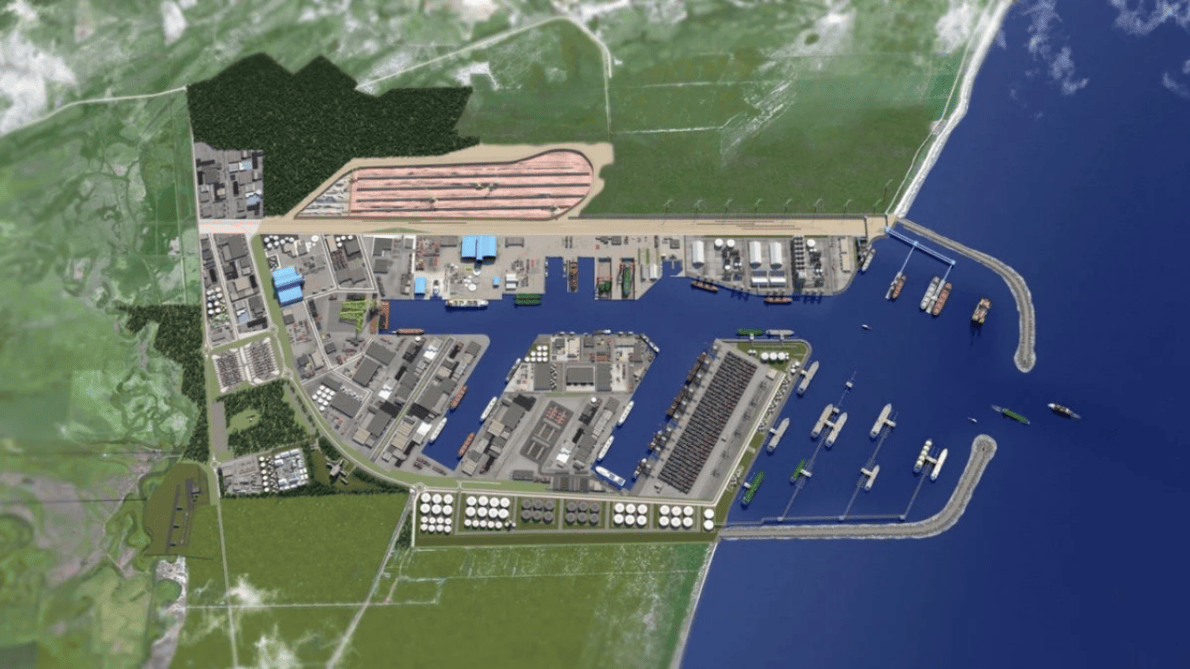
Initiative Aims to Move Up to 6 Million TEUs and Position Espírito Santo as a Strategic Hub in International Maritime Trade.
Porto Central, located in Presidente Kennedy, on the southern coast of Espírito Santo, has taken a decisive step to establish itself as one of the main logistical centers in Latin America.
After a decade of waiting, the construction of the port complex began in December 2024, and now the project has secured an important agreement to enable the installation of a container terminal with the capacity to handle up to 6 million TEUs (Twenty-foot Equivalent Units) per year.
The proposal is ambitious: to transform Porto Central into an internationally recognized port hub, capable of accommodating the largest container ships in the world.
-
OceanPact Announces Acquisition of CBO and Creates One of Brazil’s Largest Maritime Support Structures with 73 Vessels, Annual Revenue Above R$ 4 Billion and R$ 14 Billion Backlog
-
With Extreme Winds, Giant Waves, and Unrestricted Currents, Drake Passage Is Considered the Most Violent Stretch of the Oceans

-
15th Century Merchant Ship Surprises Archaeologists

-
Odfjell Inaugurates First Operational Green Corridor Between Brazil and Europe Using Sustainable B24 on Maritime Routes and Reinforces Decarbonization Strategy

The project will be developed through the signing of a Memorandum of Understanding (MoU) between the port and the consulting firm Praxys, specialized in global business and financial transactions.
State-of-the-Art Infrastructure and Unprecedented Depth on the Continent
With general operations expected to begin in December 2027, the new container terminal will be implemented in phases, with its initial capacity set at 2.5 million TEUs starting in 2030.
The structure will feature 1,370 meters of quay and an access depth of 18 meters in the first phase, reaching 20 meters in the second — a distinguishing factor that makes it unique throughout South America.
According to Porto Central, these features will allow the docking of large vessels, with capacities between 21,000 and 24,000 TEUs, currently used on the most demanding international routes.
The depth and length of the quay will strategically position the terminal to receive transoceanic routes directly from Asia and Europe, with the possibility for transshipment to other South American countries like Argentina and Uruguay.
Growing Demand for Hubs and a Solution for Logistical Bottlenecks
The expansion of container ships in recent decades has brought new challenges to global port infrastructure, especially on the eastern coast of South America, where there is a recognized lack of deep-water terminals.
In this context, the container terminal at Porto Central emerges as a response to the need for modern and efficient hubs that allow for optimized maritime logistics and reduced operational costs.
With the new terminal’s entry into operation, Brazil will gain an important tool to attract new routes for international navigation, increasing its competitiveness in the global market and facilitating the flow of import and export cargo.
The strategic location in Espírito Santo also provides quick connectivity with the main consumer and production centers in the country.
Praxys, a partner of Porto Central in enabling the container terminal, will also be responsible for marketing management and conducting commercial negotiations.
The consultancy brings experience from Jesper Kjaedegaard, a former executive at Maersk Line and an international reference in the port sector, with over four decades of experience in maritime logistics and container transport.
“The new terminal is exactly the transformation that Brazil needs. It will redefine the landscape of container services on the eastern coast of South America, attracting more navigation routes, increasing the country’s competitiveness, and bringing substantial benefits to operators, exporters, and importers and to the local economy,” Kjaedegaard stated.
The expectation is that the container terminal at Porto Central will become a catalyst for regional economic development, generating jobs, attracting investments, and boosting Brazilian foreign trade.
With this initiative, Porto Central reinforces its role as a transformative agent of national logistics, aiming high to seek a prominent place among the largest port complexes in Latin America.






Seja o primeiro a reagir!