





 Portuguese
  English
  Spanish
  5 min of reading
  56 comments





After A Visit To China, The CEO Of Ford Was Stunned By The Advance Of Local Automotive Technology And Issued A Serious Warning About The Risk Of The Disappearance Of The Western Industry
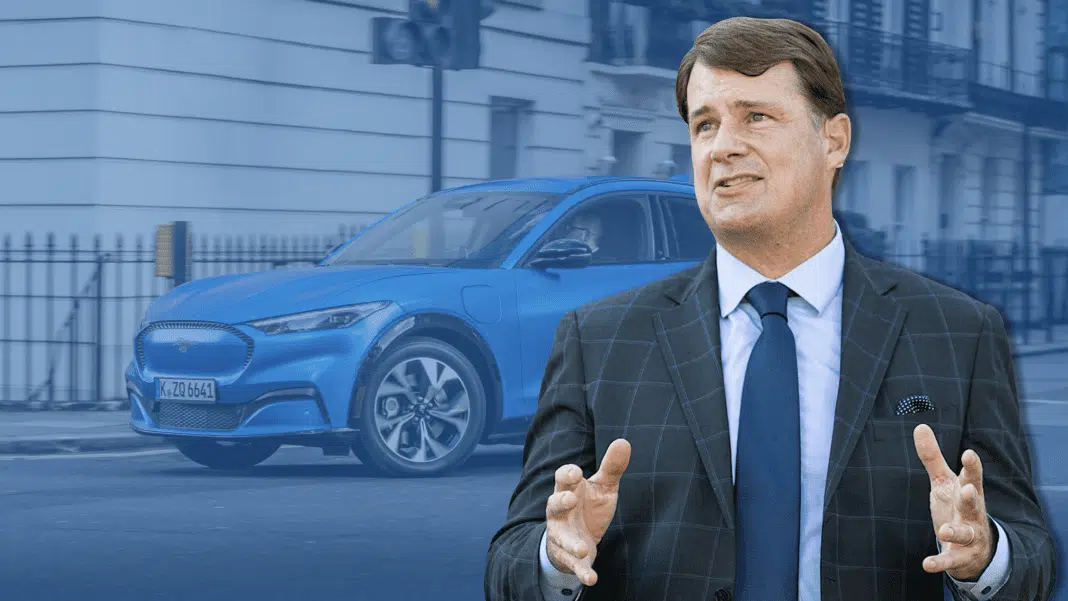
The CEO of Ford, Jim Farley, recently returned from a trip to China with an alarming vision of the future of the western automotive industry. In an interview with Wall Street Journal, Farley described what he witnessed in the Asian country as an existential threat to Ford and other traditional automotive giants like General Motors and Volkswagen.
The Reason? The overwhelming dominance of Chinese electric vehicle manufacturers, who are advancing at a terrifying pace in terms of innovation, cost-effectiveness, and market adoption.
ARTICLE CONTINUES BELOWSee also
A French brand placed a car on four huge red balloons to prove that its suspension made the vehicle “float,” and the surreal scene became one of the most iconic and unusual images in automotive history.

Jeep Avenger begins production in Brazil, debuting as the brand’s new entry-level SUV and inaugurating an unprecedented phase by becoming the first national Jeep manufactured outside of Goiana, as part of a R$ 3 billion plan.
Costing R$ 12,490, the new Shineray Urban Lite 150 “cheap one” arrives in Brazil with a CVT transmission, digital dashboard, and LED lights, making it more affordable than the Biz and targeting those who want to abandon the bus.
Ducati brings to Brazil the Superleggera V4 Centenario: 228 hp that become 247 with a track kit, carbon fiber and carbon-ceramic brakes, estimated price between R$ 1.5 and 2 million, deliveries only in 2027.
The Decline Of Western Brands In China, According To The CEO Of Ford
During his visit, Farley, the CEO of Ford, noticed a scene that would be a dark omen for western brands: in major Chinese cities, the presence of Ford vehicles and other traditional brands has virtually disappeared.

Meanwhile, the streets are filled with models from Chinese manufacturers like BYD, XPeng, and NIO, brands that have quickly established themselves as leaders in the electric vehicle market.
Farley stated that the models he observed had ranges of 400 to 500 kilometers and that the cost per kilowatt-hour (kWh) of the batteries was below 500 euros, a surprising figure compared to prices charged by western manufacturers.
The Chinese Technological Superiority
For Farley, the disparity is not just about cost. The technology he witnessed in Chinese electric vehicles is at an advanced level.
Chinese engineering stands out for its simplicity, efficiency, and flexibility, while western manufacturers struggle to keep pace with the speed of innovation. One example that impressed the CEO was the Xiaomi SU7, which Farley closely observed in a Xiaomi store.
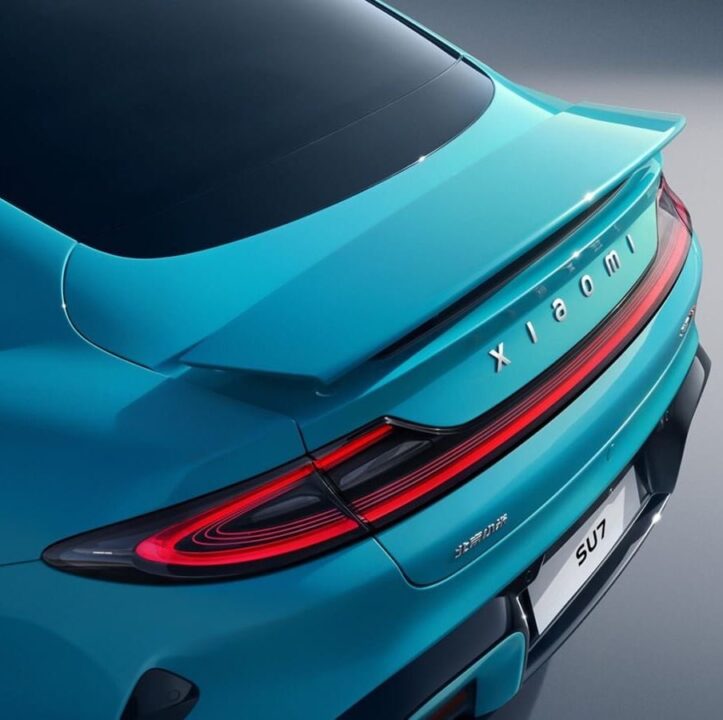
He praised both the design and the production capability of the vehicle, at a price that seems out of reach by western standards. Another highlight was the Atto 3 model from BYD, which has proven extremely popular among Chinese consumers.
Furthermore, Chinese manufacturers are at the forefront of technologies such as 800-volt architectures, advanced infotainment systems, and ultra-fast charging capabilities.
Farley mentioned the ZEEKR 009, an electric minivan capable of charging at 600 kilowatts, more than double the capacity of most fast chargers available outside China.
Global Competition And The Risk Of Disappearance
For many years, companies like Ford considered Tesla as their main competitor in the electric vehicle segment. However, after the visit to China, Farley made it clear that Chinese manufacturers like XPeng and BYD represent an even greater threat.
With the European market already being explored by these Chinese brands, Ford and other western manufacturers are falling behind in a scenario that seems increasingly difficult to compete in.
Farley was emphatic in stating that Ford and its western competitors need to act quickly or risk being eliminated from the market.
He suggested that one possible way out would be to collaborate with Chinese manufacturers, but also warned that this could further harm the automotive industry in the United States and Europe. One of Ford’s strategies would be to manufacture vehicles in Mexico, a more cost-effective entry into the North American market, but this approach also presents significant challenges.
The Chinese Strategy And The Rise Of EVs
The success of the Chinese automotive industry is not an isolated phenomenon. The Chinese government has played a fundamental role in creating an incentive system for the adoption of electric vehicles while discouraging the use of fossil fuel-powered cars.
The process of obtaining plates for diesel or gasoline vehicles is expensive and complicated in China, while for electric vehicles, it is much more accessible. In addition, the country has heavily invested in a robust infrastructure of fast chargers, which has facilitated the spread of EVs among consumers.
The impact of this policy was felt quickly. Brands like BYD, which received support from investor Warren Buffet, seized a significant share of the global market. In 2023, BYD sold over three million electric and plug-in hybrid vehicles, a substantial increase from previous years, consolidating its position as one of the largest players in the sector.
A Warning For The Western Industry
Farley’s observations serve as a warning for the western automotive industry, which faces a critical crossroads. If manufacturers do not accelerate their transition to electric vehicles and do not adopt technological innovations more rapidly, they risk becoming irrelevant in a market dominated by China.
The CEO of Ford made it clear that time is running out, and the window to react to this threat is closing rapidly.
The western automotive industry, once seen as a global leader, now faces the risk of disappearance if it does not keep up with the technological revolution that is sweeping through China.
This phenomenon is not exclusive to China. Chinese manufacturers of electric vehicles are rapidly expanding into foreign markets such as Europe, the Middle East, and other Asian countries.
Furthermore, some of them are building factories in Mexico to export vehicles to the United States, taking advantage of more favorable trade conditions.
This expansion has raised concerns among governments around the world. The European Union, for example, announced plans to impose tariffs on Chinese electric vehicles. In the United States, the Biden administration has raised tariffs to 82.5%, trying to restrict the entry of these vehicles into the American market.
However, experts believe that these protectionist measures may not be sufficient to contain the advance of Chinese automakers, who are already preparing to overcome these trade barriers.
Meanwhile, traditional manufacturers like Ford are facing challenges in adapting to this new scenario.
Even with heavy investments in the transition to electric vehicles, Ford has been recording significant losses, averaging US$ 40,000 for each unit sold.
As a result, the company is adjusting its strategy, focusing on the production of smaller and more efficient commercial electric vehicles.










E os Estados Unidos não se dizem neoliberais? Defensores do livre comércio? Também dizem que a concorrência é o segredo do sucesso? Dizem também que a taxação é uma intervenção do Governo na Economia, estratégia condenada por Adam Smith, o gênio criador do Liberalismo?
A tecnologia pode ser boa, mas a qualidade é péssima.
5 estrela no ncap
O americano depende de ganhar dinheiro porque os acionistas exigem. Assim, não fabricam carros para durar, mas para vender. Já saíram do brasil. Dando lugar para os chineses. Os riscos de operar um negócio estão maiores agora.