





 Portuguese
  English
  Spanish
  3 min of reading
  0 comments


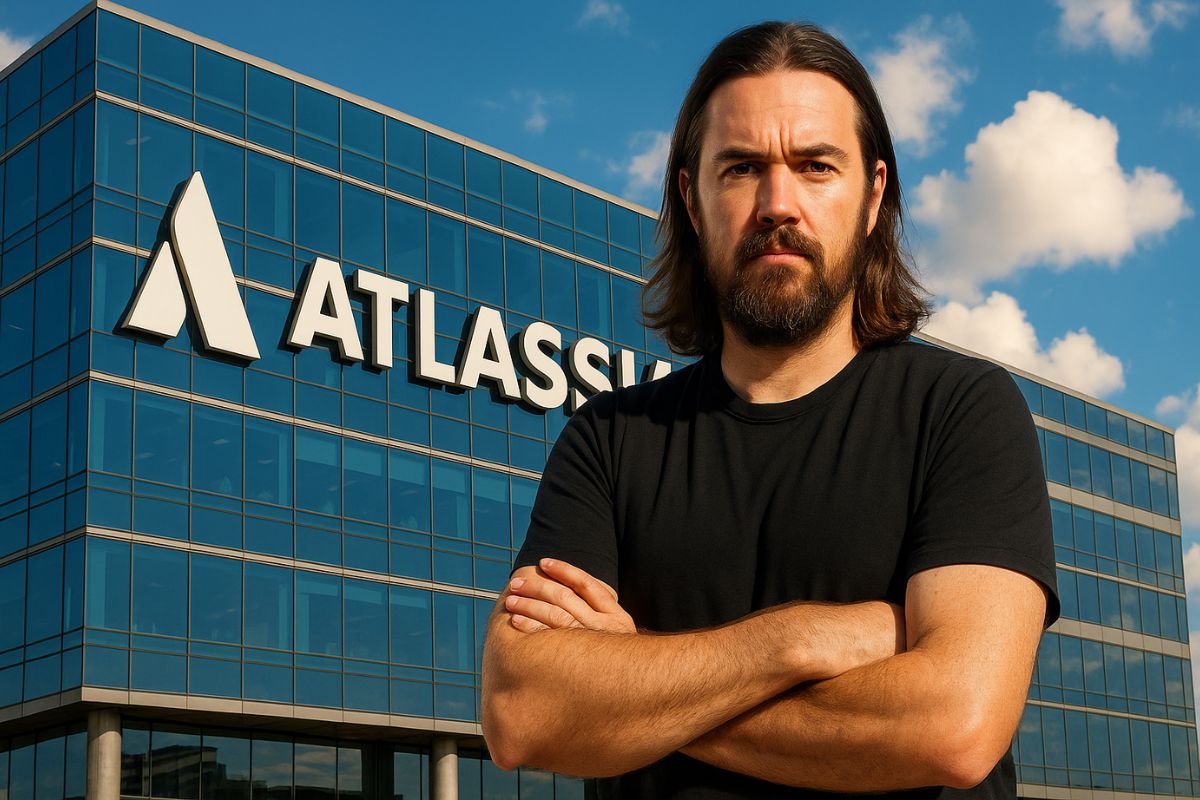
CEO Fires 150 Employees Via Video to Replace Them with AI. Atlassian’s Decision, Announced by Mike Cannon-Brookes in Pre-Recorded Video, Exposes Advancements in Artificial Intelligence and Raises Debate About the Future of Work.
The announcement in which a CEO fires 150 employees via video to replace them with AI surprised the technology sector and generated criticism about the impersonal nature of the decision. The measure came from co-founder and billionaire Mike Cannon-Brookes, of Atlassian, an Australian software company.
According to a report from Sky News, the message was delivered in a pre-recorded video, with Cannon-Brookes dressed in casual attire in his home office. After watching the announcement, employees had to wait 15 minutes to receive an email confirmation of whether they were on the layoff list. Shortly thereafter, the laid-off employees lost access to their laptops. The company stated that it would pay salaries and benefits for six months.
Who Was Affected When the CEO Fires 150 Employees Via Video to Replace Them with AI
The decision of the CEO firing 150 employees via video to replace them with AI affected different areas of Atlassian, including technical and administrative roles. The official justification was the adoption of new artificial intelligence solutions to increase internal efficiency, making some positions redundant.
-
The waste that can double a household’s water bill is not in the faucet or the shower; it happens hidden within the walls and can go unnoticed for months, according to sanitation experts.

-
Darkness can surpass light in an optical phenomenon confirmed by scientists, which expands the understanding of relativity and reveals new behaviors of waves in the universe.

-
A Brazilian scientist created a pen that touches human tissue and identifies cancer cells in seconds using a drop of water and artificial intelligence, and Lívia Eberlin’s invention has already been used in over 400 surgeries in the United States and Brazil.

-
An inventor in China creates flying drones shaped like swords that respond to hand gestures in real time, with technology based on motion sensors transforming interaction into a scene worthy of a movie and redefining the control of machines in the air.

The episode gained traction because, in addition to the layoffs themselves, the distant tone and absence of direct dialogue with employees caused outrage. Many saw the process as a clear demonstration of how automation is reducing human space in corporations.
Why the CEO Fires 150 Employees Via Video to Replace Them with AI
According to Cannon-Brookes, AI is already capable of performing repetitive tasks at a lower cost and faster, justifying the replacement of part of the team. Atlassian emphasized that the change is not just about cuts, but a restructuring in which technology takes on roles previously performed by people.
This argument has been echoed in other large companies. Amazon, Procter & Gamble, Estée Lauder, and Match Group have also been downsizing teams with the justification that artificial intelligence and automation allow for greater results with fewer resources.
Where This Movement Is Happening
The CEO fires 150 employees via video to replace them with AI in Australia, but the phenomenon goes beyond that. In the United States, Europe, and Asia, mass layoffs related to the adoption of AI have become frequent. Amazon, for instance, announced that the rise of artificial intelligence is a “once-in-a-lifetime” event and that many jobs will simply cease to exist in the coming years.
This scenario reinforces the trend of technology companies and even traditional sectors streamlining structures, creating smaller teams and broader roles to cut costs and speed up results delivery.
Is It Worth Replacing Jobs with AI?
The case in which a CEO fires 150 employees via video to replace them with AI reignites the discussion about the ethical limits of automation. While the efficiency gains are undeniable, the social impact of mass layoffs concerns experts.
Some argue that technology frees professionals for creative and strategic activities, while others warn about the precariousness of labor relations. The central question is whether the gain in productivity justifies the human and social cost of layoffs.
The episode in which a CEO fires 150 employees via video to replace them with AI shows that digital transformation is not just a promise of innovation but also a source of social and economic tension. The impersonal nature of the layoff and the speed of the replacement raise doubts about the future of labor relations.
And you, do you think the decision was necessary to modernize the company or an example of dehumanization in the corporate environment? Do you agree that AI should replace jobs in this way? Leave your opinion in the comments and share your views on this impact on the market.







Seja o primeiro a reagir!