





 Portuguese
  English
  Spanish
  4 min of reading
  0 comments


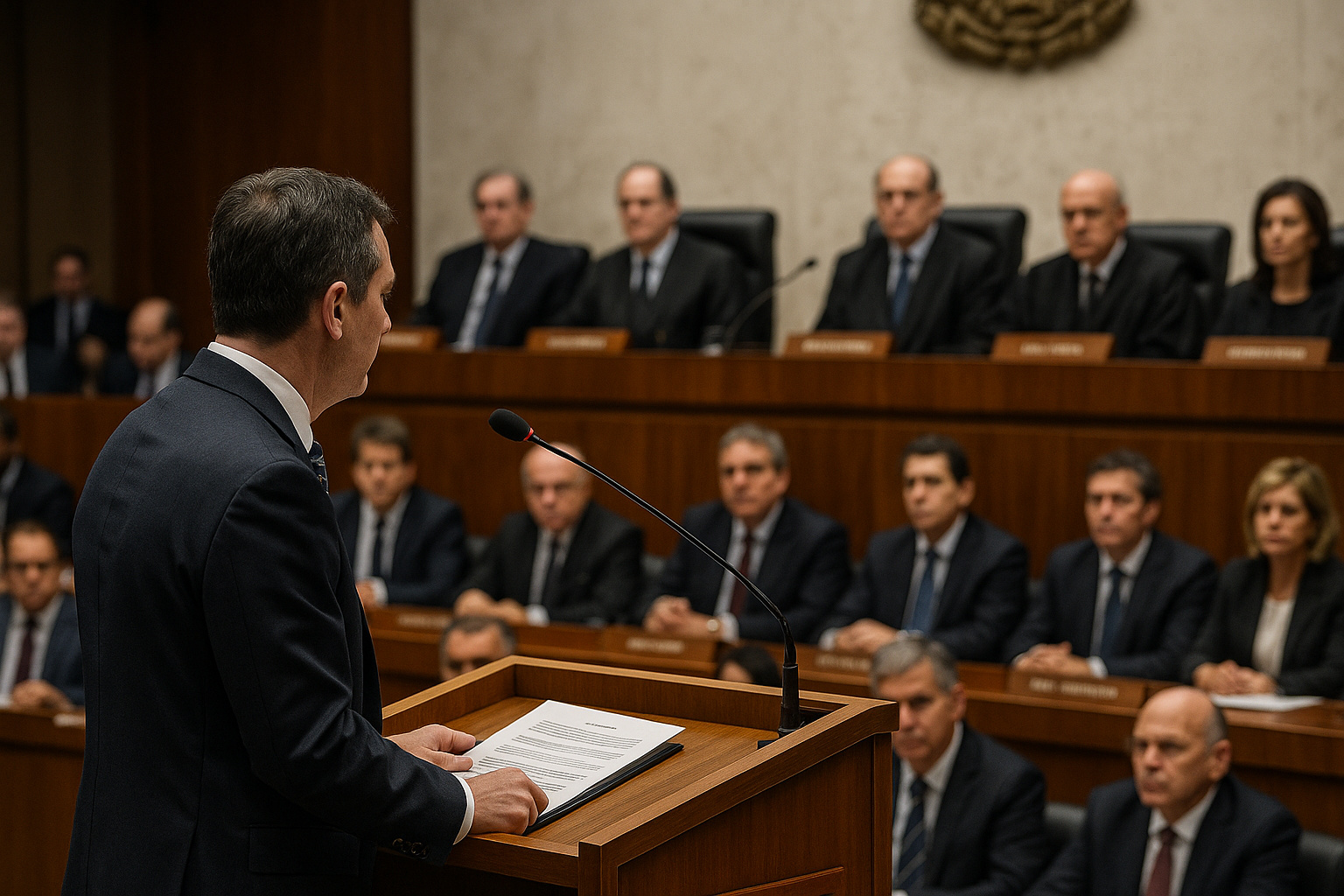
Changes Advance in Congress and Alter Limits of Individual Decisions and Impeachment Requests at the STF
The Constitution and Justice Committee of the Chamber of Deputies approved, on December 3, 2025, a project that restricts isolated decisions by ministers of the Supreme Court, as reported by the CCJ of the Chamber. The text will be sent directly to the Senate, as it received final approval and will not need to go to the plenary. The movement coincided with another relevant fact: Minister Gilmar Mendes of the STF decided to change criteria related to the impeachment of Court ministers, which expanded the legal debate in the country.
The proposal alters the way the Supreme analyzes laws passed by the National Congress and marks a moment of significant institutional reorganization.

Approved Rules Strengthen Control Over Individual Decisions
According to the report by Deputy Alex Manente (Cidadania-SP), preliminary decisions attributed to a single minister must be immediately submitted to the plenary of the STF. The measure strengthens collegiality and reduces the weight of individual decisions, which tend to impact public policies immediately. The project also redefines which parties can file actions of unconstitutionality, allowing this initiative only to the parties that meet the barrier clause.
-
The Chamber opens a debate on driver’s licenses at 16 years old as part of a reform that includes around 270 proposals to change the Brazilian Traffic Code and may redesign rules for licensing, enforcement, and circulation in the country.

-
The new Civil Code could revolutionize marriages in Brazil with “express divorce” and changes that could exclude spouses from inheritance.

-
Banco do Brasil sues famous influencer for million-dollar debt and intensifies debate on delinquency, risks of seizure, and direct impact on Gkay’s credibility.

-
The Senate approves a bill that criminalizes misogyny, hatred, or aversion towards women, and includes the crime in the Racism Law with a penalty of up to 5 years.

Smaller parties, therefore, are prevented from filing isolated actions. The possibility remains open for party federations, which can act jointly. This set of changes alters the traditional flow of constitutional control and intensifies the demand for collective decisions within the Court.
Parallel Decision by Gilmar Mendes Expands Legal Debate
The preliminary ruling signed by Gilmar Mendes on the same day as the vote in the Chamber was presented after a lawsuit filed by Solidariedade and the Association of Magistrates of Brazil. The minister established that the impeachment of STF members must receive support from two-thirds of the votes in the Senate, replacing the criterion used until then, which was based on a simple majority. The change raises the level of consensus required for a process to advance.
The same order defined that impeachment requests can no longer be opened by any citizen, as this attribution now exclusively belongs to the Attorney General of the Republic. The change centralizes the process and seeks to avoid unfounded technical requests. The decisions alter the dynamics between the Supreme and the Senate and increase the requirements for opening processes of this nature.
Impact on Actions of Unconstitutionality and Limits for Parties
The approval of the project also reformulates the rules for parties to challenge laws in the STF. Only parties with minimum electoral performance will be able to propose actions, which reduces the judicialization promoted by smaller parties. Party federations remain enabled, which maintains some degree of representation in the court.
The changes aim to prevent isolated actions from suspending laws passed by the Congress. The goal is to reorganize the flow of constitutional contestation, which for many years has been influenced by individual preliminary measures.
What’s at Stake with the Approved Changes
Limiting isolated decisions, according to parliamentarians, helps balance the STF’s action in relation to legislative production. The new impeachment criterion, in turn, requires broader political articulation to remove a minister, which alters the historical functioning between Congress and the Supreme.
Experts evaluate that the immediate submission of preliminary decisions to the plenary may create internal challenges, especially in urgent situations that require quick responses. Nevertheless, the change is seen as an attempt to reinforce institutional security and increase legal predictability.
What Will Be the Future Impact of the Changes?
The practical effects of the project are still under discussion, although parliamentarians assess that the initiative may reduce tensions between the Powers. Legal scholars assert that the limitation on access of small parties to the STF will alter political and judicial strategies in the medium term.
The country is undergoing a period of structural adjustments that involves balancing between the Powers, redefining the role of individual decisions, and strengthening collective deliberations.
What do you think should prevail: more collegial decisions to enhance legal security or greater individual freedom for ministers to act quickly in urgent cases?










-

Uma pessoa reagiu a isso.