





 Portuguese
  English
  Spanish
  4 min of reading
  0 comments


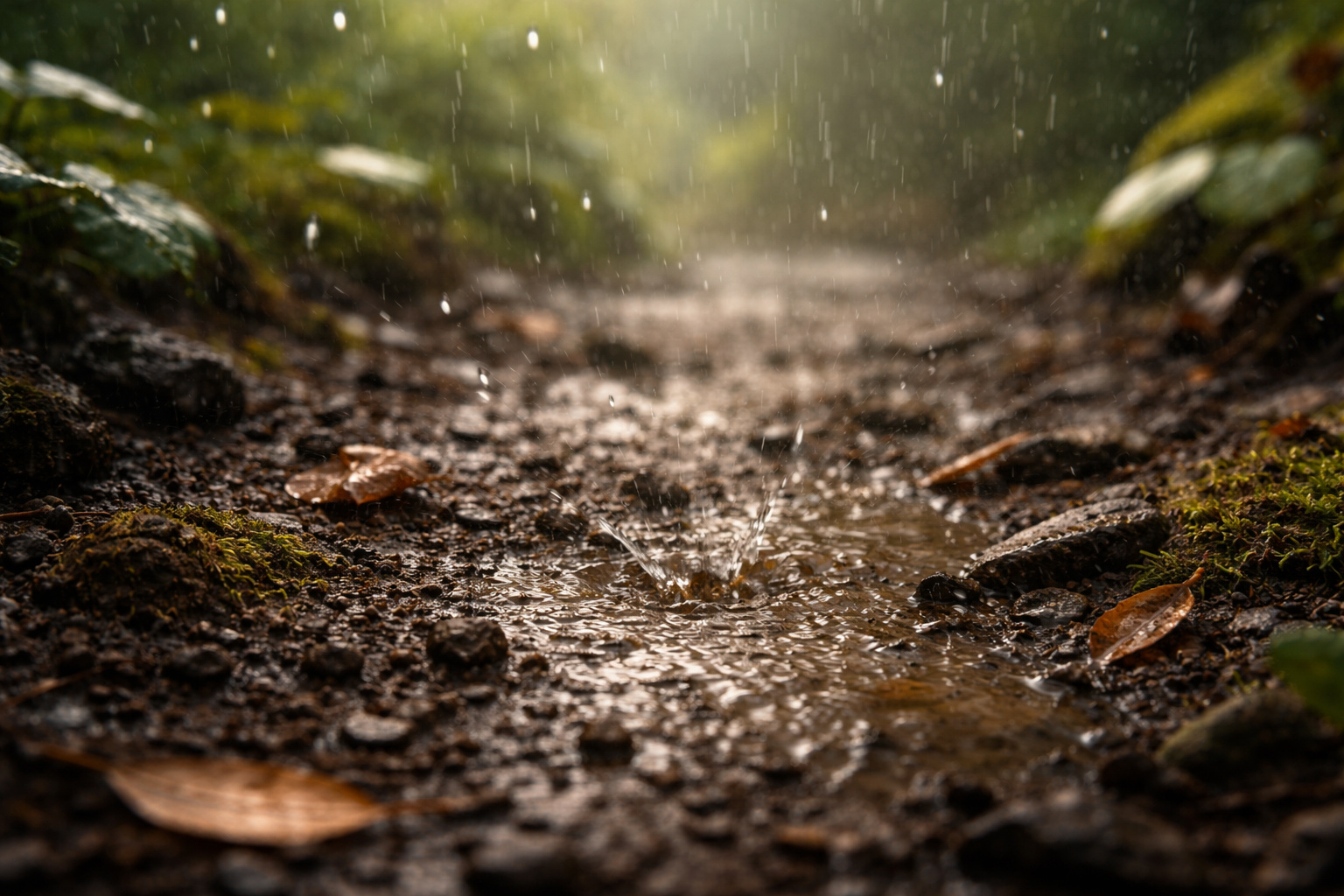
The Phenomenon Known As The Smell Of Rain Has A Scientific Explanation And Involves Soil Bacteria, Natural Compounds, And Differences In Human Olfactory Sensitivity
The characteristic aroma associated with rain is not just a subjective impression.
In fact, scientists have confirmed that the so-called smell of rain has a chemical and biological origin, resulting from the interaction between soil microorganisms, natural compounds, and the impact of the first raindrops on dry land.
This phenomenon gained a scientific name in 1964, when Australian researchers Isabel Joy Bear and Richard Thomas, in a study published in the journal Nature, identified and described what is called petrichor.
-
He started running at 66 years old, broke records at 82, and is now a subject of study for having a metabolic age comparable to that of a 20-year-old, in a case that is intriguing scientists and inspiring the world.

-
Oldest tree on the planet reappears after 130 years of searches: Wattieza, 385 million years old, was 10 meters tall and had no leaves or seeds; Gilboa fossils in New York solved the mystery in 2007.

-
A 48-square-meter house assembled in hours with 4,000 bricks made of recycled plastic that does not absorb moisture, has natural thermal insulation, and costs less than 90,000 reais in a complete kit.

-
Luciano Hang revealed that Havan’s air fleet has already accumulated more than 20,000 landings, 10,000 flight hours, and 6 million kilometers traveled, and he says that without the planes, the company would never have grown so quickly.


The term came to be used to explain the aroma released when rain comes into contact with dry soil, releasing microscopic particles into the air.
Thus, what many people recognize as the smell of wet earth originates from natural processes occurring in the soil and atmosphere.
Chemical Reaction in the Soil Releases The Characteristic Smell
During dry weather periods, plants release natural oils that remain accumulated on the soil surface, on stones, and in porous materials.
At the same time, bacteria present in the earth remain active or in a state of latency.
Among them, microorganisms of the genus Streptomyces stand out, which naturally live in the soil.
When the rain begins, the drops hit the ground and cause a small disturbance on the surface of the earth.
This impact releases microscopic particles that were trapped in the soil, mixing chemical compounds, bacterial spores, and other natural elements into the air.
As a result, these particles disperse into the atmosphere, allowing the aroma to be perceived by those nearby.
The Substance That Produces The Smell Of Wet Earth
Among the compounds involved in this process, geosmin is considered one of the main substances responsible for the smell of rain.
This substance is produced by bacteria present in the soil, especially those of the genus Streptomyces.
When rain hits dry soil, the water facilitates the release of these molecules into the air.
Consequently, the characteristic odor becomes perceptible.
Moreover, the human sense of smell is highly sensitive to geosmin, being capable of detecting extremely small amounts of this substance.
For this reason, many people can perceive the smell of rain even before the precipitation intensifies.
Why The Smell Appears Mainly At The Start Of The Rain
The aroma of rain tends to be stronger in the first moments of precipitation.
This happens because the aromatic compounds accumulate during long dry periods.
When the first drops fall, these compounds are released quickly into the air.
Scientific research has also observed another important detail.
When hitting porous surfaces, the raindrops form small air bubbles that explode rapidly.
This process projects microscopic particles into the atmosphere.
Thus, these particles carry the molecules responsible for the characteristic smell of rain.
Why Some People Perceive The Smell More Easily
Although the phenomenon occurs whenever rain begins, not everyone perceives the smell with the same intensity.
This occurs because olfactory sensitivity varies among individuals.
Some people have a greater ability to detect compounds present in the air.
Others, in turn, perceive these odors with less intensity.
Researchers also suggest a possible evolutionary explanation for this sensitivity.
Recognizing signs of rain could have represented a survival advantage for humans in natural environments, especially in regions where water was essential for life.
A Natural Phenomenon Explained By Science
Therefore, the so-called smell of rain is a result of the combination of oils released by plants, compounds produced by soil bacteria, and the action of the first raindrops.
This set of factors creates a mixture of molecules that spread through the air and produce the characteristic aroma that many people associate with the arrival of rain.
Even though it is a phenomenon studied by science since the 20th century, the smell of wet earth continues to arouse curiosity and fascination in different cultures.
Has our brain learned throughout evolution to recognize the arrival of rain just by smell?









Seja o primeiro a reagir!