





 Portuguese
  English
  Spanish
  5 min of reading
  1 comment


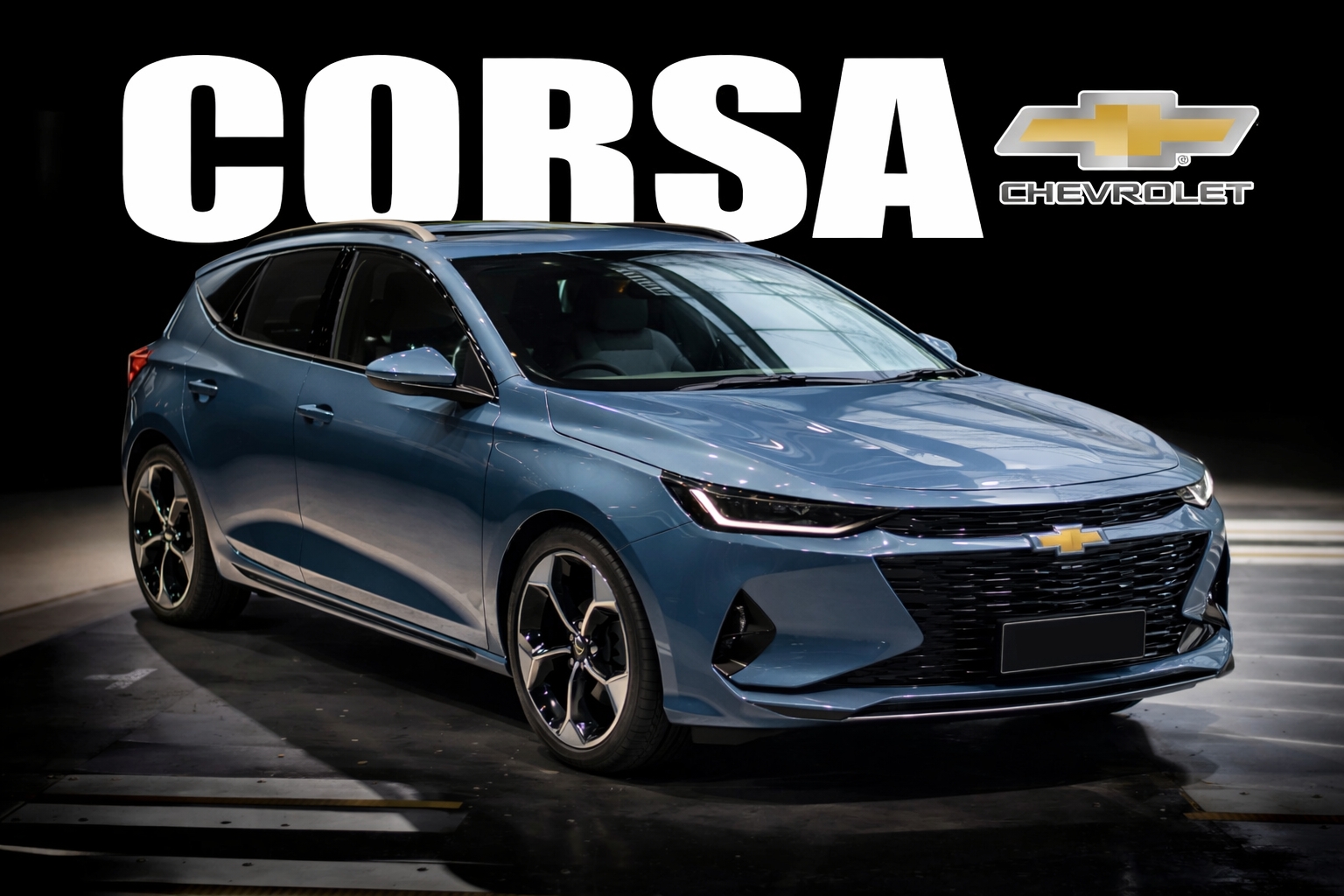


Chevrolet Boss Appeared on TV Asking Consumers Not to Buy the Corsa, Rival of Uno and Volkswagen Gol, After the Hatch Became a Sales Phenomenon in Brazil.
A Chevrolet launch that became a craze among those comparing Corsa, Uno, and Volkswagen Gol! In early 1994, the Brazilian automotive market experienced a situation as unusual as it was historic. While models like Fiat Uno, Volkswagen Gol, and other compacts dominated the streets, the arrival of the Chevrolet Corsa caused a real stir among consumers.
The demand was so great that Chevrolet needed to do something unimaginable: appear on television asking people not to buy the car at that moment.
The scene took place during prime time on Brazilian TV. Between Jornal Nacional and the soap opera Fera Ferida, one of the most expensive advertising slots on television, General Motors Brazil’s vice president, André Beer, made a direct appeal to the public.
-
If you want a car with an SUV look but don’t have the money to buy a new one, there are 5 used models starting at R$ 17,900 with raised suspension and body protection that can handle dirt roads without fear.

-
With a new look, more power, more technology, a larger size, and the farewell to a controversial item, the BYD Dolphin 2027 is getting ready to arrive in Brazil in 2026, stronger and more competitive than ever.

-
Is financing a car really worth it? Discover the impact of 25% annual interest and how you could end up paying up to R$ 39,000 more for your vehicle.

-
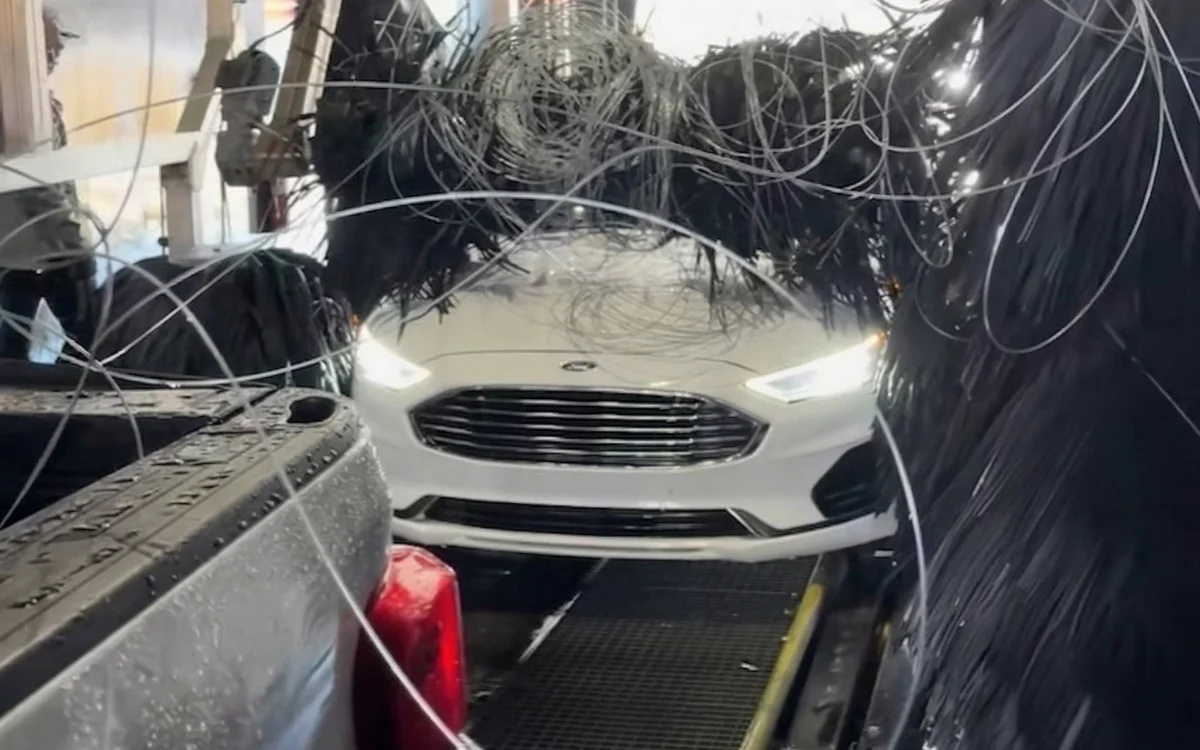
Farmer forgets barbed wire in the pickup truck and destroys Ford Fusion at car wash.

The goal was simple: to convince those interested not to pay abusive prices for the new hatch.
When Chevrolet Asked the Public for Patience on TV


The speech was straightforward. André Beer asked consumers interested in the Chevrolet Corsa to be calm, explaining that the company wanted to avoid the model being sold above the price set by the popular car program.
At that time, the government and car manufacturers had established an approximate price of R$ 7,500 for cars in that category, equivalent to about R$ 94 thousand in current values, considering accumulated inflation.
In the statement, Beer made a clear request:
“Don’t rush, help us keep the price of the Corsa fair.”
Even with the appeal, the practical effect was almost null. Dealerships remained full of interested buyers trying to secure one of the most desired cars in the country at that time.
The Explosive Demand for the Corsa Wind 1.0: Customers Paid Up to 50% Markup to Have One in the Garage
The Chevrolet Corsa Wind 1.0 was officially introduced in January 1994 and began arriving at dealerships in February. It took just a few weeks for the model to become the object of desire.
The demand grew so much that some buyers began offering up to 50% markup—that is, paying much more just to jump the waiting list.
Initially, the official justification was a bottleneck in the painting line at the factory in São José dos Campos, São Paulo. However, behind the scenes of the industry, the reality was different.
The person in charge of the production line had underestimated the car’s potential. Believing that the model would not have such high demand, he did not strengthen component orders from suppliers. When he realized the miscalculation, the waiting list was already gigantic.
The Reaction of General Motors: A Crisis Committee
Faced with the chaos at the dealerships, the automaker created a crisis committee formed by company executives and representatives from the dealership network.
It was this group that decided to put André Beer on television to ask the public for patience. However, the measure that truly helped alleviate the situation came later.
The General Motors decided to transfer the production lines of the Kadett and Ipanema models to the factory in São Caetano do Sul, in the ABC Paulista region. This way, the plant in São José dos Campos could focus on the production of the Corsa.
This industrial reorganization was only completed in November 1994.
Chevrolet Corsa vs. Volkswagen Gol 1000, Fiat Uno Mille, and Ford Escort Hobby: A Battle of Giants
To understand why the launch caused so much commotion, we need to remember what the Brazilian market was like in the early 1990s.
Popular cars were simple models with very boxy designs. Among the main rivals were:
- Volkswagen Gol 1000
- Fiat Uno Mille
- Ford Escort Hobby
- Chevrolet Chevette Junior
The Corsa, based on the Opel Corsa B, arrived with a completely different proposal. The hatch brought rounded and modern lines that contrasted with the stiffer looks of its competitors.
The designer responsible for the project, Hideo Kodama, explained years later what his intention was:
“My intention was to create a car that people would want to hug.”
Kodama also admitted that one of his inspirations was the Peugeot 205, known for its charismatic and innovative design.
Unprecedented Technology and Comfort for a Popular Car
In addition to its modern look, the Chevrolet Corsa brought important innovations for an entry-level car in Brazil.
Among the differentiators were:
- AC Rochester single-point electronic fuel injection, something rare in the category at that time;
- more refined interior finishing than rivals like Uno and Gol;
- better comfort levels in suspension and steering.
The project also represented a significant technical evolution. Originally developed by Opel, GM’s European arm, the model had modern architecture with transverse engine and front-wheel drive, which was essential for improving interior space and efficiency.
Impressive Sales Right at the Start
Even with limited production in the early months, the sales numbers showed that the success of the Corsa was not exaggerated.
Data from the automaker indicated that:
- 60 thousand units were sold in the first year of launch
- 150 thousand units were sold the following year
By November 1994, monthly production of the 1.0 and 1.4 versions had already reached 9,201 units.
An Entire Family of Cars Arose from the Corsa: A Sales Phenomenon with More Than 3 Million Units Produced
The success of the hatch was so great that the project expanded rapidly.
Over the years, several derivative versions emerged:
- Corsa Sedan
- Corsa Wagon
- Corsa Pick-up
- Chevrolet Meriva, a minivan based on the same platform
The model became one of the most important cars in the Brazilian automotive industry.
In total, more than 3 million units were produced in the country over two generations, cementing the car as one of the most popular compacts in history.
The End of an Era for Chevrolet
After nearly two decades on Brazilian streets, Chevrolet ended Corsa production in Brazil in 2012.
Even so, the model’s legacy continued for several years through the Chevrolet Classic, a sedan version derived from the original project.
Today, the hatch remains alive in Europe under the Opel brand, now part of the Stellantis group, and has reached several new generations, including electric versions.
A Unique Episode in the History of the Automotive Industry
Few times has an automaker needed to resort to television to ask consumers not to buy their own product.
The episode involving Chevrolet, the Corsa, and the rush of buyers who were also considering models like Uno and Volkswagen Gol became one of the most curious moments in Brazilian automotive history.
And it shows how a car can go far beyond a simple means of transportation; it can become a true cultural phenomenon.
Did you enjoy this curious story about the Chevrolet Corsa? Leave your comment telling if you ever had a Corsa, Uno, or Volkswagen Gol in your garage and share this article with anyone who also loves classic cars from Brazil.








Sim ! Tive vários Corsas, gerenciei vendas especiais da Jorlan, concessionária GM, DF , Brasília.