





 Portuguese
  English
  Spanish
  5 min of reading
  0 comments


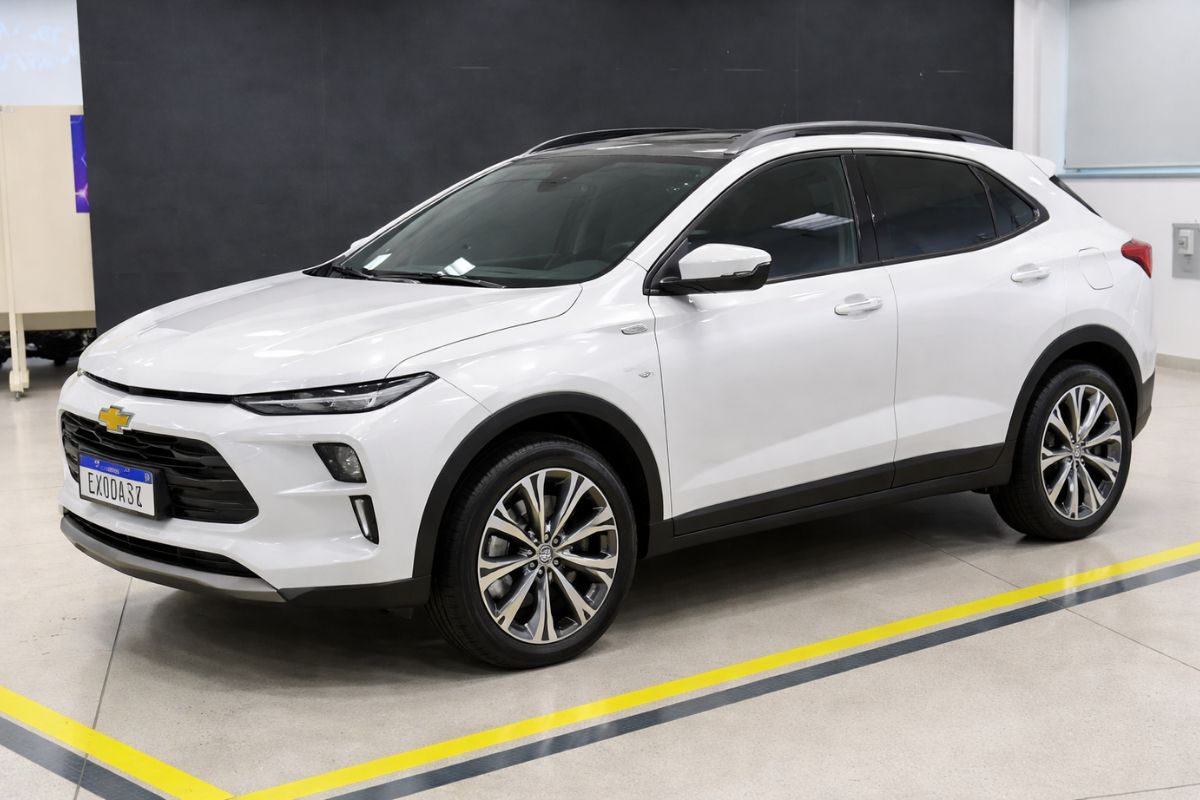
Chevrolet has unveiled the new Sonic, a 4.23-meter coupe SUV developed on the GEM platform of the Onix with an investment of R$ 900 million, featuring a 1.0 turbo engine with direct injection and the Chevrolet Intelligent Driving system, set to arrive by June to compete with VW Nivus and Fiat Fastback.
Chevrolet is about to fill an important gap in its Brazilian portfolio. The new Sonic, still camouflaged but already presented to the press in São Caetano do Sul, is a coupe SUV that revives the name of a model that previously designated hatchbacks and compact sedans above the Onix. The project consumed R$ 900 million and about three years of development led by the General Motors team in South America. The model will reach dealerships by June 2026 to directly compete with two of the best-selling coupe SUVs in Brazil: the Volkswagen Nivus and the Fiat Fastback.
Chevrolet’s positioning with the Sonic is strategic. The model will occupy the space between the Onix Activ and the Tracker, catering to consumers who want something larger than a hatch but do not want to pay the price of a conventional SUV. At 4.23 meters long, the Sonic is smaller than the Nivus (4.27 m) and significantly more compact than the Fastback (4.44 m), but compensates in width and height. Chevrolet bets that the coupe SUV look and competitive price will be enough to attract buyers who currently choose the rivals.
The dimensions of the Sonic and how Chevrolet positions it against Nivus and Fastback

The numbers reveal where Chevrolet decided to compete and where it decided to differentiate itself, according to a report from Motor1. The Sonic measures 4.23 meters in length, 1.77 meters in width, and 1.53 meters in height, positioning it as the widest in the category, tied with the Fastback, and the tallest among the three direct rivals.
-
‘We will not survive,’ says Toyota’s CEO: the manufacturer of the world’s best-selling cars like Corolla and Yaris Cross feels the weight of its own perfectionism and rushes to avoid being ‘swallowed’ by China.

-
Cheaper than a latest-generation iPhone, these 5 used cars combine low maintenance, easily found parts, and prices starting from less than R$ 8,000.

-
Amid the tension between the US and China, Democratic senators warn Trump about the risk of an irreversible crisis by allowing Chinese automakers in the country.
-
It became R$ 10,000 cheaper! The new version of the Citroën C3 features new tires, reduces consumption, improves comfort, and enters the competition among popular cars.
The Nivus measures 4.27 meters in length, 1.75 meters in width, and 1.49 meters in height. The Fastback is the largest of the trio, at 4.44 meters in length.
The Sonic’s base is the GEM (Global Emerging Markets) platform, the same used in the Onix hatch and Onix Plus sold since 2019, but updated to accommodate new technologies.
Chevrolet has not yet disclosed the official wheelbase, but it is speculated to be the same as the Tracker, at 2.57 meters. Choosing a well-established platform reduces development costs and allows production in São Caetano do Sul to scale quickly after launch.
The investment of R$ 900 million that Chevrolet made in the Sonic project

The amount invested by Chevrolet in the development of the Sonic reflects the importance the brand attributes to the coupe SUV segment in Brazil.
The R$ 900 million was invested over three years, and the project was almost entirely led by the General Motors team in South America, which envisioned the model from the beginning focusing on the success that locally developed vehicles have been having since the turn of the decade. Tracker, Montana, and the Onix family are examples of regional products that have worked.
For Chevrolet, the Sonic is not just another model in the portfolio. It is the response to a segment that the brand has been observing without participating while Fiat and Volkswagen have been winning buyers with the Fastback and Nivus.
The investment of nearly one billion reais shows that Chevrolet did not enter the segment to just make an appearance. They entered to compete for leadership, with a product that combines a known platform, updated design, and technologies that rivals do not yet offer in the same price range.
The look of the Sonic and what Chevrolet revealed even with camouflage
Despite appearing camouflaged, the Sonic already hints at the lines that differentiate it from the Onix hatch. The front of the Chevrolet features split headlights, in the same style as the Montana and Tracker, but with projectors that the brand claims are 19% more efficient and up to 47% lighter than conventional optical sets.
This is a technical detail that indicates concern for energy efficiency and weight, factors that impact fuel consumption.
On the sides, Chevrolet adopted wheel arch trims that give volume to the Sonic, running the entire length of the vehicle to the front and rear bumpers, in a style similar to that used on the Fiat Pulse.
At the rear, the glass and tailgate differ from the Onix hatch, with integrated and sleek taillights that refer to the Equinox EV, the brand’s more refined model. The Sonic has less rear overhang than the Nivus and Fastback, giving it a more compact and sporty proportion that Chevrolet clearly aimed for.
What is known about the engine and technology of Chevrolet’s new coupe SUV
Chevrolet has not yet officially confirmed all mechanical details, but the expectation is almost certain. The Sonic is expected to debut with the 1.0 three-cylinder turbo engine from the Tracker, already equipped with direct fuel injection.
Since July 2025, this engine’s power has been adjusted from 121 to 115.5 horsepower to fit into a lower tariff range within the Sustainable Car Program. The 1.2 turbo engine found in more expensive versions of the Tracker and the Montana pickup is still a possibility, but has not been confirmed.
In terms of technology, Chevrolet has indicated that the Sonic will debut the new Chevrolet Intelligent Driving system, with driving assistance (ADAS) more sophisticated than those offered in the brand’s current models.
Details about which features will be available and in which versions are expected to be revealed closer to the launch. For a segment where Nivus and Fastback already offer competitive technology packages, Chevrolet will need to deliver something that justifies the choice of the Sonic.
What the launch of the Sonic means for Chevrolet’s strategy in Brazil
With the Sonic, Chevrolet completes a family that ranges from the Onix hatch to the Equinox, passing through Onix Plus, Onix Activ, Sonic, Tracker, and Montana.
The coupe SUV fills exactly the gap between the Onix Activ, which is an adventurous hatch, and the Tracker, which is a conventional SUV, creating an intermediate option for consumers who want the elevated look of an SUV with the practicality of a compact car.
Chevrolet bets that the Brazilian market has room for one more competitor in the coupe SUV segment, and the R$ 900 million invested signals that the brand firmly believes in this thesis.
The launch by June 2026 places the Sonic in dealerships before the second half, when vehicle sales typically heat up. If the price is competitive compared to the Nivus and Fastback, Chevrolet may finally have the answer the market has been waiting for in this segment.
What do you think of the new Chevrolet Sonic: does it stand a chance against the Nivus and Fastback or has it arrived too late? Did the look convince you even with the camouflage? Let us know in the comments. The launch of a new car always divides opinions, and this one promises to be one of the most debated of the year.









Seja o primeiro a reagir!