





 Portuguese
  English
  Spanish
  3 min of reading


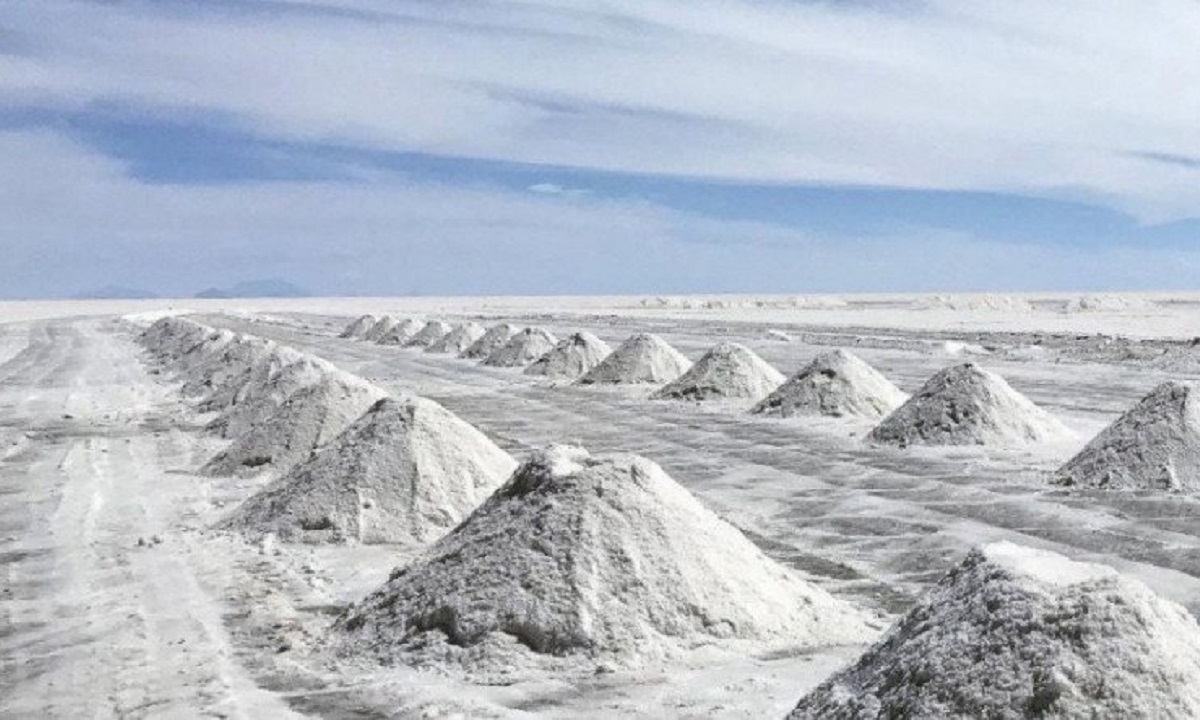
The Nationalization Of Lithium In Chile Also Aims To Increase Decarbonization, That Is, To Contribute To The Production Of Batteries For Electric Cars
The President of Chile, Gabriel Boric, recently announced a plan to nationalize the country’s lithium production industry, aiming to increase national wealth and lay the groundwork for a greener economic future. Lithium is a valuable mineral used in batteries for electric cars and other electronic devices, and Chile is the second largest exporter in the world, with an estimated reserve of about half of the global reserve, according to Insideevs Uol.
The plan, called the National Lithium Strategy, includes a series of measures to incorporate capital, technology, sustainability, and added value into a public-private model. The intention is for lithium production to be led by the State, through the Corporación Nacional del Cobre de Chile (Codelco), one of the largest state-owned copper mining companies in the world, and the Empresa Nacional de Minería (ENAMI), along with private sector participation.
Main Points Of The National Lithium Production Strategy
- Creation of the National Lithium Company
- Creation of a Network of Protected Salt Flats with low environmental impact technologies
- Modernization of the institutional framework
- Creation of a Technological Research and Public Institute for Lithium and Salt Flats
- Incorporation of the State into the productive activity of the Salar de Atacama
- Exploration of other salt flats
President Boric emphasized that the lithium production strategy will protect biodiversity and indigenous rights, and help distribute the gains from mineral wealth more broadly among Chileans. He also explained that the control of operations will only be assumed by the State when the current contracts are renewed. The SQM contract will expire in 2030 and Albemarle’s in 2043, but Boric hopes that the companies will be open to early State participation.
-
Buried under China, a colossal machine weighing 20,000 tons began operating as the largest neutrino detector on the planet and, in just 59 days, surpassed results that science took half a century to achieve.

-
Iran enters the center of a climate alert after the war emitted 5.6 million tons of CO2 in two weeks, surpassing the annual pollution of entire countries.

-
Lunar exploration may change after a Chinese probe finds a “cavity” of radiation that reduces the impact on astronauts by up to 20% at certain times on the Moon.

-
Artemis 2 sends four astronauts on a historic mission to the Moon after 50 years, with a launch on April 1 and a record flight to the far side of the Earth’s natural satellite.


The plan now needs to pass through the National Congress of Chile, but Boric plans to do this later this year, despite the resistance presented by the House lately to the current Chilean leader.
The Future Of The Lithium Production Market
In addition to Chile, several countries, including Australia, Argentina, Bolivia, China, the United States, and even Brazil, are trying to increase the lithium market. This is due to the growing demand for electric car batteries and other electronic devices, which use the mineral. Recently, Mexico also increased its lithium production.
Chile is working to become a global leader in lithium production and is preparing the country for a green economy in the future. The nationalization of the lithium production industry is a bold move, but the Chilean government believes it will benefit the economy and the country’s population.






Seja o primeiro a reagir!