Portuguese
  Spanish


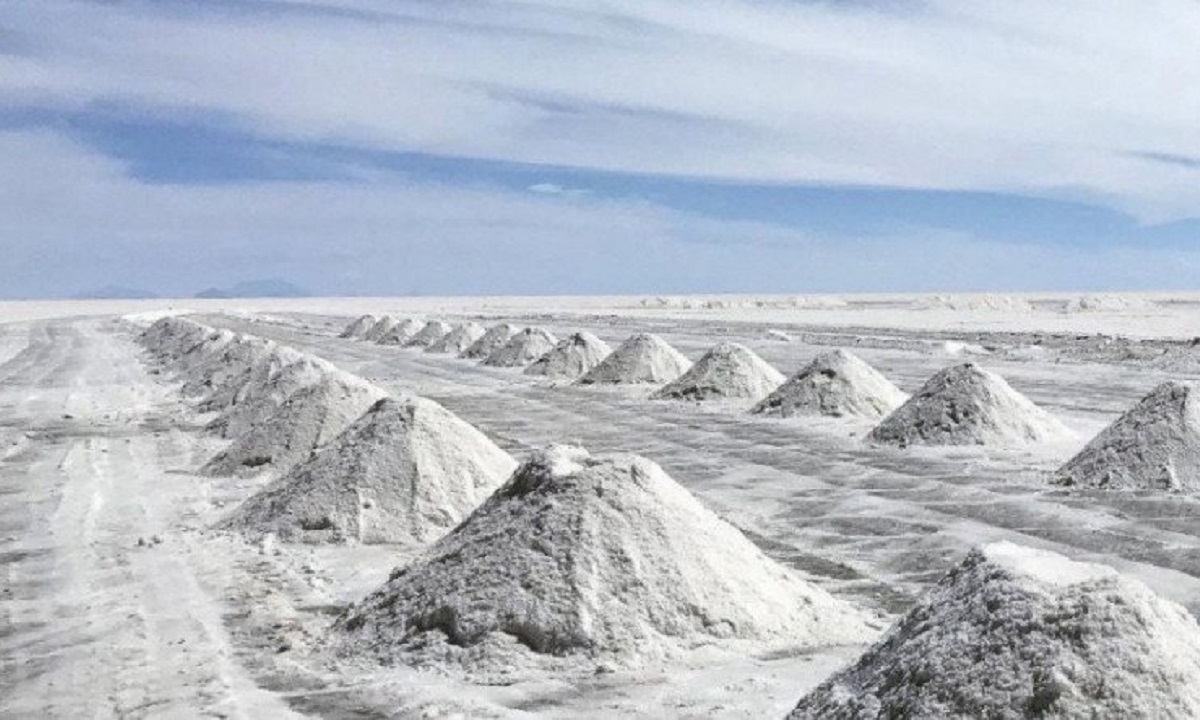

The Nationalization Of Lithium In Chile Also Aims To Increase Decarbonization, That Is, To Contribute To The Production Of Batteries For Electric Cars
The President of Chile, Gabriel Boric, recently announced a plan to nationalize the country’s lithium production industry, aiming to increase national wealth and lay the groundwork for a greener economic future. Lithium is a valuable mineral used in batteries for electric cars and other electronic devices, and Chile is the second largest exporter in the world, with an estimated reserve of about half of the global reserve, according to Insideevs Uol.
The plan, called the National Lithium Strategy, includes a series of measures to incorporate capital, technology, sustainability, and added value into a public-private model. The intention is for lithium production to be led by the State, through the Corporación Nacional del Cobre de Chile (Codelco), one of the largest state-owned copper mining companies in the world, and the Empresa Nacional de Minería (ENAMI), along with private sector participation.
Main Points Of The National Lithium Production Strategy
- Creation of the National Lithium Company
- Creation of a Network of Protected Salt Flats with low environmental impact technologies
- Modernization of the institutional framework
- Creation of a Technological Research and Public Institute for Lithium and Salt Flats
- Incorporation of the State into the productive activity of the Salar de Atacama
- Exploration of other salt flats
President Boric emphasized that the lithium production strategy will protect biodiversity and indigenous rights, and help distribute the gains from mineral wealth more broadly among Chileans. He also explained that the control of operations will only be assumed by the State when the current contracts are renewed. The SQM contract will expire in 2030 and Albemarle’s in 2043, but Boric hopes that the companies will be open to early State participation.
-
She spent 73 years breathing inside an iron lung, survived the aftereffects of polio, and became the last woman in the United States dependent on the equipment before dying at 78 years old.

-
Brazilian students created a $1 filter using pine bark, cotton, and 3D-printed parts to clean cassava wastewater, reduce the toxicity of a hazardous waste, and transform contaminated water into biofertilizer.

-
Astronaut from Artemis II steps down after mission to the Moon and decision surprises after a record of 406,771 km, a historic 10-day journey, and an unprecedented achievement for Canada.

-
A fossil kept for years in a small museum in Montreal concealed 450-million-year-old soft tissue, a discovery that has only happened once before in history.


The plan now needs to pass through the National Congress of Chile, but Boric plans to do this later this year, despite the resistance presented by the House lately to the current Chilean leader.
The Future Of The Lithium Production Market
In addition to Chile, several countries, including Australia, Argentina, Bolivia, China, the United States, and even Brazil, are trying to increase the lithium market. This is due to the growing demand for electric car batteries and other electronic devices, which use the mineral. Recently, Mexico also increased its lithium production.
Chile is working to become a global leader in lithium production and is preparing the country for a green economy in the future. The nationalization of the lithium production industry is a bold move, but the Chilean government believes it will benefit the economy and the country’s population.