





 Portuguese
  English
  Spanish
  5 min of reading
  0 comments


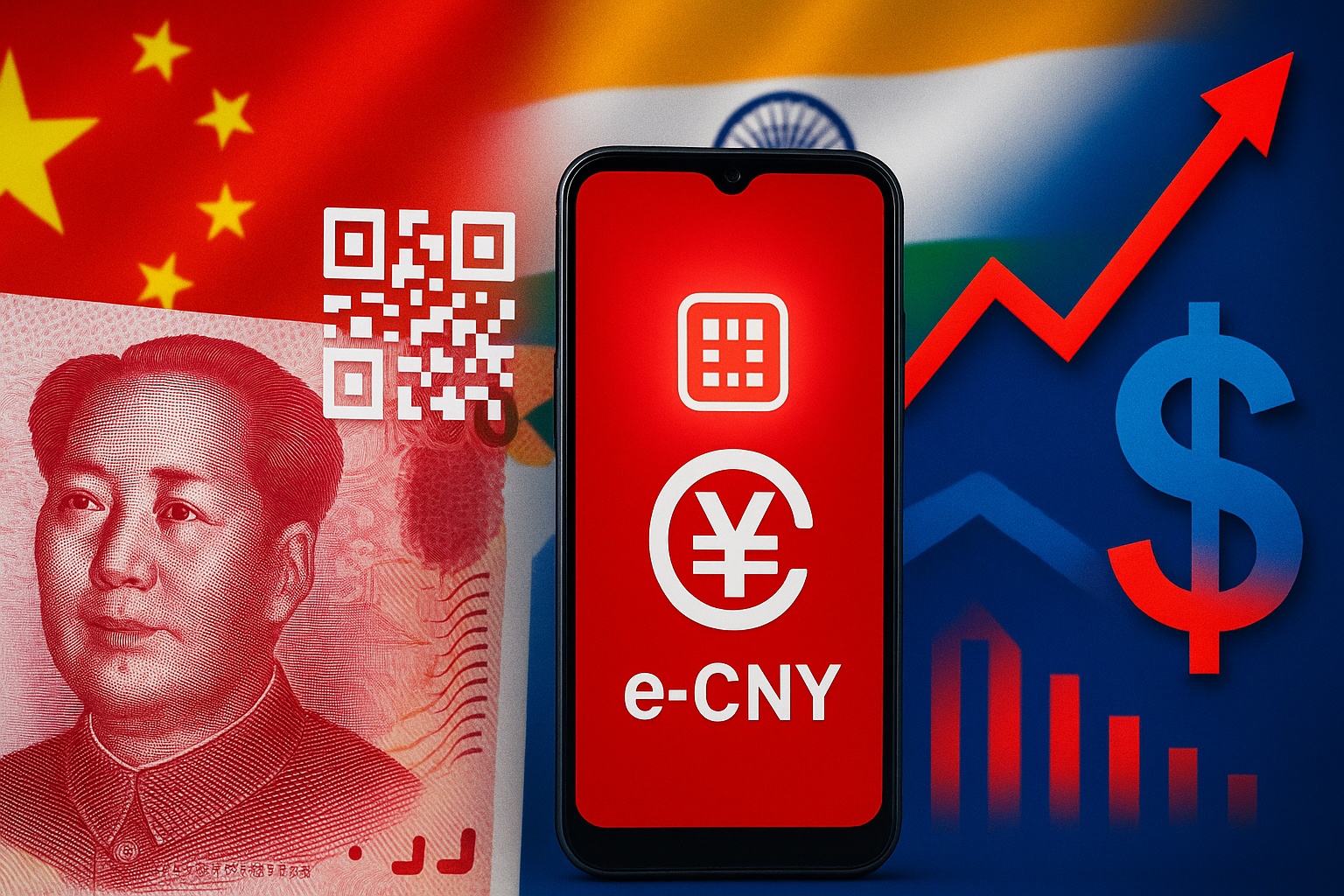
China Expands Use of E-Yuan in Deals With BRICS Countries, Creates Alternative Financial Network to the Dollar and Raises Concern in Washington.
The quiet struggle for leadership of the global financial system has taken a new turn. Beijing is accelerating the use of the e-yuan, its official digital currency, in international transactions with BRICS countries and strategic partners, creating a parallel financial network that threatens to reduce dependence on the dollar. As the project advances with bilateral agreements and tests in emerging markets, the United States is watching closely — and with growing concern — the reach of this movement.
The initiative not only strengthens China’s economic influence but also signals a new stage in global monetary competition, with direct impacts on trade, currency reserves, and the international sanctions system.
From Domestic Pilot to International Expansion
The e-yuan began as an internal experiment in 2020, tested in major Chinese cities such as Shenzhen, Suzhou, and Chengdu.
-
After a devastating fire that left 3 injured and 200 intoxicated by smoke in the Red Sea, the most expensive warship ever built — $13.3 billion — returns to the front in Iran after quick repairs in Croatia.

-
It fell apart! The US and Iran fail to reach an agreement and global tension explodes — Vance’s exit from Pakistan raises alarms about Hormuz and the nuclear program.

-
U.S. Armed Forces send warships to the Strait of Hormuz for mine removal from the channel as supertankers resume transit and global tensions pressure oil.

-
While $5.5 billion aircraft carriers dominate the seas with advanced technology, an $80 million submarine can simulate a devastating attack and expose strategic vulnerabilities that still challenge naval powers.

The initial idea was to modernize domestic payment methods, reduce dependence on private platforms like Alipay and WeChat Pay, and strengthen the People’s Bank of China (PBoC)’s control over monetary flow.
With over 260 million digital wallets opened by 2024, the project has reached critical mass within the country. Now, Beijing is directing the technology towards foreign trade, integrating it into settlement mechanisms between central banks and cross-border payment platforms.
BRICS as a Field of Expansion
The bloc formed by Brazil, Russia, India, China, and South Africa, which recently welcomed new members like Iran, Egypt, and Ethiopia, has become the main showcase for the e-yuan on the international stage.
In the last 18 months, Chinese authorities have signed memorandums of understanding to test digital transactions with central banks from the group, particularly in sectors such as oil, gas, strategic minerals, and food.
An emblematic example was the pilot agreement with Russia, which allowed energy export payments directly in e-yuan, bypassing Western banks and settlement systems like SWIFT.
In Brazil, the Chinese digital currency has been the subject of technical discussions between the Central Bank and Chinese authorities within the context of BRICS financial cooperation.
Alternative to the Dollar and Shield Against Sanctions
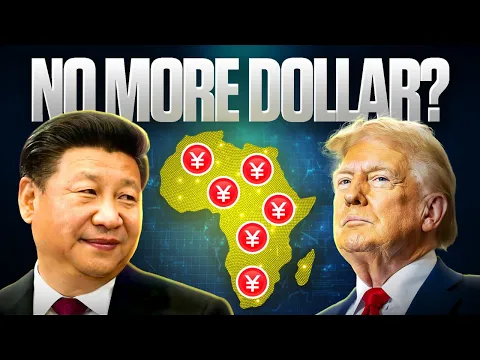

China’s great ambition is not only to modernize transactions but to create a network capable of operating independently of financial mechanisms controlled by the West.
By using the e-yuan in international payments, countries can evade blockades or confiscation of reserves imposed by sanctions. This logic has particularly attracted nations under political and economic pressure from the U.S. or the European Union, such as Russia and Iran.
Economists point out that although the dollar still accounts for over 58% of global international reserves, the creation of reliable and easy-to-use alternatives could accelerate a gradual erosion of this share — especially in emerging markets.
Technology and Digital Integration
The e-yuan is built on a hybrid architecture: it is not a decentralized cryptocurrency like Bitcoin, but it also does not depend on traditional settlement systems.
All transactions pass through infrastructure controlled by the PBoC, with layers of selective privacy and the possibility of total tracking by the Chinese government.
For international use, Beijing is developing protocols that allow direct integration with systems of other central banks, including exploring the use of smart contracts for the automatic settlement of commercial operations.
Reaction and Monitoring by the USA
The advancement of the e-yuan has been closely monitored by agencies such as the U.S. Treasury and the Federal Reserve. In recent reports, analysts in Washington warned that the expansion of the Chinese digital currency could “weaken the effectiveness of financial sanctions” and “reduce visibility over illicit capital flows.”
Despite the concern, American experts acknowledge that the replacement of the dollar as the dominant global currency is still unlikely in the short term. The greatest risk, they say, is the formation of regional economic blocks that operate almost exclusively outside the dollar sphere, fragmenting the international financial system.
Brazil on the E-Yuan Radar
For Brazil, the possibility of integrating into a digital payment system with China presents both opportunities and challenges.
The bilateral trade has already surpassed US$ 150 billion annually, and adopting a direct settlement means could reduce costs and timeframes.
However, the change would also require regulatory and technological adjustments, in addition to positioning the country more clearly on a geopolitical chessboard marked by tensions between Washington and Beijing.
The Future of E-Yuan in BRICS
Behind the scenes of the bloc, diplomats are discussing the possibility of creating a digital monetary “umbrella” that unites initiatives like the e-yuan, the Indian digital rupee, and, in the future, a Brazilian Drex adapted for international transactions.
Although still distant, this integration could give rise to a BRICS payment system capable of significantly reducing the presence of the dollar in operations among its members, as well as creating new tools to finance infrastructure, energy, and technology projects.
The Message From Beijing
By accelerating the expansion of the e-yuan, China sends a clear message: it wants to dictate the rules of the next stage of financial globalization. More than a technological instrument, the digital currency is a strategic piece in a long-term game for economic and political influence.
For the U.S. and its allies, the task will be to balance defending dollar hegemony with the inevitable adaptation to a more multipolar world in monetary terms.









-

-

2 pessoas reagiram a isso.