





 Portuguese
  English
  Spanish
  6 min of reading
  0 comments


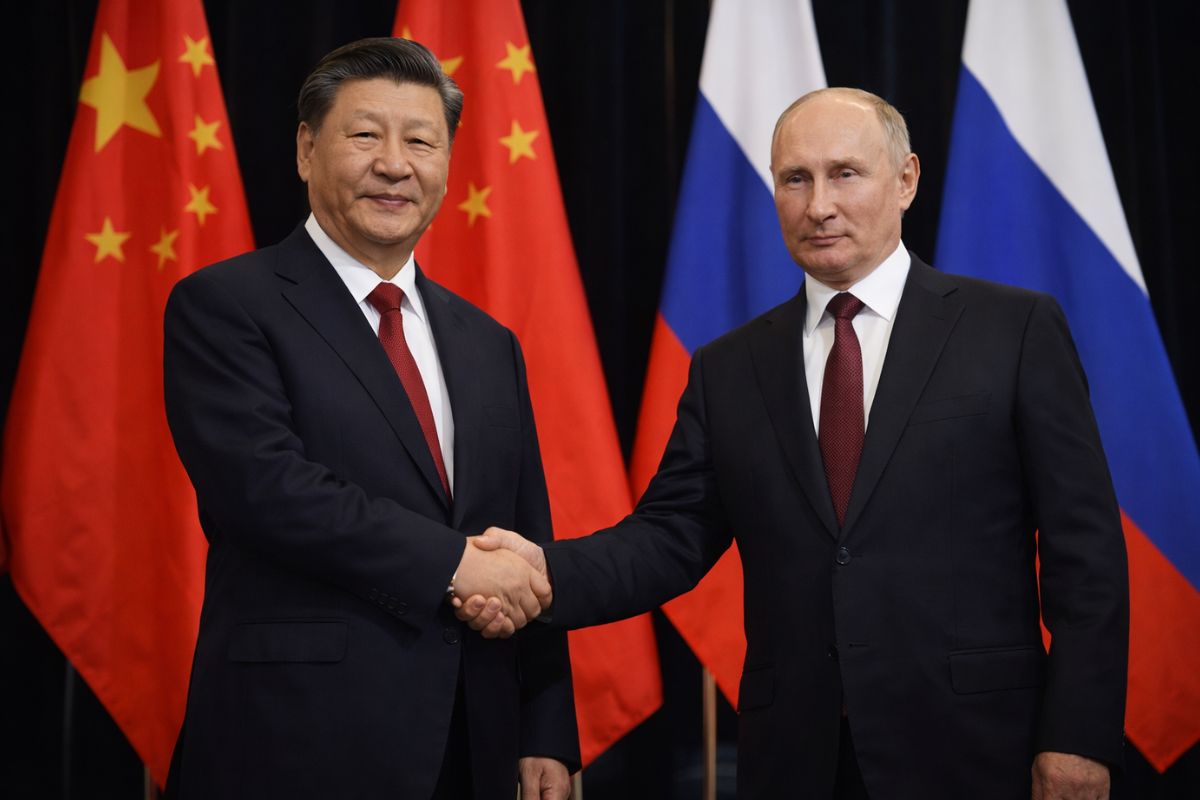
China and Russia announced joint cooperation in the UN Security Council to reduce tensions in the Middle East, on the eve of a vote on a resolution to protect navigation in the Strait of Hormuz, through which 25% of the world’s maritime oil passes.
On the eve of a decisive meeting in the United Nations Security Council, China and Russia announced that they are ready to cooperate in the UN body with the aim of reducing tensions in the Middle East and pushing for a ceasefire in the war involving the United States, Israel, and Iran. The joint statement was made after a phone conversation between China’s Foreign Minister, Wang Yi, and Russia’s Foreign Minister, Sergei Lavrov, according to reports from Xinhua and Reuters.
The Security Council is set to vote this week on a resolution proposed by Bahrain regarding the protection of commercial navigation in the Strait of Hormuz, which is partially blocked by Iran due to attacks from the United States and Israel on the Persian country, according to Estadão. China and Russia are permanent members of the Council with veto power, which means that any joint position from the two countries can determine whether the resolution will be approved or blocked. The coordination between Beijing and Moscow turns the vote into a diplomatic clash with implications that go beyond the Middle East.
What Wang Yi and Lavrov stated about the cooperation between China and Russia

The Chinese minister Wang Yi was direct in describing the seriousness of the situation. According to Xinhua, he stated that the situation in the Middle East continues to worsen and that hostilities in the region are still intensifying.
-
It is the second factory that Toyota has closed in Brazil in three years, but this time the Japanese giant promises not to lay off anyone and will invest R$ 11 billion to transform Sorocaba into its largest production hub in the country by 2030.

-
Latin America is switching from gasoline to electricity faster than anyone expected, with over 136,000 electrified vehicles sold in just two months, and Brazil accounting for almost half of that number, leading the transition uncontested.

-
Switzerland will get a chocolate park worth R$ 2.5 billion: Cailler’s megaproject in Broc will feature hotels, restaurants, and a pre-opening scheduled for between 2027 and 2028.

-
The government eliminates the tax on kerosene to try to curb the rise in airfares and includes a billion-dollar credit to airlines in a package against fuel prices, while diesel and cooking gas are also included in the crisis equation.
For Wang Yi, the fundamental solution to ensure navigation through the Strait of Hormuz lies in achieving a ceasefire as soon as possible and ending the war. The message is clear: as long as there is conflict, the Strait will remain at risk.
Wang Yi stated that China and Russia must “make joint efforts to help reduce the escalation of the situation in the Middle East, safeguard regional peace and stability, and defend the common security of the world.” The Chinese minister added that the two countries should adopt an objective and balanced approach and seek greater understanding and support from the international community.
On the Russian side, Lavrov stated that Moscow is very concerned about the ongoing escalation and that military operations must be halted immediately. Russia stated it is ready to maintain close communication and coordination with China.
Why the Strait of Hormuz is the center of the dispute and how it connects China and Russia to the conflict
The Strait of Hormuz is not a secondary geographical detail in this crisis. According to the International Energy Agency, about 25% of the world’s maritime oil and derivatives pass through this route, which separates Iran from the Arabian Peninsula.
The partial blockade by Iran, in response to attacks from the United States and Israel, directly affects global energy prices and supply chains that feed economies across all continents.
China is one of the main destinations for the oil that circulates through the Strait of Hormuz, which makes the issue of navigation a direct strategic interest for Beijing. For Russia, which also has energy and geopolitical interests in the region, cooperation with China in the Security Council strengthens a diplomatic front that openly opposes the military stance of Washington and Tel Aviv.
When China and Russia align on an issue in the Security Council, the diplomatic weight is sufficient to alter the course of any resolution.
What is being voted on in the UN Security Council this week
The resolution proposed by Bahrain specifically addresses the protection of commercial navigation in the Strait of Hormuz. The text seeks to ensure that commercial vessels can transit through the route without the risk of blockade or attack, a direct response to the partial closure imposed by Iran as part of the conflict.
For countries that depend on the oil that circulates there, the resolution is a matter of economic security.
The joint positioning of China and Russia on the eve of the vote indicates that the two countries may condition their support for the resolution on demands for a ceasefire. As permanent members of the Security Council, both have veto power.
This means that if the resolution does not include language about ending hostilities against Iran, China and Russia may block it. The dynamic transforms the vote on navigation into a diplomatic battleground where the conflict in the Middle East will be debated in global terms.
The message that China and Russia send to the United States and Israel
The joint statement leaves no room for ambiguity. The Russian Foreign Ministry stated, in a statement quoted by Reuters, that there was “satisfaction with the coincidence of approaches between Russia and China on most issues of the global agenda”, specifically including “the situation surrounding Iran, related to the unprovoked aggression of the US and Israel against that country.”
The choice of words is significant: calling military operations “unprovoked aggression” positions China and Russia in direct opposition to the American narrative.
Lavrov stated that Russia is ready to continue making efforts in support of a ceasefire and the end of the war, and that efforts should focus on seeking a political and diplomatic solution. The message from China and Russia to Washington and Tel Aviv is that the military path will not have support in the Security Council as long as the two countries maintain their joint position.
If the alignment between Beijing and Moscow holds during the vote, any attempt to approve a resolution that does not contemplate a ceasefire will face direct resistance.
What is at stake for the world with the alignment between China and Russia in the Security Council
The scenario that is unfolding is one of a clear division in the Security Council. On one side, China and Russia push for a ceasefire and diplomatic solution. On the other, the United States and Israel conduct military operations that have already altered the power structure in Iran.
Bahrain proposes a resolution on navigation that could serve as a test to measure the balance of power in the most powerful body of the UN.
For the rest of the world, the alignment between China and Russia means that the crisis in the Middle East will not be resolved solely on the battlefield. Oil prices, the security of trade routes, and global geopolitical stability depend on what is decided this week in the Security Council.
The cooperation between Beijing and Moscow, involving the two largest strategic rivals of the United States, adds a layer of complexity that transforms the regional conflict into a planetary dispute.
What do you think of the alignment between China and Russia on the eve of the UN vote? Do you believe that diplomatic pressure can force a ceasefire or that military operations will continue regardless of the Security Council? Leave your comments. This is the kind of geopolitical maneuvering that affects the price you pay at the gas pump and at the supermarket.






Seja o primeiro a reagir!