





 English
  Francês
  Alemão
  Italiano
  Japonês
  Norueguês
  Portuguese
  Spanish
  5 min of reading
  0 comments


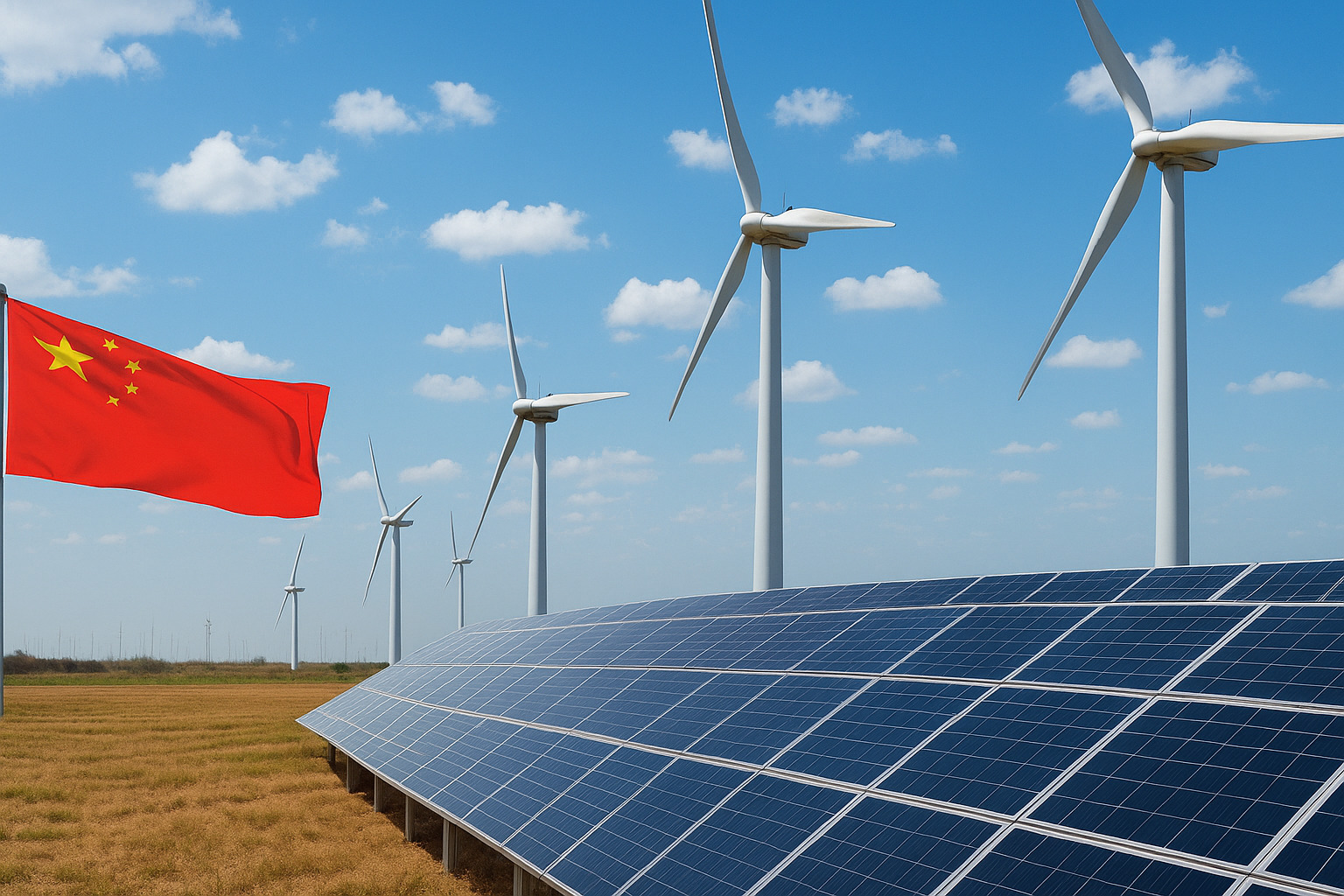
China Plans to Reduce Emissions and Expand Solar and Wind Energy to 3.6 TW by 2035, Accelerating the Country’s Energy Transition.
China Announces New Climate Goal and, with this, seeks to reduce its greenhouse gas (GHG) emissions by 7% to 10% by 2035. In relation to the historic peak of emissions.
Additionally, President Xi Jinping made the announcement during the United Nations Climate Summit in New York. Demonstrating the country’s intention to accelerate the energy transition.
However, this goal still falls short of scientists’ recommendations to align with the Paris Agreement, which aims to limit global warming to 1.5ºC.
-
Renewable energy advances over protected areas in Brazil, and a survey by the Energy Transition Observatory reveals silent impacts that challenge environmental conservation and pressure sensitive traditional territories.

-
Rio Grande do Sul accelerates energy transition: State invests in renewable technologies and consolidates decarbonization strategies and pathways to attract billions in new industrial investments.

-
With 160,000 m² of collectors, an area larger than 20 football fields, Silkeborg, in Denmark, hosts a solar thermal plant that heats 19,500 homes and could become the largest solar heating plant in the world.

-
A study reveals the expansion of renewable energy procurement in Brazil and shows how companies are taking advantage of opportunities to reduce expenses, ensure energy efficiency, and strengthen strategic environmental commitments.


Historically, China has become the world’s largest emitter of GHGs. Mainly due to accelerated industrial growth and intense coal use as an energy source.
Thus, since the economic opening in the 1980s, the country has undergone an unprecedented industrial expansion. Which significantly increased its carbon emissions.
Despite this, China consistently invests in renewable energy and, consequently, undertakes environmental commitments that often exceed its own initial targets.
In this way, the new climate goal includes the commitment to achieve more than 30% of non-fossil sources in total energy consumption.
This percentage reflects the country’s effort to promote the energy transition. Considering the size of the Chinese economy and the historical intensity of coal use.
Furthermore, the country integrates energy efficiency policies in industrial and urban sectors. Promoting low-carbon technologies in factories, buildings, and transportation systems.
Thus, China is not only seeking to reduce emissions in isolation. But transform its economy into a more sustainable structure adaptable to the demands of the 21st century.
Expansion of Renewable Energies
To achieve these objectives, China plans to expand solar and wind energy generation capacity to 3.6 terawatts (TW) by 2035.
This represents an increase of more than six times the level in 2020. In other words, it practically doubles the current capacity of these energy sources, which totaled 1,482 gigawatts (GW) in March 2025, surpassing coal capacity.
Moreover, the country combines climate mitigation with sustainable economic growth, as the expansion of renewable energies not only reduces emissions but also creates economic opportunities, especially in job creation and development of clean technologies.
Historically, policies focused on technological innovation and large-scale production have allowed China to lead global production of solar panels and wind turbines.
Thus, China’s ability to build large-scale solar and wind farms results from decades of investment in research, development, and the establishment of efficient supply chains.
Additionally, China invests in increasing its total forest stock to over 24 billion cubic meters.
On the other hand, the protection of forests, combined with the expansion of new green areas, sequesters carbon from the atmosphere and reduces the impacts of climate change, showing that the country’s strategy goes beyond energy production.
Additional Strategies and Adaptation
The country encourages the adoption of new energy vehicles, such as electric and hybrid cars, and also expands the National Carbon Emissions Trading Market, covering key high-emission sectors.
Thus, these measures reflect an integrated approach that combines mitigation, adaptation, and economic incentive, aiming to build a society more resilient to climate change.
Although the goal of reducing by 7% to 10% by 2035 may seem modest against scientific recommendations, China meets or exceeds its climate targets ahead of schedule.
For example, the previous NDC, which aimed to reach peak emissions before 2030, likely already occurred in 2023, showing that modest commitments often result in effective actions that exceed expectations.
Furthermore, the renewable energy target for 2030, set in 2020, was met six years ahead of schedule.
At the same time, China invests in pilot projects for sustainable cities and efficient public transport, demonstrating that the energy transition includes urban planning, clean mobility, and quality of life for the population.
International Context and Global Leadership
The international context also influences the Chinese decision.
With COP30 scheduled for November in Belém, Brazil, and the expectation that over 190 countries will present their updated NDCs, China reinforces its global position as a leader in the energy transition.
Therefore, the country wants to demonstrate its ability to invest in clean technologies and reduce its environmental footprint without compromising economic development.
The country’s position is strategic, considering its participation in the global economy, its role in industrial production, and its influence over global supply chains, especially in sectors related to renewable energies and clean technology.
Moreover, the goal of 3.6 TW of solar and wind energy reveals a structural shift in the Chinese energy sector, prioritizing the diversification of the energy matrix and reducing dependence on coal.
This transformation aligns with the goal of achieving net-zero emissions by 2060, showing that the decisions made today directly impact the global climate future.
Additionally, historically, China uses large investments in energy infrastructure to consolidate its industrial growth.
Now, it applies this logic to the clean energy sector as well.
Furthermore, the country enhances its international cooperation in research and development of renewable energies, establishing partnerships with other countries and global companies to accelerate technological innovation.
In this way, this strategy reinforces its central role in the green economy and in leading sustainable practices around the world.
Economic and Social Implications
The advancement in renewable energies is not only environmental but also geopolitical.
Consequently, China’s leadership in the clean energy sector positions the country as a central player in the global green economy, influencing technological standards, commodity prices, and international decarbonization policies.
In the domestic context, the promotion of electric and hybrid vehicles, the increase in forest stock, and the implementation of carbon market policies demonstrate China’s intention to integrate sustainability and economic growth.
Moreover, these measures meet social demand for cleaner air, environmental conservation, and adaptation to climate change, showing that the country sees the energy transition as a multifaceted path, involving economy, technology, society, and the environment.
Additionally, the transition to renewable energies stimulates the creation of new jobs in sectors such as turbine manufacturing, solar panels, and technological research.
This contributes to regional development and reduces inequalities.
Thus, China recognizes that effective climate policies can be both a driver of economic growth and environmental justice.
In summary, China announces a new climate goal that combines emission reductions, expansion of renewable energies, and social and environmental adaptation.
Although the initial GHG reduction target by 2035 is considered insufficient to limit global warming to 1.5ºC, the country’s history indicates that modest commitments often result in concrete and significant actions.
The growth of solar and wind energy capacity to 3.6 TW, the expansion of new energy vehicles, and the strengthening of forest and carbon market policies represent a broad and strategic approach.
Thus, this stance solidifies China as a global leader in the energy transition and in building a sustainable future.
It shows that economic development and environmental preservation can go hand in hand.










Seja o primeiro a reagir!