





 Portuguese
  English
  Spanish
  4 min of reading
  0 comments


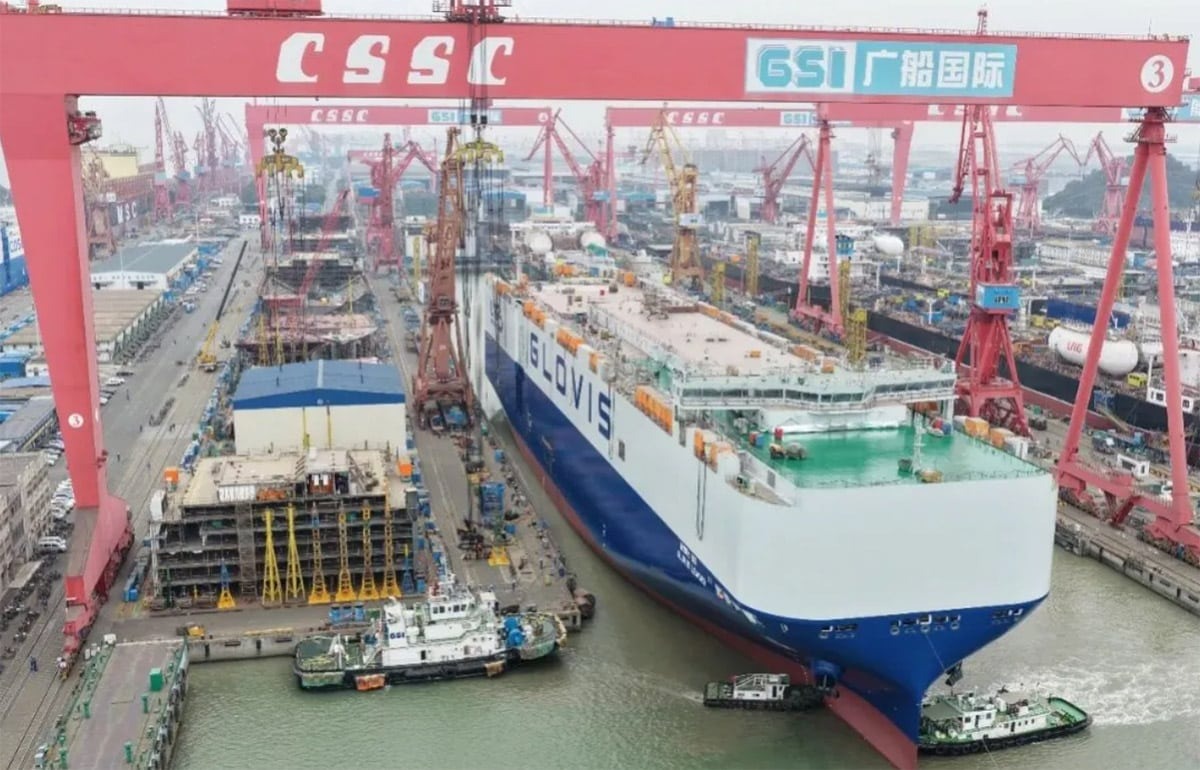
With Unprecedented Capacity for 10,800 Vehicles, 230 Meters in Length, 14 Decks and Liquefied Natural Gas Propulsion, the New Ship Launched by China Redefines the Global Standard for Automotive Maritime Transport by Meeting Tier III Environmental Standards and Expanding the Logistical Scale of Asian Exports
China has launched the world’s largest car carrier, with capacity for 10,800 vehicles, developed by Guangzhou Shipyard International, powered by liquefied natural gas and delivered to HMM, amid rising global demand for automotive transport and the search for cleaner maritime propulsion.
The vessel represents a milestone for the Chinese shipbuilding industry and for the maritime automotive transport sector, combining large loading capacity, new environmental requirements, and a logistics strategy focused on large-scale vehicle exports.
Developed by Guangzhou Shipyard International Co., Ltd. (GSI), the ship is the result of a project led by a state-owned shipbuilder, a subsidiary of China State Shipbuilding Corporation. GSI specializes in building large vessels, including tankers, bulk carriers, and specialized ships such as passenger Ro-Ro and semi-submersible heavy cargo vessels.
-
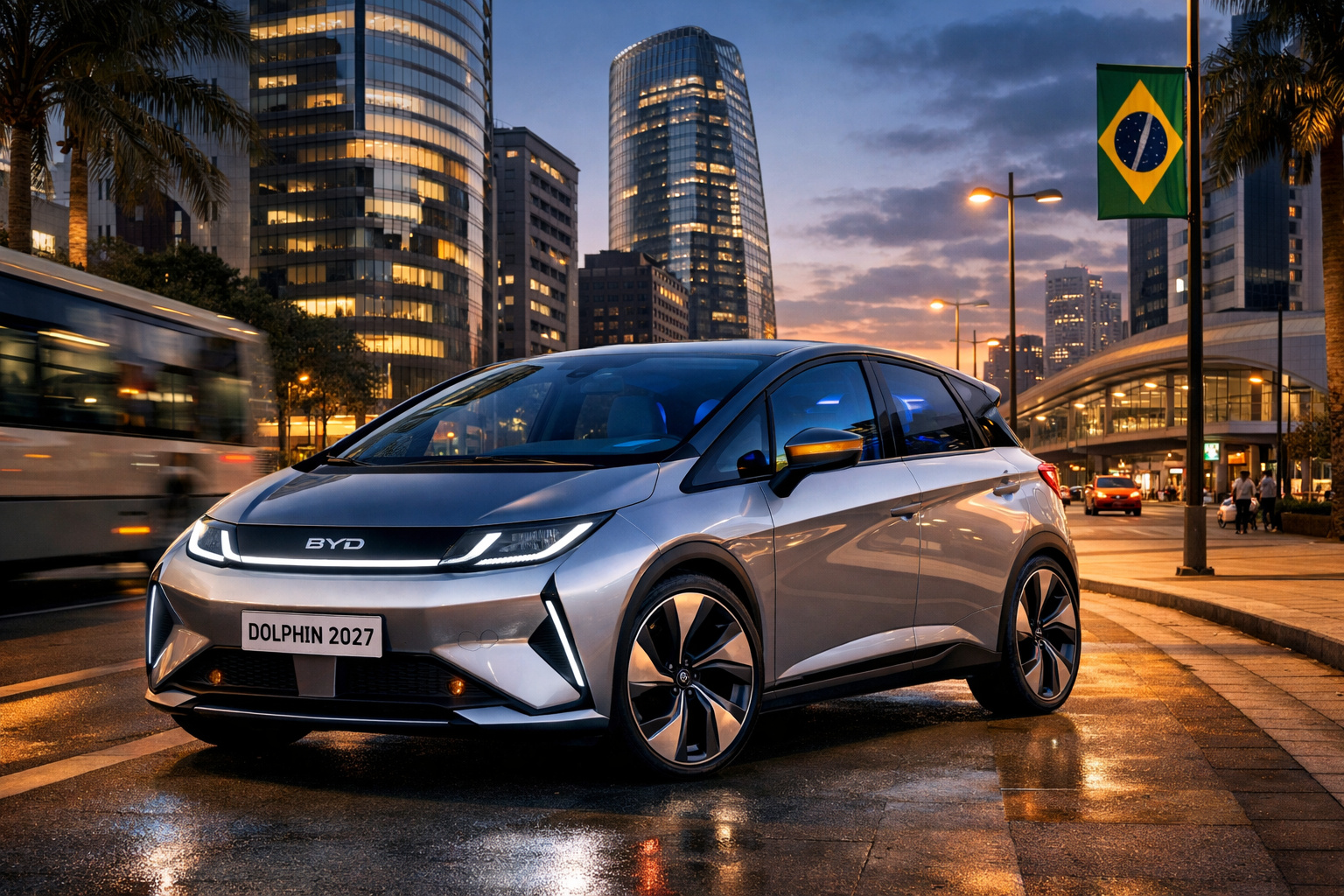
BYD Dolphin 2027 gains more power, increases in size, changes interior, and abandons controversial feature to face new competition in Brazil.
-
The German economist Wolf-Peter Schill has no doubts: “Electric cars are already far superior to cars with internal combustion engines.”

-
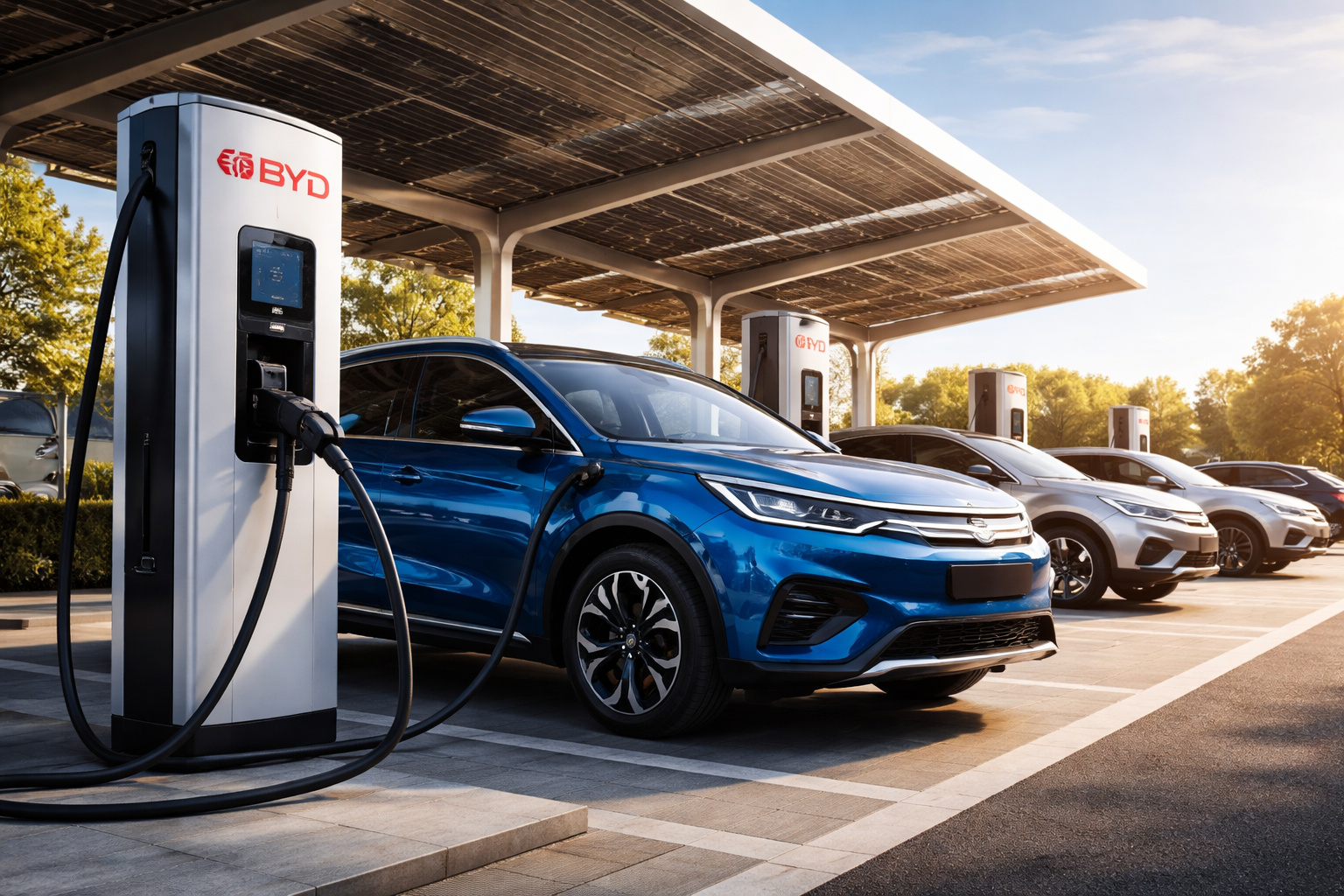
Largest public charging network in Brazil: BYD reaches 125 fast chargers and accelerates national expansion of electric mobility.
-
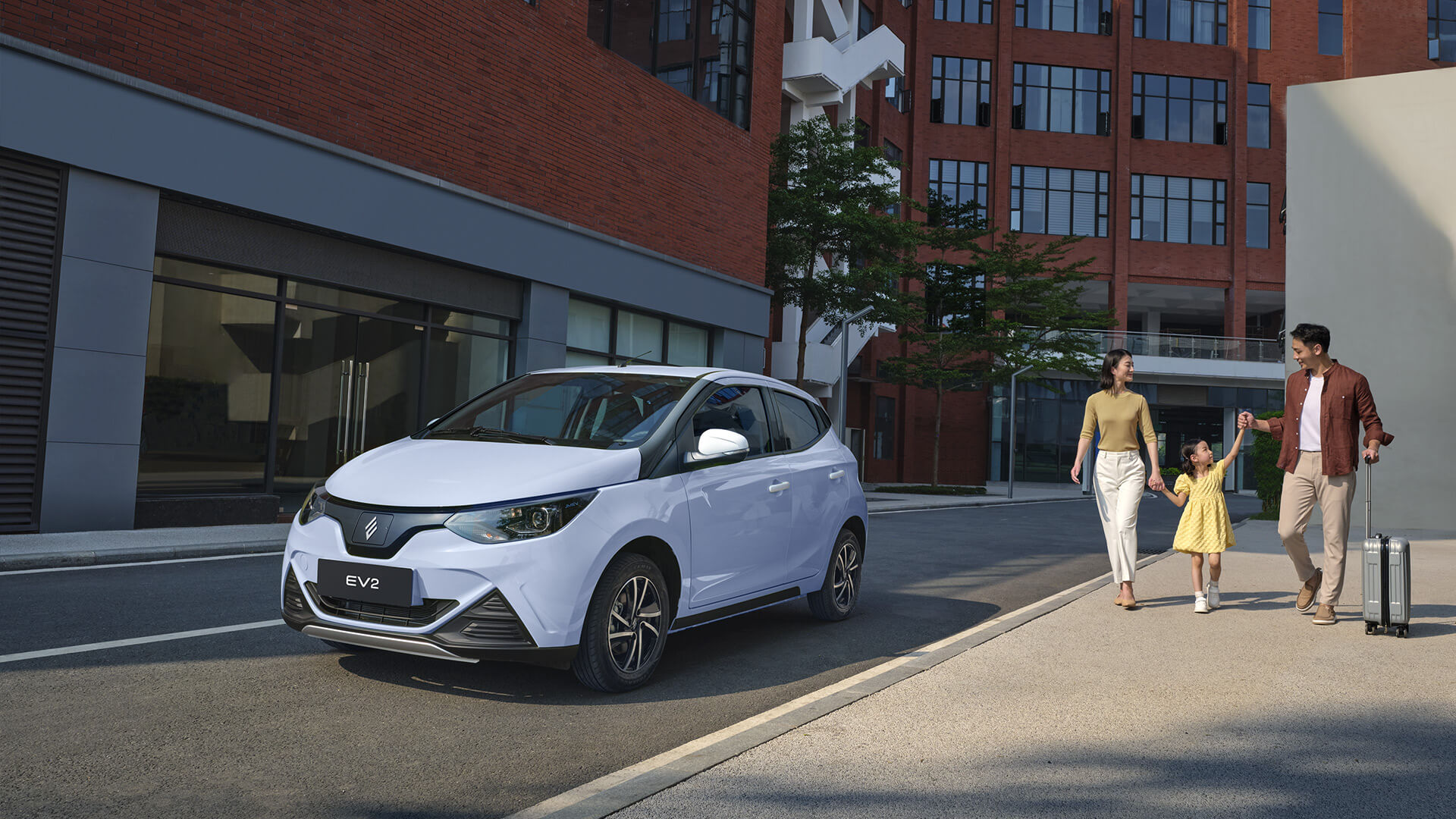
Goodbye expensive popular car: electric vehicle for less than R$ 70,000 starts being sold in Brazil with a range of 200 km and targets those looking to escape gasoline.

Built for HMM, the leading maritime operator in South Korea, the ship is part of a new class of ultra-capacity car carriers. HMM operates about 90 vessels, with a total capacity of approximately 950,000 twenty-foot equivalent units, and has confirmed that the ship has already left the dock on Wednesday.
Dimensions and Capacity That Redefine the Global Standard
With approximately 230 meters in length, 40 meters in breadth, and a structural draft of about 10.5 meters, the vessel is currently the largest vehicle carrier ever built in China. Its capacity of 10,800 automobiles surpasses previous models that held the world record.
Until now, the largest standard was represented by the Anji Soundness and Anji Ansheng ships, from Anji Logistics, designed to transport up to 9,500 vehicles. These ships operate as a benchmark for the post-Panamax generation and belong to a unit of SAIC Motor, headquartered in Shanghai.
The new ship significantly increases the volume transported per trip, addressing the growing pressure for logistical efficiency in the global automotive sector, especially in the context of rising Asian exports.
LNG Propulsion and Stringent Environmental Requirements
The ship is powered by liquefied natural gas, a solution adopted in response to the more stringent environmental regulations of international shipping.
According to GSI, the vessel complies with Tier III standards of the International Maritime Organization, considered among the most stringent for nitrogen oxide emissions.
These standards require a reduction of nearly 80% in nitrogen oxide emissions for ships operating in designated Emission Control Areas, including North America and parts of Europe. The adoption of LNG reflects a structural shift in the maritime sector, driven by environmental regulations and market pressures.
The delivery of the ship reinforces the industry’s trend towards cleaner propulsion solutions, without compromising the scale needed for the mass transport of vehicles.
Operational Flexibility and Multiple Types of Cargo
The vessel’s design includes 14 decks, a feature that enhances flexibility in loading and unloading. This configuration allows for the transport of different categories of vehicles, catering to the diversity of current automotive production.
The ship can accommodate conventional cars, electric vehicles, hydrogen-powered vehicles, and heavy trucks, adapting to the logistical needs of automakers and global operators. This versatility makes the ship suitable for different routes and cargo profiles.
The internal structure has been designed to maximize the use of available space while maintaining the stability and safety required for large-scale operations, even on long maritime crossings.
Logistical Strategy and Expansion of China’s Role
According to industry reports, HMM ordered the vessel as part of its strategy to return to automotive transport after years focused mainly on container operations. Although the ship belongs to HMM, its commercial operation is linked to Hyundai Glovis, based in Seoul.
Hyundai Glovis is responsible for the maritime transport of Hyundai and Kia vehicles, directly connecting the new ship to South Korea’s global automotive export chains. This arrangement reflects the integration between shipbuilders, logistics operators, and automakers.
The launch also highlights China’s growing role in international automotive logistics. By 2025, the country exported over seven million vehicles, with electric vehicles representing an increasingly larger share of global shipments.
Direct Investments and Competition Among Shipyards
In recent years, leaders in the automotive sector have invested directly in maritime transport to secure export capacity. The Chinese manufacturer BYD completed its own fleet of eight ships and achieved an annual capacity of over one million cars transported.
Leapmotor, an electric vehicle manufacturer based in Hangzhou, also secured its own dedicated cargo ship last year. The vessel was specifically built to send over 2,500 electric vehicles to Europe, reinforcing the pursuit of logistical control.
The delivery of the new ship from GSI highlights the growing competition among global shipbuilders as the demand for larger, more efficient, and environmentally compliant vessels continues to grow. The company also reported the departure of another new vessel from the shipyard on January 21, built for EPS of Singapore, signaling the acceleration of this expanding market.









Seja o primeiro a reagir!