





 English
  Francês
  Alemão
  Italiano
  Japonês
  Norueguês
  Portuguese
  Spanish
  4 min of reading
  3 comments


Chinese Strategy Redefines The Soy Market And Pressures Brazil And The USA With New Geopolitical And Commercial Logic
China Prioritizes Food Security And Expands Control Over The Soy Chain
The soybean, once seen merely as an agricultural commodity, has gained status as an essential geopolitical asset in this century.
By 2025, three countries will concentrate the main hubs of this strategic dispute: Brazil, the United States, and China.
Brazil leads global production, the USA dominates industrialization, while China accounts for 61% of global imports, according to FAO data.
In February 2025, the Chinese government published “Central Document No. 1”.
The document reinforced the absolute priority of food security, highlighting soybeans.
The Chinese goal is to produce 700 million tons of grains annually domestically.
The country maintains strategic stocks exceeding 100 million tons, according to the Ministry of Agriculture and Rural Affairs of China.
-
Unemployment rises again to 5.8% at the beginning of 2026, raising alarms about the end of temporary positions and its impact on the Brazilian job market.

-
Document organization can cut invisible costs in small businesses, a simple step that prevents waste, rework, and losses in daily operations.

-
Chinese giant worth nearly R$ 4 billion that manufactures cables for electric cars, solar energy, and robotics wants to open a factory in SC.
-
Many employers do not know, but the law guarantees domestic workers a 25% increase in salary during trips, 50% for overtime, 20% for night shifts, and 17 additional benefits that can lead to labor lawsuits if not paid.


Although the country does not seek total self-sufficiency in soy, it aims to reduce its external vulnerability.
This is particularly happening in light of trade tensions with the USA.
Therefore, to achieve this goal, China has been investing in three complementary fronts:
Expansion of domestic production focused on productivity.
Diversification of suppliers with greater control of the chain.
And partial substitution of soybeans with other protein sources.
Beijing Invests In Agricultural Innovation And Strategic Storage
Since 2020, the Chinese government has increased investments in agricultural technology, seeking higher yields per hectare.
More than 100 counties have received incentives to modernize soybean cultivation.
The actions include crop rotation, pest control, use of improved seeds, and intercropping with corn.
According to the Soybean Research Institute of the Chinese Academy of Agricultural Sciences, average productivity increased by 18% in the last three years.
In addition, the expansion of silos and strategic storage facilities has been accelerated.
In Hebei province, the Qinhuangdao Haigang complex has been constructed, covering 370,000 square meters.
It is now the largest grain storage center on the planet.
It operates with 90 vertical silos and a digital monitoring system.
The investment exceeded US$ 3.3 billion, according to China’s National Development and Reform Commission.
With this structure, China ensures greater logistical autonomy.
It reduces interruption risks and strengthens its position in trade negotiations with the USA and Brazil.
Brazil Leads Production But Depends On China And Faces Increasing Risks
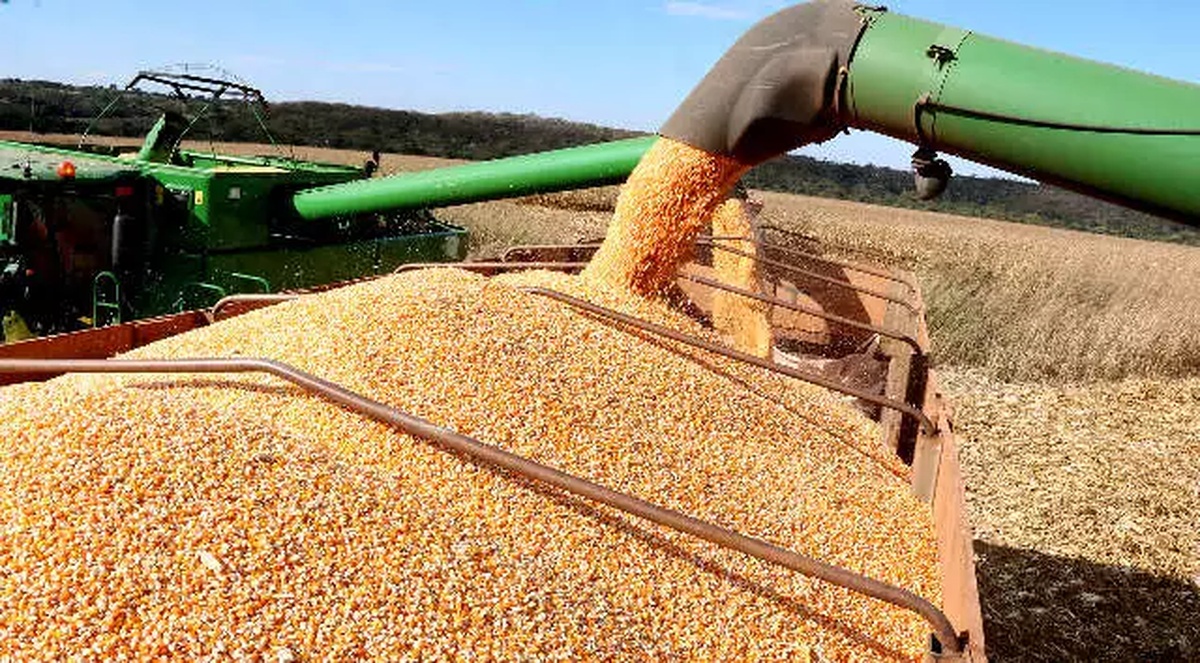
Brazil harvested 168 million tons of soybeans in the 2024/2025 season, according to the National Supply Company (Conab).
Mato Grosso accounted for 50.6 million tons.
The production occupies about 40 million hectares.
It represents 28% of Brazil’s agricultural GDP.
Historically, Brazil has benefited from Chinese expansion.
Since the trade war between the USA and China in 2018, Brazilian shipments have skyrocketed.
In 2024, Brazil exported 75 million tons to China, totaling US$ 36.5 billion.
In contrast, the USA exported 22 million tons, summing up to US$ 12 billion.
However, this dependency relationship has become critical.
About 73% of Brazilian soy is destined for the Chinese market.
This level imposes significant risks on the country.
Any reduction in China’s purchases could cause internal surplus.
There would be a decrease in prices and impact on Brazil’s trade surplus.
The economy would suffer loss of foreign exchange, currency fluctuations, and reduced tax collection from exporting states.
United States Modernize Cultivation And Seek To Regain Space With Political Support
Even after losing leadership to Brazil, the United States remains a powerhouse in soybean production.
Approximately 118 million tons were harvested in 2024, according to the USDA.
The Upper Midwest region concentrates the largest production.
States like Illinois, Iowa, and Minnesota are the main producers.
More than 87 million acres have been cultivated with soy.
About 70 million tons were allocated to the crushing industry.
Another 44 million tons were exported.
China received 52% of the total exported by the USA.
In August 2024, former President Donald Trump suggested that Beijing increase purchases of American soy.
China signaled a willingness to negotiate a new agreement, similar to the one signed in 2020.
The so-called “Phase 1 Agreement” stipulated annual purchases of US$ 40 billion in agricultural products from the USA for two consecutive years.
If American purchases increase, Brazil could lose ground.
The two exporters would compete for a single powerful buyer: China.
Chinese Pressure May Force Brazil To Reassess Its Global Strategy
Even with internal changes, China will continue to be the largest destination for global soy. However, the current foreign policy signals the end of guaranteed growth.
Thus, Brazil will need to reassess its dependence on China. Furthermore, it will be essential to develop new commercial strategies to face the challenges of the global market.
To achieve this, it will be necessary to diversify markets, add value to rural production, and simultaneously invest heavily in the industrialization of the national agribusiness.
Furthermore, exporting products derived from soybeans, such as meal, oil, and biodiesel, could significantly reduce the country’s external vulnerability.
Additionally, Brazil has the potential to increase the export of processed animal protein, which will bring greater value added to the production chain.
Therefore, strengthening logistical routes and signing new trade agreements could considerably expand the base of international buyers.
Meanwhile, Asia, Europe, and Africa emerge as strategic markets that need to be explored more intensively by Brazilian producers and exporters.
The Brazilian economic sovereignty will depend on its ability to adapt. For this reason, the agricultural sector must react swiftly to geopolitical changes.
Today, the agricultural world is increasingly integrated into the geopolitical chessboard. Thus, soy has shifted from a simple commodity to a central piece in a dynamic game.









Brasil país do futuro. Eterno produtor e exportador de comodites. Não agrega. Vai dançar num futuro não tão longe.
Faz isso com a nossa soja mesmo, compra barato e revende, controla com valor mais alto. Querem dominar o Agro Brasileiro.
China maior produtora de alimentos do mundo não exportam é pra segurança alimentar de seu povo.