





 Portuguese
  English
  Spanish
  3 min of reading
  0 comments


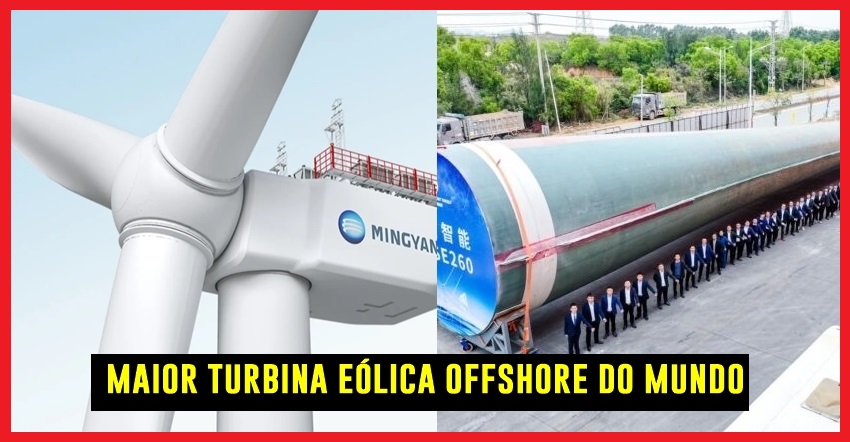
Giant Innovation: China Activates The Largest Offshore Wind Turbine Of All Time, With Impressive 20 MW Power And Capacity To Withstand Even The Strongest Typhoons
In recent years, China has stood out on the global stage by investing billions of dollars in clean energy technologies, especially in generating offshore wind energy. Recently, the Asian country showed the world the most powerful offshore wind turbine in history.
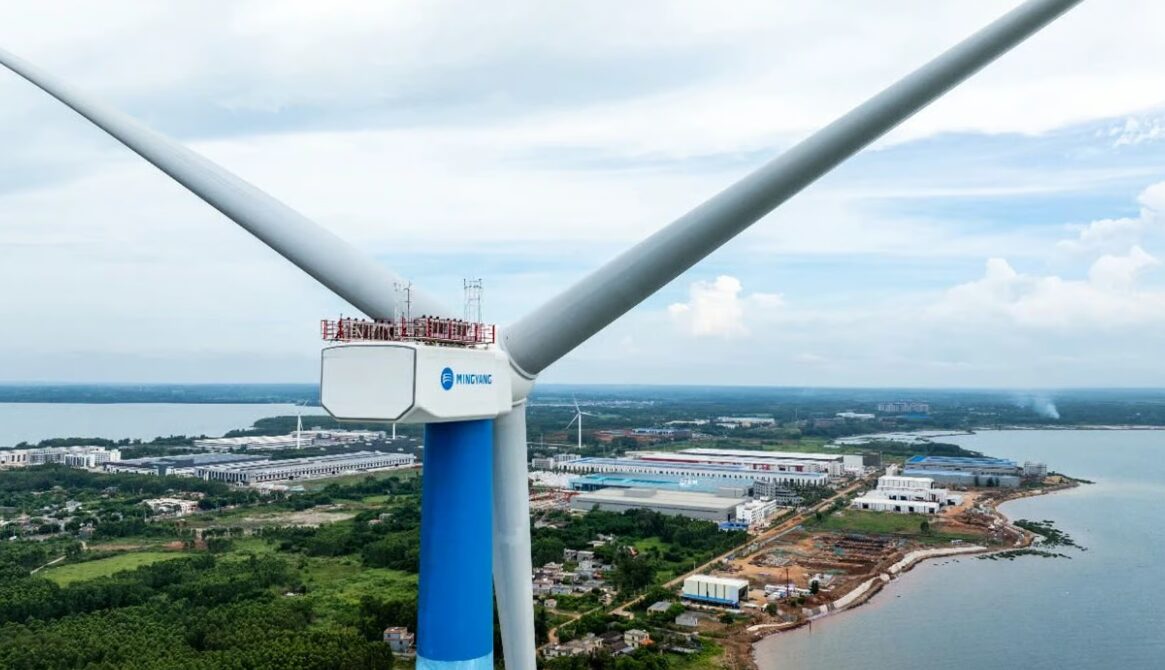
A clear example of this progress is the installation by Mingyang Smart Energy of the largest single-capacity offshore wind turbine in the world.
The turbine, located in Hainan, China, has an impressive power of 20 MW, surpassing the company’s previous model, which offered 18 MW in 2023. This milestone in wind energy showcases the country’s ability to develop cutting-edge technologies while always seeking to optimize the production of clean energy.
-
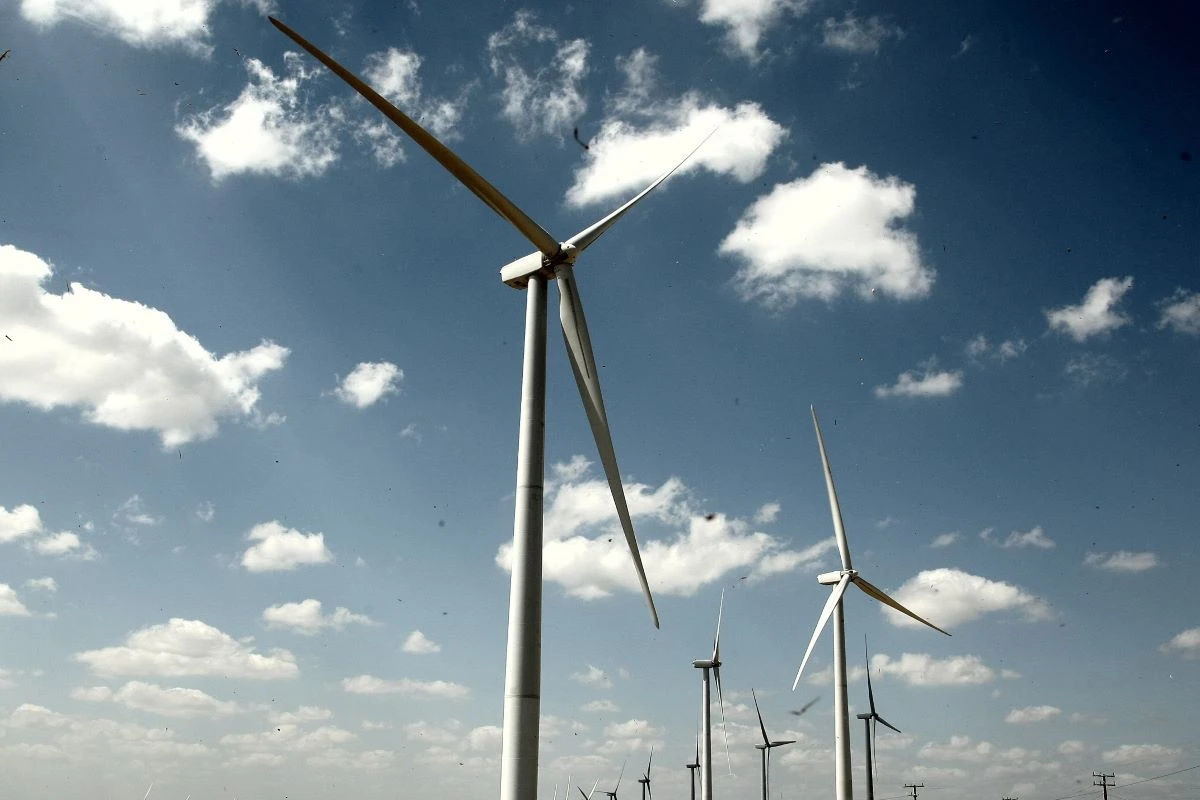
Urgent energy transition: Greenpeace advocates for massive investments and points to Brazil as a global leader in wind energy production in the coming years.
-
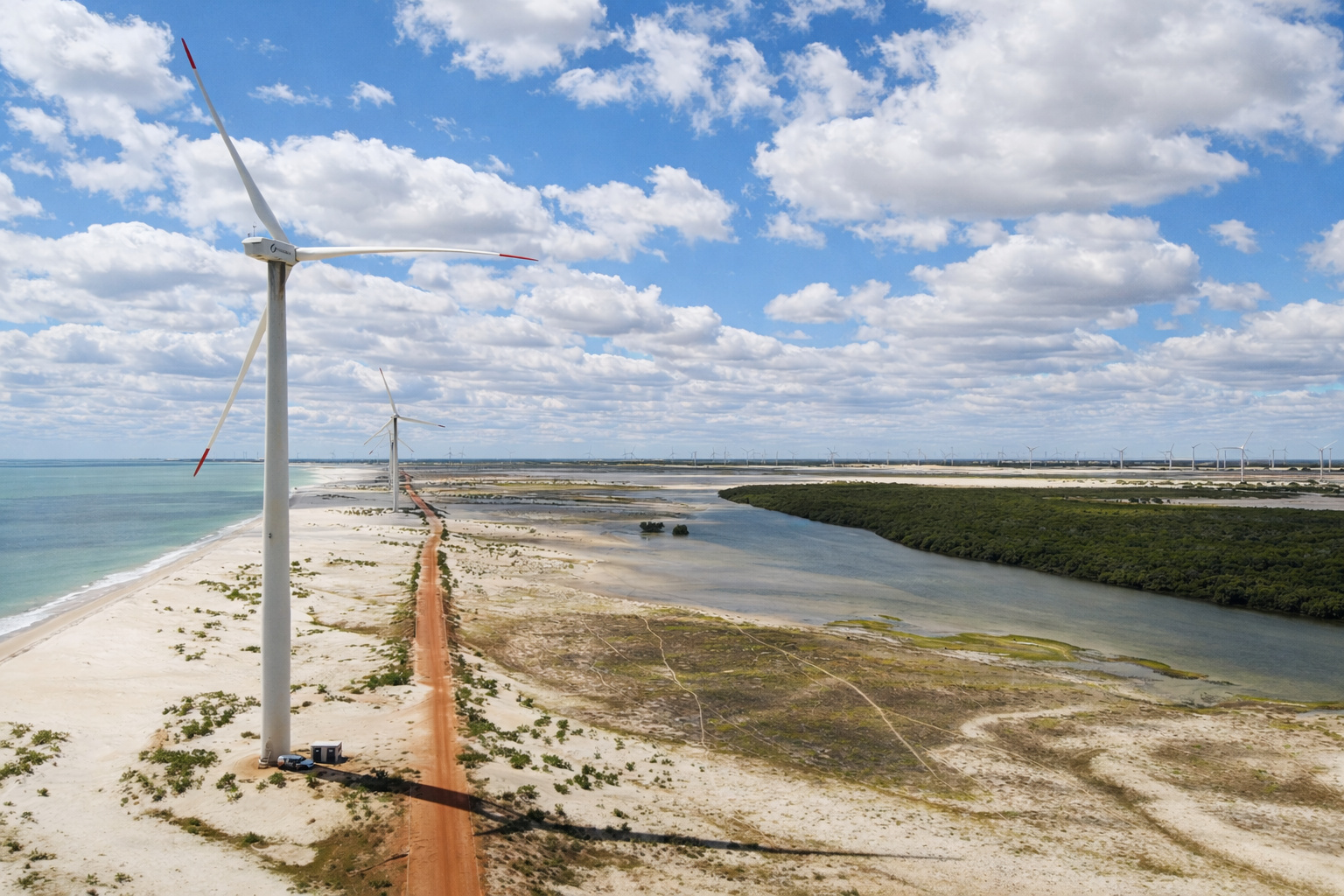
Conflict in the Sertão: Rural communities in Rio Grande do Norte report issues with wind farms and the new challenges of clean energy in the semi-arid region.
-
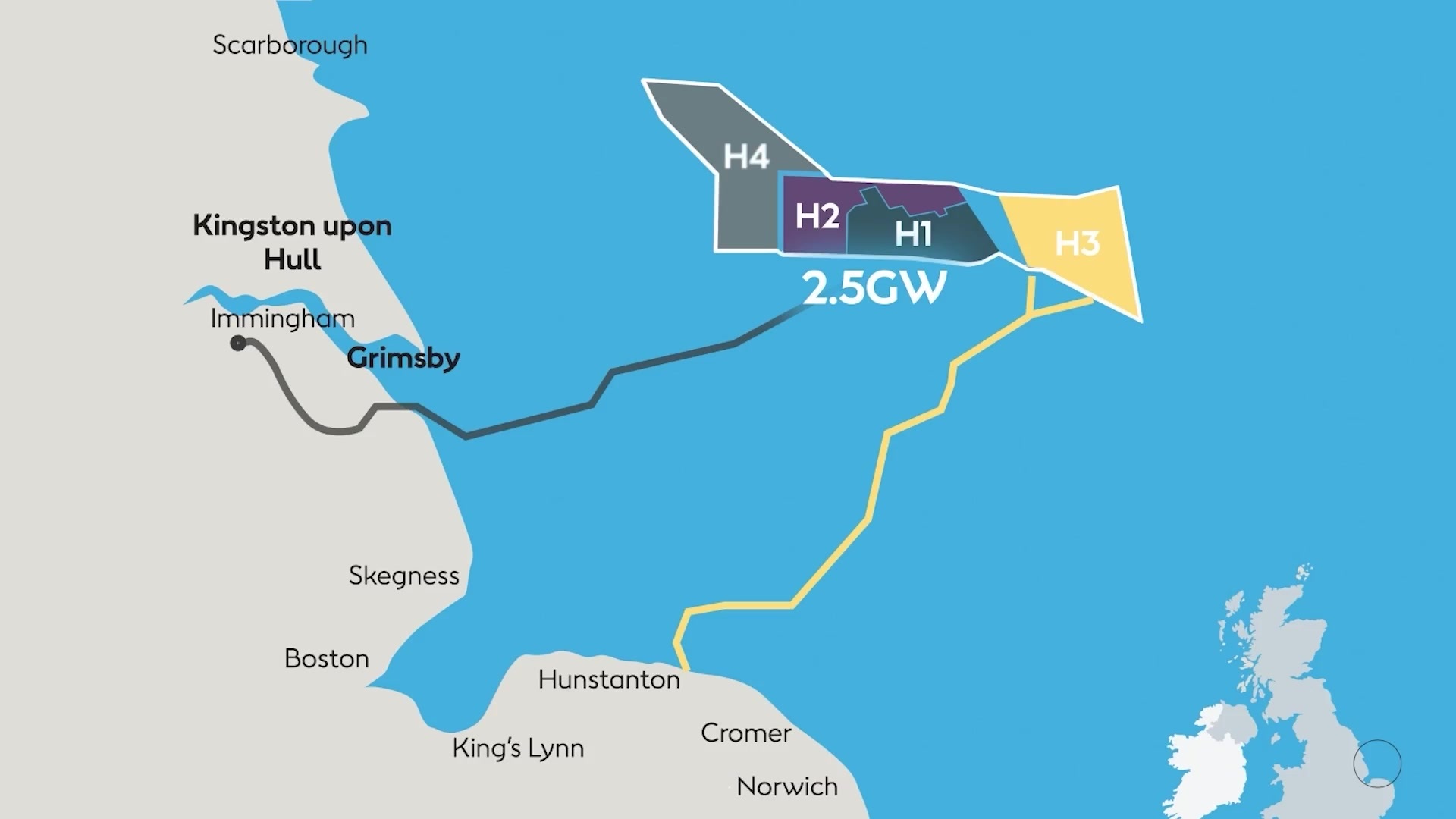
231 turbines of 260 meters at 160 km from the coast, monopiles weighing as much as nine blue whales embedded in the North Sea, and a crane ship taller than the Eiffel Tower: Hornsea 3 will be the largest offshore wind farm on the planet by 2027, and its first components have already arrived in England.
-
International Certification Puts Senai Norte on the Renewable Energy Map and Expands Access to Essential Training for Qualified Wind Power Professionals


Largest Wind Turbine In The World
The turbine, named MySE18.X-20MW, was designed to be lightweight, modular, and highly reliable. Its wind rotor has an impressive diameter that ranges between 260 and 292 meters, providing a wind sweep area of 66,966 m², equivalent to more than 12 American football fields. This innovative design ensures greater efficiency in capturing winds, optimizing energy generation.
In addition to its impressive size, the turbine is extremely efficient. With an average annual wind speed of 8.5 m/s, the MySE18.X-20MW can generate about 80 million kWh of electricity per year, enough to supply approximately 96,000 homes. This demonstrates the potential of offshore wind turbines to generate large amounts of energy, helping to replace polluting sources like fossil fuels.
The robustness of this turbine is also impressive. Designed to withstand typhoons of level 17, it can endure wind speeds of up to 79.8 m/s (178.5 mph). This resilience is essential, especially in regions like the South China Sea, where weather conditions can be challenging. The ability to withstand extreme conditions guarantees that energy production remains consistent, even in adverse situations.
Projects like this one from Mingyang are crucial for the future of clean energy. In addition to increasing generation capacity, these initiatives also have the potential to reduce the costs of offshore wind energy, making it a more viable alternative compared to other energy sources.
According to a report by the International Renewable Energy Agency, the cost of electricity generated by offshore wind turbines has fallen significantly in recent years. In 2010, the cost was more than double that of the cheapest fossil fuel alternative, but by 2022, the gap had narrowed to just 17%. During this period, the cost of offshore wind electricity dropped from US$ 0.197/kWh to US$ 0.081/kWh.
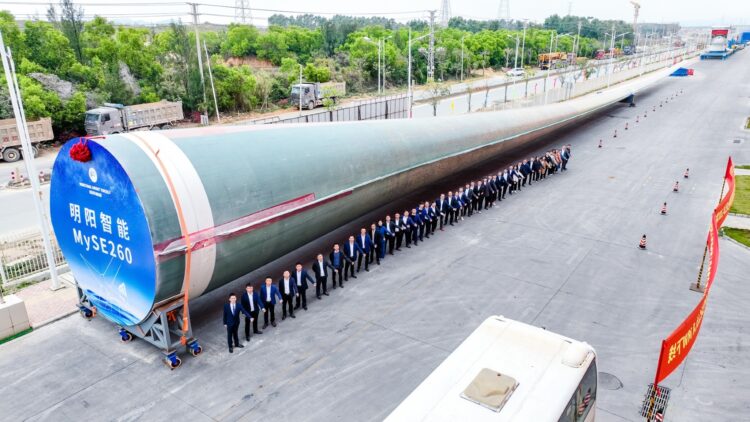
Wind Energy Still Faces Its Challenges
Despite this cost decrease, offshore wind energy is still more expensive than other renewable sources, such as solar, hydroelectric, and geothermal. This means that there is still a long way to go before offshore wind energy becomes widely adopted around the world.
However, the potential for growth in this energy source is enormous, especially since conditions at sea are more favorable for energy generation. The more consistent and stronger winds in the offshore environment ensure more efficient and stable production compared to onshore turbines.
Another advantage of offshore wind turbines is the ease of transport and installation. Large towers and blades can be transported by ship, which is more practical than moving them overland. Additionally, larger turbines mean more energy generated, making these operations more cost-effective.
Mingyang is already working on a new project that is expected to go into operation next year. The new turbine will be even larger, with a capacity to provide 22 MW of energy and a wind sweep area of 75,477 m². These advancements show that the future of offshore wind energy is promising, with potential to transform the global energy matrix and make significant contributions to the transition to a low-carbon economy.








Seja o primeiro a reagir!