





 Portuguese
  English
  Spanish
  3 min of reading
  2 comments


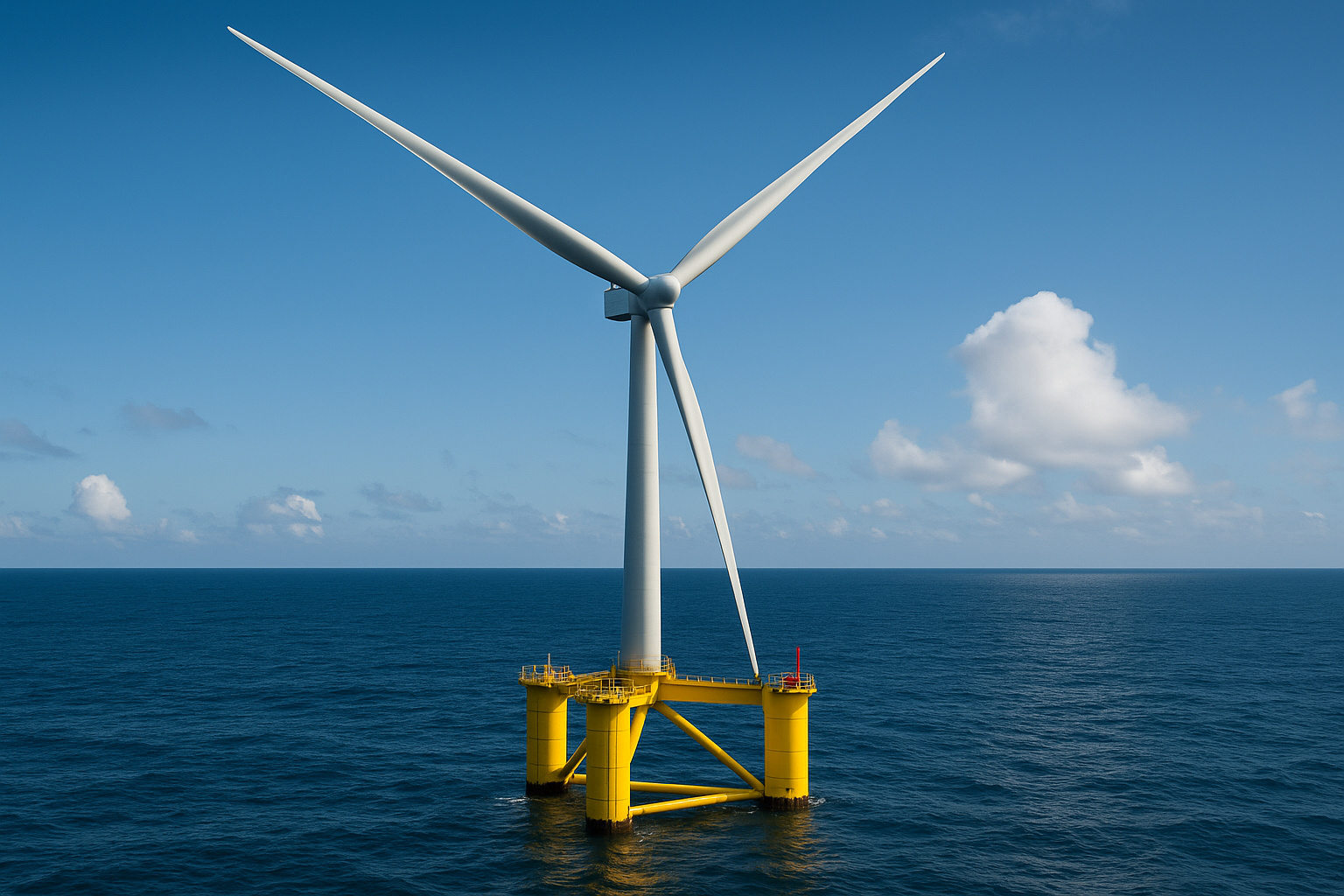

Platform of 16 MW Assembled in September 2025 Signals New Advance of China in the Race for Clean and Self-Sufficient Sources
The China took another decisive step in the energy transition by completing the assembly of the largest floating wind turbine on the planet in September 2025. This achievement represents an unprecedented technological milestone and reinforces the country’s position as a global leader in clean energy.
According to the South China Morning Post, the turbine has blades with a span equivalent to seven football fields. Furthermore, the 16 megawatt (MW) system was completed in the city of Beihai, in the Guangxi Zhuang Autonomous Region, and will be towed to waters deeper than 50 meters for testing.
The 252-meter diameter rotor, the largest in the world, will be capable of generating about 44.7 million kWh per year, enough to power four thousand households in the United States. Thus, the advance reinforces China’s commitment to sustainable energy and reducing dependence on fossil fuels.
-
Investment in offshore wind energy could reach R$ 900 billion and promises to transform Brazil’s energy matrix in the next decade.
-
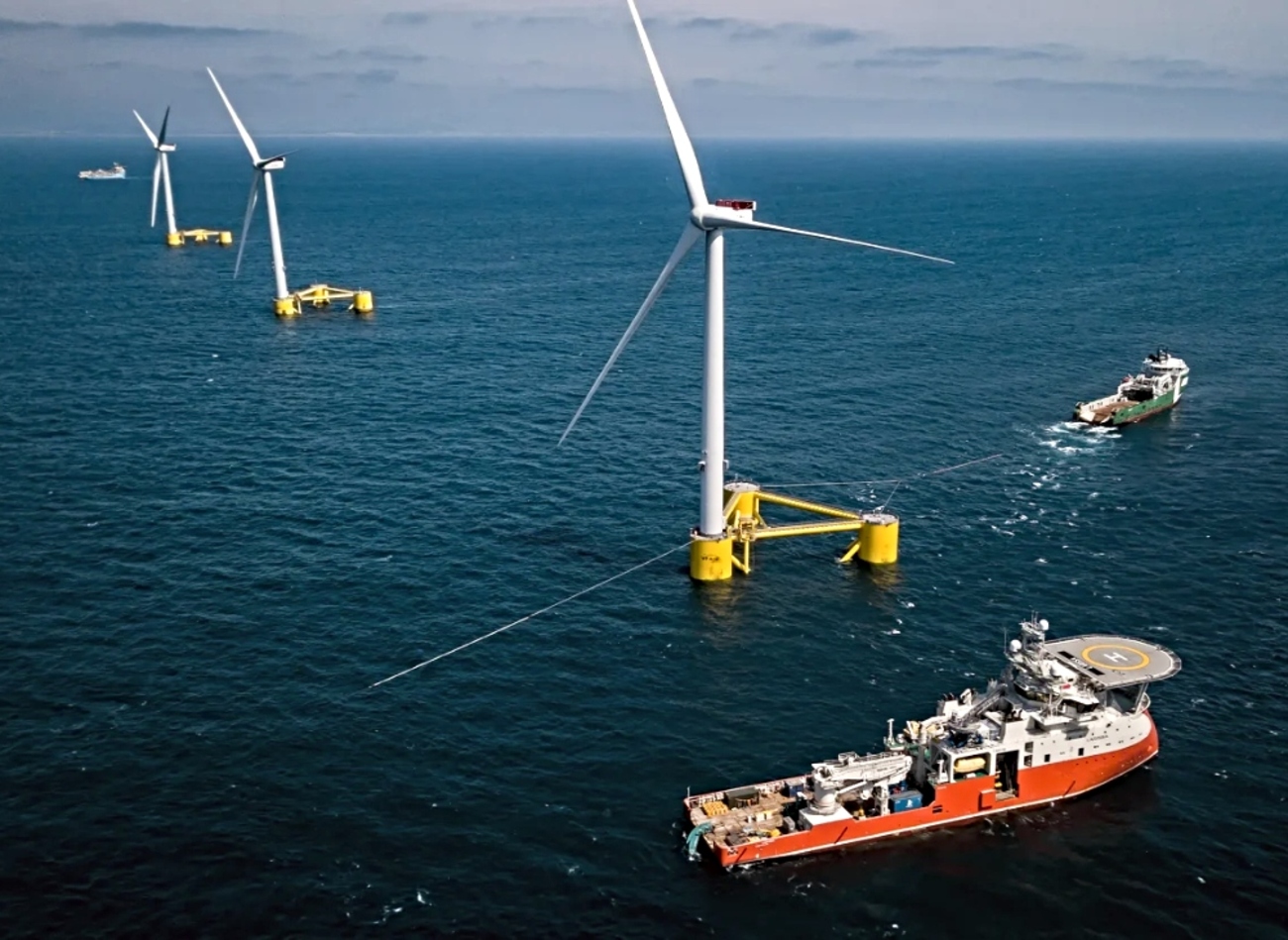
China accelerates offshore wind energy and sets new installed capacity records to lead global decarbonization.
-
Giant of the winds in Rio Grande do Norte: Serra do Tigre Wind Complex receives new investments and accelerates the expansion of clean energy generation to supply millions of Brazilian homes.
-
Urgent energy transition: Greenpeace advocates for massive investments and points to Brazil as a global leader in wind energy production in the coming years.
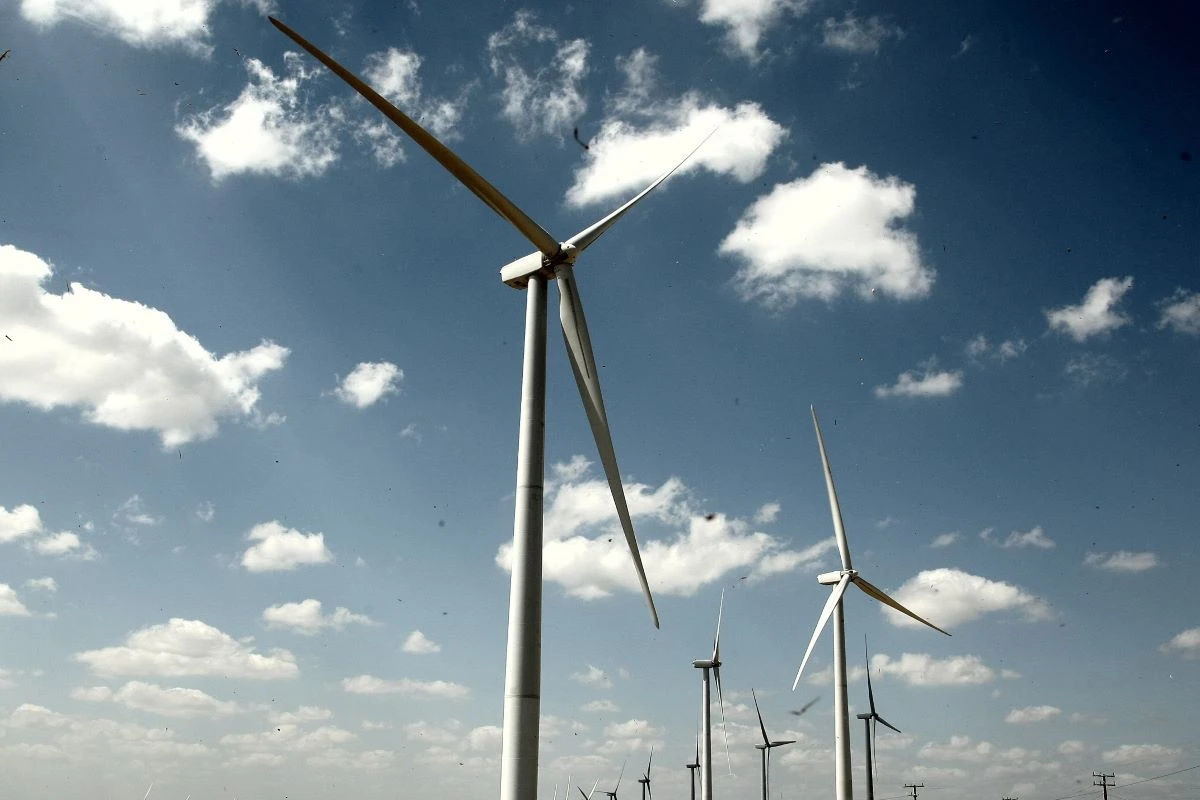
National Technology Symbolizes Industrial Self-Sufficiency
All components of the turbine, such as anchoring cables, gears, and ballast systems, were designed and manufactured in China. Therefore, the country reaffirms its technological self-sufficiency and strengthens its renewable energy industrial chain.
The turbine was installed on a modern semi-submersible platform, equipped with the country’s first dynamic ballast system. This technology automatically adjusts the structure’s balance according to the force of winds and waves, pumping water in or out of internal tanks.
This way, the platform’s tilt is reduced, and operational stability is enhanced, ensuring greater safety and efficiency even in turbulent seas.
The project is led by China Three Gorges Corporation, the state-owned enterprise that built the Three Gorges Dam, inaugurated in 2012. The company is now expanding its operations in the offshore wind sector, consolidating China as a global leader in clean energy production.
Offshore Wind Energy Gains Strategic Role in Chinese Politics
During an economic meeting in July 2025, President Xi Jinping stated that offshore wind energy is essential for the “high-quality development” of the maritime economy. Additionally, he highlighted the goals of reaching peak CO₂ emissions before 2030 and achieving carbon neutrality by 2060.
Since 2015, China has accounted for 90% of global growth in CO₂ emissions, according to the International Energy Agency (IEA). Currently, the country represents one third of global emissions. Thus, its decisions directly influence the success of the Paris Agreement, signed in 2016 to limit global warming to 1.5 °C.
Hence, the development of offshore wind energy has become a national priority, both to reduce emissions and to boost sustainable economic growth.
Chinese Advance Redefines Global Energy Transition
Experts assert that the Chinese advance in floating turbines could change the course of the global energy transition. After all, China dominates production, engineering, and innovation in this sector.
Each megawatt generated avoids tons of carbon emissions and increases the supply of clean energy. Moreover, the use of floating platforms allows installing turbines in deeper waters, where winds are more intense and consistent, enhancing generation efficiency.
According to experts cited by Xinhua Agency, the project demonstrates China’s ability to unite science, engineering, and environmental policy. Thus, the country reduces dependence on fossil fuels and strengthens its role as a global sustainability benchmark.
Technological Milestone and Symbol of the New Energy Age
The largest floating wind turbine in the world represents a monumental advance in the clean energy industry. It combines innovation, technological independence, and environmental commitment, which are the pillars of China’s energy strategy.
With this project, China demonstrates that it is possible to grow sustainably, balancing economic expansion and environmental preservation. Additionally, the country proves that the energy of the future depends on local and efficient solutions, driven by strategic investments in green technology.
While several nations are still planning their climate policies, China executes its plans swiftly and accurately. Thus, the country redefines global standards for the energy transition and sends an unequivocal message to the world: the wind revolution has already begun — and the wind blows from the East.







I must say this article is extremely well written, insightful, and packed with valuable knowledge that shows the author’s deep expertise on the subject, and I truly appreciate the time and effort that has gone into creating such high-quality content because it is not only helpful but also inspiring for readers like me who are always looking for trustworthy resources online. Keep up the good work and write more. i am a follower.
I must say this article is extremely well written, insightful, and packed with valuable knowledge that shows the author’s deep expertise on the subject, and I truly appreciate the time and effort that has gone into creating such high-quality content because it is not only helpful but also inspiring for readers like me who are always looking for trustworthy resources online. Keep up the good work and write more. i am a follower.