





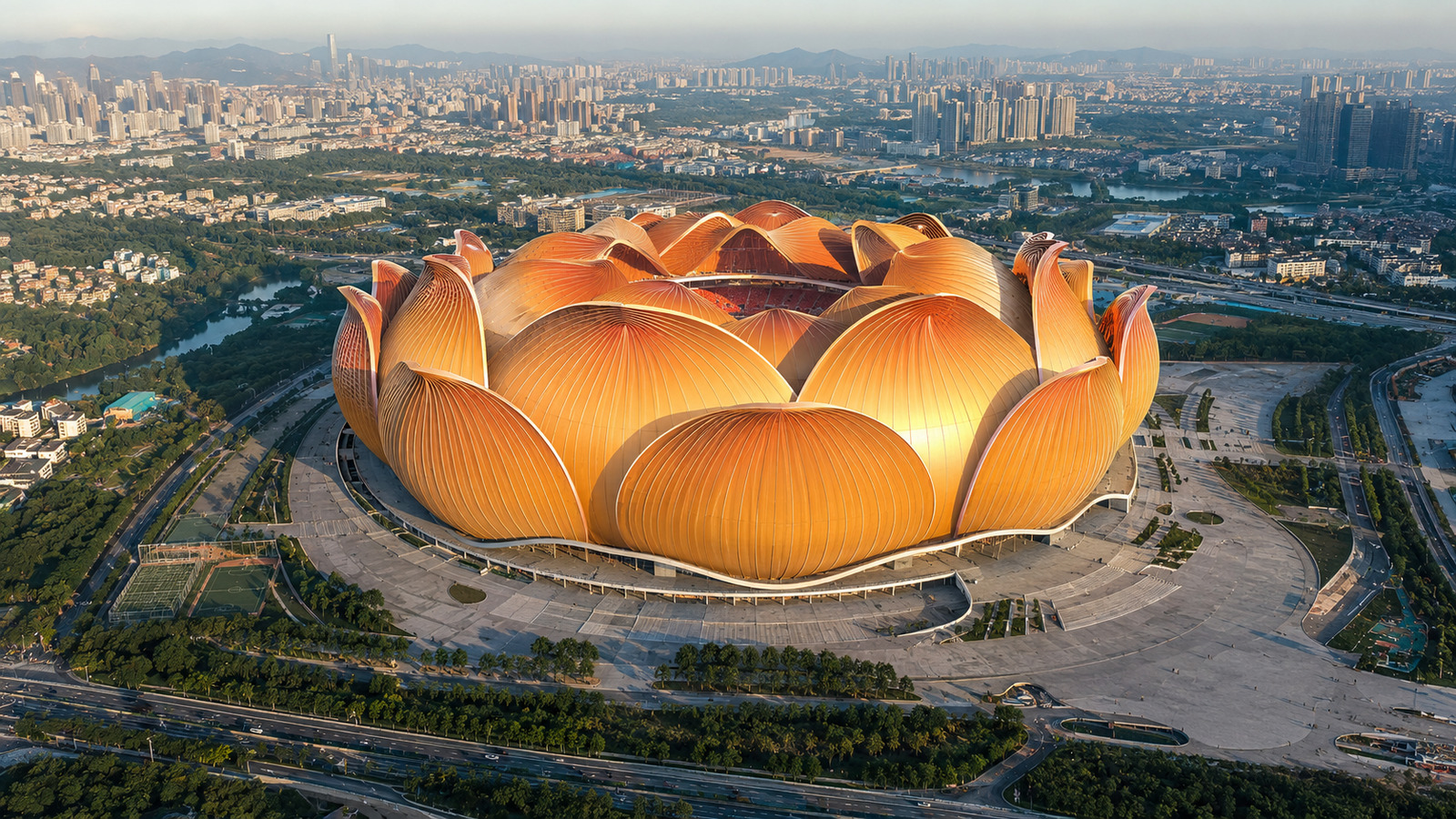

The Evergrande Stadium, announced in 2020 to host 100,000 fans and cost up to $1.8 billion, will be completed with a different name, a simpler design, and a capacity of 73,000 people. The redesign transforms a project halted by the Chinese real estate crisis into a sports and commercial complex controlled by a state-owned company.


Evergrande Stadium was born to be the largest in the world for football
The original project was presented during a period of strong Chinese investment in football. With a design inspired by a lotus flower, the arena was to be built in the city of Guangzhou and serve as the home of Guangzhou Evergrande.
With 100,000 seats, the stadium would surpass Camp Nou, Barcelona’s stadium, as the largest arena in the world built exclusively for football matches.
-
China uses 42 million tons of steel in a R$2.2 billion arena and does something unique in the world: a giant braided structure that supports the roof without pillars over the field, providing an unobstructed view for more than 90,000 people.

-
Caterpillar that devastates soybean, corn, and cotton plantations harbors four fungi capable of degrading styrofoam within its own intestine.

-
Sarah Winchester inherited a fortune from the most famous rifles in the United States and spent almost 40 years expanding a 160-room mansion surrounded by legends about ghosts.
-
Archaeologists open a bag dropped in a medieval latrine in Germany and find a wax notebook with Latin inscriptions preserved for 700 years.


The development could also host major international competitions, including the Asian Cup.
The estimated cost was $1.8 billion, a value exceeding 10 billion BRL at the exchange rate of the time. The proposal also envisioned the structure becoming a new landmark of China.
The feasibility of the project, however, was directly linked to Evergrande. The conglomerate had expanded its business with billion-dollar loans while the Chinese real estate market was still growing.
Debt of $300 billion halted the construction
The financial model began to lose strength when the Chinese government restricted the indebtedness of developers.
Evergrande accumulated more than $300 billion in debts and started selling assets, suspending projects, and renegotiating commitments.
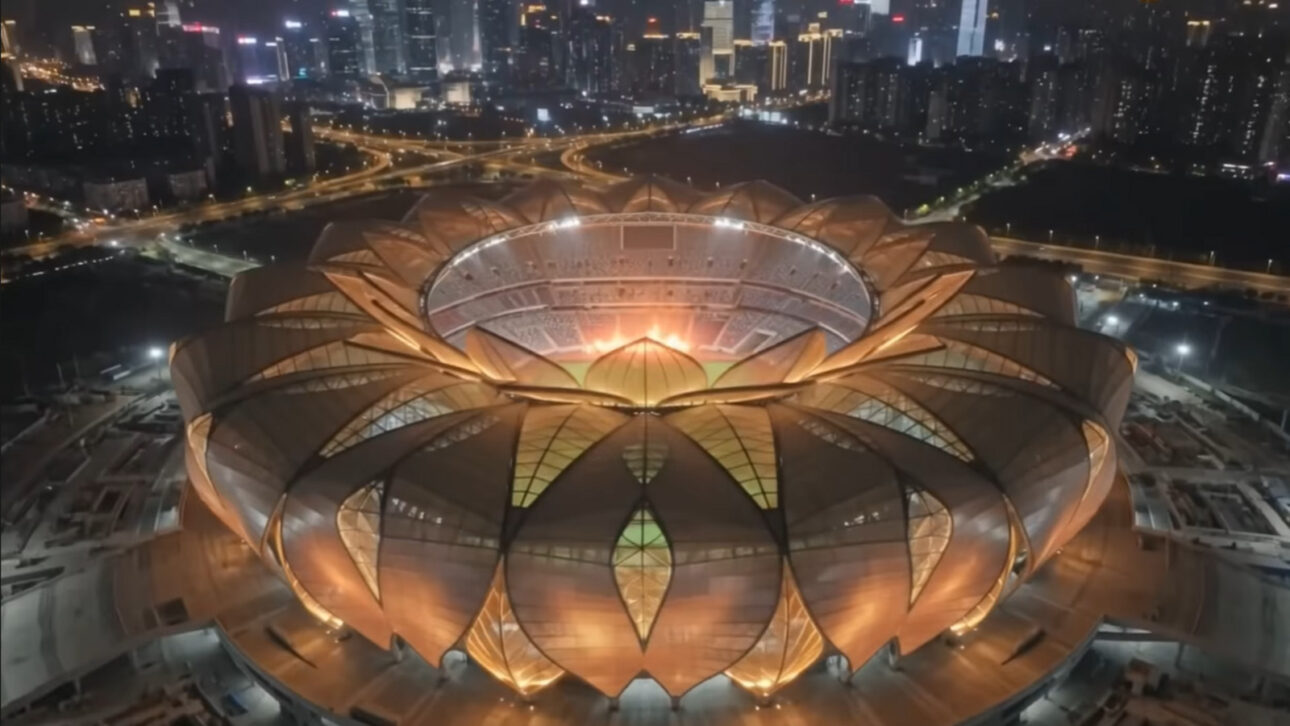
The stadium construction was halted. In 2021, the Guangzhou city government took control of the project, which remained practically abandoned for almost two years.
Aerial images taken in 2022 showed stationary cranes, scattered materials, and parts of the structure still unfinished.
Evergrande also canceled the land use contract to recover part of the invested resources.
The money obtained from the operation was directed to creditor payments. The Evergrande Stadium, once presented as a symbol of the group’s economic and sports expansion, came to represent the effects of its financial crisis.
Company’s downfall also affected Guangzhou Evergrande
The halt accompanied the decline of the club that would use the arena. Purchased by the developer in 2010, Guangzhou Evergrande became an Asian powerhouse after receiving substantial investments.
The team won eight Chinese Championship titles and two editions of the Asian Champions League. It also signed well-known players in Brazil, such as Paulinho, Ricardo Goulart, Conca, Elkeson, Robinho, and Talisca.
The club was also managed by coaches like Luiz Felipe Scolari, Marcello Lippi, and Fabio Cannavaro. With the crisis of the parent company, it lost its main players, was relegated, and failed to meet financial requirements.
Guangzhou ended up losing the necessary license to compete in professional football. Thus, the team ceased to exist in competitions just as the stadium built to represent it remained unfinished.
New stadium will have 73,000 seats and a smaller budget
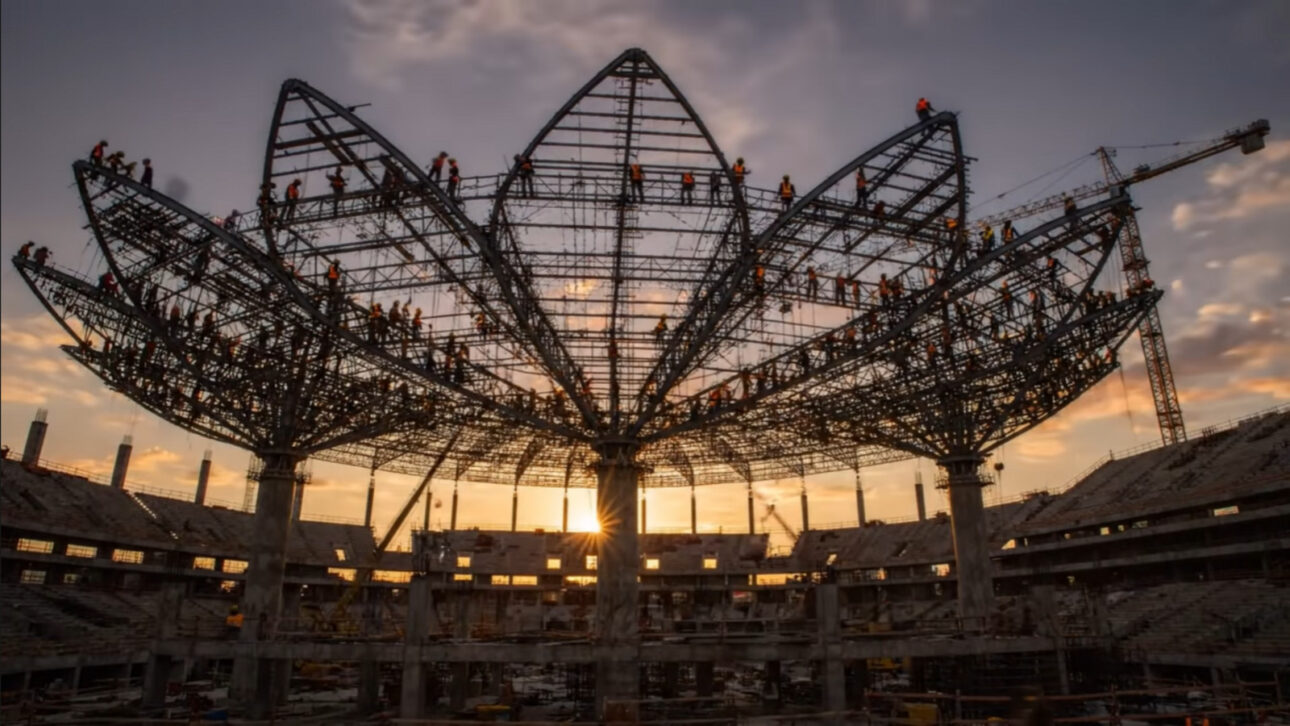
The Guangzhou City Construction Investment Group, the state-owned company that took over the project, decided to utilize part of the existing structure but abandoned the original design and completely reworked the proposal.
The capacity was reduced from 100,000 to 73,000 fans. The budget, previously estimated at around €1.5 billion, approximately R$ 8.9 billion, fell to €300 million, about R$ 1.7 billion.
Renamed Guangzhou Football Park, the project will be more conventional and will no longer function solely as a stadium. The plan includes a public sports activity center and commercial spaces.
When opened, the complex will be the largest professional football stadium in China. However, the arena will no longer compete for the title of the largest in the world, a goal that was part of the proposal announced in 2020.
This article was prepared based on the information from the provided source material, with data, numbers, and references preserved as per the consulted content.


