





 Portuguese
  English
  Spanish
  6 min of reading
  0 comments


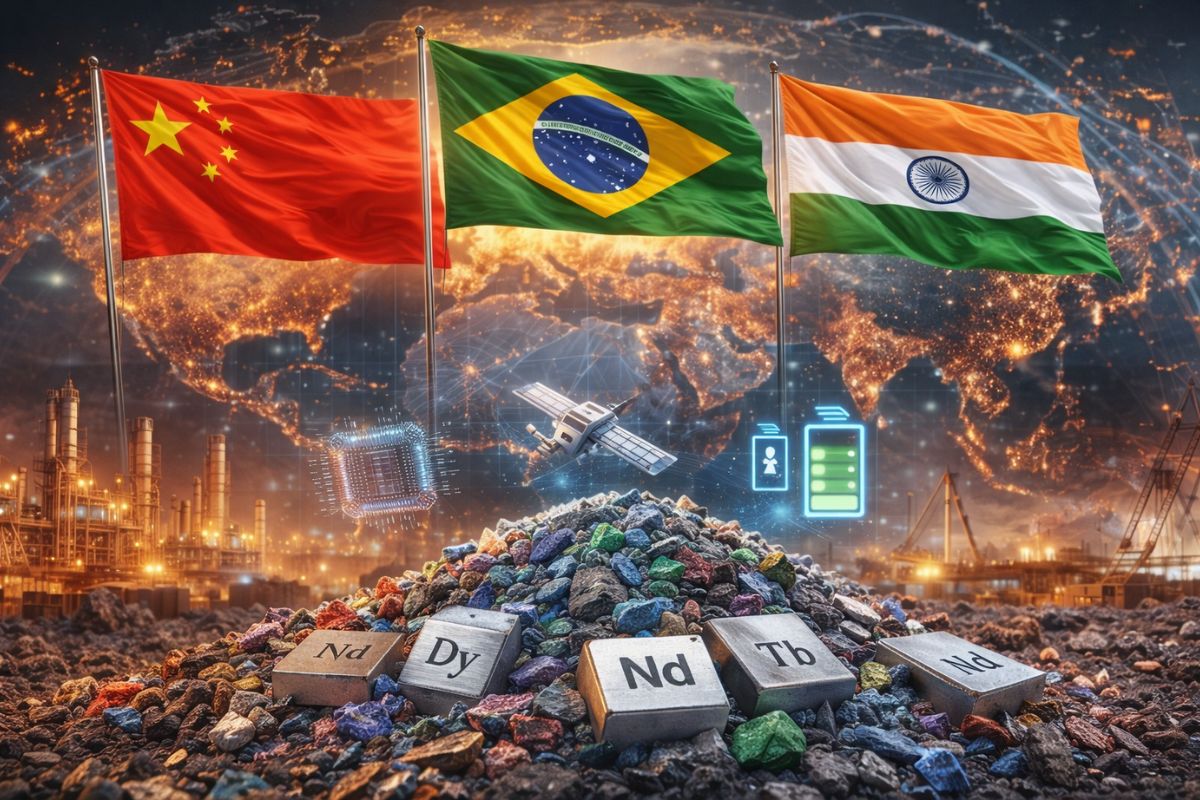
With nearly 72 million tons in combined reserves, China, Brazil, and India concentrate the majority of the known rare earths in the world—the 17 chemical elements essential for smartphones, electric cars, wind turbines, and military systems that are at the center of the dispute between the United States and China for control of global technology.
Rare earths have become the most contested resource in contemporary geopolitics. This group of 17 chemical elements is present in practically everything that defines modern technology from smartphones and electric cars to guided missiles and wind turbines. Despite the name, rare earths are not necessarily scarce, but their extraction and especially their refining are complex and concentrated in a few countries. This has turned access to these minerals into a matter of national security for the world’s major powers.
According to Revista Fórum, at the center of this dispute are three countries that, together, concentrate the overwhelming majority of the known reserves of rare earths: China, with about 44 million tons; Brazil, with approximately 21 million; and India, with 6.9 million, according to data from the United States Geological Survey (USGS). The United States and the European Union are pushing to establish partnerships with Brazil and India, seeing them as a strategic alternative to reduce dependence on China, which dominates not only the reserves but the entire production and refining chain.
What are rare earths and why are they at the center of the global dispute

Rare earths are a set of 17 chemical elements from the periodic table: the 15 lanthanides, plus scandium and yttrium. According to the Ministry of Mines and Energy, among them are lanthanum, cerium, neodymium, dysprosium, and other elements with names not well known to the public, but absolutely decisive for the functioning of the modern economy.
-
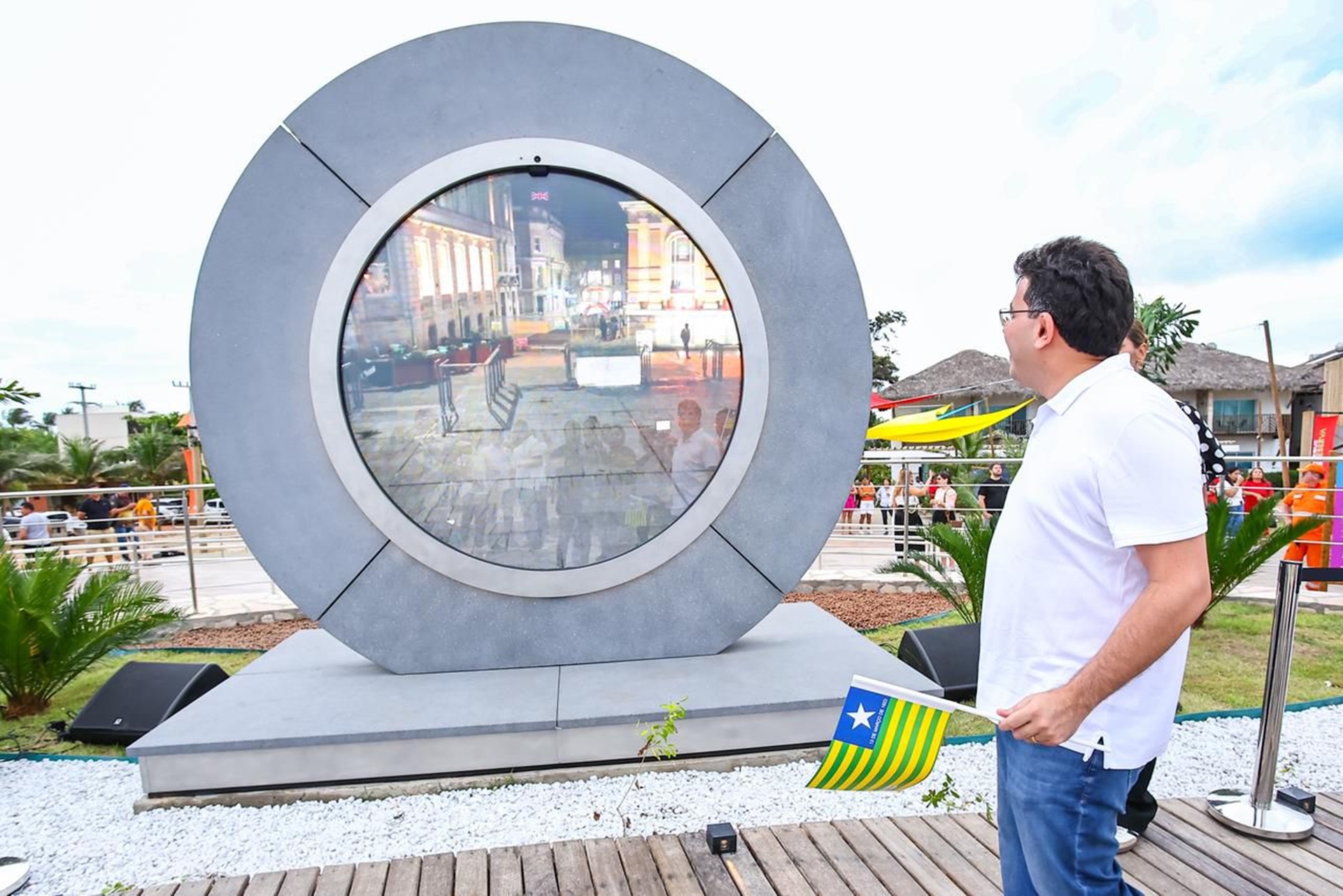
While thousands continue to lack water and sewage on the coast of Piauí, the government inaugurates a R$ 5.5 million international portal in Barra Grande and bets on global visibility.
-
Lula’s government opens 13,000 positions for teachers in Brazil and creates more than 24,000 federal jobs, with an impact of R$ 5.3 billion by 2026.

-
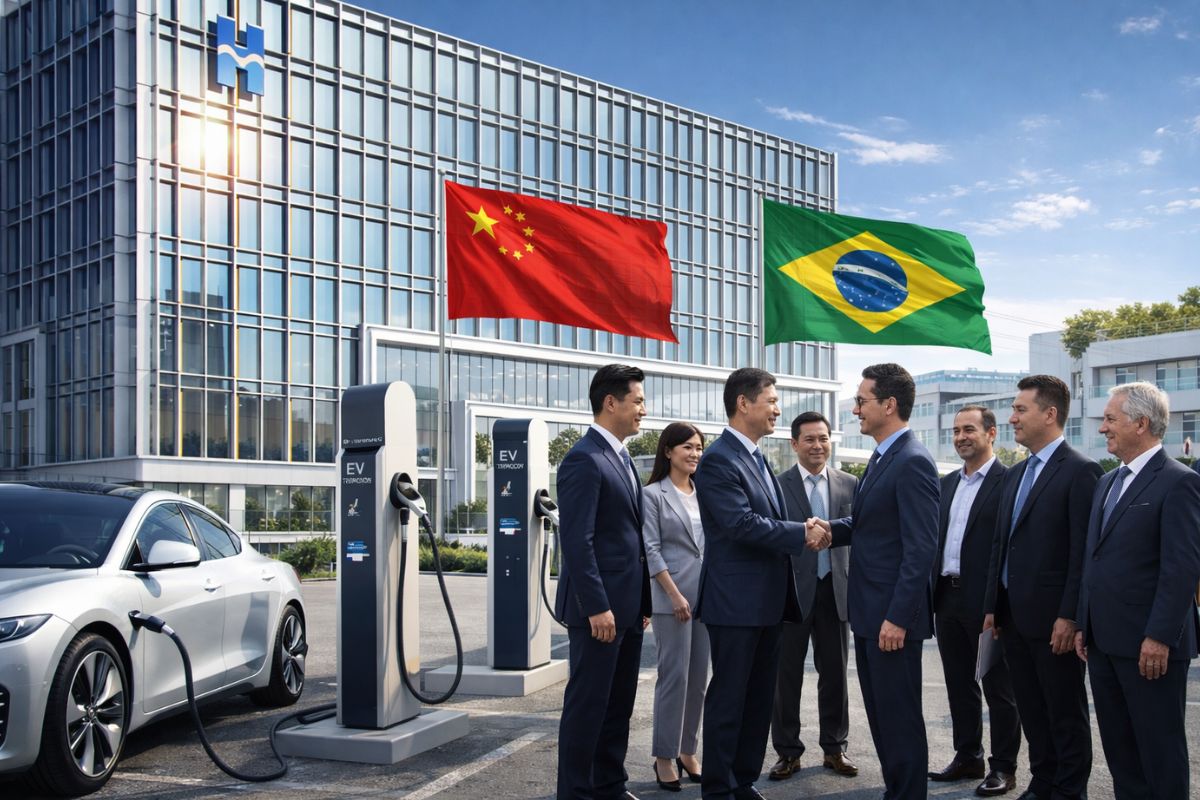
A Chinese electric vehicle technology giant wants to invest up to R$ 200 million in a city in Santa Catarina, and the mayor returned from China with a signed document that guarantees the immediate opening of a CNPJ and the start of operations in Brazil.
-
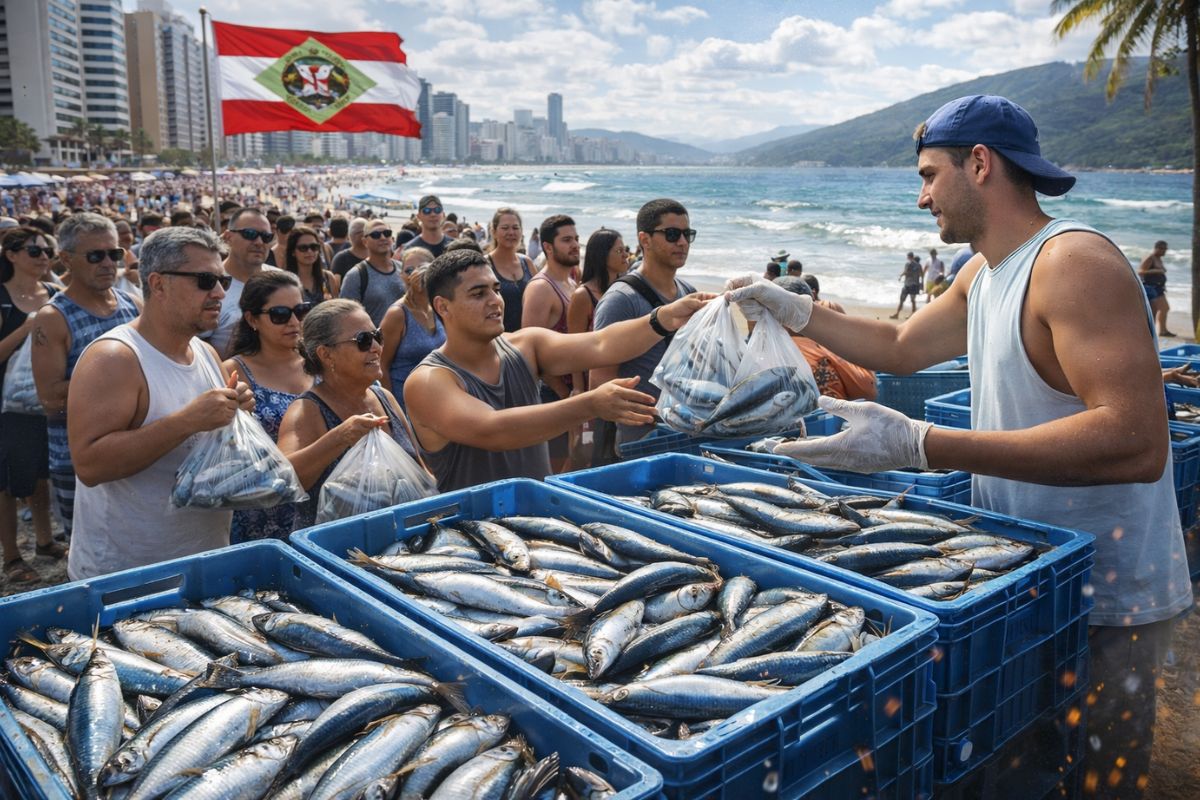
A beach town in Santa Catarina will distribute 4 tons of sardines completely free of charge to the population next Thursday, with a limit of 2 kilograms per person, and the distribution will end when the stock runs out.

Without rare earths, there would be no high-power permanent magnets, which are essential for electric motors, wind generators, and defense equipment.
Applications range from flat-screen televisions and fluorescent lamps to satellites, rockets, and guided missiles. Experts point out that rare earths will play a geopolitical role in the coming decades similar to that of oil in the 20th century.
Demand is growing with the energy transition: electric cars, solar panels, and wind turbines increasingly require these elements. In 2025, export restrictions imposed by China led to disruptions in production lines of the global automotive industry, highlighting the world’s dependence on these minerals.
China: 44 million tons and near absolute control over the world’s rare earths
China comfortably leads the ranking of rare earth reserves with about 44 million tons, equivalent to almost half of the world’s total, according to the USGS’s Mineral Commodity Summaries 2024 report. But Chinese dominance goes far beyond reserves: the country controls approximately 70% of global production and nearly the entire refining chain of these minerals. This gives Beijing a geopolitical leverage that few countries possess.
In recent years, China has increasingly used this power explicitly. Throughout 2025, Beijing tightened export controls on medium and heavy rare earth elements, reinforcing pressure on Western countries. The world’s dependence on China is considered a strategic risk by international reports, which has accelerated the search for alternative suppliers. It is in this context that Brazil and India enter the game.
Brazil: the second largest rare earth reserve on the planet and a still wasted potential
Brazil ranks second in the world in rare earth reserves, with approximately 21 million tons—about 23% of the global total. Despite this colossal potential, the country accounts for less than 1% of global production, due to high processing costs, lack of industrial infrastructure, and absence of a national refining chain.
In January 2026, the Ministry of Mines and Energy announced the beginning of the formulation of a National Rare Earth Strategy—a move that experts consider late but necessary.
International interest in Brazil is growing and coming from all sides. The United States invested $565 million in Serra Verde, the only producer of rare earths on a commercial scale in Brazil, in Goiás, and secured a stake in the company.
The European Union is negotiating joint investments and promises to process the minerals on Brazilian territory. Rare earth projects in Brazil have already attracted about $700 million in funding over the past two years, mostly from Western investors.
In February 2026, Trump called about 20 countries, including Brazil, to a meeting in Washington with the aim of creating an international minimum price mechanism for rare earths, seeking to limit China’s ability to set global prices alone.
Brazil finds itself in a delicate position: pressured by the U.S. to join an anti-China front while historically maintaining a solid economic relationship with Beijing. Experts assess that any decision will need to consider economic, diplomatic, and strategic impacts.
India: 6.9 million tons and the new strategic hub for rare earths in Asia
India completes the trio with the third largest rare earth reserve on the planet—about 6.9 million tons, according to estimates based on USGS data.
The country is being observed by major powers as a possible new strategic production hub, especially given the global need for more secure and diversified supply chains.
In February 2026, Brazil and India signed an agreement on rare earths and expanded their trade partnership.
Prime Minister Narendra Modi stated that “the agreement on critical minerals will help shape a new and resilient supply chain” after meeting with President Lula in New Delhi.
India’s strategic geographic position in Asia and its geological potential could transform the country into one of the protagonists in the new race for critical resources—especially if it can attract the necessary investments to develop its production and refining chain.
The dispute that will define the future: why rare earths are the new oil
The scenario is clear: whoever controls rare earths controls technology. And whoever controls technology defines the direction of the global economy.
The reorganization of rare earth supply chains is not an episodic commercial dispute—it is a strategic restructuring on a global scale, in which countries holding reserves cease to be mere commodity exporters and begin to occupy sensitive geopolitical positions.
For Brazil, the challenge is twofold: to seize the opportunity without repeating historical mistakes. The country risks exporting raw materials at low prices and importing processed components at thousands of dollars—exactly what happened with other natural resources throughout history.
Without investments in refining, technology, and industrial infrastructure, possessing the second largest rare earth reserve in the world may mean very little in practice. The window of opportunity exists, but it is closing as other nations advance.
The board of rare earths: three countries, many powers, and a race with no turning back
China, Brazil, and India together hold more than 70 million tons in rare earth reserves—enough to be central pieces in a dispute that will define who dominates the economy and technology in the coming decades.
China has already transformed its rare earths into an instrument of power. India is positioning itself. And Brazil has the second largest reserve on the planet but still needs to decide what to do with it.
The minerals that power your smartphone, your electric car, and the satellites orbiting the Earth are at the center of a silent war. And the next moves by Beijing, Brasília, and New Delhi could redraw the map of global power.
Do you think Brazil should align with the United States in the rare earth dispute or maintain an independent position? And what do you think about the risk of the country exporting cheap raw materials and importing expensive technology? Leave your opinion in the comments.





Seja o primeiro a reagir!