





 Portuguese
  English
  Spanish
  6 min of reading
  0 comments


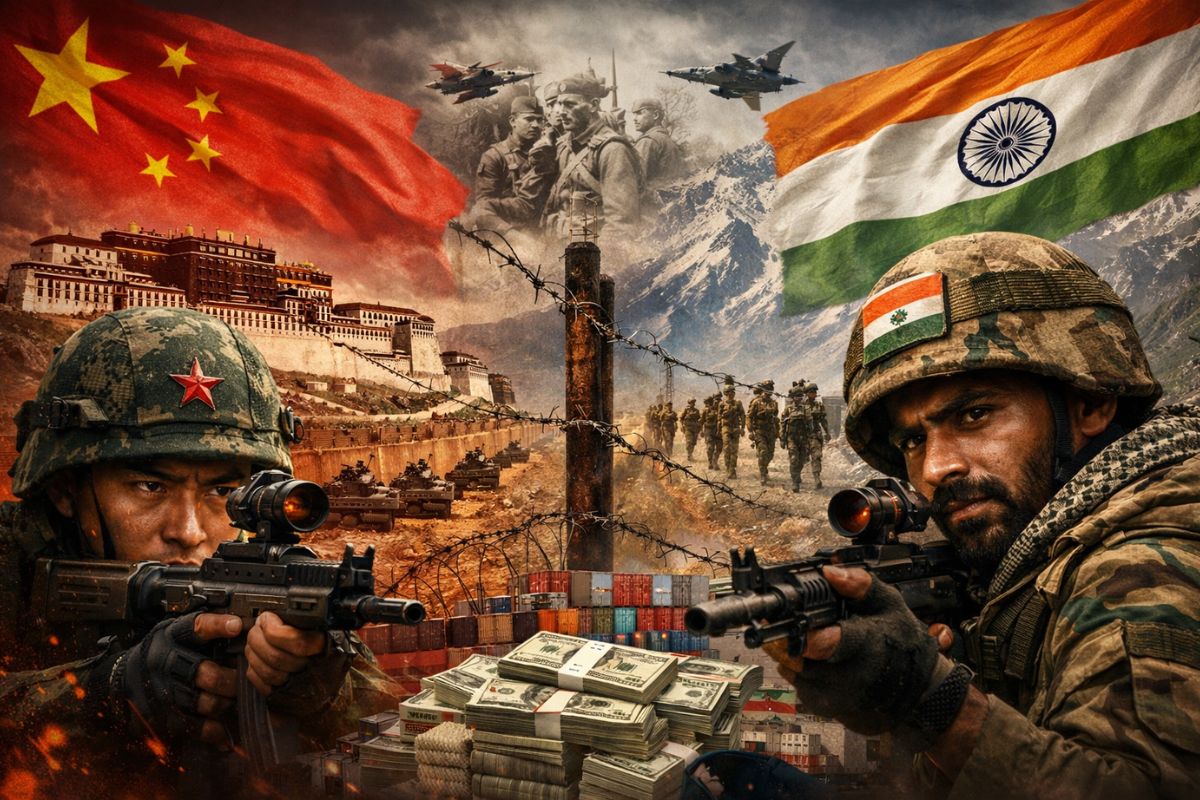
The Speech Of China Rescues Panchsheel Of 1954, Tibet In 1959, War Of 1962, Arunachal And A Militarized Border On The Line Of Control.
In the rivalry between China and India, the language has become heated with accusations and mentions of bribery worth millions of rupees. The focus is on the bilateral relationship and what happens in the border region between China and India, paying attention to Arunachal Pradesh, Ladakh, Aksai Chin, Tibet, and Kashmir.
The sequence of cited episodes mixes diplomacy, political decisions, international agreements, military preparedness, and economic dependence. While the border is described as militarized, trade is treated as too big to allow a real boycott, keeping the tension active in the present.
The Shadow Of Bribery
The speech mentions a high court meeting in the Ministry of India and describes an environment where China would be extremely hostile to public officials while trying to influence decisions with money.
-
Havan buys historic football land in Blumenau for a million-dollar amount protected by a confidentiality clause and is already planning to change even the layout of streets to build a megastore in half-timbered style costing 80 million reais.

-
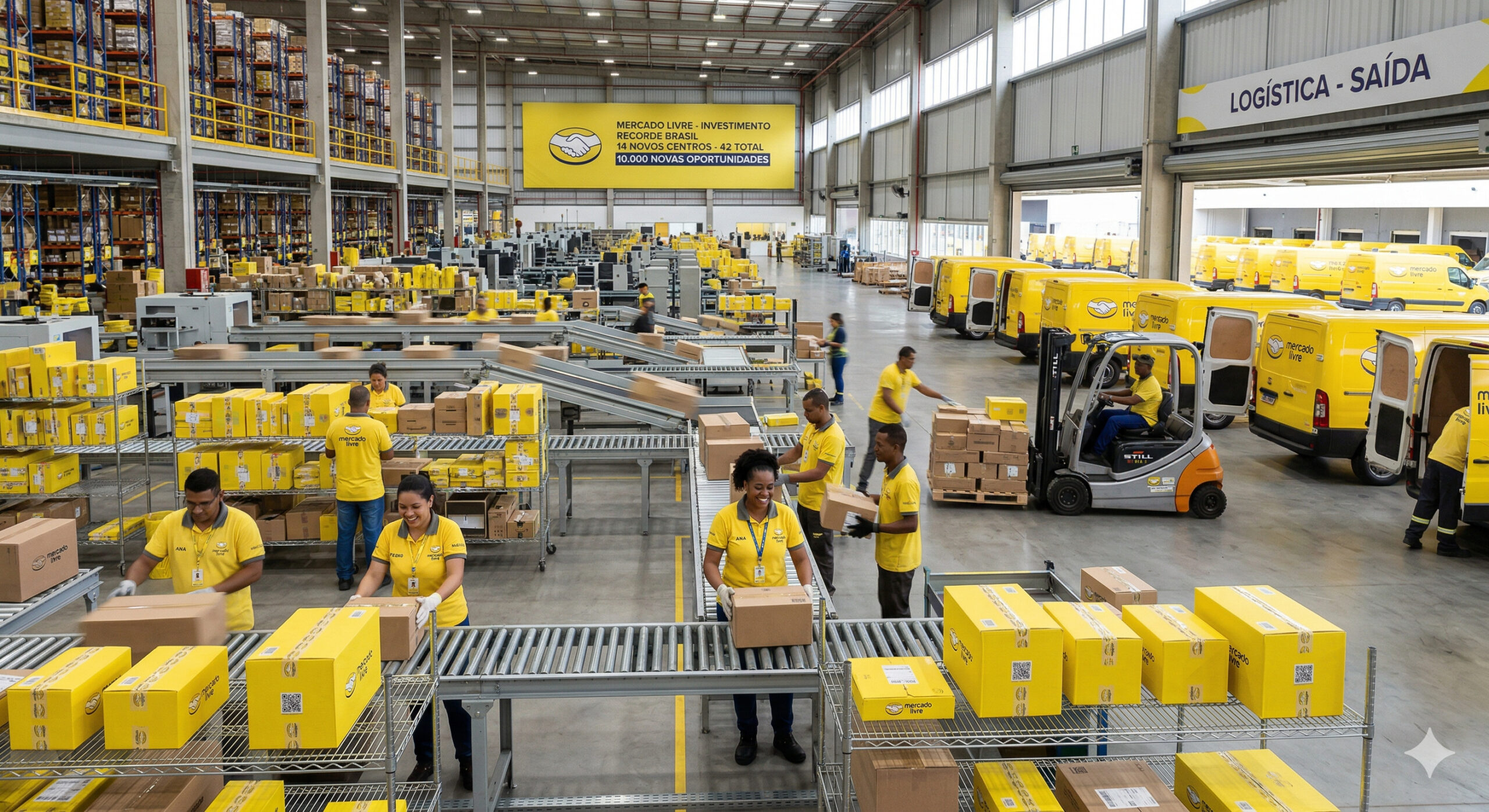
Mercado Livre “opens the vault” and announces a record investment of R$ 57 billion in Brazil in 2026, a value 50% higher than the previous year, with an expansion plan that includes 14 new logistics centers, totaling 42 units in the country and hiring an additional 10,000 employees.
-
How investment in technology can revolutionize the national economy and enhance industrial gains, according to a study that highlights the direct impact on productivity, innovation, and wealth retention within Brazil.

-
The largest food company on the planet, JBS, has just opened a 4,000 square meter laboratory in Florianópolis to develop customized proteins that modulate muscle mass gain, immune response, and metabolic performance.


The most sensitive excerpt connects bribery to economic and political choices.
The logic presented is straightforward: if goods come through China, blocking that abruptly would have an immediate impact, opening controversy, affecting careers, and generating internal resistance.
The accusation transforms the commercial debate into a debate about the integrity of the State, with ministers and officials pressured by economic consequences.
Panchsheel, Nehru And The Promise Of “Not Going To War”
In the cited reconstruction, Jawaharlal Nehru sought an agreement with China to avoid war for a long period.
The name of the pact appears repeatedly:
Panchsheel Agreement, signed in 1954, with five points and a simple political core, described as “we will not go to war against each other” and “we will not fight each other.”
In addition to this core, elements such as cultural exchanges and a rule of non-interference in internal affairs appear.
India, in this framing, would not be concerned about what happens internally in China, and China would not care about what happens inside India.
The agreement is presented as a diplomatic brake, but also as a test of political naivety.
A decisive detail is the timeframe. The narrative states that Nehru wanted the agreement to last 20 years, while China would have accepted only six.
The shortening becomes a central piece of the argument: China would have understood the importance of Panchsheel and preferred to limit the time, keeping freedom to act afterward.
Tibet In 1959, Annexation And The Dalai Lama Effect
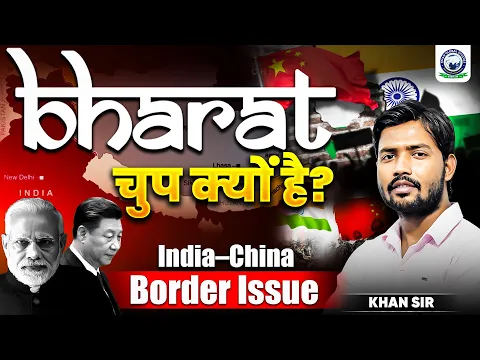

The deterioration gains a specific milestone: 1959, when Tibet is cited as a country that was annexed by China.
The episode is described as a total occupation, followed by revolt and global reaction.
India appears pressured by its link to Buddhism and by an asylum decision: the Dalai Lama, the religious leader of Tibet, flees and seeks refuge in India.
The political consequence is presented in a chain.
On one hand, India finds itself limited by a rule of Panchsheel itself, that of not interfering in internal affairs.
On the other hand, China would have reacted with irritation and placed the asylum as a breaking point.
The Tibetan issue ceases to be merely territorial and becomes a diplomatic, religious, and strategic trigger.
End Of The Deadline, Militarization And The War Of 1962
With the deadline reduced and the expiration of the agreement in 1960, the narrative describes China deepening its presence in Tibet and initiating military deployment in the border region of India.
The preparation period is cited as intense, with about 1960, 1961, and 1962 marked by complete war readiness.
The cited spark involves Arunachal Pradesh.
In 1962, while Nehru was in Nepal, it is mentioned that China entered 5 kilometers into Arunachal Pradesh. Nehru, according to the speech, allegedly said he ordered the intruder to be expelled, and China treated this as a sign of war and challenge.
The war is named as the Sino-Indian War of 1962. In this description, China conquers an area called Aksai Chin and would have also conquered Arunachal Pradesh, with a visit to Arunachal and movement to the Tawang Valley in the context of intensification.
The result is a border that remains marked by the Line of Actual Control, presented as the line defining the current dispute.
Staple Visa And The Sovereignty Dispute In Arunachal Pradesh
One of the examples used to illustrate the dispute appears in the topic of the staple visa.
The practice is described as a stapled document, instead of a stamp in the passport.
The political meaning attributed is clear: by avoiding the stamp and using a stapled paper, China signals that it does not recognize Arunachal Pradesh as part of India.
The narrative goes beyond the procedure and transforms the bureaucratic detail into a territorial message.
The staple visa is treated as a way of saying “you entered the country,” without formally recognizing the passport within the disputed territory, reinforcing the tension in a daily gesture.
Impossible Boycott And Trade Too Big To Stop
Despite the hostility, China is described as the largest trading partner, making a boycott “impossible.”
The most compelling example is symbolic: T-shirts with the phrase “Boycott China” would be manufactured in China itself, and even packaging with that call would have been produced there.
The contradiction becomes an economic argument.
Even when mentioning that products may be available in Vietnam at the same price, or that equivalent tariffs could exist elsewhere, the repeated conclusion is that dependence remains.
Politics clashes with logistics, and trade holds the rupture even with the border tense.
“One China,” Taiwan And The Map Of The “Five Fingers”
Another block of tension appears in the broader territorial statement.
China is cited as saying that Tibet would be like a palm with five fingers, and these “fingers” include Ladakh, Nepal, Sikkim, Bhutan, and Arunachal Pradesh.
The formulation suggests that the dispute is not limited to a point, but spreads across several regional edges.
In the same package, the One China Policy appears, associated with Taiwan.
The speech cites Indian prime ministers, from Nehru to Indira Gandhi and Atal Bihari Vajpayee to Narendra Modi, in the context of signing and continuing this policy, implying that India accepts the idea of China and Taiwan as one.
The embedded criticism is that by endorsing one logic, India would lose strength to insist on its own territorial logic in Arunachal Pradesh.
A Historical Rivalry That Mixes Diplomacy, Naivety And Resentment
Overall, the rivalry between China and India is drawn as a long-term plot: agreement, annexation, asylum, expiration of the deadline, military preparation, war, and a border that remains militarized.
Kashmir appears as a backdrop, and Article 370 is cited along with a question about authorship, with the name Gopalaswami mentioned in the debate.
The central point, however, is the constant contrast.
China appears, at the same time, as a threat on the border and as an indispensable trading partner, while India is portrayed amid diplomatic decisions, economic dependence, and internal pressures.
The story does not end in 1962 because the argument insists that “India will not stop in the future” and that China calculates its moves in advance, keeping the rivalry active today.
Do you think trade with China prevents a real rupture, or will the border speak louder in the coming years?





Seja o primeiro a reagir!