





 Portuguese
  English
  Spanish
  4 min of reading
  0 comments


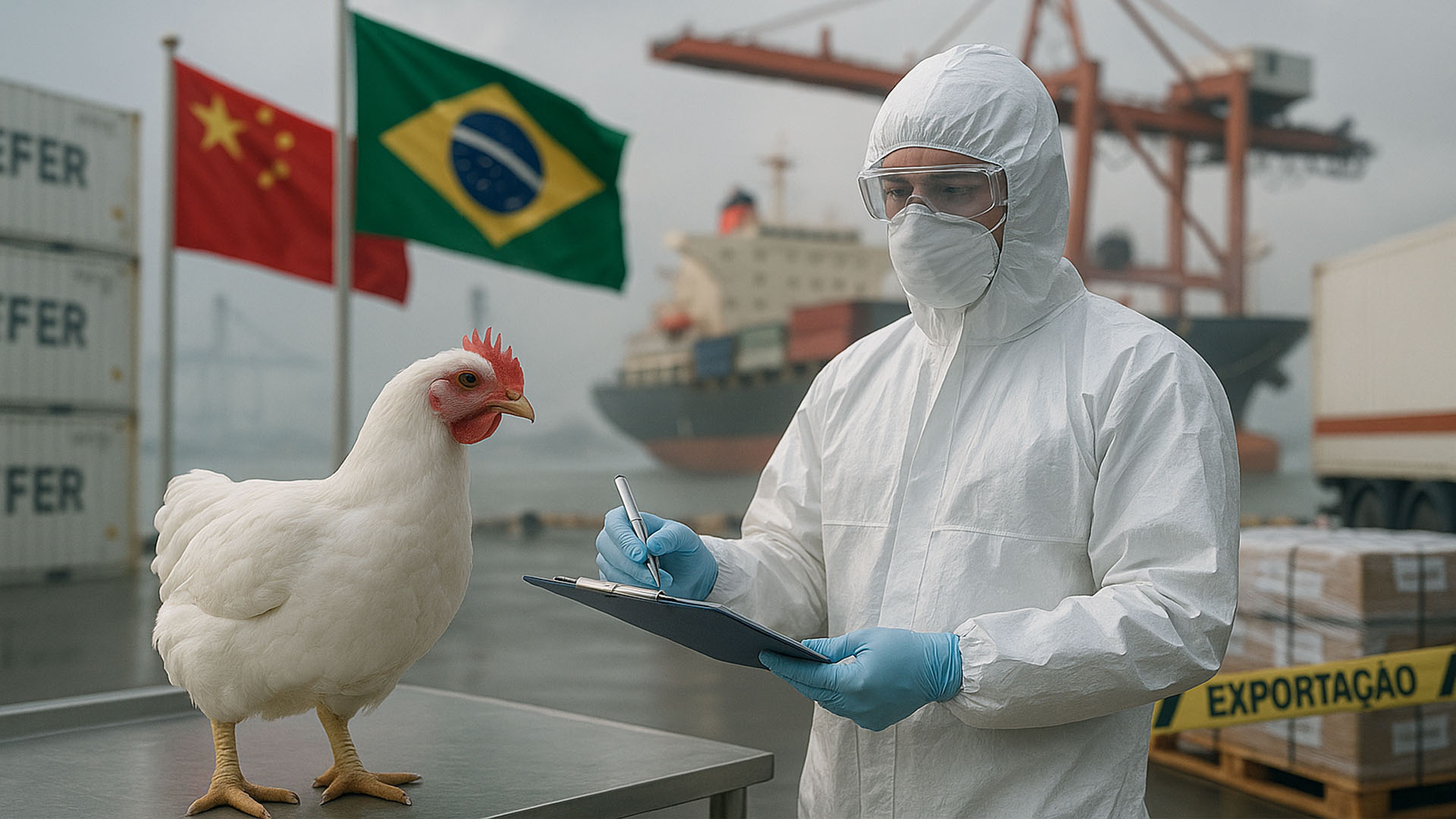
Chinese Mission Evaluates Sanitary Controls in the Country While the European Union Resumes Purchases with Staggered Schedule; Sector Expects Gradual Normalization of Exports.
The Brazil is experiencing a key week for the chicken supply chain. China has started an audit to verify the sanitary status of Brazil after the bird flu outbreak in May, while the European Union has reopened the market with defined rules and dates.
According to the Ministry of Agriculture, the European reopening takes effect starting Tuesday, September 23, and comes in stages that cover the entire country and later, Rio Grande do Sul. The decision comes five months after the suspensions motivated by the outbreak in Montenegro (RS).
For the sector, the EU’s return reduces uncertainties, but the Chinese release is the decisive step to recover volumes and revenue. The technical mission from Beijing in Brazil is seen as a trigger for an opinion that could end the embargo on Brazilian chicken.
-
Mothers and daughters come together, create an ‘express’ beauty salon and turn the idea into a network with 21 units, revenue of R$ 16.7 million and 12,000 subscribers.

-
End of the 6×1 schedule: how the reduction of hours can affect service companies, industry, and agribusiness.

-
Brazil Ignores Trump’s threats to BRICS, Buys 42 tons of gold and reduces the Dollar’s share by 6.45% in international reserves.

-
Havan buys historic football land in Blumenau for a million-dollar amount protected by a confidentiality clause and is already planning to change even the layout of streets to build a megastore in half-timbered style costing 80 million reais.


EU Reopens Market with Schedule and Production Dates
The European Union has confirmed the resumption of purchases of chicken and turkey from Brazil, starting this Tuesday (23/9). Products with production date from September 18 are authorized for the entire national territory, except for Rio Grande do Sul at this first moment.
The RS will be cleared for sale starting October 2, excluding the area of the outbreak in Montenegro. Meanwhile, the 10 km zone around the farm will have shipments resumed on October 16, consolidating logistical normalization.
The announcement concludes a cycle of five months of restrictions in the European bloc after the outbreak was registered. For agribusiness, the predictability of the schedule facilitates the planning of slaughter, cold storage, and shipments.
According to sector data, between January and May (before the suspension), Brazil sent 125.3 thousand tons to the EU, with US$ 386.3 million in revenue, indicating the importance of the destination in chicken meat exports.
China Conducts Sanitary Audit in Brazil
China has sent a mission to audit the Brazilian system for controlling bird flu. The Brazilian government regards the visit as the final step to reestablish sales to its largest chicken client.
Industry sources and specialized press report that the audit focuses on official procedures, traceability, and biosecurity in plants under the Federal Inspection Service. The expectation is that the technical opinion will serve as a basis for a decision from Beijing.
With the EU resuming purchases, China remains the only major market still with extensive restrictions on Brazilian chicken. The Chinese release would have an immediate effect on price, cut mix, and container routes.
The Case of Montenegro (RS) and the Sanitary Status of Brazil
The first and only outbreak of highly pathogenic avian influenza (H5N1) in a commercial farm in Brazil was confirmed on May 16, in Montenegro (RS), according to the MAPA. Measures included sanitary slaughter, disinfection, and sanitary emptying.
After 28 days without new records in commercial establishments, the country declared itself free of the disease on June 18, communicating this to the OIE and trade partners.
The EU recognized Brazil as free of avian influenza at the beginning of September, paving the way for this week’s decision. For Brussels, the transparency of data and the Brazilian sanitary regulatory framework were crucial.
Impacts on Exports and the Poultry Industry
The ABPA states that, with the European reopening, exports are expected to return to previous levels, with the possibility of increase due to the pent-up demand during the suspension period. The sector projects a gradual normalization of flow to the ports.
Before the embargo, the EU accounted for a significant part of the Brazilian mix, although China holds a larger volume. The recovery of both is likely to rebalance internal prices, occupancy of slaughterhouse capacity, and contracts for processed cuts.
For logistics and exchange rates, the predictability of windows on 23/9, 2/10, and 16/10 reduces storage costs and freight renegotiation. Companies report reallocating routes during the embargo and expect better margins with the reopening.
EU opened with a clear schedule, but China maintains a blockade until the audit is concluded. Do you think Beijing should regionalize the embargo as the EU did, or maintain caution until the end of the process? Comment if the Chinese strategy is prudent or excessive for the current risk.







-

-

-

-

9 pessoas reagiram a isso.